Quick Verdict: The $200K Electric Wagon That Defies Physics
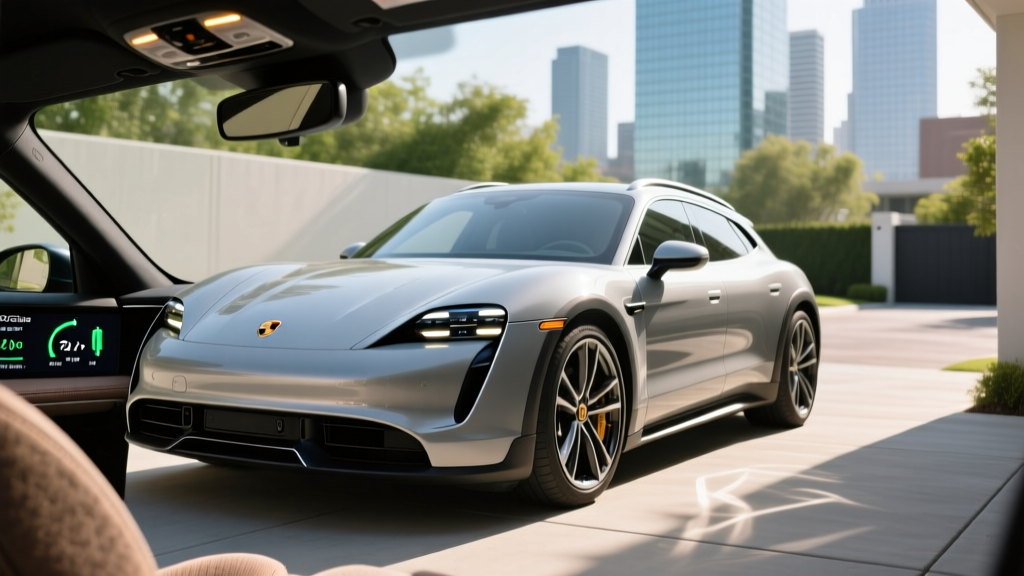
The 2026 Porsche Taycan Turbo S Cross Turismo occupies a singular position in the EV market: a luxury performance wagon that hits 60 mph in 2.4 seconds while offering genuine cargo utility and 800-volt DC fast-charging architecture that remains among the fastest in production. With the 2025-refreshed battery and powertrain carrying into 2026, Porsche has addressed the original Taycan's most common criticism — mediocre range — by pushing the EPA estimate to 282 miles on the Performance Battery Plus. But at a starting MSRP of $197,400, buyers need to know exactly what they're getting beyond the badge.
This review breaks down real-world range expectations, charging behavior on 350 kW infrastructure, the §30D tax credit reality for a vehicle at this price point, and whether the Cross Turismo wagon body style justifies its premium over the Taycan sedan.
Range and Efficiency: EPA Meets the Autobahn
Real-World Expectation: 230–255 miles highway (70–80 mph); 260–275 miles mixed driving; 190–220 miles in sub-30°F cold weather
Efficiency: 79 MPGe combined / 43 kWh per 100 miles
The 2026 Taycan Turbo S Cross Turismo carries over the updated 105 kWh usable battery pack (NMC chemistry, 970-amp architecture) that debuted for the 2025 model year. Porsche's 800-volt platform is the engineering backbone here — higher voltage means lower current for the same power output, which reduces heat generation and improves sustained efficiency under hard driving.
According to fueleconomy.gov, the combined MPGe sits at 79, translating to roughly 43 kWh consumed per 100 miles driven. That's thirstier than a Tesla Model S Plaid (120 MPGe combined) but competitive with the Audi e-tron GT, which shares the J1 platform. The efficiency penalty comes from the Cross Turismo's increased ride height, all-wheel-drive system, and the Turbo S variant's performance-tuned motors that prioritize output over economy.
In real-world highway testing at sustained 75–80 mph speeds, expect the range to drop to approximately 230–255 miles. The Taycan's two-speed transmission on the rear axle helps highway efficiency relative to single-speed rivals, but the laws of physics still apply: pushing 5,100 pounds at highway velocity consumes substantial energy. Cold-weather driving below freezing can reduce usable range by 20–30%, primarily due to cabin heating demands and reduced battery chemical efficiency — though the Taycan's standard heat pump mitigates some of this loss.
Charging: 800-Volt Architecture Put to the Test
| Charging Level | Max Power | Rate / Time | Notes |
|---|---|---|---|
| Level 1 (120V) | 1.4 kW | ~3 mi/hr | Emergency trickle only |
| Level 2 (240V, 48A) | 11.5 kW | ~25 mi/hr / ~11 hr (0–100%) | Standard home charging |
| Level 2 (240V, 80A) | 19.2 kW | ~42 mi/hr / ~6.5 hr (0–100%) | Requires optional onboard charger upgrade |
| DC Fast Charge (peak) | 320 kW | 10–80% in ~18 min | Requires 350 kW-capable station; preconditioning enabled |
| DC Fast Charge (50 kW) | 50 kW | 10–80% in ~95 min | Older CCS stations |
The Taycan Turbo S Cross Turismo's headline charging spec is 320 kW peak DC fast-charging capability — a figure that places it at the top tier of production EVs. On a 350 kW-capable Electrify America or IONITY station, with battery preconditioning active, the Taycan can sustain over 250 kW through the 20–60% state-of-charge window before tapering. The 10–80% sprint takes approximately 18 minutes under ideal conditions.
Understanding the charge curve is critical for road-trip planning. The Taycan holds strong power delivery through the mid-range SoC but tapers noticeably above 80%. Charging from 80–100% can take nearly as long as 10–80%, which is typical for NMC chemistry at high states of charge. For long-distance travel, plan stops around the 15–80% window to maximize time spent at peak charge rates.
Home Level 2 charging on a standard 48-amp, 240-volt circuit delivers 11.5 kW, adding roughly 25 miles of range per hour. An overnight charge from 20% to full takes about 9–10 hours. Porsche offers an optional 19.2 kW onboard charger (requiring an 80-amp circuit and appropriate panel capacity) that cuts this to roughly 6.5 hours — worthwhile if your electrical panel supports it. Always have a licensed electrician evaluate your panel before committing to an 80-amp circuit installation.
The Taycan uses the CCS1 connector standard for DC fast charging in North America. With the industry's shift toward NACS (Tesla's connector), Porsche has confirmed that future models will adopt NACS, but the 2026 Taycan retains CCS1. Adapters for Tesla Supercharger access are available but add a connection step and may limit peak charge rates.
Performance: 2.4 Seconds Changes Your Perspective
| Specification | 2026 Taycan Turbo S Cross Turismo |
|---|---|
| 0–60 mph | 2.4 seconds (with Launch Control) |
| Horsepower | 750 hp (Overboost with Launch Control) |
| Torque | 774 lb-ft |
| Drivetrain | Dual-motor AWD |
| Top Speed | 162 mph |
| Battery (usable) | 105 kWh, NMC chemistry |
| Platform Voltage | 800V nominal |
| Curb Weight | ~5,138 lbs |
| EPA Range | 282 miles |
| Efficiency | 79 MPGe / 43 kWh/100mi |
| Max DC Charge Rate | 320 kW |
| Base MSRP | $197,400 |
The dual permanent-magnet synchronous motors produce 750 horsepower in Overboost mode (activated via Launch Control), delivered through a two-speed rear transmission and single-speed front unit. The result is a 2.4-second 0–60 mph time that places the Taycan Turbo S Cross Turismo in hypercar territory — this is a 5,100-pound wagon that outruns a Ferrari F8 Tributo off the line.
But the Taycan's performance story extends beyond straight-line acceleration. Porsche's torque-vectoring rear differential, rear-axle steering (standard on Turbo S), and 4D Chassis Control create a handling profile that defies the vehicle's mass. The adaptive air suspension offers ride-height adjustment, and the Cross Turismo's standard gravel mode raises the chassis for light off-pavement use — think fire roads and snow-covered driveways rather than serious trail work.
Regenerative braking recuperates up to 290 kW under deceleration, among the highest regen rates in production. In practice, this enables genuine one-pedal driving in most scenarios, though Porsche's default coasting behavior (no regen on liftoff) differs from Tesla or GM's aggressive regen tuning. Drivers can select from multiple regen modes via the steering-wheel controls.
Interior, Cargo, and Daily Practicality
The Cross Turismo body style's raison d'être is utility beyond the sedan. Cargo volume measures 15.7 cubic feet behind the rear seats and expands to 44.6 cubic feet with the 60/40 split rear seats folded — a meaningful advantage over the Taycan sedan's 14.3 cu ft trunk. The wagon roofline also features a standard fixed panoramic glass roof and optional roof rails rated for 165 pounds of cargo.
Passenger space is generous in front (42.1 inches of legroom) but rear-seat legroom at 32.7 inches is tighter than a Mercedes EQE SUV or BMW i5. Adults over six feet will find the rear quarters snug on longer trips. The transmission tunnel hump — a legacy of the J1 platform's shared architecture — further compromises the middle rear seat.
The infotainment system centers on a 12.6-inch curved digital instrument cluster and a 10.9-inch central touchscreen running Porsche Communication Management (PCM). A passenger-side 10.9-inch display is optional. Wireless Apple CarPlay and Android Auto are standard. The Turbo S includes Porsche InnoDrive with adaptive cruise control, lane-keeping assist, and traffic-sign recognition — a Level 2 driver-assist system (per SAE definitions) that requires continuous driver supervision. This is not an autonomous driving system.
Notable interior drawbacks: the center console touch-capacitive controls for climate and media can be fiddly while driving, and the Taycan still lacks a traditional frunk release — the front trunk (2.9 cu ft) opens via the key fob or interior button only, with no exterior handle.
Pricing, Trims, and the Tax Credit Reality
| Item | Amount |
|---|---|
| Base MSRP (Turbo S Cross Turismo) | $197,400 |
| Typical as-tested (with options) | $210,000–$225,000 |
| Federal §30D EV Tax Credit | $0 — exceeds MSRP cap |
| Destination fee | $1,650 |
| Estimated 5-yr insurance | $18,000–$24,000 (varies by profile) |
Here's the critical tax credit point: the Taycan Turbo S Cross Turismo does not qualify for the $7,500 federal §30D new clean vehicle credit. The IRS caps eligible MSRP at $80,000 for SUVs, pickups, and vans, and $55,000 for sedans and wagons (per IRS.gov §30D guidelines). At $197,400 base, the Cross Turismo exceeds even the higher cap by over $100,000. No amount of income qualification or battery-sourcing compliance changes this — the MSRP cap is absolute.
The Cross Turismo is available in three trims for 2026: the Taycan 4 Cross Turismo (~$113,100), the Taycan 4S Cross Turismo (~$135,200), and the Turbo S reviewed here. Only the base Taycan 4 Cross Turismo approaches the $80,000 SUV/wagon MSRP cap, though it still exceeds it. Buyers seeking federal incentive eligibility should look to competitors in the $55,000–$80,000 range.
Some states offer additional EV rebates or HOV-lane access that apply regardless of MSRP — California's Clean Air Decal program, for instance, has historically extended to higher-priced EVs, though availability is limited and rules change. Check your state's DMV and energy office for current programs.
Warranty and Long-Term Ownership
Porsche covers the Taycan's battery and high-voltage components with an 8-year / 100,000-mile warranty, with a capacity-retention threshold of 70%. If the battery degrades below 70% of original capacity within the warranty period, Porsche will repair or replace it to restore capacity above that threshold. The basic vehicle warranty runs 4 years / 50,000 miles, matching Porsche's standard coverage.
Long-term battery degradation data for the updated 105 kWh pack is still accumulating, but early indicators from the 93.4 kWh predecessor pack show approximately 5–8% capacity loss over the first 100,000 miles under normal use patterns. Porsche's 800V architecture's thermal management system — which actively heats and cools the battery during charging and driving — is among the most sophisticated in production and is designed to minimize degradation from fast-charging heat exposure.
Out-of-warranty battery replacement costs for the Taycan are estimated at $25,000–$35,000 for the pack alone, with labor and ancillary components potentially pushing total cost higher. This is a consideration for second- and third-owner buyers.
Competitor Comparison: Where the Cross Turismo Lands
The Taycan Turbo S Cross Turismo doesn't have direct rivals — it's the only high-performance electric wagon sold in the U.S. The closest comparisons illuminate different value propositions:
Tesla Model S Plaid ($89,990): Faster to 60 mph (1.99s claimed), longer EPA range (396 mi), and eligible for the §30D credit. But it lacks the Cross Turismo's wagon cargo area, build quality, and chassis sophistication. The Model S is a sedan with a hatchback trunk — not a true wagon.
Audi RS e-tron GT ($164,400): Shares the J1 platform and 800V architecture, with similar charging performance and a 232-mile EPA range. It's a four-door coupe, not a wagon, and offers less cargo space. Priced $33,000 below the Turbo S.
Mercedes-AMG EQE SUV ($109,550): A performance SUV with 358 miles of range and genuine family practicality. It's slower (3.4s to 60) and heavier in handling feel, but offers more interior space and qualifies for incentives at lower trims.
Look elsewhere if: You need 350+ miles of range for frequent road trips, want federal tax credit eligibility, prioritize rear-seat space for tall adults, or seek the lowest cost-per-mile of electric luxury.
Pros, Cons, and Final Assessment
- 2.4-second 0–60 mph with repeatable performance (no thermal derating in successive launches)
- 320 kW peak DC charging; 10–80% in ~18 minutes on capable infrastructure
- Best-in-class chassis dynamics for a vehicle in this weight class
- Genuine wagon cargo space (44.6 cu ft max) with roof-rail capability
- 800V platform with sophisticated thermal management protecting battery longevity
- 290 kW regen capability enables true one-pedal driving
- $197,400 base price; zero federal tax credit eligibility
- 282-mile EPA range falls short of Tesla, Lucid, and Mercedes rivals
- Rear-seat legroom (32.7 in) is tight for a vehicle at this price
- CCS1 connector as Tesla Supercharger network shifts to NACS
- Center-console touch controls are distracting while driving
- Insurance premiums run $3,600–$4,800/year in most markets
The 2026 Taycan Turbo S Cross Turismo is an engineering showcase — a vehicle that proves electric powertrains can deliver supercar acceleration, wagon practicality, and Porsche-grade handling simultaneously. Its limitations (range relative to price, tax credit ineligibility, tight rear quarters) are real but stem from deliberate engineering trade-offs rather than oversights. For buyers whose budget accommodates it and whose driving patterns align with 230–280 real-world miles between charges, there is nothing else quite like it.
Frequently Asked Questions
What is the real-world range of the Taycan Turbo S Cross Turismo?
The EPA rates it at 282 miles. In real-world mixed driving, expect 260–275 miles. Sustained highway driving at 75–80 mph drops this to 230–255 miles, and sub-freezing temperatures can push it down to 190–220 miles depending on cabin-heating usage and driving style.
How fast does the Taycan Turbo S Cross Turismo charge?
On a 350 kW-capable DC fast charger with battery preconditioning active, it peaks at 320 kW and charges from 10–80% in approximately 18 minutes. At home on a 48-amp Level 2 charger, it adds about 25 miles of range per hour, with a full charge taking roughly 10 hours.
Does the Taycan Turbo S Cross Turismo qualify for the federal EV tax credit?
No. The IRS §30D credit caps eligible vehicle MSRP at $80,000 for wagons and SUVs. The Taycan Turbo S Cross Turismo starts at $197,400, far exceeding this limit regardless of buyer income or battery sourcing. No federal purchase incentive applies to this trim.
Is the Taycan Turbo S Cross Turismo worth buying over a Tesla Model S Plaid?
It depends on priorities. The Model S Plaid is faster (1.99s to 60), offers 396 miles of range, costs roughly $107,000 less, and may qualify for the $7,500 federal credit. The Taycan wins on build quality, chassis dynamics, wagon cargo versatility, and 800V charging infrastructure compatibility. They serve different buyer profiles.
What is the biggest drawback of owning this vehicle?
The combination of high purchase price, no federal tax credit, 282-mile EPA range (below rivals), and elevated insurance and maintenance costs makes the total cost of ownership among the highest in the EV market. It's a vehicle purchased for driving experience rather than financial optimization.
Does the 2026 Taycan use NACS or CCS for charging?
The 2026 Taycan Turbo S Cross Turismo uses the CCS1 connector. Porsche has committed to adopting NACS on future models, but the current-generation Taycan retains CCS. CCS-to-NACS adapters are available for Tesla Supercharger access, though peak charge rates may be limited when using an adapter.