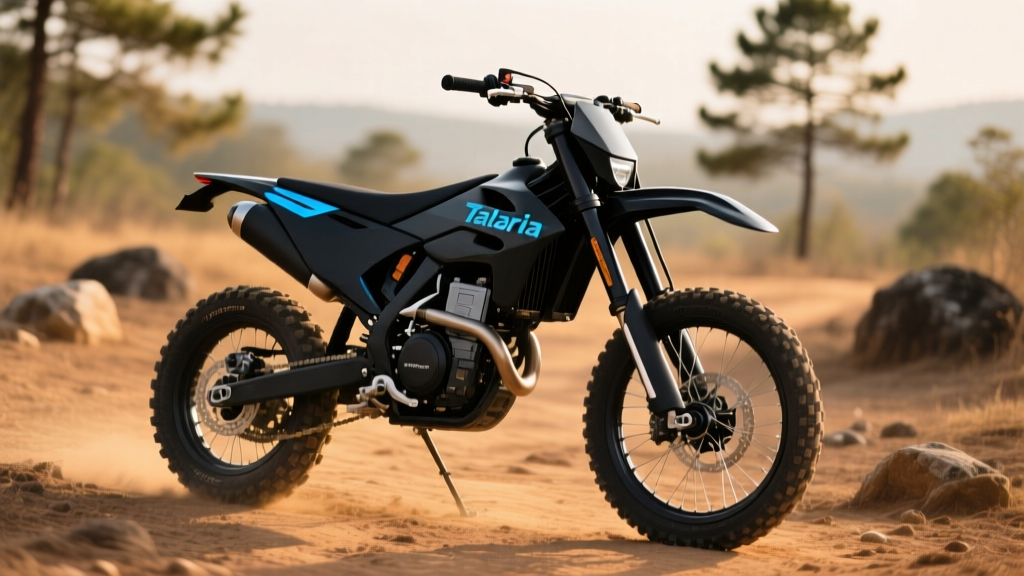
The Talaria Komodo electric dirt bike sits at the intersection of two worlds that rarely talk to each other: the off-road motorcycle community and the broader electric-vehicle ecosystem. If you're researching the Talaria Komodo because you're considering ditching a gas-powered 250cc or 450cc trail bike, this guide breaks down exactly what you'll get — battery capacity, real-world range, charging logistics, and total cost of ownership — with the same data-driven rigor we apply to every electrified vehicle we cover.
Quick Answer: Is the Talaria Komodo Worth It?
The Talaria Komodo is a 60V electric off-road motorcycle with a ~2.2 kWh battery pack, delivering roughly 25–40 miles of real-world trail range depending on riding style and terrain. At a base price around $3,500–$4,200, it undercuts comparable gas dirt bikes on fuel and maintenance costs but trades top-end range and quick refueling for silent operation, zero trailside emissions, and dramatically lower per-hour operating costs. It does not qualify for the federal §30D EV tax credit (that credit applies to four-wheeled highway-capable vehicles). Expect a full charge in roughly 3–4 hours on a standard 120V outlet.
Talaria Komodo Battery, Motor, and Performance Specs
Before we get into cost comparisons and ownership logistics, let's establish the hard numbers. The Komodo uses a lithium-ion battery pack (typically NMC chemistry in this segment) paired with a mid-drive electric motor. Here's what the spec sheet looks like for the current-generation model:
| Specification | Talaria Komodo |
|---|---|
| Battery Voltage | 60V nominal |
| Battery Capacity | ~2.2 kWh usable |
| Battery Chemistry | NMC (Nickel Manganese Cobalt) |
| Motor Type | Mid-drive, brushless DC |
| Peak Power Output | ~8–12 kW (varies by tune/mode) |
| Top Speed (off-road) | ~45–55 mph (unrestricted) |
| Real-World Trail Range | 25–40 miles (moderate riding) |
| Charge Time (120V Level 1) | ~3–4 hours (0–100%) |
| Charge Time (240V, if supported) | ~1.5–2 hours |
| Curb Weight | ~130–145 lbs (est.) |
| Base MSRP | $3,500–$4,200 |
A few things to note immediately. The kWh figure (energy stored) is tiny compared to a highway EV — a Tesla Model Y carries roughly 75 kWh — but dirt bikes need far less energy because they're light and operate at lower sustained speeds. The kW figure (power output) is where the Komodo delivers its punch: 8–12 kW translates to roughly 11–16 horsepower at peak, which is comparable to a 250cc four-stroke gas engine in seat-of-the-pants feel, with the advantage of instant torque delivery from zero RPM.
Real-World Range: What to Actually Expect on the Trail
This is where buyer expectations and reality diverge most sharply. Manufacturer range claims in the electric off-road segment are notoriously optimistic, often based on low-speed, flat-terrain testing that doesn't reflect how anyone actually rides.
Here's a more honest breakdown based on riding style:
| Riding Style | Estimated Range | Notes |
|---|---|---|
| Light trail cruising (15–25 mph, flat) | 35–45 miles | Best-case scenario; minimal elevation change |
| Moderate trail riding (mixed terrain, hills) | 25–35 miles | Most realistic for typical weekend riders |
| Aggressive motocross/enduro | 12–20 miles | Hard throttle, jumps, deep sand or mud |
| Cold weather (below 40°F) | Reduce above by 15–25% | Lithium-ion loses capacity in cold |
For context, a gas-powered KTM 250 SX-F with a 1.6-gallon tank gets roughly 40–60 miles of trail riding before needing a refill, and refueling takes 30 seconds with a fuel jug. The Komodo's range is competitive for moderate riding but falls short for aggressive use, and you can't swap a battery pack in seconds the way you pour in fuel. This is the core trade-off.
If your typical ride is 20–30 miles of moderate single-track and you can charge between sessions (at a cabin, campsite, or garage), the Komodo's range is workable. If you regularly ride 50+ miles in a day or participate in enduro events, you'll hit the range ceiling hard.
Cost Breakdown: Talaria Komodo vs. Gas Dirt Bike
The purchase-price conversation is only half the equation. Where electric off-road bikes make their strongest case is operating cost. Let's compare the Komodo against a typical gas 250cc four-stroke dirt bike (think Yamaha WR250F or KTM 250 XC-F) over a realistic ownership period.
| Cost Factor | Talaria Komodo (Electric) | Gas 250cc Dirt Bike |
|---|---|---|
| Purchase Price (MSRP) | $3,500–$4,200 | $8,500–$10,500 |
| Fuel/Energy per Riding Hour | $0.15–$0.40 (electricity) | $4.00–$7.00 (gas + premix if 2-stroke) |
| Annual Fuel/Energy (100 hrs/yr) | $15–$40 | $400–$700 |
| Oil Changes per Year | None | 2–4 ($30–$80 total) |
| Air Filter Service | None (sealed motor) | 2–6 cleanings/replacements ($20–$60) |
| Chain Maintenance | Same (chain-driven) | Same |
| Top-End Rebuild (valves, piston) | N/A | $500–$1,200 every 100–200 hrs |
| Clutch Replacement | N/A | $150–$300 periodically |
| Estimated 3-Year Operating Cost | $50–$120 | $1,500–$3,000+ |
The numbers are stark. Over three years of moderate riding (100 hours/year), a gas dirt bike will cost $1,500–$3,000+ in fuel and engine maintenance alone, while the Komodo's electricity cost is under $120. The Komodo also starts at roughly half the purchase price of a comparable gas machine. The total cost of ownership advantage is substantial — if the Komodo's range and performance meet your riding needs.
One caveat: battery replacement. NMC lithium-ion packs in this segment typically last 500–800 full charge cycles before significant degradation (dropping to ~80% of original capacity). If you ride 100 hours/year and deplete the battery each session, that's roughly 5–8 years before you'd notice meaningful range loss. A replacement pack currently costs $600–$1,000 depending on the supplier. Factor that into long-term ownership math.
Charging Logistics: What First-Time Electric Dirt Bike Owners Need to Know
Unlike highway EVs that rely on DC fast-charging networks, the Komodo charges from standard wall power. Here's what that means in practice:
At home (garage or driveway): The included charger plugs into a standard 120V household outlet. A full 0–100% charge takes roughly 3–4 hours. If you ride in the morning and plug in when you get home, the bike is ready again by evening. No special electrical work is required — this is the equivalent of Level 1 charging in the car world.
At a cabin or campsite: If you have access to a standard outlet (even a generator-fed one at 120V), you can top up between rides. A 2,000-watt portable generator can charge the Komodo, though it defeats the silent, zero-emission purpose somewhat.
No public charging network: Unlike Tesla Superchargers or Electrify America stations for cars, there is no public fast-charging infrastructure for electric dirt bikes. You are entirely dependent on standard outlets. This matters if you ride at remote trailheads with no power access.
Charging cost math: At the US average residential electricity rate of ~$0.16/kWh (per EIA data), fully charging the Komodo's 2.2 kWh battery costs roughly $0.35. Even at California's higher rates (~$0.30/kWh), it's under $0.70 per charge. Compare that to $8–$12 for a gallon of race fuel or premium pump gas.
Federal and State Incentives: Does the Komodo Qualify?
This is a common misconception, so let's be direct: the Talaria Komodo does not qualify for the federal §30D Clean Vehicle tax credit. That credit, which can provide up to $7,500 for new EVs, applies only to four-wheeled vehicles with a gross vehicle weight rating under 14,000 pounds that are highway-capable. Motorcycles, dirt bikes, e-bikes, and off-road vehicles are excluded under current IRS rules.
Some states offer separate incentive programs for electric motorcycles or off-road vehicles — California's Clean Fuel Reward and certain utility rebates have occasionally included two-wheeled EVs — but these vary by jurisdiction, change frequently, and are typically modest ($100–$500). Check your state energy office or utility provider for current programs.
The absence of tax credits means the Komodo's price is the price. Budget accordingly and don't factor in a $7,500 offset that won't materialize.
Common Misconceptions About Electric Dirt Bikes
| Myth | Fact |
|---|---|
| "Electric dirt bikes have no power." | The Komodo's 8–12 kW peak output delivers instant torque comparable to a 250cc gas bike off the line. It lacks top-end horsepower for sustained high-speed desert runs, but for technical trail riding, the power delivery is competitive. |
| "The battery will die in a year." | NMC lithium-ion packs are rated for 500–800 full cycles before dropping to ~80% capacity. With moderate use, expect 5–8 years of functional service before noticeable range loss. |
| "You can ride it in the rain." | Most electric dirt bikes, including the Komodo, have IP-rated water resistance for splash and light rain, but they are not submersible. Deep water crossings that a gas bike might survive can destroy an electric bike's motor controller. Check your owner's manual for specific IP ratings. |
| "It's completely maintenance-free." | No engine oil, valves, or clutch to service — but you still maintain the chain, sprockets, brake pads, suspension, tires, and bearings. The drivetrain is simpler, not absent. |
| "I can charge it at a public EV station." | Public DC fast chargers (CCS, NACS, CHAdeMO) are designed for four-wheeled vehicles with large battery packs. The Komodo charges via its own dedicated charger on standard AC wall power. No compatibility with car charging networks exists. |
Decision Framework: Should You Buy the Talaria Komodo?
Choose the Talaria Komodo if:
- Your typical rides are under 30 miles of moderate trail riding
- You have reliable access to a standard 120V outlet at or near where you ride (garage, cabin, campsite)
- You value silent operation — critical for riding on private land near neighbors or on trails with noise restrictions
- You want to minimize ongoing maintenance (no oil changes, valve checks, top-end rebuilds, or clutch replacements)
- Your budget is under $5,000 and you'd rather spend the savings on gear, transport, or trail access
- You ride primarily in areas where zero-emission operation is required or preferred
Stick with a Gas Dirt Bike if:
- You regularly ride 40+ miles in a single day or participate in enduro/hare scramble events
- You ride at remote trailheads with no electrical access and need 30-second refueling
- You need sustained high-speed desert or fire-road performance where top-end horsepower matters
- You ride extensively in sub-freezing temperatures where lithium-ion capacity drops significantly
- You already own a well-maintained gas bike and the upfront savings don't offset the range trade-off for your use case
What First-Time EV Buyers (of Any Kind) Should Understand
If the Komodo is your first electric vehicle of any kind — car, bike, or otherwise — a few universal EV ownership principles apply:
kWh is your fuel tank; kW is your fuel pump. The Komodo's 2.2 kWh battery is how much energy it stores (like gallons in a gas tank). The charger's kW rating determines how fast that energy flows in. Confusing these two is the single most common EV mistake. A bigger kWh number means more range; a bigger kW number means faster charging.
Cold weather reduces range. Lithium-ion batteries lose capacity and deliver less power in cold temperatures. Expect 15–25% range reduction below 40°F, and more in deep cold. This applies to the Komodo just as it does to a Tesla or a Ford F-150 Lightning.
Battery degradation is real but slow. You won't notice it in year one or two. By year five or six, you may see 10–20% less range than when new. This is normal chemistry behavior, not a defect. Store the bike at roughly 50–60% charge if it's sitting unused for weeks at a time — this extends battery lifespan.
Charging access defines the experience. If you can plug in at or near where you ride, the Komodo is a joy — plug in, walk away, come back to a full battery. If you're hauling it to remote trailheads 90 minutes from the nearest outlet and riding all day, the range limitations become a hard constraint. Be honest about your riding patterns before you buy.
Frequently Asked Questions
How fast does the Talaria Komodo go?
In unrestricted mode, the Komodo reaches approximately 45–55 mph on flat ground. Most trail riding happens well below that speed. The bike's strength is low-end torque and throttle response rather than top speed, which makes it excellent for technical terrain but less suited to open desert running.
Can I ride the Talaria Komodo on public roads?
In most US states, the Komodo is classified as an off-road vehicle and is not street-legal from the factory. It lacks DOT-required equipment (turn signals, mirrors, horn, speedometer, street-legal tires). Some states allow OHV registration for limited road use, but this varies by jurisdiction. Check your local DMV.
How long does the battery last before needing replacement?
Expect 500–800 full charge cycles before the battery degrades to roughly 80% of its original capacity. With moderate use (1–2 rides per week, not fully depleting each time), that translates to roughly 5–8 years of functional service. A replacement pack currently runs $600–$1,000.
Is the Talaria Komodo suitable for beginners?
The instant torque and lack of clutch or gears make it approachable for beginners — there's no stalling, no shifting, just twist and go. Most models offer adjustable power modes that limit output for novice riders. However, the bike still produces serious torque and can surprise inexperienced riders. Proper protective gear and gradual progression are essential.
Can I charge the Komodo from a portable power station like a Jackery or EcoFlow?
Yes, provided the power station has a standard 120V AC outlet and sufficient wattage output (typically 300W+ for the Komodo's charger). A large portable power station (1–2 kWh capacity) can provide a partial charge in the field — enough for one additional riding session. This is a practical workaround for riders without grid access at their riding location.
How does the Komodo compare to the Sur-Ron Light Bee or KTM Freeride E-XC?
The Sur-Ron Light Bee (~$4,000–$4,500) is the Komodo's closest competitor — similar battery size, similar range, similar power. The KTM Freeride E-XC (~$8,000+) is a premium option with a larger battery and more sophisticated suspension but at roughly double the price. The Komodo occupies a middle ground: more refined than budget Chinese imports, less expensive than the European OEM offerings. Ride all three if possible before deciding.