The Short Answer: There Is No Tacoma EV Yet
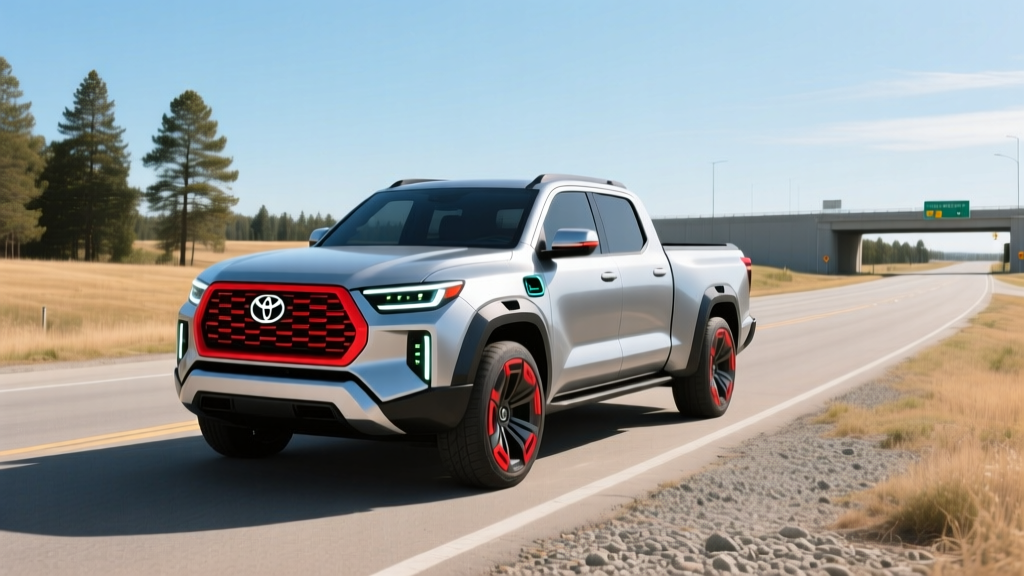
As of early 2026, Toyota does not sell a fully electric Tacoma. The current sixth-generation Tacoma (introduced for 2024) is available as a turbocharged four-cylinder gas model and the Tacoma i-FORCE MAX hybrid, which pairs a 2.4-liter turbo with a 48-hp electric motor integrated into the transmission for a combined 326 hp and up to an EPA-estimated 26 mpg combined. Toyota has confirmed it is developing a next-generation electric pickup on its dedicated iMax (IM-3) EV platform, but no production Tacoma EV has been announced with a firm on-sale date or official specifications. If you need an electric midsize truck today, your closest alternatives are the Ford Maverick Hybrid (a unibody compact, not a body-on-frame truck) and the Chevrolet Silverado EV (full-size). If you want a Tacoma with electric assist, the i-FORCE MAX hybrid is the current reality.
Toyota's Electric Pickup Roadmap: What's Confirmed and What's Speculation
Toyota has been cautious on battery-electric vehicles compared to rivals, but the company's EV strategy has accelerated significantly since 2023. The key development for truck buyers is the iMax platform — a dedicated battery-electric architecture designed from the ground up for pickups and large SUVs. Toyota first referenced this platform in its 2023 EV strategy update and provided further detail at its 2024 technology briefing.
Here is what Toyota has confirmed versus what remains speculation:
| Item | Status | Detail |
|---|---|---|
| iMax (IM-3) EV platform | Confirmed in development | Dedicated BEV architecture for trucks/large SUVs; supports body-on-frame construction |
| Production electric pickup | Confirmed intent | Toyota executives have referenced a "next-generation battery-electric pickup" but have not named it "Tacoma EV" officially |
| Tacoma EV nameplate | Unconfirmed | Toyota could use the Tacoma name, a new name, or position it as a separate model — no decision has been announced |
| On-sale date | Estimated late 2027–2029 | Industry analysts and supply-chain reporting suggest a 2028 model year is plausible; Toyota has not committed publicly |
| Battery chemistry | Likely NMC, possible LFP option | Toyota's bZ-series vehicles currently use NMC; LFP could be offered for a lower-cost trim |
| Estimated range | 300–400+ miles (speculative) | Based on platform size and competitor targets; no EPA figures exist |
The critical takeaway: Toyota is clearly building toward an electric body-on-frame pickup, but calling it a "Tacoma EV" is premature. The company may introduce it as an entirely new nameplate, similar to how it launched the bZ4X as a distinct model rather than an "electric RAV4."
Current Tacoma i-FORCE MAX Hybrid: The Electrified Option You Can Buy Today
For buyers who want Tacoma capability with improved efficiency right now, the i-FORCE MAX hybrid is the relevant model. It is a conventional parallel hybrid (not a plug-in), meaning it does not offer electric-only driving range and cannot be charged from an outlet. Instead, the electric motor fills in torque gaps, enables low-speed electric assist, and improves fuel economy.
Here are the 2025/2026 Tacoma i-FORCE MAX specifications based on EPA data at fueleconomy.gov:
| Spec | Tacoma i-FORCE MAX (4WD) |
|---|---|
| Powertrain | 2.4L turbo-4 + 48-hp electric motor (parallel hybrid) |
| Combined output | 326 hp / 465 lb-ft torque |
| Transmission | 8-speed automatic |
| EPA fuel economy | 23 city / 27 hwy / 26 combined mpg (4WD, varies by trim) |
| Electric-only range | None (not a PHEV) |
| Towing capacity | Up to 6,000 lbs (varies by configuration) |
| Payload | Up to ~1,709 lbs (varies by configuration) |
| Starting MSRP | ~$46,300 (TRD Off-Road, 2025 model year; destination included) |
| Federal tax credit | Not eligible (§30D requires plug-in BEV or PHEV; conventional HEVs do not qualify) |
| Hybrid battery warranty | 10 years / 150,000 miles |
The i-FORCE MAX delivers meaningful torque improvements over the base 2.4L turbo (278 hp / 317 lb-ft) and a modest 2–3 mpg combined improvement depending on trim and drivetrain. It is a legitimate upgrade for towing and off-road low-speed control, but it is not an efficiency revolution — real-world fuel economy in mixed driving typically lands between 22 and 25 mpg.
How a Future Tacoma EV Would Compare to the Hybrid and Gas Models
If Toyota does bring a Tacoma EV to market on the iMax platform, it would compete directly against the current Tacoma lineup on capability, cost, and daily usability. Here is a projected comparison framework based on what we know about the iMax platform's goals and current midsize EV truck competitors:
| Factor | Tacoma Gas (i-FORCE 2.4T) | Tacoma Hybrid (i-FORCE MAX) | Projected Tacoma EV (iMax, estimated) |
|---|---|---|---|
| EPA range / fuel economy | ~21 mpg combined | ~26 mpg combined | ~300–400 mi range (est.) |
| Energy cost per mile | ~$0.16–$0.20/mi (at $3.50/gal) | ~$0.13–$0.15/mi | ~$0.04–$0.07/mi (home charging at $0.14/kWh) |
| 0–60 mph | ~7.0 sec | ~6.3 sec | ~4.5–5.5 sec (est., dual motor) |
| Towing capacity | Up to 6,500 lbs | Up to 6,000 lbs | 6,000–8,000 lbs (target, est.) |
| Range loss while towing | ~30–40% (fuel range) | ~30–40% (fuel range) | ~40–55% (EV range drops sharply under load) |
| Starting MSRP (est.) | ~$33,000 | ~$46,300 | ~$50,000–$60,000 (est.) |
| Federal tax credit (§30D) | None | None | Up to $7,500 if eligible (battery sourcing/income/MSRP rules apply) |
| Maintenance cost (5 yr est.) | ~$2,500–$3,500 | ~$2,200–$3,200 | ~$1,200–$1,800 (no oil, fewer moving parts) |
Towing reality check: EV trucks lose range dramatically when towing. Based on real-world tests of the Ford F-150 Lightning and Rivian R1T, expect a 40–55% range reduction when pulling 5,000+ lbs. A Tacoma EV with a 350-mile EPA rating might deliver only 160–200 miles while towing a trailer — a critical consideration for truck buyers who tow regularly on highways without frequent charging stops.
Real Costs and Savings: EV Truck Ownership vs. Gas Tacoma
To understand whether a future Tacoma EV (or any electric truck) makes financial sense, you need to model the full ownership equation — not just the sticker price. Here is a 5-year cost projection comparing a gas Tacoma i-FORCE with a hypothetical Tacoma EV, assuming 15,000 miles/year:
| Cost Category (5 years) | Tacoma Gas (2.4T, 4WD) | Projected Tacoma EV (est.) |
|---|---|---|
| Purchase price (before incentives) | $40,000 | $55,000 |
| Federal tax credit (§30D) | $0 | Up to $7,500 (if eligible) |
| Effective purchase price | $40,000 | $47,500 |
| Fuel / electricity (75,000 mi total) | $10,500 (at 21 mpg, $3.50/gal) | $3,150 (at 2.5 kWh/mi, $0.14/kWh home rate) |
| Maintenance | $3,000 | $1,500 |
| Insurance (avg) | $7,500 | $8,500 (EV premiums typically 10–15% higher) |
| Estimated depreciation | -$16,000 | -$22,000 (EV trucks depreciate faster currently) |
| Total 5-year cost | $45,000 | $38,150 |
Key caveats on this projection:
- The $7,500 federal tax credit under IRS §30D requires meeting buyer income caps ($150K single / $300K joint), vehicle MSRP caps ($80K for trucks), battery-critical-mineral sourcing, and North American final assembly. Toyota's current BEVs do not yet qualify — the bZ4X is built in Japan. A US-built Tacoma EV on the iMax platform would likely be designed to qualify, but eligibility is not guaranteed until production specs are finalized.
- Home charging at $0.14/kWh is a national average. Rates in California, Hawaii, and the Northeast often exceed $0.25/kWh, which would raise EV fuel costs to ~$5,600 over 5 years.
- Public DC fast charging costs $0.30–$0.60/kWh at networks like Electrify America and EVgo. If you rely primarily on public charging, your per-mile cost can approach or exceed gas.
- EV truck depreciation has been steep — the Ford F-150 Lightning lost 30–45% of value in its first two years on the used market, driven by high inventory and softening demand. A Tacoma EV could hold value better given Toyota's brand strength, but this is unproven.
First-Time EV Truck Buyer: What You Must Know Before You Wait (or Buy Now)
If you are considering holding out for a Tacoma EV or evaluating electric trucks for the first time, these ownership realities will shape your experience far more than marketing claims:
Home Charging Is Non-Negotiable for Most Owners
Over 80% of EV charging happens at home. A Level 2 home charger (240V, 7–11 kW) adds roughly 25–35 miles of range per hour and can fully replenish a large truck battery overnight. Without home charging access, you will rely on public DC fast chargers, which cost 3–5x more per kWh, take 20–40 minutes per session, and may be sparse in rural areas where many truck owners live. If you cannot install a Level 2 charger at your residence — due to renting, HOA restrictions, or lack of a dedicated 240V circuit — an EV truck's convenience advantage collapses.
Home Charger Installation Costs
Budget $800–$2,500 for a quality Level 2 charger (e.g., ChargePoint Home Flex, Emporia Vue) plus professional installation. If your electrical panel needs a 200-amp upgrade, add $1,500–$3,500. Total first-year charging infrastructure cost can easily reach $2,000–$5,000 before any utility rebates.
Cold-Weather Range Loss
Lithium-ion batteries lose 20–40% of their EPA-rated range in sustained sub-freezing temperatures. A Tacoma EV rated at 350 miles EPA could deliver 210–280 miles in January in Montana or Minnesota. Heat pumps (which Toyota has been adopting in newer EVs) mitigate this somewhat but do not eliminate it. If you live in a cold climate and need maximum range for towing or long commutes, this is a real constraint.
Charging Speed: Peak kW Is Not Sustained kW
When manufacturers advertise "250 kW DC fast charging," that is the peak rate, typically sustained only between roughly 10–30% state of charge. Above 50%, the charge curve tapers significantly. A realistic 10–80% session on a 250 kW-capable truck with a ~100 kWh battery takes 25–35 minutes, not the 15 minutes peak kW might imply. For road trips, plan 30-minute stops every 200–250 real-world miles.
Common Tacoma EV Misconceptions — Myth vs. Fact
| Myth | Fact |
|---|---|
| "Toyota is definitely releasing a Tacoma EV in 2026." | No Tacoma EV has been officially announced with a sale date. Toyota has confirmed an electric pickup on the iMax platform is in development, with industry estimates pointing to 2028–2029 at the earliest. |
| "The Tacoma hybrid is a plug-in with electric-only range." | The i-FORCE MAX is a conventional parallel hybrid (HEV). It has no plug, no electric-only driving mode, and no EV range. It recapters energy through regenerative braking and uses the electric motor to supplement the gas engine. |
| "An electric Tacoma would get the $7,500 tax credit automatically." | §30D eligibility depends on final assembly in North America, battery critical-mineral and component sourcing thresholds, buyer income limits, and MSRP caps. Toyota's current BEVs (bZ4X) are built in Japan and do not qualify. A US-built Tacoma EV would likely target eligibility, but it is not guaranteed. |
| "EV trucks can tow just as far as gas trucks." | Towing cuts EV range by 40–55%. A gas Tacoma loses fuel economy while towing but can refuel in 5 minutes anywhere. An EV truck towing 5,000 lbs may need to stop every 150–200 miles for 30+ minutes of charging — a significant trip-planning burden on long hauls. |
| "EV trucks have lower maintenance, so they are always cheaper to own." | Lower maintenance (no oil changes, fewer brake replacements due to regen) saves $1,000–$2,000 over 5 years. But higher insurance premiums ($500–$1,500 more over 5 years), steeper depreciation in the current market, and higher upfront cost can offset those savings. The math depends on your mileage, electricity rates, and how long you keep the vehicle. |
| "I can charge an EV truck on a standard 120V outlet overnight." | Level 1 (120V) charging delivers roughly 1–1.5 kW, adding about 3–5 miles of range per hour. Fully charging a 100 kWh truck battery from empty would take 70–100 hours. Level 1 is viable only as emergency trickle charging, not daily use for a large-battery truck. |
Decision Framework: Should You Wait for a Tacoma EV or Buy Now?
Choose the Tacoma i-FORCE MAX Hybrid Now If:
- You need a midsize body-on-frame truck within the next 6–12 months
- You tow regularly (5,000+ lbs) and cannot tolerate 30-minute charging stops mid-haul
- You live in a rural area with limited DC fast-charging infrastructure
- You want Toyota's established reliability record and dealer network for service
- You are satisfied with ~26 mpg combined and do not need plug-in electric driving
Choose a Gas Tacoma i-FORCE (2.4T) Now If:
- Budget is a primary concern (base MSRP starts ~$33,000 vs. ~$46,300 for hybrid)
- You drive under 10,000 miles/year, making fuel savings less impactful
- You want the widest trim and configuration selection (the hybrid is limited to higher trims)
Wait for a Tacoma EV (or Competing Electric Midsize Truck) If:
- You have reliable home Level 2 charging access and your daily commute is under 150 miles round-trip
- You rarely tow heavy loads, or you are willing to plan charging stops around towing
- You can wait until at least 2028–2029 for a production model with confirmed specs
- You want to minimize per-mile energy costs and your electricity rate is under $0.18/kWh
- You are open to competitors: the Chevrolet Silverado EV (full-size, ~$55K+, 300+ mi range) is available now, and the Ram 1500 REV (full-size, ~350 mi target range) is expected soon
Consider a Plug-In Hybrid (PHEV) Alternative If:
- You want electric-only commuting with gas flexibility for longer trips and towing
- Toyota does not currently offer a Tacoma PHEV, but the Ford Maverick (HEV only, not PHEV) and the Hyundai Santa Cruz (no electrified option yet) are compact alternatives worth watching
- The Toyota Tundra i-FORCE MAX hybrid (full-size) is available now if you can accept the larger footprint and higher price (~$58K+ starting)
Frequently Asked Questions
Will Toyota make an electric Tacoma?
Toyota has confirmed it is developing a next-generation battery-electric pickup on its iMax (IM-3) dedicated EV platform. Whether this vehicle will carry the Tacoma nameplate has not been announced. Industry estimates suggest a possible 2028–2029 launch window, but Toyota has not committed to a specific on-sale date.
Is the current Tacoma hybrid a plug-in?
No. The Tacoma i-FORCE MAX is a conventional parallel hybrid (HEV). It cannot be plugged in and does not offer electric-only driving range. The 48-hp electric motor works alongside the 2.4-liter turbo gas engine to improve torque delivery and fuel economy. If you want plug-in electric range, you would need to look outside the Tacoma lineup.
What electric midsize trucks can I buy right now?
As of early 2026, there are no true body-on-frame midsize electric pickups on sale in the US. The closest alternatives are the Ford Maverick Hybrid (compact, unibody, not electric but very efficient at ~42 mpg city) and full-size electric trucks like the Ford F-150 Lightning (EPA range up to 320 mi, starting ~$55K) and Chevrolet Silverado EV (EPA range up to 440 mi on 4WT trim, starting ~$55K). The Rivian R1T is also full-size but targets the premium segment.
Would a Tacoma EV qualify for the $7,500 federal tax credit?
It depends on production details that have not been finalized. Under current IRS §30D rules, the vehicle must undergo final assembly in North America, meet battery critical-mineral and component sourcing thresholds, fall under the $80,000 MSRP cap for trucks, and the buyer must meet income limits ($150K single / $300K joint filing). Toyota's current BEVs are assembled in Japan and do not qualify. A US-built Tacoma EV would likely be designed with §30D eligibility in mind, but this cannot be confirmed until production begins.
How much would it cost to charge a Tacoma EV at home?
Assuming a ~100 kWh battery and a national average residential electricity rate of $0.14/kWh, a full charge from empty would cost roughly $14 and deliver an estimated 300–350 miles of range. That works out to about $0.04–$0.05 per mile — roughly one-quarter the per-mile fuel cost of a gas Tacoma at $3.50/gallon. However, rates vary significantly: in California, Hawaii, and parts of the Northeast, residential rates can exceed $0.25/kWh, pushing the cost closer to $0.07–$0.09/mile.
Can an electric truck tow as well as a gas Tacoma?
Electric trucks can match or exceed gas trucks in peak torque and towing capacity ratings. However, the practical limitation is range. Towing a 5,000-lb trailer can reduce EV range by 40–55%, meaning a truck rated at 350 miles EPA might deliver only 160–200 miles while towing. Combined with 25–35 minute DC fast-charging stops, this makes long-distance towing significantly more time-consuming in an EV. For short local towing (boat to lake, trailer to dump), an EV truck is excellent. For 300+ mile highway towing trips, a gas or hybrid truck remains more practical today.
Sources: EPA Fuel Economy (fueleconomy.gov), IRS Clean Vehicle Tax Credits, Toyota Motor North America press releases and technology briefings (2023–2025).