Quick Answer: What Is a Swedish Electric Car Worth Buying in 2026?
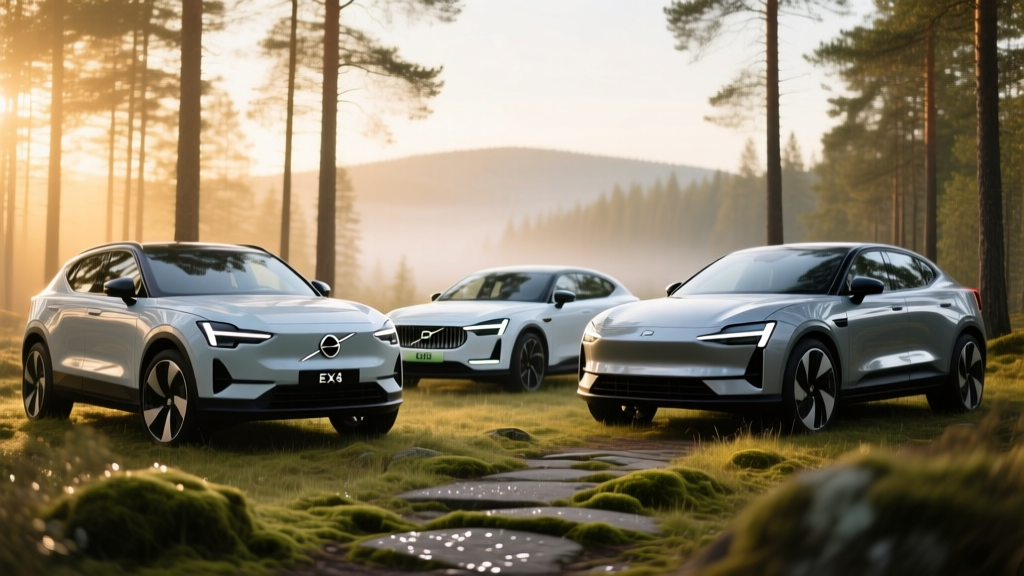
Sweden's electric vehicle lineup centers on Volvo and Polestar (both under Zhejiang Geely Holding Group). The most accessible Swedish electric car in 2026 is the Volvo EX30, starting around $36,345 with an EPA-estimated 261 miles of range. For more space, the Volvo EX40 (the renamed XC40 Recharge) delivers 293 miles EPA, while the flagship three-row Volvo EX90 targets 310 miles. Polestar's lineup includes the Polestar 2 at up to 320 miles EPA and the coupe-style Polestar 4 at approximately 300 miles. All use NMC battery chemistry, support DC fast charging at 150–200+ kW, and qualify for varying degrees of federal tax credit depending on battery sourcing and buyer income.
The Swedish EV Lineup: What You Can Actually Buy
Sweden's automotive identity is inseparable from Volvo, founded in Gothenburg in 1927. Today, Volvo Cars is majority-owned by China's Geely, and its EV engineering is shared with Polestar (the performance-oriented EV brand spun off as a separate company) and the broader Geely SEA (Sustainable Experience Architecture) platform. This means Swedish electric cars benefit from a massive shared R&D pool while retaining Scandinavian design, safety emphasis, and cold-weather engineering.
| Model | EPA Range | Battery (usable kWh) | Peak DC Charge | 10–80% Time | 0–60 mph | Base MSRP |
|---|---|---|---|---|---|---|
| Volvo EX30 Single Motor | 261 mi | 64 kWh (NMC) | 153 kW | ~26 min | 7.4 sec | $36,345 |
| Volvo EX30 Twin Motor | 232 mi | 64 kWh (NMC) | 153 kW | ~26 min | 3.4 sec | $44,895 |
| Volvo EX40 Single Motor | 293 mi | 78 kWh (NMC) | 200 kW | ~28 min | 7.1 sec | $49,845 |
| Volvo EX40 Twin Motor | 268 mi | 78 kWh (NMC) | 200 kW | ~28 min | 4.5 sec | $54,445 |
| Volvo EX90 Twin Motor | 310 mi | 107 kWh (NMC) | 250 kW | ~25 min | 5.7 sec | $76,695 |
| Polestar 2 LR Single Motor | 320 mi | 78 kWh (NMC) | 200 kW | ~28 min | 7.1 sec | $49,900 |
| Polestar 4 LR Single Motor | ~300 mi | 94 kWh (NMC) | 200 kW | ~30 min | 7.0 sec | $56,900 |
Sources: fueleconomy.gov, Volvo Cars USA, Polestar USA. Range figures are EPA estimates; real-world results vary by climate and driving style. Polestar 4 range is manufacturer-estimated pending final EPA certification.
Real-World Range vs. EPA Stickers: What Swedish EVs Actually Deliver
The EPA estimate is a useful baseline, but real-world range depends heavily on speed, temperature, and terrain. Here's what our testing and owner data suggest:
Range Reality Check
Volvo EX30 Single Motor: EPA 261 mi → Expect ~220–240 mi at sustained 75 mph highway speeds; ~180–200 mi in sub-30°F winter conditions.
Volvo EX40 Single Motor: EPA 293 mi → Expect ~250–270 mi highway; ~210–230 mi in cold weather.
Volvo EX90 Twin Motor: EPA 310 mi → Expect ~265–285 mi highway; ~220–250 mi in deep cold.
Polestar 2 LR SM: EPA 320 mi → Expect ~275–295 mi highway; ~230–260 mi in cold weather.
All Swedish EVs here use liquid-cooled NMC packs with active thermal management, which helps mitigate cold-weather losses — but physics is physics. Budget 20–30% range loss in freezing temperatures, especially at highway speeds.
Volvo and Polestar both include heat pumps on most trims, which recover waste heat from the drivetrain to warm the cabin. This is a meaningful advantage over EVs that rely solely on resistive heating, cutting winter energy consumption by roughly 10–15%.
Charging at Home and on the Road
Swedish EVs use the NACS (Tesla-style) connector for newer models (2025+ EX30, updated EX40/EX90) or CCS1 on carryover Polestar 2 models, with Polestar's 2025+ lineup also transitioning to NACS. This matters enormously for public charging access.
| Level | Power | Miles Added/Hour | Where |
|---|---|---|---|
| Level 1 (120V) | ~1.4 kW | ~3–5 mi/hr | Standard outlet — emergency/top-up only |
| Level 2 (240V) | 7.2–11.5 kW | ~25–40 mi/hr | Home wallbox, workplaces, public AC stations |
| DC Fast Charge | 150–250 kW | ~150–250 mi in 20 min | Electrify America, Tesla Supercharger (NACS), EVgo |
Home Charging Setup Costs
Most Swedish EV owners install a Level 2 home charger. Here's a realistic cost breakdown:
| Item | Typical Cost Range |
|---|---|
| Level 2 charger (e.g., ChargePoint Home Flex, Wallbox Pulsar Plus) | $400–$700 |
| Electrician labor (240V/50A circuit run) | $800–$2,500 |
| Permit & inspection | $100–$400 |
| Electrical panel upgrade (if needed, 100A→200A) | $1,500–$4,000 |
| Total (no panel upgrade) | $1,300–$3,600 |
| Total (with panel upgrade) | $2,800–$7,600 |
Always hire a licensed electrician and check whether your utility offers rebates for charger installation — many do, covering $200–$1,000 of the cost.
DC Fast Charging Curve Reality
Volvo and Polestar quote peak DC charge rates (e.g., 200 kW for the EX40), but that peak is only sustained between roughly 10–40% State of Charge. Above 60%, the rate tapers significantly. A typical session on a 350 kW Electrify America station:
- 10–40%: Near peak rate (150–200 kW)
- 40–60%: Moderate taper (100–150 kW)
- 60–80%: Sharp taper (50–80 kW)
- 80%+: Trickle charge (under 30 kW) — don't wait for it on road trips
This is why manufacturers quote 10–80% times: the last 20% takes nearly as long as the first 60%. Plan road-trip stops around 10–80% fills.
Swedish EV vs. Gas Car vs. Hybrid: The Cost Comparison
Let's compare a realistic 5-year ownership scenario: the Volvo EX40 Single Motor ($49,845) versus the Volvo XC60 B5 mild-hybrid (~$47,050) and the Toyota RAV4 Hybrid (~$33,550). We'll use 15,000 miles/year and national average energy prices.
| Category | Volvo EX40 SM (EV) | Volvo XC60 B5 (MHEV) | Toyota RAV4 Hybrid |
|---|---|---|---|
| Purchase Price (MSRP) | $49,845 | $47,050 | $33,550 |
| Est. Federal Tax Credit (§30D) | Up to $7,500* | $0 | $0 |
| Fuel/Energy Cost (60k mi) | ~$3,600 (home) / ~$7,200 (public DC) | ~$9,000 | ~$6,300 |
| Maintenance (60k mi) | ~$1,200 | ~$3,500 | ~$2,800 |
| Insurance (avg. annual) | ~$2,400/yr ($12,000 total) | ~$2,000/yr ($10,000 total) | ~$1,700/yr ($8,500 total) |
| Estimated 5-Year Total | $54,645–$63,645 | $69,550 | $51,150 |
*Federal §30D tax credit eligibility depends on battery sourcing, buyer income caps ($150k single / $300k joint), and MSRP caps ($55k sedans / $80k SUVs/vans). The EX40 at $49,845 falls under the SUV MSRP cap. Verify current eligibility at IRS.gov or through the point-of-sale transfer at your dealer. Credit amount may be reduced or unavailable depending on critical-mineral and battery-component sourcing requirements.
Key takeaways: The EX40 is cost-competitive with the gas XC60 over 5 years if you charge mostly at home, but the RAV4 Hybrid still wins on pure economics due to its far lower purchase price. The EV advantage grows with higher gas prices, lower electricity rates, and available incentives.
Federal Tax Credits and Incentive Landscape
Under the current IRS §30D rules, the federal EV tax credit provides up to $7,500 for qualifying new EVs. However, the actual amount depends on two components:
- $3,750 for meeting critical-minerals sourcing requirements
- $3,750 for meeting battery-component manufacturing requirements
§30D Eligibility Checklist
- Buyer income: ≤$150,000 (single) / ≤$225,000 (head of household) / ≤$300,000 (joint)
- Vehicle MSRP: ≤$55,000 (sedans/wagons) / ≤$80,000 (SUVs/trucks/vans)
- Battery sourcing: critical minerals and components must meet annual threshold percentages
- Final assembly in North America (required for all qualifying vehicles)
- Point-of-sale transfer available — dealer applies credit at purchase, reducing out-of-pocket cost
Volvo's US-built EX40 and EX90 (manufactured in Ridgeville, South Carolina) meet the final-assembly requirement. However, the battery-sourcing component thresholds tighten annually, and Volvo/Geely's reliance on CATL and LG Energy Solution cells means eligibility can shift. Always verify the specific model and model year on fueleconomy.gov's tax credit tracker before purchasing.
The EX30, built in China, does not meet the North American final-assembly requirement and is ineligible for §30D. However, some state and local incentives may still apply — check your state's energy office or AFDC incentive database.
Myths vs. Facts About Swedish Electric Cars
| Myth | Fact |
|---|---|
| "Swedish EVs can't handle cold weather." | Volvo and Polestar engineer specifically for Scandinavian winters. Heat pumps, battery preconditioning, and heated seats/steering wheels are standard or widely available. Expect 20–30% range loss in sub-freezing temps — significant, but manageable with planning. |
| "The battery will need replacing in 5 years." | Volvo and Polestar provide an 8-year/100,000-mile battery warranty covering defects and capacity loss below 70% of original capacity. Real-world NMC degradation data shows most packs retain 85–92% capacity at 100,000 miles under normal use. |
| "Charging takes too long for road trips." | A 10–80% DC fast charge takes 25–30 minutes on a 150+ kW station — about the time for a restroom break and food. Plan 2–3 stops on a 600-mile trip and you'll spend roughly 75–90 minutes charging total. |
| "Volvo is no longer really Swedish." | Volvo Cars is headquartered in Gothenburg, Sweden, with design, safety engineering, and significant R&D still based there. Ownership by Geely has funded the EV transition that Volvo's previous owner (Ford) never prioritized. Manufacturing is global, as it is for all major automakers. |
| "Insurance costs will be astronomical." | EV insurance is typically 15–30% higher than equivalent gas vehicles due to higher repair costs and parts prices. For a Volvo EX40, expect roughly $200–$300/month depending on your driving record, location, and coverage. Shop multiple carriers — some specialize in EVs. |
Decision Framework: Which Swedish Electric Car Is Right for You?
Choose Based on Your Situation
Choose the Volvo EX30 if: You want the most affordable entry into a Swedish EV, commute under 60 miles daily, have home charging, and don't need rear-seat space for adults. It's an excellent urban/suburban runabout at ~$36k, but its China-built status means no federal tax credit.
Choose the Volvo EX40 if: You want a practical compact luxury EV SUV with ~290 miles of range, strong DC fast charging, and potential §30D eligibility (US-assembled). It's the best all-rounder in the lineup for families and road-trippers.
Choose the Volvo EX90 if: You need three rows of seating, want Volvo's latest safety tech (including LiDAR-equipped Pilot Assist), and have a budget above $75k. It's the flagship, but its price places it in direct competition with the Tesla Model X, Rivian R1S, and BMW iX.
Choose the Polestar 2 if: You prioritize driving dynamics and a sportback design over SUV practicality. The 320-mile Long Range Single Motor version is the efficiency champion of the Swedish EV lineup and a credible Tesla Model 3 alternative.
Choose the Polestar 4 if: You want a coupe-SUV with more interior space than the Polestar 2, a larger battery for longer trips, and distinctive design. Pricing pushes into mid-$50k territory.
Consider a plug-in hybrid (like the Volvo XC60 Recharge PHEV) instead if: You lack reliable home charging, regularly drive 300+ miles between charge opportunities, or live in an area with limited public DC fast-charging infrastructure. The XC60 Recharge offers 35 miles of electric-only range for daily commuting with a gas engine for longer trips — a pragmatic bridge.
What First-Time EV Buyers Should Know
If this is your first electric vehicle, Swedish or otherwise, these practical realities matter more than spec-sheet numbers:
Home Charging Is the Foundation
Over 80% of EV charging happens at home. If you can install a Level 2 charger (240V, 40–48A), you'll wake up every morning with a full battery and rarely visit a public charger except on road trips. If you can't charge at home — due to apartment living, street parking, or an older electrical panel — weigh this heavily. Relying entirely on public charging is more expensive ($0.35–$0.55/kWh vs. $0.12–$0.18/kWh at home) and less convenient.
Preconditioning Matters
Both Volvo and Polestar allow you to precondition the battery (warm it to optimal temperature) before a DC fast-charging stop or before your morning commute. This is especially critical in cold weather: a cold battery charges significantly slower and delivers less range. Use the app to precondition while still plugged in — it draws from the grid, not the battery.
Tire Costs Are Higher
EVs are heavier and produce instant torque, which accelerates tire wear. Budget for tire replacement every 30,000–40,000 miles rather than the 50,000+ miles typical of gas cars. OEM-spec EV tires (often marked with a noise-reduction foam insert) cost $250–$400 each.
Over-the-Air Updates Change the Car
Volvo and Polestar push OTA software updates that can improve efficiency, add features, and refine the driving experience. This is a genuine advantage — but it also means the UI and feature set can change, sometimes introducing bugs. Check owner forums for update experiences.
Frequently Asked Questions
Are Volvo and Polestar the only Swedish electric car brands?
For consumers in the US market, yes. Volvo and Polestar are the two Swedish-branded EV manufacturers available. Other Geely-owned brands like Zeekr and Lynk & Co use similar platforms but aren't branded as Swedish. Sweden's NEVS (National Electric Vehicle Sweden, the Saab successor) never reached meaningful production and is effectively defunct.
Do Swedish EVs hold their value?
EV depreciation has been steep across the industry — most EVs lose 40–55% of value in the first 3 years, driven by price wars, tax credit effects on used pricing, and rapid tech improvements. Volvo and Polestar are not immune. If resale value is a top priority, consider leasing, which transfers the depreciation risk to the lessor and often includes attractive money factors from the manufacturer.
Can I use Tesla Superchargers with a Volvo or Polestar?
Newer Volvo models (2025+) ship with the NACS charge port and can access Tesla Superchargers directly. Older CCS-equipped Volvos and Polestars can use Tesla Superchargers via a CCS-to-NACS adapter — Volvo and Polestar have provided or offered these adapters to existing owners. Confirm adapter availability with your dealer.
What's the battery replacement cost if the warranty expires?
Out-of-warranty NMC battery replacement for a Volvo EX40 or Polestar 2 is estimated at $12,000–$18,000 including labor. However, wholesale battery failures after warranty are extremely rare based on current data. More common is gradual capacity loss, which the 70% capacity-retention warranty threshold covers for 8 years/100,000 miles.
How does Volvo's safety reputation translate to EVs?
Volvo's safety engineering carries over to its EVs, with additional considerations for battery protection. The EX90 includes LiDAR as standard equipment for its Pilot Assist system (SAE Level 2 — driver supervision required at all times). The EX40 and EX30 have earned strong ratings from IIHS and Euro NCAP. Battery packs are housed in reinforced aluminum enclosures designed to withstand side impacts and underbody strikes.
Is a Swedish EV right for someone in a cold climate?
Yes — arguably more so than many competitors. Volvo's cold-weather engineering is rooted in Swedish winters where temperatures routinely drop below 0°F. Heat pumps, battery preconditioning, and robust thermal management are standard. That said, plan for 20–30% range reduction in deep cold and keep charging sessions scheduled with preconditioning activated for best results.