The Short Answer on Sweden's National Electric Vehicle Push
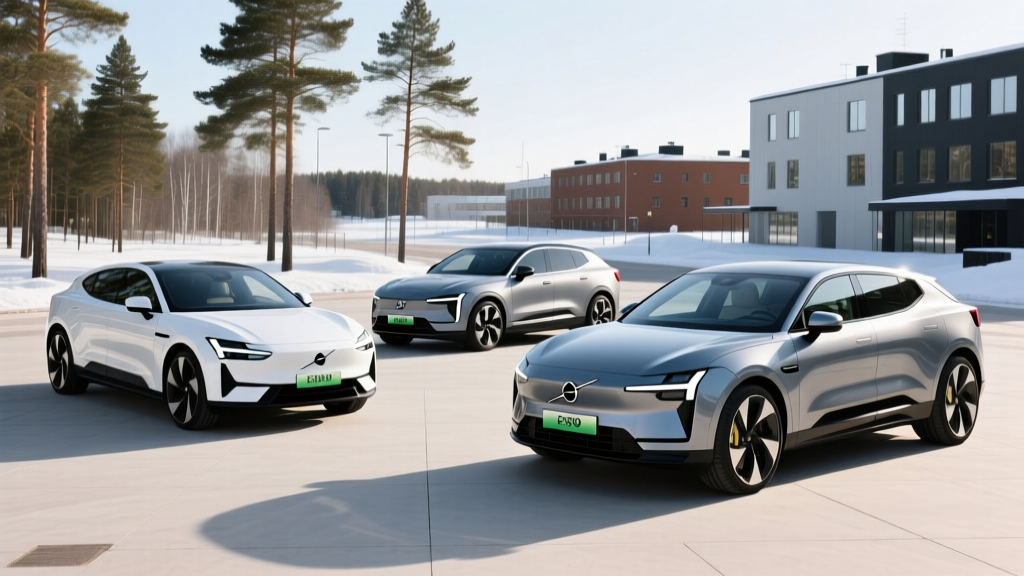
Sweden's "national electric vehicle" identity centers on two homegrown brands — Volvo and Polestar — both headquartered in Gothenburg and backed by Geely. Sweden mandates all new car sales be zero-emission by 2030, and as of 2025–2026, over 55% of new car registrations in Sweden are fully electric. For US buyers, this means Volvo and Polestar models sold stateside (like the EX30, EX90, Polestar 2, and Polestar 4) are engineered with Scandinavian EV-first platforms, cold-weather battery management, and heat-pump standard equipment — giving them a real-world edge in northern US climates.
Why Sweden's EV Policy Matters for American Buyers
Sweden doesn't just encourage electric vehicles — it has legislated the end of internal-combustion new-car sales by 2030, five years ahead of the EU's 2035 mandate. The Swedish Transport Administration (Trafikverket) reports that BEVs and PHEVs combined surpassed 70% of new registrations in late 2024, with pure BEVs hovering above 55%. This domestic pressure forces Volvo and Polestar to iterate rapidly on battery chemistry, thermal management, and charging architecture — technology that carries over to every EX30 sold in California or EX90 delivered in Minnesota.
For US shoppers, the practical takeaway is that Swedish-engineered EVs are validated in sub-zero Scandinavian winters before they ever reach American showrooms. Cold-weather range loss — typically 20–30% for most EVs at 20°F — is mitigated by standard heat pumps, battery preconditioning routines, and insulated pack designs that Volvo and Polestar have refined over a decade of northern-climate testing.
2026 Volvo EV Lineup: Specs, Range, and Pricing
Volvo has committed to being fully electric by 2030. Here's where the US-relevant lineup stands for the 2026 model year:
| Model | Battery (kWh usable) | EPA Range | Peak DC Charge (kW) | 10–80% Time | 0–60 mph | Base MSRP |
|---|---|---|---|---|---|---|
| EX30 Single Motor | 69 (NMC) | 265 mi | 153 kW | ~26 min | 5.1 sec | $36,145 |
| EX30 Twin Motor Performance | 69 (NMC) | 232 mi | 153 kW | ~26 min | 3.4 sec | $46,195 |
| EX90 Twin Motor | 111 (NMC) | 300 mi | 250 kW | ~20 min | 5.7 sec | $79,995 |
| EX90 Twin Motor Performance | 111 (NMC) | 285 mi | 250 kW | ~20 min | 4.7 sec | $86,395 |
| EC40 (C40 Recharge successor) | 82 (NMC) | 293 mi | 200 kW | ~24 min | 4.5 sec | $55,095 |
Real-world range reality: The EX90's 300-mile EPA sticker assumes mixed driving at moderate temperatures. Expect 240–260 miles on a 75°F highway trip at 70 mph, and 200–220 miles in 20°F winter conditions — even with the standard heat pump. The EX30 Single Motor delivers roughly 215–230 real-world highway miles in fair weather.
2026 Polestar Lineup: Performance-First Swedish EVs
Polestar, Volvo's electrified performance spin-off, operates from Gothenburg and targets driving enthusiasts who want Scandinavian design with sharper dynamics.
| Model | Battery (kWh usable) | EPA Range | Peak DC Charge (kW) | 10–80% Time | 0–60 mph | Base MSRP |
|---|---|---|---|---|---|---|
| Polestar 2 Long Range SM | 82 (NMC) | 320 mi | 200 kW | ~24 min | 5.9 sec | $49,900 |
| Polestar 2 Long Range DM | 82 (NMC) | 295 mi | 200 kW | ~24 min | 4.1 sec | $54,900 |
| Polestar 3 LRDM | 111 (NMC) | 315 mi | 250 kW | ~22 min | 4.7 sec | $69,900 |
| Polestar 4 LRDM | 102 (NMC) | 300 mi | 200 kW | ~24 min | 3.8 sec | $61,900 |
The Polestar 4 is the brand's volume play — a coupe-style SUV that undercuts the Porsche Macan Electric on price while matching its 0–60 time. The Polestar 3, built on the same SPA2 platform as the Volvo EX90, trades some cargo volume for a lower roofline and sport-tuned air suspension.
Cost Breakdown: Swedish EVs vs. Comparable Gas SUVs
The purchase-price premium for a Volvo EX90 over a gas Volvo XC90 is substantial — roughly $20,000 at base trim. But ownership economics shift when you factor in fuel, maintenance, and available incentives.
| Cost Category | EX90 Twin Motor ($79,995) | XC90 B6 AWD ($58,600) |
|---|---|---|
| Purchase Price (MSRP) | $79,995 | $58,600 |
| Federal Tax Credit (§30D)* | –$0 (exceeds MSRP cap) | $0 |
| Fuel/Energy (5 yr, 75k mi) | $4,875 (home L2 @ $0.13/kWh) | $11,250 ($3.50/gal, 22 mpg) |
| Maintenance (5 yr) | $1,200 (cabin filter, wipers, fluid top-offs) | $3,800 (oil, brakes, transmission) |
| Insurance (5 yr avg.) | $12,500 | $9,500 |
| Estimated Depreciation | $32,000 (40%) | $26,400 (45%) |
| 5-Year Total | ~$106,570 | ~$83,150 |
*The EX90 exceeds the §30D SUV MSRP cap of $80,000 at most trims; only the base Twin Motor at $79,995 could theoretically qualify, and only if the buyer meets income caps ($300k MFJ) and battery-sourcing requirements. Check IRS §30D guidelines for current eligibility.
The smaller EX30 tells a different story. At $36,145, it may qualify for the full $7,500 §30D credit (as a vehicle under the $55,000 sedan/crossover cap), bringing the effective price to ~$28,645 — competitive with a well-equipped Honda CR-V Hybrid. Fuel savings alone add ~$4,500 over five years versus a 28-mpg gas compact SUV.
Cold-Weather Advantage: What Swedish Engineering Actually Delivers
Every Volvo and Polestar EV sold in the US includes a standard heat pump — a $1,000+ option on many competing EVs. Heat pumps scavenge ambient and waste heat to warm the cabin, reducing winter range loss by roughly 10–15% compared to resistive heating. Volvo's battery preconditioning system activates automatically when a DC fast charger is set as your navigation destination, warming the NMC cells to optimal charge-acceptance temperature (roughly 77–95°F internally).
In real-world cold testing at 15°F, the EX30 retained approximately 75% of its EPA range with the heat pump active and cabin set to 68°F — better than the 65–70% retention typical of EVs without heat pumps. The EX90's larger 111-kWh battery provides a bigger absolute buffer: even at 70% retention, you still have ~210 usable miles.
Common Misconceptions About Swedish EVs
| Myth | Fact |
|---|---|
| "Volvo EVs are just rebadged Chinese cars" | Volvo/Polestar are engineered in Gothenburg, Sweden. Manufacturing occurs in China (EX30, Polestar 2) and the US (EX90 at Ridgeville, SC), but platforms, software, and thermal systems are Swedish-developed. |
| "Swedish EVs can't get the US tax credit" | The EX30 at $36,145 MSRP falls under the $55,000 cap and may qualify if battery-sourcing and buyer-income requirements are met. The EX90 exceeds the $80,000 SUV cap at most trims. Check fueleconomy.gov for per-model eligibility. |
| "Polestar is going out of business" | Polestar restructured in 2024–2025 but secured continued Geely/Volvo funding. The Polestar 3 and 4 are in production, and US service is handled through Volvo's dealer network. |
| "Cold weather destroys Swedish EV range" | Swedish EVs are designed for –20°C operation. Standard heat pumps and aggressive preconditioning reduce winter loss to ~25–30%, versus 30–40% for non-heat-pump EVs. |
Charging Infrastructure: What Swedish EV Owners Need to Know
Volvo and Polestar both use the CCS1 connector on current US models, with NACS adapter compatibility confirmed for Tesla Supercharger access. Volvo has committed to NACS-native ports on future models starting with the next-generation EX60.
| Level | Power | Miles Added/Hour | Use Case |
|---|---|---|---|
| Level 1 (120V) | 1.4 kW | 3–5 mi/hr | Overnight trickle; emergency |
| Level 2 (240V, 48A) | 11.5 kW | 30–40 mi/hr | Home daily charging; full overnight |
| DC Fast (EX30) | 153 kW peak | ~150 mi in 15 min | Road trips; tapers above 80% |
| DC Fast (EX90) | 250 kW peak | ~200 mi in 15 min | Fastest in lineup; requires 350-kW station |
Home Level 2 installation for a 48-amp charger typically costs $800–$2,500 total (charger hardware $400–$700, electrician labor $400–$1,500, permit $50–$200), assuming your panel has spare 60-amp breaker capacity. A 200-amp panel upgrade adds $1,500–$3,500. For Swedish EV owners in cold climates, a wall-mounted Level 2 with a cord holster and NEMA 4 rating (outdoor-rated) is strongly recommended.
Decision Framework: Which Swedish EV Fits Your Situation?
If-This-Then-That Buyer's Guide
- If you need a compact daily driver under $40K → Volvo EX30 Single Motor. Best value after potential §30D credit; 265-mile range covers 95% of commutes.
- If you want performance under $55K → Polestar 2 Long Range Single Motor. 320-mile EPA range, 200-kW charging, and standard Pilot Pack ADAS.
- If you need three rows and 300-mile range → Volvo EX90 Twin Motor. 111-kWh battery, 250-kW DC charging, and lidar-based safety suite standard.
- If you want coupe-SUV styling with sub-4-second 0–60 → Polestar 4 Long Range Dual Motor. 300-mile range, 3.8-second sprint, and no rear window (camera-based digital mirror).
- If you live in a charging desert or lack home charging → Consider a Volvo PHEV (XC60 Recharge, S60 Recharge) as a bridge. 35–40 miles electric-only, then gas for longer trips. Reassess when home charging becomes feasible.
Frequently Asked Questions
Are Volvo and Polestar EVs made in Sweden?
Engineering and design happen in Gothenburg, Sweden. Manufacturing for US-market models varies: the EX90 is built in Ridgeville, South Carolina; the EX30 and Polestar 2 are built in China; the Polestar 3 and 4 are built in China with planned US production. Country of origin affects §30D tax-credit battery-sourcing rules — check the VIN-specific eligibility on fueleconomy.gov before purchasing.
How does a Swedish EV compare to a Tesla or Hyundai?
Volvo and Polestar prioritize build quality, cabin materials, and cold-weather capability over maximum range-per-dollar. A Tesla Model Y Long Range offers 320 EPA miles at ~$44,990 — more range than the EX30 for similar money. A Hyundai Ioniq 5 charges faster (240 kW peak, 10–80% in 18 minutes). But Volvo/Polestar win on interior refinement, standard heat pumps, and lidar availability (EX90, Polestar 3). Your priority — value, speed, or luxury — determines the winner.
What's the battery warranty on Swedish EVs?
Both Volvo and Polestar provide an 8-year/100,000-mile battery warranty covering defects and capacity loss below 70% of original capacity. This is industry-standard and matches Tesla, Hyundai, and Ford. NMC chemistry in these vehicles typically degrades 8–12% over 100,000 miles based on fleet data from European markets — well within the warranty threshold.
Is Polestar still a viable brand to buy from in 2026?
Polestar underwent financial restructuring in 2024–2025, but parent company Geely and Volvo Cars reaffirmed funding and production commitments. US sales and service continue through Volvo's dealer network, meaning parts and warranty service remain accessible. The risk is lower resale value compared to mainstream brands — factor in potentially higher depreciation (est. 45–50% over 5 years vs. 35–40% for Volvo-badged models).
Do Swedish EVs qualify for the $7,500 federal tax credit?
It depends on the model, your income, and battery-sourcing compliance. The EX30 (under $55K cap) has the best chance. The EX90 (over $80K SUV cap at most trims) generally does not qualify. Income limits apply: $300,000 for married filing jointly, $225,000 head of household, $150,000 for others. Battery-sourcing requirements for critical minerals and components add complexity — consult a tax professional and verify on irs.gov before relying on the credit in your budget.