The Short Answer on Suzuki EVs in the US
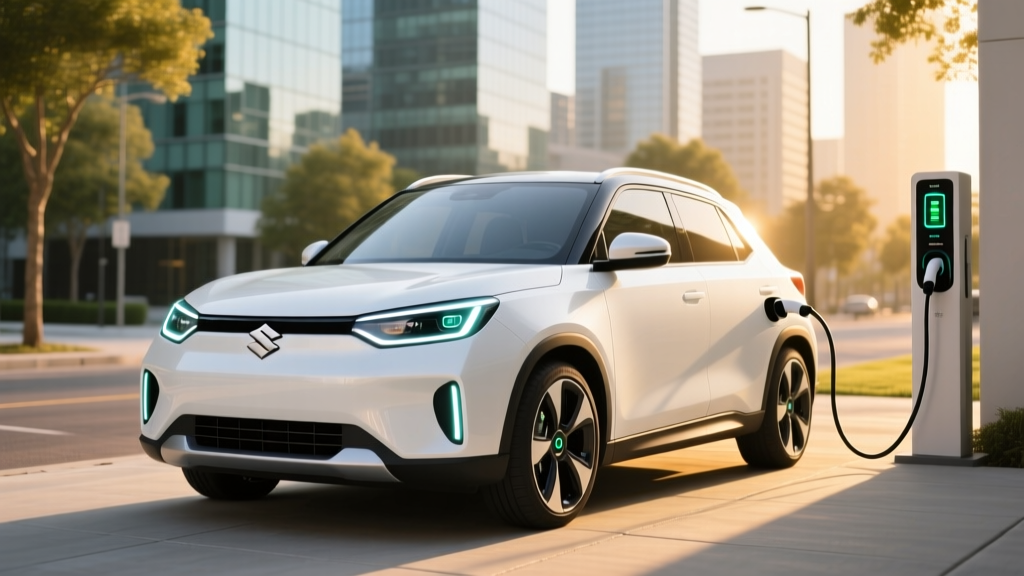
As of 2026, Suzuki does not sell vehicles in the United States — having exited the US auto market in 2012. The brand's first global electric vehicle, the Suzuki e Vitara (also badged as the Toyota Urban Cruiser in some markets), launched in India and Europe in 2025 with an estimated EPA-equivalent range of up to 250 miles and a starting price around $30,000 USD. However, there is no confirmed timeline for Suzuki re-entering the US market or selling the e Vitara stateside. American EV shoppers looking for a similar subcompact electric crossover should consider the Hyundai Kona Electric (261 mi EPA, ~$32,975), the Chevrolet Equinox EV (319 mi EPA, ~$33,000), or the Kia Niro EV (239 mi EPA, ~$39,600) as available alternatives.
Suzuki e Vitara: What We Know About the EV
The Suzuki e Vitara is the brand's first dedicated battery-electric vehicle, built on a new HEARTECT-e platform developed in partnership with Toyota. It was officially unveiled in late 2024 and began production in India at Suzuki's Gujarat plant in early 2025, with European and Indian market deliveries following shortly after.
For global-market buyers, the e Vitara represents Suzuki's attempt to bring its reputation for affordable, compact, rugged vehicles into the electric era. Here's what the specifications look like based on announced and early-market data:
| Specification | e Vitara (Standard Range) | e Vitara (Long Range) |
|---|---|---|
| Battery Capacity | 49 kWh (LFP) | 61 kWh (LFP) |
| WLTP Range | ~400 km (249 mi) | ~500 km (311 mi) |
| Estimated EPA Range | ~210-225 mi | ~250-265 mi |
| Motor Output | 144 hp / 189 Nm | 174 hp / 189 Nm |
| 0-60 mph (est.) | ~8.5 sec | ~7.8 sec |
| DC Fast Charge Peak | ~80 kW | ~100 kW |
| 10-80% DC Charge (est.) | ~35 min | ~32 min |
| Level 2 AC Charge | 11 kW (~7 hr) | 11 kW (~8.5 hr) |
| Drivetrain | FWD | FWD / AWD available |
| Starting Price (global) | ~$28,000 USD | ~$33,000 USD |
Important caveats: These WLTP range figures are measured on the European cycle, which tends to run 10-15% higher than the US EPA cycle. Real-world highway driving at 70 mph in moderate temperatures will likely yield 180-200 miles for the standard-range model and 215-240 miles for the long-range variant. In cold weather (below 32°F), expect an additional 15-25% reduction due to cabin heating demands and reduced battery efficiency — a reality for all EVs, not unique to Suzuki.
Real-World Range Reality Check
EPA-equivalent estimate: ~250 mi (Long Range)
Expect in practice: ~215-240 mi highway / ~185-210 mi in cold weather (under 32°F)
Why the gap? EPA testing includes significant city/low-speed driving where regenerative braking recovers energy. Sustained highway speeds and cold temperatures reduce efficiency measurably.
Why Suzuki Left the US — and Why an EV Return Is Complicated
Suzuki's 2012 US market exit wasn't about product quality — the SX4 and Grand Vitara were competent vehicles. The problem was scale: Suzuki's US sales peaked at around 100,000 units annually, far too small to justify the marketing, dealer network, and regulatory compliance costs required in the American market. Unlike Subaru or Mazda, Suzuki couldn't achieve the volume needed to sustain profitability stateside.
Re-entering the US in 2026 with an EV would require Suzuki to:
- Rebuild a dealer network from scratch or partner with an existing franchise group — a multi-year, multi-billion-dollar effort
- Homologate the e Vitara for US safety standards (FMVSS), which differ from European and Indian regulations in crash-test requirements, lighting standards, and bumper specifications
- Navigate §30D federal tax credit eligibility, which in 2026 requires battery components manufactured or assembled in North America and critical minerals sourced from US free-trade partners — a supply chain the e Vitara's India-built LFP cells almost certainly don't meet
- Compete against entrenched subcompact EVs like the Equinox EV, Kona Electric, and Volvo EX30 that already have US service infrastructure and brand recognition
The Toyota partnership does offer a potential path: Toyota sells a rebadged version of the e Vitara as the Urban Cruiser in some markets, and Toyota has an established US dealer network. But Toyota already offers the bZ4X and has the upcoming bZ Compact SUV in its pipeline, making a badge-engineered Suzuki redundant for American showrooms.
How the e Vitara Compares to US-Available Subcompact EVs
If you're considering what the e Vitara offers and want a comparable vehicle you can actually buy in the US today, here's how it stacks up against the segment leaders:
| Vehicle | EPA Range | Battery | Peak DC Charge | 10-80% Time | Starting MSRP | Federal Tax Credit |
|---|---|---|---|---|---|---|
| Suzuki e Vitara LR (not US avail.) | ~250 mi (est. EPA) | 61 kWh LFP | ~100 kW | ~32 min | ~$33,000 | Not eligible (not sold in US) |
| Hyundai Kona Electric | 261 mi | 64.8 kWh NMC | 100 kW | ~43 min | $32,975 | Up to $7,500 (verify sourcing) |
| Chevrolet Equinox EV | 319 mi | 85 kWh NMC | 150 kW | ~20 min | $33,000 | Up to $7,500 (verify sourcing) |
| Kia Niro EV | 239 mi | 64.8 kWh NMC | 85 kW | ~44 min | $39,600 | Not eligible (Korea-built) |
| Volvo EX30 | 265 mi | 69 kWh NMC | 153 kW | ~26 min | $36,950 | Not eligible (China-built) |
The takeaway: On paper, the e Vitara Long Range competes favorably with the Kona Electric and Niro EV on range and would undercut most competitors on price. But its ~100 kW peak DC charging speed lags behind the Equinox EV's 150 kW and the EX30's 153 kW — a meaningful difference on road trips where 10-80% charging time matters. The Kona Electric and Equinox EV also benefit from potential §30D tax credit eligibility, which can bring their effective prices down to the $25,000-$26,000 range for qualifying buyers.
EV Ownership Costs: What First-Time Buyers Should Budget
Whether you're waiting on a hypothetical Suzuki US return or buying a comparable subcompact EV today, the ownership economics follow a consistent pattern. Here's a 5-year cost breakdown for a typical subcompact EV priced around $33,000, compared to a similarly equipped gas-powered crossover getting 28 MPG combined:
| Cost Category (5 Years) | Subcompact EV (~$33K) | Gas Crossover (28 MPG) |
|---|---|---|
| Purchase Price (after credit) | $25,500 (with $7,500 §30D) | $30,000 |
| Fuel / Electricity | $3,200 (home charging @ $0.14/kWh) | $8,900 (@ $3.40/gal) |
| Maintenance | $1,500 (no oil, fewer brakes) | $3,800 (oil, filters, brakes) |
| Insurance (avg.) | $7,500 (EV premium ~15-20%) | $6,200 |
| Depreciation (est.) | $12,000 | $11,500 |
| Total 5-Year Cost | ~$49,700 | ~$60,400 |
Key assumptions: 12,000 miles/year, electricity at national average of $0.14/kWh, gas at $3.40/gallon, and the EV qualifies for the full §30D credit at point of sale. Your actual numbers depend heavily on your local electricity rate, whether you can charge at home (where rates are lowest), and your state's incentive programs. According to fueleconomy.gov, the average EV driver saves $4,700-$9,200 on fuel over the vehicle's lifetime compared to a comparable gas car.
Insurance reality check: EV insurance premiums run 15-25% higher than equivalent gas vehicles, driven by higher repair costs for battery-adjacent damage and specialized technician requirements. Get quotes before purchasing — a $33,000 EV may cost $150-$225/month to insure depending on your profile and location.
Common Suzuki EV Misconceptions — Fact vs. Fiction
| Myth | Fact |
|---|---|
| "I can import a Suzuki e Vitara to the US myself." | Importing a non-homologated vehicle for road use requires meeting all FMVSS standards, a process costing $50,000+ and requiring manufacturer cooperation. It's not practical for individual buyers. |
| "Suzuki's partnership with Toyota means the e Vitara will be sold at Toyota US dealers." | Toyota sells the Urban Cruiser badge in Europe and emerging markets only. Toyota's US EV lineup uses its own bZ platform vehicles. |
| "LFP batteries in the e Vitara mean shorter range and worse performance." | LFP (lithium iron phosphate) chemistry trades slightly lower energy density for longer cycle life, better thermal stability, and lower cost. You can charge LFP to 100% daily without degradation concerns — a real ownership advantage over NMC. |
| "The e Vitara's 250-mile range isn't enough for real driving." | The average American drives 37 miles per day (FHWA data). A 250-mile EV covers nearly a full week of commuting before needing a charge. Road trips require planning but are manageable with DC fast charging. |
| "If Suzuki returns, the e Vitara will qualify for the $7,500 tax credit." | Under current §30D rules, the vehicle must be assembled in North America with battery sourcing from US free-trade partners. An India-built Suzuki with Chinese-sourced LFP cells would almost certainly not qualify. Check IRS guidelines for current requirements. |
Decision Framework: What Should You Actually Buy?
If you want a Suzuki e Vitara specifically:
You're likely outside the US, or you're a Suzuki enthusiast willing to wait indefinitely. If you're in Europe, India, or Japan, the e Vitara is available now and offers strong value. If you're in the US, there is no actionable path to owning one — move to the alternatives below.
If you want an affordable subcompact EV in the US today:
- Choose the Chevrolet Equinox EV if you want maximum range (319 mi EPA), fast DC charging (150 kW, 10-80% in ~20 min), and potential §30D eligibility. It's the segment's best value on paper.
- Choose the Hyundai Kona Electric if you want a proven platform with strong dealer support, competitive range (261 mi), and a well-designed interior. Charging speed is slower (~43 min 10-80%), but the overall package is mature.
- Choose the Volvo EX30 if you prioritize premium interior quality and fast charging (153 kW) and don't mind that it won't qualify for the federal credit due to Chinese assembly.
- Choose a PHEV like the Toyota RAV4 Prime if you lack reliable home charging or frequently drive in extreme cold. The 42-mile electric-only range covers most commutes, and the gas engine eliminates range anxiety on road trips.
If you're a first-time EV buyer:
- Confirm home charging access first. A Level 2 home charger (240V, 32-48A) is the single biggest quality-of-life factor in EV ownership. Budget $500-$2,000 for professional installation depending on your electrical panel capacity and run distance. Without home charging, public charging costs 2-3x more and adds significant friction.
- Calculate your actual daily mileage. Most drivers need far less range than they think they do. A 250-mile EV is sufficient for 90%+ of American driving patterns if you can charge overnight at home.
- Verify tax credit eligibility before committing. The §30D credit has income caps ($150K single / $300K joint), MSRP caps ($55K for cars, $80K for SUVs/trucks), and strict battery sourcing requirements. Use the point-of-sale transfer option at a participating dealer to apply the credit as a down payment reduction. Consult a tax professional for your specific situation.
Frequently Asked Questions
Will Suzuki ever sell the e Vitara in the United States?
There is no confirmed plan or timeline for Suzuki to re-enter the US market. While the Toyota partnership provides a theoretical pathway through badge-engineering, Toyota's own US EV strategy makes this unlikely in the near term. Suzuki's strengths remain in India, Southeast Asia, and Europe, where the e Vitara is already on sale.
What is the Suzuki e Vitara's battery chemistry, and why does it matter?
The e Vitara uses LFP (lithium iron phosphate) battery cells. LFP offers a longer cycle life (typically 3,000+ full cycles before significant degradation), better thermal safety (less prone to thermal runaway), and lower cost per kWh compared to NMC (nickel manganese cobalt) chemistry. The trade-off is lower energy density, meaning a larger, heavier pack for the same range. For daily use, LFP's ability to charge to 100% regularly without accelerated degradation is a genuine ownership advantage.
How does the e Vitara's charging speed compare to competitors?
At roughly 100 kW peak DC fast charging, the e Vitara Long Range would add approximately 150 miles in about 30 minutes under ideal conditions. This is adequate but not class-leading — the Equinox EV at 150 kW adds the same range in roughly 20 minutes. Keep in mind that peak charge rate is not sustained: all EVs taper charging speed significantly above 80% State of Charge to protect battery health. The 10-80% time is a more useful metric than peak kW alone.
Is a subcompact EV practical for a family?
It depends on your family size and cargo needs. Subcompact EVs like the e Vitara, Kona Electric, and Equinox EV offer around 23-28 cubic feet of cargo space behind the rear seats — sufficient for two adults and a child with stroller and groceries, but tight for larger families or frequent road trips. If you regularly carry four passengers and cargo, consider a compact SUV EV like the Hyundai Ioniq 5 (303 mi, ~$42,450) or the Ford Mustang Mach-E (250-320 mi, ~$42,995).
Can I charge an EV without a garage or driveway?
Yes, but it's less convenient and more expensive. Options include workplace charging, public Level 2 chargers (often $0.25-$0.49/kWh), and DC fast charging stations ($0.30-$0.60/kWh). Some cities are installing curbside Level 2 chargers in residential areas. However, relying exclusively on public charging typically doubles or triples your per-mile energy cost compared to home charging and requires time planning. If you lack home charging access, a PHEV may be a more practical electrified option.
Note: Suzuki e Vitara specifications in this article are based on global-market announced data and early production figures as of early 2026. US EPA testing has not been conducted on this vehicle. Prices, range estimates, and tax credit rules are subject to change. Always verify current IRS §30D eligibility before purchasing.