The Short Answer: Suzuki EVs and the US Market
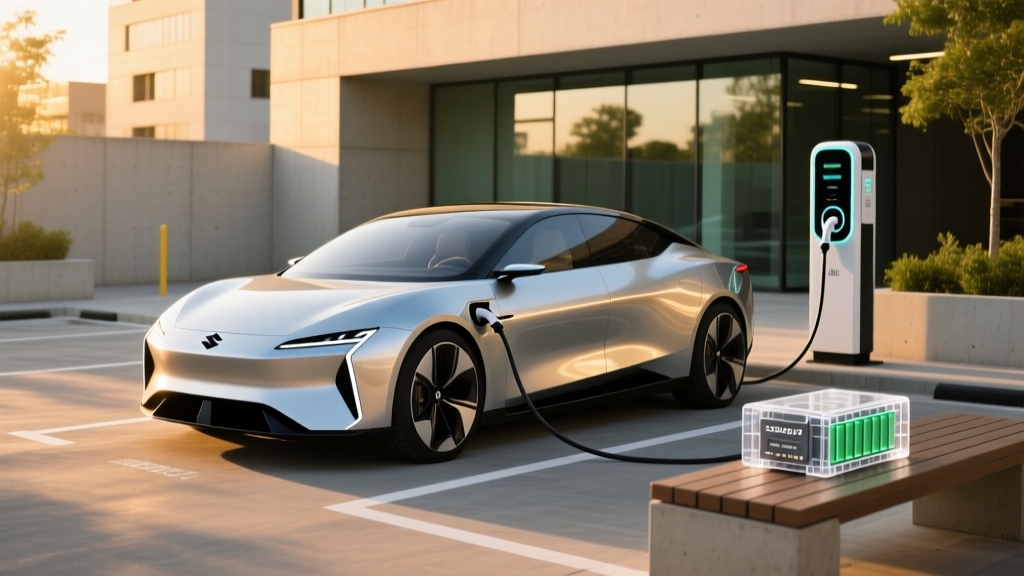
As of 2026, Suzuki does not sell any electric car in the United States. Suzuki withdrew from the US automotive market in 2012 and has not returned. Globally, Suzuki has launched the e Vitara (also badged as the Toyota Urban SUV in some markets), a compact electric crossover with an estimated 250 miles of WLTP range and a ~50 kWh battery. However, this vehicle is not available through any US dealership, carries no EPA certification, and qualifies for no federal incentives. If you are a US-based buyer searching for a Suzuki electric car, your practical options are either importing one (costly and legally complex) or choosing from comparable compact EVs that are actually sold and serviced stateside.
Suzuki's Global EV Lineup: The e Vitara and Beyond
Suzuki's electric strategy has been deliberate and partnership-driven. The brand's first ground-up battery-electric vehicle is the e Vitara, unveiled in late 2024 and rolling into select global markets (India, Europe, Japan) through 2025 and 2026. Developed in collaboration with Toyota and manufactured at Suzuki's Gujarat, India plant, the e Vitara sits on the new HEARTECT-e platform.
| Specification | Standard Range | Long Range / AWD |
|---|---|---|
| Battery Capacity (usable) | ~49 kWh (LFP) | ~61 kWh (LFP) |
| WLTP Range | ~250 mi (400 km) | ~310 mi (500 km) |
| EPA Range (estimated if US-certified) | ~210–225 mi | ~265–280 mi |
| Motor Output | 142 hp / 131 lb-ft | 181 hp (dual motor AWD) |
| DC Fast Charge (peak) | ~100 kW | ~120 kW |
| 10–80% DC Charge Time (est.) | ~32 min | ~30 min |
| Level 2 AC Charge Rate | 11 kW | 11 kW |
| 0–60 mph (est.) | ~8.5 sec | ~7.2 sec |
A few observations from these figures: the e Vitara uses LFP (lithium iron phosphate) battery chemistry, which trades some energy density for longer cycle life, lower degradation, and no cobalt or nickel. That makes it durable and cost-effective but limits range in a compact package. The DC fast-charging speeds are modest by 2026 standards — competitors like the Hyundai Kona Electric peak at 100 kW while the Kia EV6 can sustain 240 kW. For a subcompact crossover aimed at price-sensitive markets, these specs are sensible, but they wouldn't stand out in the competitive US segment.
Suzuki has also announced plans for additional EVs through 2030, including a smaller city car and a larger SUV, all leveraging the Toyota partnership. None of these have been confirmed for North America.
Why Suzuki Isn't Selling EVs in the United States
Suzuki's 2012 US exit was driven by low sales volume, an unfavorable yen-dollar exchange rate, and a limited model lineup that couldn't justify the regulatory and distribution costs of the American market. Re-entering would require:
- EPA certification and emissions compliance for every model sold, a multi-year, multi-million-dollar process
- NHTSA safety homologation, including crash testing to US-specific standards (which differ from Euro NCAP and Global NCAP)
- A dealer network — Suzuki's former US dealers have long since converted to other brands or closed
- Parts and service infrastructure for warranty claims and collision repair
- §30D tax credit qualification, which requires battery components and critical minerals to meet US sourcing thresholds — a challenge for vehicles built in India with LFP cells likely sourced from China
Given these barriers and Suzuki's strategic focus on India, Southeast Asia, and Europe, a US return — electric or otherwise — appears unlikely before 2030 at the earliest.
What US Buyers Actually Get: Comparable Compact EVs You Can Buy Today
If the e Vitara's concept appeals to you — a compact, affordable, practical electric crossover — several vehicles already sold in the US fill that role with full EPA certification, warranty support, dealer service, and potential tax-credit eligibility.
| Model | EPA Range | Battery | Peak DC kW | 10–80% | Base MSRP | Fed. Credit Eligible? |
|---|---|---|---|---|---|---|
| Hyundai Kona Electric | 261 mi | 64.8 kWh (NMC) | 100 kW | ~41 min | $32,975 | Yes (up to $7,500)* |
| Kia EV6 (Standard Range) | 232 mi | 58 kWh (NMC) | 180 kW | ~18 min | $42,900 | Yes (up to $7,500)* |
| Nissan Leaf (60 kWh) | 212 mi | 60 kWh (NMC) | 100 kW (CCS) | ~40 min | $36,190 | Yes (up to $7,500)* |
| Chevrolet Equinox EV | 319 mi | 85 kWh (NMC) | 150 kW | ~24 min | $33,600 | Yes (up to $7,500)* |
| Volvo EX30 | 265 mi | 69 kWh (NMC) | 153 kW | ~26 min | $36,950 | No (built in China) |
*Federal §30D credit eligibility depends on MSRP caps ($80,000 SUVs / $55,000 sedans), buyer income limits ($150K single / $300K joint), and battery-component/critical-mineral sourcing requirements. Verify current-year rules at IRS.gov before purchasing. Point-of-sale transfer is available through registered dealers.
Estimated 5-Year Ownership Cost: Kona Electric vs. Comparable Gas Crossover
| Cost Category | Hyundai Kona Electric (SEL) | Hyundai Kona Gas (SEL AWD) |
|---|---|---|
| Purchase Price (MSRP) | $32,975 | $28,500 |
| Federal Tax Credit (est.) | –$7,500 | $0 |
| Effective Purchase Price | $25,475 | $28,500 |
| Fuel/Energy (5 yr / 75,000 mi) | $3,400 (home charging avg.) | $8,100 (28 MPG @ $3.60/gal) |
| Maintenance (5 yr) | $1,200 | $3,800 |
| Insurance (5 yr avg.) | $7,500 | $6,200 |
| Total 5-Year Cost | $37,575 | $46,600 |
Assumptions: 15,000 miles/year, $0.13/kWh national average for home charging, 85% home / 15% DC fast charging mix. Insurance estimates are averages — actual premiums vary by state, age, and driving record. Source: fueleconomy.gov for efficiency data.
The numbers show that even with a higher sticker price, the Kona Electric's effective cost after the tax credit is lower than its gas sibling, and the fuel and maintenance savings widen that gap over five years. This is the economic case for buying an EV that is actually sold and supported in the US, rather than attempting to import a Suzuki e Vitara.
Real-World Ownership Considerations for First-Time EV Buyers
Whether you were hoping for a Suzuki EV or are pivoting to an alternative, these ownership realities apply to any first electric car purchase:
Home Charging Access Is the Biggest Variable
Charging at home on a Level 2 (240V) circuit is where EVs deliver their greatest convenience and cost savings. A typical Level 2 home charger delivers 7–11 kW, adding roughly 25–40 miles of range per hour — enough to fully replenish any compact EV overnight. Installation costs range from $500–$1,500 if your electrical panel has capacity, or $2,000–$4,500 if a panel upgrade (100A to 200A) is needed. If you live in an apartment or lack off-street parking, you'll depend on public charging, which costs 2–4× more per mile and adds time to your routine.
Cold Weather Reduces Range by 20–35%
Lithium-ion batteries lose efficiency in cold temperatures, and cabin heating draws significant energy. In sustained sub-freezing conditions, expect an EPA-rated 261-mile EV to deliver roughly 170–210 real-world miles. Vehicles with a heat pump (standard on the Kona Electric, optional on some competitors) reduce this penalty to ~15–25%. If you live in the northern US, plan your daily range budget around winter worst-case, not the EPA sticker.
DC Fast Charging Is for Road Trips, Not Daily Use
A typical compact EV peaks at 100–180 kW on DC fast chargers, but that peak is sustained only between roughly 10–50% state of charge. Above 80%, charging slows dramatically to protect the battery — the final 20% can take as long as the first 80%. Plan road-trip stops around 10–80% charges (typically 20–40 minutes depending on the vehicle), and rely on Level 2 home charging for daily needs.
Battery Degradation Is Slower Than Most Buyers Fear
Modern EV batteries lose roughly 1–2% of capacity per year under normal use. Most manufacturers warranty the battery for 8 years / 100,000 miles against dropping below 70% of original capacity (NHTSA mandates minimum warranty standards). In practice, many owners report 90%+ state of health after 5 years. LFP batteries, like those in the e Vitara, tend to degrade even more slowly but are harder to source replacement cells for in the US.
Common Misconceptions About Importing a Suzuki EV
| Myth | Fact |
|---|---|
| "I can just import an e Vitara from Europe or India." | US import laws require EPA and NHTSA compliance. Vehicles not originally manufactured for the US market generally cannot be imported unless they are 25+ years old or brought in under the limited "Show or Display" exemption — neither applies to a new EV. |
| "Suzuki is coming back to the US soon." | Suzuki has made no official announcement about a US return. The brand's public strategy documents focus on India, ASEAN, Europe, and Japan through 2030. |
| "The e Vitara would qualify for the $7,500 tax credit." | Even if it were sold in the US, the e Vitara's India-built battery pack with likely Chinese-sourced LFP cells would face significant hurdles meeting §30D critical-mineral and battery-component sourcing requirements for the full credit. |
| "An imported EV would be cheaper than US alternatives." | Between shipping (~$3,000–$5,000), import duties (2.5% for cars, potentially more under tariff adjustments), DOT/EPA compliance modifications, and the lack of any federal or state incentives, an imported e Vitara would likely cost $45,000+ with no warranty support. |
| "Suzuki's hybrid models are available in the US." | Suzuki's mild-hybrid and strong-hybrid models (Swift, Fronx, Grand Vitara) are sold in India, Europe, and Japan — not the United States. |
Decision Framework: What Should You Actually Buy?
If You Were Searching for a Suzuki Electric Car, Here's Your Path
IF you want an affordable compact EV with good range and US support → Test-drive the Hyundai Kona Electric ($32,975, 261 mi EPA) or Chevrolet Equinox EV ($33,600, 319 mi EPA). Both qualify for the federal credit (verify eligibility), have nationwide dealer networks, and offer competitive charging speeds.
IF you specifically want Suzuki's rugged, compact SUV character → The closest analog in the US EV market is the Subaru Solterra (227 mi EPA, $38,495), which offers standard AWD and 8.3 inches of ground clearance. It's built on the same Toyota e-TNGA platform Suzuki leverages for the e Vitara, making it a spiritual cousin.
IF you're willing to wait for Suzuki → There is no announced timeline for Suzuki's US return. Monitor Suzuki's global press releases, but don't delay an EV purchase in expectation. The 2026–2027 model years bring strong new entries from Hyundai, Kia, GM, and Toyota that won't leave you without service support.
IF you live outside the US → The e Vitara may be available in your market. Check local Suzuki dealerships in Europe, India, or Japan for pricing and delivery timelines. Note that WLTP range figures run 10–15% higher than EPA equivalents — plan accordingly.
Frequently Asked Questions
Does Suzuki make any electric vehicles?
Yes. The Suzuki e Vitara is the brand's first ground-up EV, launched globally in 2025–2026 with LFP battery options (~49–61 kWh), up to ~310 miles of WLTP range, and DC fast charging up to ~120 kW. Suzuki also sells mild-hybrid and strong-hybrid versions of models like the Swift, Fronx, and Grand Vitara in select markets.
Can I buy a Suzuki e Vitara in the United States?
No. Suzuki does not sell any vehicles in the US market and has not since 2012. The e Vitara is not EPA-certified or NHTSA-homologated for US sale, and importing one privately is not legally practical for a new vehicle.
What is the closest US-available alternative to a Suzuki electric car?
For size, price, and practicality, the Hyundai Kona Electric ($32,975, 261 mi EPA) and Chevrolet Equinox EV ($33,600, 319 mi EPA) are the closest matches. For AWD capability similar to the e Vitara's dual-motor variant, consider the Subaru Solterra ($38,495, 227 mi EPA) or Hyundai Ioniq 5 AWD ($45,500, 290 mi EPA).
Will Suzuki return to the US market?
There is no official announcement or timeline for Suzuki's return to the US. The company's strategic focus remains on India (its largest market), Japan, Europe, and ASEAN nations. Industry analysts consider a US return unlikely before 2030.
How does the e Vitara's range compare to US compact EVs?
The e Vitara's estimated EPA-equivalent range of 210–280 miles (depending on battery) is competitive with the Nissan Leaf (212 mi) and Volvo EX30 (265 mi) but trails the Kona Electric (261 mi), Equinox EV (319 mi), and Kia EV6 Long Range (310 mi). Its LFP battery chemistry offers better long-term degradation characteristics but at the cost of energy density.
Would a Suzuki EV qualify for the US federal tax credit?
Even if Suzuki sold the e Vitara in the US, its India-manufactured battery pack and likely Chinese-sourced LFP cells would face challenges meeting the §30D battery-component and critical-mineral sourcing requirements. Check current eligibility rules at IRS.gov for any vehicle you consider.
What should I know before buying my first EV?
Confirm you have reliable access to Level 2 home charging (a 240V outlet or installed charger), understand your daily driving distance versus the vehicle's real-world range (subtract 20–35% for cold weather, 10–15% for sustained highway driving), and factor in the federal tax credit's income and MSRP limits. EVs have lower fuel and maintenance costs but often higher insurance premiums — get a quote before committing.