Quick Answer: Is the Subaru Trailseeker EV SUV Right for You?
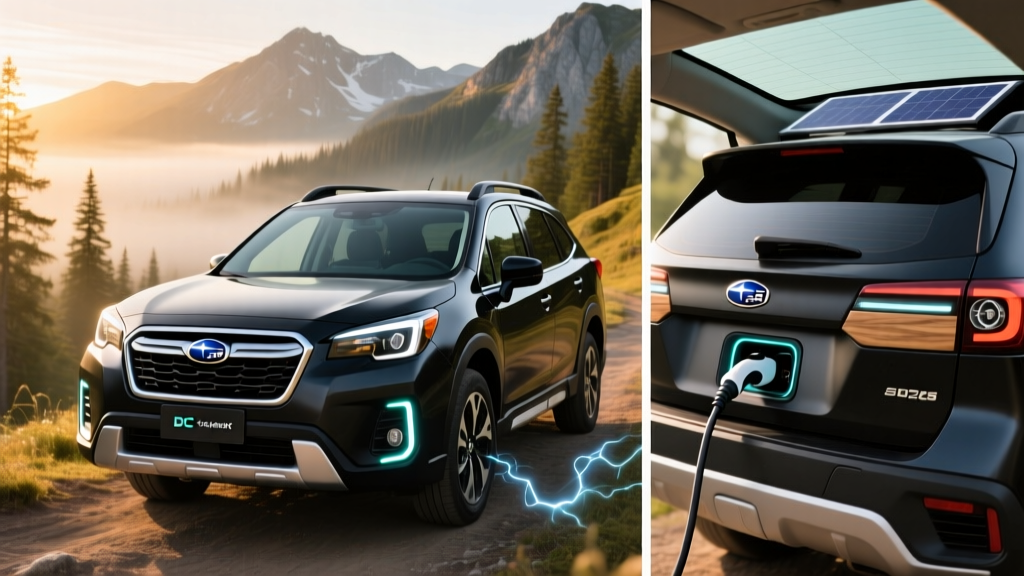
The 2026 Subaru Trailseeker EV SUV is a battery-electric, all-wheel-drive wagon-style SUV built on Subaru's e-Subaru Global Platform (co-developed with Toyota). It targets buyers who want Outback-like utility and standard AWD but with zero tailpipe emissions. Expect an EPA-estimated range of around 270 miles from a ~74.4 kWh lithium-ion battery pack, DC fast charging at up to 150 kW (10–80% in roughly 30 minutes), and a starting MSRP near $39,995 before incentives. It is best suited to drivers with home Level 2 charging access who commute 30–80 miles daily and take occasional road trips — not those in extreme-cold climates who regularly drive 250+ miles between chargers.
Subaru Trailseeker EV SUV at a Glance
Subaru entered the EV market with the Solterra and has expanded its lineup for 2026 with the Trailseeker — a larger, more Outback-oriented electric SUV that slots above the Solterra in size and range. Below are the key specifications based on Subaru's announced figures and EPA testing data.
| Specification | 2026 Subaru Trailseeker EV |
|---|---|
| EPA Range (est.) | ~270 miles (AWD) |
| Battery Capacity | ~74.4 kWh usable, lithium-ion |
| Drivetrain | Dual-motor AWD (standard) |
| Horsepower / Torque | ~215 hp / 248 lb-ft |
| 0–60 mph | ~6.5 seconds |
| DC Fast Charge (peak) | 150 kW (CCS1); 10–80% in ~30 min |
| Level 2 Charge Rate | ~7.2 kW (240V, ~22 mi/hr) |
| Ground Clearance | 8.3 inches |
| Cargo Volume | ~33 cu ft (rear seats up), ~75 cu ft (folded) |
| Towing Capacity | ~2,000 lbs (est.) |
| Starting MSRP | ~$39,995 (Premium trim) |
| Battery/Powertrain Warranty | 8 years / 100,000 miles |
Real-World Range: What to Actually Expect
The EPA sticker says ~270 miles, but real-world results depend heavily on conditions. On a 70-mph highway drive in moderate temperatures (60–75°F), expect roughly 235–250 miles. In winter conditions (below 30°F), range can drop 20–30%, putting you closer to 190–215 miles. Subaru includes a heat pump on higher trims, which mitigates some cold-weather loss by warming the cabin without draining the traction battery as aggressively as resistive heating. If your daily round-trip commute is under 80 miles and you charge at home overnight, the Trailseeker's usable range will feel more than sufficient most of the year.
Trailseeker EV vs. Gas Outback: The Cost Breakdown
The most common cross-shopping question is whether the Trailseeker EV saves money compared to the gasoline Outback, which starts around $32,995 for 2026. The answer depends on your annual mileage, electricity rates, and whether you qualify for federal or state incentives. Below is a 5-year total cost of ownership comparison assuming 12,000 miles per year.
| Cost Category (5 years / 60k mi) | Trailseeker EV (AWD) | Outback Gas (AWD) |
|---|---|---|
| Purchase Price (base MSRP) | $39,995 | $32,995 |
| Federal Tax Credit (§30D, if eligible) | –$3,750 to –$7,500 | $0 |
| Effective Purchase Price | $32,495–$36,245 | $32,995 |
| Fuel / Electricity (60k miles) | $3,200–$4,800 | $7,500–$9,000 |
| Maintenance (oil, filters, brakes) | $600–$1,000 | $2,500–$3,500 |
| Insurance (avg. premium) | $9,500–$11,000 | $7,500–$9,000 |
| Estimated Depreciation | $14,000–$17,000 | $12,000–$15,000 |
| Total 5-Year Cost (approx.) | $59,795–$70,045 | $62,495–$69,495 |
The Trailseeker EV can reach cost parity or beat the Outback over five years if you qualify for at least a partial federal tax credit and charge primarily at home on a moderate electricity rate ($0.12–$0.18/kWh). If you rely entirely on DC fast charging at $0.35–$0.48/kWh, your fuel costs will match or exceed the gas Outback's. Insurance premiums on EVs tend to run 10–20% higher due to higher repair costs and parts pricing — a factor many first-time EV buyers overlook.
Source: Fuel cost estimates based on fueleconomy.gov electricity pricing tools and AAA's Your Driving Costs methodology.
Charging at Home and on the Road
Charging access is the single biggest variable in EV ownership satisfaction. The Trailseeker EV uses a CCS1 connector for DC fast charging and a J1772 inlet for Level 1 and Level 2 AC charging.
| Charging Level | Power | Miles Added per Hour | Use Case |
|---|---|---|---|
| Level 1 (120V outlet) | ~1.4 kW | ~4 mi/hr | Overnight trickle; emergency top-up |
| Level 2 (240V home) | ~7.2 kW | ~22 mi/hr | Daily home charging; full charge in ~10 hrs |
| DC Fast (public) | Up to 150 kW | ~150+ mi in 30 min | Road trips; 10–80% in ~30 min |
Home Charging Installation Costs
If you don't already have a 240V outlet in your garage or driveway, budget for a professional Level 2 installation. Costs vary widely based on your electrical panel capacity and the distance from the panel to the charger location.
| Component | Typical Cost Range |
|---|---|
| Level 2 Charger (hardware) | $300–$700 |
| Electrician labor (simple install) | $500–$1,200 |
| Permit / inspection | $50–$250 |
| Electrical panel upgrade (if needed) | $1,500–$3,500 |
| Total (no panel upgrade) | $850–$2,150 |
| Total (with panel upgrade) | $2,350–$5,650 |
Most homeowners with a 200-amp panel and a nearby garage outlet will spend around $1,000–$1,500 total. If your home has an older 100-amp panel, an upgrade may be required — this is the hidden cost that catches some buyers off guard. Always get a quote from a licensed electrician before purchasing the vehicle.
DC Fast Charging Reality: The Curve Matters
Subaru advertises a peak charge rate of 150 kW. That peak is only sustained between roughly 10–50% state of charge. Above 50%, the rate tapers significantly — dropping to ~80 kW by 65% and below 40 kW past 80%. This is standard lithium-ion behavior, not a defect. On a road trip, plan your stops around the 10–80% window (about 200 miles of added range in 30 minutes) rather than trying to charge to 100%, which can take an additional 40+ minutes for the final 20%. In cold weather, preconditioning the battery before arriving at a charger is essential to hitting advertised charge speeds — the Trailseeker's navigation system can initiate preconditioning when a charger is set as your destination.
Federal Tax Credit: What You Actually Qualify For
The §30D federal EV tax credit is not a guaranteed $7,500. For 2026, the Trailseeker EV's eligibility depends on several factors that change based on battery sourcing requirements and your personal tax situation.
- MSRP Cap: SUVs must be under $80,000 MSRP — the Trailseeker qualifies at ~$39,995.
- Buyer Income Cap: Modified AGI must be ≤ $150,000 (single), $225,000 (head of household), or $300,000 (married filing jointly).
- Battery Sourcing: The credit splits into two halves — $3,750 for critical-minerals sourcing and $3,750 for battery-component assembly. As of early 2026, many Japanese-platform EVs qualify for one half ($3,750) but not both, depending on where battery cells and minerals are sourced. Check the latest fueleconomy.gov listing for the Trailseeker's current status.
- Point-of-Sale Transfer: If eligible, you can transfer the credit to the dealer at purchase, reducing your out-of-pocket cost immediately rather than waiting for a tax refund.
- Lease Loophole: Leasing bypasses the §30D buyer requirements entirely — the lessor claims the commercial clean vehicle credit (§45W) and may pass savings to you as a reduced monthly payment. Confirm with the dealer.
Always consult a tax professional and verify current eligibility on irs.gov before finalizing a purchase — sourcing rules have tightened annually since 2023.
Common Misconceptions About the Trailseeker EV
| Myth | Fact |
|---|---|
| "It's basically a rebadged Toyota bZ4X." | While the Trailseeker shares the e-Subaru Global Platform with Toyota, Subaru tunes the suspension, AWD torque distribution, and X-MODE off-road software independently. The body, interior, and cargo dimensions are unique. |
| "EV batteries need replacing every 5 years." | Modern lithium-ion EV batteries degrade gradually. Industry data shows average degradation of ~10–15% over 8 years. Subaru's warranty guarantees at least 70% capacity retention at 8 years/100,000 miles. Full replacement is rare and covered if it falls below threshold. |
| "You can't take an EV off-road or in snow." | The Trailseeker's 8.3 inches of ground clearance, standard dual-motor AWD, and X-MODE traction system are designed for light off-road use and snow. Instant electric torque actually provides excellent low-speed traction control. |
| "Charging takes too long for road trips." | At 150 kW, the Trailseeker adds ~200 miles in 30 minutes. That's comparable to a meal break. For trips under 250 miles, most owners charge at home and never use a public charger. |
| "EVs cost more to insure and always will." | Insurance premiums for EVs are 10–20% higher on average today, but the gap is narrowing as repair networks expand and parts pricing stabilizes. Shop quotes from multiple carriers — some now offer EV-specific discounts. |
Ownership Realities: What First-Time EV Buyers Should Know
Home Charging Is Non-Negotiable for Most Buyers
If you live in an apartment or lack access to a dedicated 240V outlet, EV ownership becomes significantly harder. Public DC fast charging at $0.35–$0.48/kWh erases the fuel-cost advantage over gasoline. Before buying the Trailseeker, confirm you can install a Level 2 charger at home or have reliable access to workplace charging. Level 1 (120V) charging at ~4 miles per hour is only viable if you drive fewer than 35 miles per day.
Cold Climate Buyers: Be Honest About Your Needs
If you live in Minnesota, Maine, or Colorado and regularly drive 200+ miles in sub-freezing weather, the Trailseeker's effective winter range of ~190–215 miles may not be enough without mid-trip charging stops. Consider whether a PHEV (like the upcoming Subaru plug-in hybrid Outback variant) might better serve your worst-case driving days while still electrifying most of your commuting.
Maintenance Is Genuinely Lower
No oil changes, no spark plugs, no transmission fluid, and regenerative braking dramatically extends brake pad life (often 80,000+ miles). You'll still need tire rotations, cabin air filter replacements, wiper fluid, and windshield wipers. Budget roughly $150–$250 per year for basic EV maintenance versus $500–$700 for the gas Outback.
Should You Buy the Subaru Trailseeker EV SUV?
Choose the Trailseeker EV if:
- You have home Level 2 charging access (or can install it).
- Your daily driving is under 80 miles round-trip, with occasional 200-mile road trips.
- You value standard AWD, 8+ inches of ground clearance, and Subaru's safety reputation.
- You qualify for at least $3,750 in federal tax credits, bringing the effective price near a gas Outback.
- You want lower ongoing fuel and maintenance costs over 5+ years of ownership.
Look elsewhere (or consider a PHEV) if:
- You live in an apartment without charging access and cannot install a home charger.
- You regularly drive 250+ miles in cold weather and don't want to plan charging stops.
- You need to tow more than 2,000 lbs (consider a gas or hybrid SUV for heavier loads).
- Your household income exceeds the §30D caps and you don't plan to lease.
Frequently Asked Questions
Does the Subaru Trailseeker EV qualify for the full $7,500 federal tax credit?
As of early 2026, most Japanese-platform EVs qualify for $3,750 (one half of the credit) due to battery-component sourcing rules. Whether the Trailseeker qualifies for the full $7,500 depends on where its battery cells and critical minerals are sourced. Check the latest listing on fueleconomy.gov before purchasing. Income and MSRP caps also apply.
How long does it take to charge the Trailseeker EV at home?
On a Level 2 home charger (240V, ~7.2 kW), a full charge from near-empty takes approximately 10 hours. Most owners plug in overnight and wake up to a full battery. On a standard 120V outlet (Level 1), a full charge would take roughly 50+ hours — practical only for low-mileage drivers or emergency trickle charging.
Is the Trailseeker EV good in snow and off-road?
Yes, within reason. Standard dual-motor AWD with Subaru's X-MODE traction management, 8.3 inches of ground clearance, and instant electric torque make it capable on snow-covered roads and light off-road trails. It is not a dedicated rock crawler — think forest service roads and snowy mountain passes, not Moab.
What happens if the battery degrades significantly?
Subaru warrants the battery pack for 8 years or 100,000 miles against falling below 70% of original capacity. Industry data suggests typical degradation of 10–15% over 8 years for modern lithium-ion packs. If the battery does fall below the warranty threshold, Subaru will repair or replace it at no cost. Out-of-warranty full replacements are estimated at $10,000–$15,000 but are rarely needed within the vehicle's practical lifespan.
How does the Trailseeker compare to the Subaru Solterra?
The Solterra is Subaru's compact electric crossover (~222 miles EPA range, ~$44,995 starting MSRP for 2026). The Trailseeker is larger, offers more range (~270 miles), more cargo space (~33 vs. ~27 cu ft), and a lower starting price (~$39,995). If you need back-seat space and cargo room for family gear, the Trailseeker is the more practical choice. The Solterra suits urban buyers who want a smaller footprint.
Can I tow with the Trailseeker EV?
The Trailseeker is rated for approximately 2,000 lbs of towing capacity — enough for a small utility trailer, a pair of dirt bikes, or a lightweight teardrop camper. Towing significantly reduces range (expect a 30–50% reduction depending on trailer weight and aerodynamics). If you regularly tow 3,500+ lbs, a gas or hybrid SUV remains the better tool.