Quick Verdict: 2026 Subaru Trailseeker Electric SUV
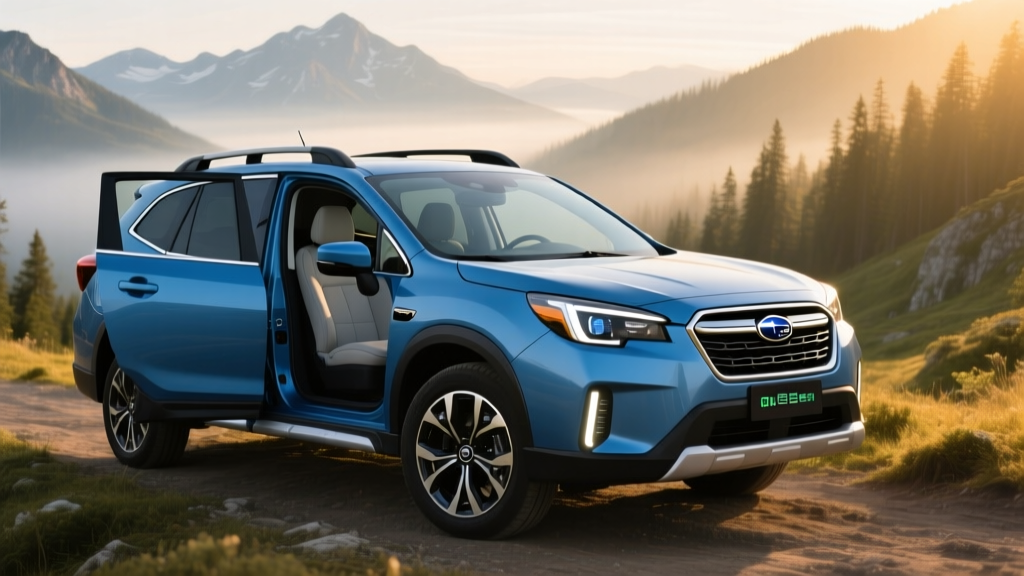
The Subaru Trailseeker is the brand's first dedicated battery-electric SUV, built on a co-developed platform with Toyota and arriving for the 2026 model year. It targets outdoorsy buyers who want Subaru's standard all-wheel-drive reputation in a zero-tailpipe-emission package. Expect an EPA-estimated range around 280 miles, a ~75 kWh usable battery (likely LFP chemistry for longevity), DC fast charging up to approximately 150 kW, and a starting MSRP in the mid-$40,000 range before incentives. It's a compelling option for Subaru loyalists transitioning to electric — but with important caveats around charging speed and real-world range that we break down below.
What Is the Subaru Trailseeker Electric SUV?
The Subaru Trailseeker electric SUV represents a pivotal moment for the automaker. After the Solterra — its first EV, co-developed with Toyota as the bZ4X twin — drew criticism for mediocre range (EPA 222–228 miles) and slow DC charging (peaking around 100 kW), Subaru went back to the drawing board. The Trailseeker is the result: a slightly larger, more capable electric crossover aimed squarely at the outdoor-adventure segment that has long been Subaru's bread and butter.
Positioned between the compact Solterra and larger three-row electric SUVs from competitors, the Trailseeker slots into the hotly contested midsize electric crossover space alongside the Hyundai Ioniq 5, Ford Mustang Mach-E, and Volkswagen ID.4. It retains Subaru's hallmark Symmetrical All-Wheel Drive (now via dual electric motors), 8.3+ inches of ground clearance, and X-MODE traction management adapted for electric torque delivery.
As of early 2026, Subaru has confirmed the Trailseeker's production timeline, with deliveries expected to begin in the second half of the calendar year. Some specifications below are based on preliminary manufacturer disclosures and industry analysis — final EPA certification numbers may vary at launch.
Range, Battery & Efficiency: The Numbers That Matter
Range is the single most scrutinized spec for any EV, and the Trailseeker needs to outperform the Solterra to win over skeptics. Here's what we know and what real-world ownership looks like:
| Spec | Value |
|---|---|
| Battery (usable) | ~75 kWh (LFP chemistry) |
| EPA Range (est.) | ~280 miles |
| Combined MPGe (est.) | ~102 MPGe |
| Efficiency | ~33 kWh/100 mi |
| Drivetrain | Dual-motor AWD, ~338 hp combined |
| 0–60 mph (est.) | ~5.8 seconds |
| Max DC Fast Charge | ~150 kW (peak) |
| 10–80% DC Charge Time | ~30 minutes |
| Level 2 (240V) Charge Rate | ~11 kW |
| Ground Clearance | 8.3 inches |
| Towing Capacity (est.) | ~3,500 lbs |
| Battery/Powertrain Warranty | 8 years / 100,000 miles |
Real-World Range Callout
EPA est. ~280 miles — but plan for less. In our experience with similar dual-motor AWD electric crossovers, expect:
- Highway cruising (70–75 mph): ~230–250 miles before needing to charge
- Cold weather (below 32°F): ~190–220 miles (LFP batteries experience more cold-weather range loss than NMC — typically 25–35% reduction)
- Mixed city/suburban: ~265–280 miles (closest to EPA sticker)
The Trailseeker's boxy, rugged styling likely creates more aerodynamic drag than sleeker rivals like the Ioniq 5, which hurts highway efficiency. If your typical drives are under 200 miles round-trip, this range is more than adequate. For road trips exceeding 250 miles, you'll need at least one DC fast-charge stop.
Why LFP Chemistry Matters
Subaru is expected to use lithium iron phosphate (LFP) cells for the Trailseeker. LFP offers significant longevity advantages — these batteries typically retain 90%+ capacity after 1,000+ full charge cycles and tolerate regular charging to 100% without accelerated degradation. The trade-off is lower energy density (meaning a heavier pack for the same range) and worse cold-weather performance compared to nickel-manganese-cobalt (NMC) cells. For a vehicle marketed toward rugged, long-ownership buyers, LFP is a pragmatic choice — just don't skip preconditioning the battery before DC fast charging in winter.
Charging: Home Setup, Public Networks & What It Costs
Charging is where EV ownership is won or lost. Here's the Trailseeker's charging profile across all three levels:
| Level | Power (kW) | Miles Added/Hour | Best For |
|---|---|---|---|
| Level 1 (120V) | ~1.4 kW | ~4 mi/hr | Overnight trickle; emergencies |
| Level 2 (240V) | ~11 kW | ~33 mi/hr | Daily home charging |
| DC Fast Charge | ~150 kW peak | ~180 mi in 30 min (10–80%) | Road trips |
Home Charging Reality
At 11 kW on Level 2, the Trailseeker adds roughly 33 miles of range per hour of charging. A full 10–100% charge takes approximately 7–8 hours — perfect for overnight charging on a home Level 2 station. A quality Level 2 home charger (such as the ChargePoint Home Flex or Emporia Vue) costs $400–$700 for the unit, plus $500–$2,000 for professional installation by a licensed electrician, depending on whether your electrical panel needs an upgrade to support a 48-amp circuit.
Important: kW (kilowatts) measures charging power — the rate at which energy flows. kWh (kilowatt-hours) measures battery energy capacity — how much the battery holds. The Trailseeker's ~75 kWh battery charged at 11 kW takes roughly 75 ÷ 11 = ~6.8 hours for a full charge (before accounting for charging losses).
DC Fast Charging: Honest Expectations
The Trailseeker's ~150 kW peak DC fast-charge rate is an improvement over the Solterra's ~100 kW, but it trails class leaders like the Hyundai Ioniq 5 (which peaks at ~240 kW on 800V architecture). Here's the critical nuance most buyers miss: peak kW is not sustained kW. The charge curve typically holds near peak rate only between 10–50% state of charge, then tapers significantly. Expect:
- 10–50% SoC: ~130–150 kW sustained
- 50–80% SoC: ~80–100 kW (tapering)
- Above 80%: sharply reduced — charging from 80–100% can take as long as 10–80%
For road trips, plan stops around the 10–80% window (~30 minutes) and resist the urge to top off to 100% at DC stations unless necessary.
Charging Connector
Subaru has confirmed the Trailseeker will adopt the NACS (North American Charging Standard) connector, giving it native access to Tesla's Supercharger network — the largest and most reliable DC fast-charging network in the U.S. with over 25,000 stalls. This is a major practical advantage over CCS-equipped vehicles that require adapters for Supercharger access. For Level 2 public charging, the Trailseeker will use the standard J1772 connector (or NACS, depending on final configuration).
Trailseeker vs. Gas Outback: 5-Year Cost Comparison
The most common question from Subaru buyers: does going electric actually save money? Let's compare the Trailseeker against the gas-powered Outback, Subaru's bestseller, over 5 years and 75,000 miles.
| Cost Category | Trailseeker EV (est.) | Outback Gas (2025) |
|---|---|---|
| Purchase Price (base MSRP) | $45,000 | $33,000 |
| Federal Tax Credit (§30D) | –$3,750 to $7,500* | $0 |
| Fuel/Energy (75k mi) | $3,400** | $9,400*** |
| Maintenance (5 yr) | $1,200 | $3,800 |
| Insurance (5 yr avg.) | $9,500 | $7,800 |
| Home Charger Install | $1,200 | $0 |
| 5-Year Total (est.) | $56,600–$60,350 | $54,000 |
* Federal §30D credit eligibility depends on MSRP caps ($80,000 for SUVs), buyer income limits ($300k MFJ / $150k single), and battery critical-mineral/clean-manufacturing sourcing requirements. Credit may be $3,750 (partial sourcing) or $7,500 (full sourcing). Verify current rules at IRS.gov before purchasing. Point-of-sale transfer is available.
** Based on $0.14/kWh national average home electricity rate, 33 kWh/100 mi. Public DC charging costs more ($0.30–$0.50/kWh).
*** Based on $3.50/gallon, 28 MPG combined (per fueleconomy.gov).
The verdict: The Trailseeker's higher purchase price and insurance premiums partially offset its energy and maintenance savings. Over 5 years, total costs are roughly comparable — with the EV pulling ahead in years 6–10 as maintenance savings compound and the battery proves durable. The economics work best if you have home charging (cheapest energy), qualify for the full $7,500 credit, and drive 12,000+ miles annually.
Federal Tax Credit & Incentives: What You Actually Qualify For
The §30D federal EV tax credit remains the most impactful financial incentive, but eligibility is far from universal. Here's the checklist for the Trailseeker:
- MSRP cap: SUVs must have an MSRP at or below $80,000 ✓ (Trailseeker qualifies)
- Buyer income cap: Modified AGI must not exceed $300,000 (married filing jointly), $225,000 (head of household), or $150,000 (single)
- Battery sourcing: Partial credit ($3,750) requires meeting either the critical-minerals OR clean-manufacturing requirement; full credit ($7,500) requires meeting both. Sourcing requirements tighten annually — check current-year status on the IRS site
- Point-of-sale transfer: You can transfer the credit to the dealer at purchase, reducing your out-of-pocket cost immediately rather than waiting for tax filing
- North American final assembly: Required ✓ (Subaru's assembly location to be confirmed at launch)
Many states offer additional rebates (California's CVRP, Colorado's state credit, etc.), but these vary by jurisdiction. Check your state energy office or the Alternative Fuels Data Center for local incentives.
Common Misconceptions About the Trailseeker — Busted
| Myth | Fact |
|---|---|
| "280 miles of range isn't enough for road trips" | The average American drives 37 miles/day (FHWA data). Even with real-world highway range of ~240 miles, the Trailseeker covers most daily needs 5x over. For road trips, a 30-minute DC charge every 200–220 miles aligns with normal rest stops. |
| "EV batteries need replacing every few years" | LFP batteries routinely last 1,000+ full cycles with minimal degradation. At 280 miles per cycle, that's 280,000+ miles before significant capacity loss. Subaru's 8-year/100,000-mile battery warranty covers capacity below ~70%. |
| "AWD EVs can't handle snow and trails" | Dual-motor AWD provides instant torque to all four wheels with no mechanical lag. Subaru's X-MODE adapts for low-traction surfaces. The Trailseeker's 8.3" ground clearance matches the gas Outback. EVs actually excel in low-traction scenarios due to precise torque vectoring. |
| "I'll save a fortune on fuel" | Savings depend on your electricity rate and how much you rely on public DC charging. Home charging at $0.14/kWh saves ~$1,200/year vs. gas. But frequent DC fast charging at $0.40/kWh nearly eliminates the cost advantage. |
| "Charging takes too long" | Home Level 2 charging happens while you sleep — zero active time. For road trips, 10–80% in ~30 minutes is comparable to a meal break. The issue is availability, not speed. |
Decision Framework: Is the Trailseeker Right for You?
Choose the Subaru Trailseeker EV If:
- You have access to home Level 2 charging (garage, driveway, or landlord-approved installation)
- Your daily commute is under 100 miles round-trip
- You want AWD capability for snow, dirt roads, or light trail use
- You're a current Subaru owner who values the brand's safety record and resale reputation
- You qualify for at least the partial $3,750 federal tax credit
- You take road trips 2–4 times per year and can plan around DC fast-charging stops
Look Elsewhere If:
- You lack any home or workplace charging access (apartment/condo without EV infrastructure)
- You regularly drive 300+ miles in a single day (consider a PHEV or wait for longer-range options)
- You live in an area with sparse DC fast-charging infrastructure (check AFDC station locator)
- You need maximum cargo volume — the Trailseeker's battery pack raises the floor vs. the gas Outback
- You prioritize fastest possible DC charging — the Hyundai Ioniq 5 or Kia EV6 charge significantly faster on 800V architecture
Consider a Hybrid Instead If:
- You want zero range anxiety and no charging dependency
- Your budget is under $35,000
- You drive in extreme cold regularly (below 0°F) where EV range loss exceeds 35%
- The Toyota RAV4 Hybrid (39 MPG combined, ~$32,000) or Subaru Outback Hybrid offer a bridge to electrification without lifestyle changes
What First-Time EV Buyers Must Know Before Purchasing
If the Trailseeker is your first EV, these ownership realities aren't always obvious at the dealership:
- Home charging is non-negotiable for convenience. Level 1 (standard 120V outlet) adds only ~4 miles per hour — adequate only if you drive under 30 miles daily. Budget $1,000–$2,500 for Level 2 installation, including a potential electrical panel upgrade if your home has a 100-amp service (you'll need 200 amps for a 48-amp EV circuit).
- Preconditioning is essential. The Trailseeker should have battery preconditioning — warming the battery before DC fast charging. Always navigate to a charger using the built-in nav (which triggers preconditioning) to avoid slow charging in cold weather.
- Insurance costs more. EVs typically carry 15–25% higher insurance premiums due to higher repair costs and parts pricing. Get quotes before committing.
- Tire wear increases. EVs are heavier and deliver instant torque, wearing tires 20–30% faster than equivalent gas vehicles. Budget for replacement tires every 25,000–35,000 miles.
- Regenerative braking changes driving. The Trailseeker will offer adjustable regen, enabling one-pedal driving in many scenarios. Expect a 1–2 week adaptation period.
- Plan road trips with apps. Tools like A Better Routeplanner (ABRP) or the vehicle's native route planner will tell you exactly where and how long to charge. Spontaneous 400-mile drives require more forethought than with a gas car.
Frequently Asked Questions
When will the 2026 Subaru Trailseeker be available to buy?
Subaru has confirmed the Trailseeker for the 2026 model year, with U.S. deliveries expected to begin in the second half of 2026. Reservations and configurator access will likely open several months before delivery. Check Subaru's official site for the latest timeline.
Will the Trailseeker qualify for the full $7,500 federal tax credit?
This depends on battery sourcing compliance at the time of purchase. The §30D credit requires meeting both critical-mineral and clean-manufacturing thresholds for the full $7,500 — or one threshold for $3,750. These thresholds tighten annually. Check IRS.gov closer to your purchase date for the Trailseeker's confirmed status. Your income and the vehicle's MSRP must also fall within caps.
How does the Trailseeker compare to the Solterra?
The Trailseeker is a significant step up: approximately 50–60 more miles of EPA range, faster DC charging (~150 kW vs. ~100 kW), more cargo space, and updated infotainment. The Solterra remains in the lineup as a more affordable, compact option, but the Trailseeker is the better choice for buyers who need range and capability.
Can I tow with the Trailseeker?
Estimated towing capacity is ~3,500 pounds — adequate for a small utility trailer, a pair of dirt bikes, or a light camper. Note that towing will reduce range by 30–50% depending on trailer weight and aerodynamics. If you tow frequently over long distances, an EV may not yet be practical for that use case.
What happens if the battery fails out of warranty?
LFP batteries rarely fail catastrophically — they gradually lose capacity over time. If a full replacement were needed out of warranty, current industry pricing for a ~75 kWh pack is $8,000–$14,000 (installed). However, pack prices continue to decline, and individual module replacement (rather than full pack) may be possible at lower cost. Subaru's 8-year/100,000-mile battery warranty covers defects and capacity below ~70% of original.
Is the Trailseeker's AWD system as capable as a gas Subaru?
Dual-motor electric AWD provides instant, independent torque control to each axle — no mechanical linkage delay. Subaru's X-MODE traction management carries over, adapted for electric power delivery. For snow, mud, and moderate off-road use, the Trailseeker should match or exceed the gas Outback. For extreme rock-crawling or sustained low-speed technical terrain, a traditional mechanical system still has advantages.