The Quick Verdict: Solterra Tax Credit Eligibility in 2026
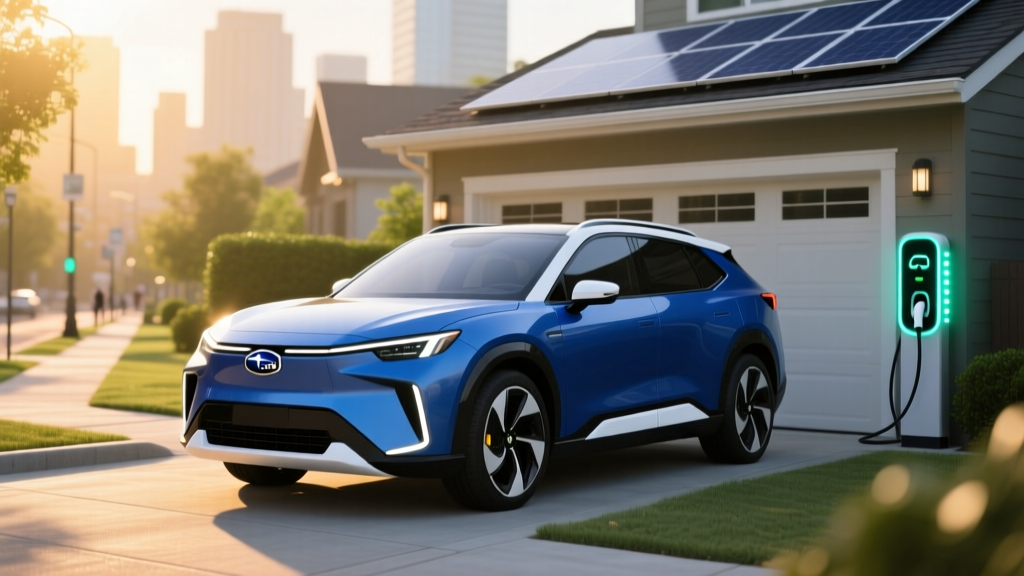
The short answer to "does the Subaru Solterra qualify for the tax credit" is yes — but with important caveats that depend on your income, how you buy, and the specific battery sourcing of the model year you purchase. For the 2026 model year, the Solterra remains eligible for up to $7,500 under IRS §30D, provided you meet the adjusted gross income caps and the vehicle's battery components and critical minerals satisfy the phased-in sourcing thresholds. Since 2024, buyers can also transfer the credit to the dealer as a point-of-sale discount, which effectively lowers the drive-off price.
But tax credit eligibility is only part of the purchase equation. The Solterra — co-developed with Toyota on the e-TNGA platform (it's the twin of the Toyota bZ4X) — brings standard all-wheel drive, solid off-road credibility, and Subaru's safety reputation. It also carries real trade-offs in range and DC charging speed that buyers need to weigh honestly. Let's walk through every number that matters.
Range and Efficiency: EPA vs. the Real World
Real-World Expectation: Expect 180–200 miles on sustained highway driving at 70+ mph. In cold weather (below 32°F), plan for 150–170 miles. City driving with regenerative braking can push closer to the EPA sticker, but the Solterra's efficiency is a weak point compared to rivals.
The 2026 Solterra carries over the 71.4 kWh usable battery pack (72.8 kWh gross) using NMC (nickel manganese cobalt) lithium-ion chemistry. EPA efficiency is rated at approximately 104 MPGe combined (roughly 32 kWh/100 mi), which is notably thirstier than competitors like the Hyundai Ioniq 5 (114 MPGe) or Tesla Model Y (122 MPGe).
This efficiency gap matters in practice. On a 250-mile road trip at highway speeds in moderate temperatures, you'll need one DC fast-charge stop. In winter, that same trip could require two stops or careful planning around charger availability. The Solterra is a competent EV, but it is not a range leader — and buyers in cold climates or those who road-trip frequently should factor this into route planning.
| Spec | Value |
|---|---|
| EPA Range | 227–228 mi |
| Battery (usable) | 71.4 kWh, NMC |
| Max DC Fast Charge | ~100 kW (peak) |
| 10–80% DC Time | ~56 minutes |
| Level 2 Home Charging | 6.6 kW (~21 mi/hr) |
| Drivetrain | Dual-motor AWD (standard) |
| Horsepower | 214 hp |
| 0–60 mph | 6.5 seconds |
| EPA Efficiency | ~104 MPGe / 32 kWh/100mi |
| Cargo Volume | 23.8 cu ft (rear seats up), ~56 cu ft (folded) |
| Base MSRP | ~$39,995 (Premium) |
| Battery Warranty | 8 yr / 100,000 mi |
Charging Speed: The Solterra's Achilles' Heel
Charging is where the Solterra requires the most honest buyer assessment. The 2026 model peaks at roughly 100 kW on DC fast charging — a figure that was adequate in 2022 but falls well behind 2026 competitors. The Hyundai Ioniq 5 peaks at 240 kW, the Kia EV6 at 240 kW, and the Tesla Model Y at 250 kW. The Solterra's 10–80% charge takes approximately 56 minutes, compared to 18–20 minutes for 800V-architecture rivals.
The charge curve is relatively flat, meaning the Solterra doesn't taper as dramatically above 80% as some competitors — but the low peak rate means that advantage is minor. On a road trip, you'll spend roughly three times as long at a charger as an Ioniq 5 driver covering the same distance.
| Method | Solterra Rate | Miles Added per Hour |
|---|---|---|
| Level 1 (120V, 12A) | ~1.4 kW | ~4 mi/hr |
| Level 2 (240V, 28A) | 6.6 kW | ~21 mi/hr |
| DC Fast Charge (peak) | ~100 kW | ~190 mi/hr (peak, not sustained) |
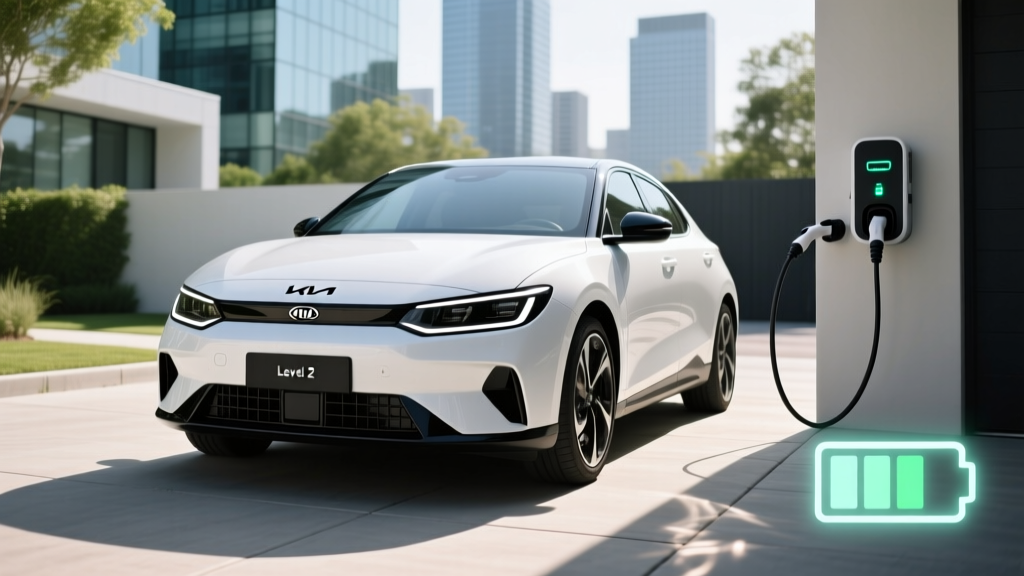
For home charging, the 6.6 kW onboard charger is adequate. A full 0–100% charge takes about 11 hours on a Level 2 home station, meaning overnight charging easily replenishes daily driving. Most owners will rarely need DC fast charging if they charge at home nightly.
The Solterra uses the CCS1 connector for DC fast charging and J1772 for Level 2. Subaru has not announced a transition to the NACS (Tesla-style) connector for the current-generation Solterra, though future model years may adopt it. For now, Solterra owners have access to Electrify America, EVgo, ChargePoint, and — via adapter — Tesla Superchargers (though adapter compatibility should be verified with Subaru before relying on it for long trips).
Performance, Drivetrain, and Daily Driving
Every 2026 Solterra comes with dual-motor all-wheel drive producing 214 horsepower and 248 lb-ft of torque. The 0–60 mph time of 6.5 seconds is adequate for merging and passing but won't win stoplight races against a Model Y Long Range (5.0 seconds) or an Ioniq 5 AWD (5.2 seconds).
Where the Solterra distinguishes itself is off-pavement. Subaru's X-MODE with hill descent control, 8.3 inches of ground clearance, and the StarDrive AWD system give it genuine light-trail and snow capability that most EV crossovers can't match. If you ski, hike, or deal with unplowed roads, the Solterra is arguably the most capable EV in its price class for those conditions.
Ride quality is composed, cabin noise is well-managed, and the steering is weighted appropriately for a crossover. The 3,500-pound towing capacity (when properly equipped) is competitive for the segment, though towing will cut range by 30–40%.
Interior Space, Tech, and Driver Assistance
The Solterra seats five with 35.7 inches of rear legroom — adequate for adults but tighter than the Ioniq 5's generous 39.4 inches. Cargo space is 23.8 cubic feet behind the rear seats and approximately 56 cubic feet with them folded, which is competitive but not class-leading.
Infotainment runs through a 12.3-inch touchscreen on higher trims (8-inch on base), with wireless Apple CarPlay and Android Auto. The interface is functional but not as responsive or visually polished as Tesla's or Hyundai's systems. A digital instrument cluster sits high on the dash, positioned to reduce eye movement — a nice ergonomic touch borrowed from the bZ4X.
Subaru's EyeSight driver-assistance suite is standard and includes adaptive cruise control, lane centering, automatic emergency braking, and blind-spot monitoring. This is SAE Level 2 driver assistance — it supports you on the highway but requires full driver engagement at all times. It is not autonomous driving, and Subaru does not market it as such. The system is competent and predictable, if not as ambitious as Ford's BlueCruise or GM's Super Cruise in hands-free capability.
Pricing, Trims, and the Tax Credit Math
| Trim | MSRP (est.) | After Max $7,500 Credit |
|---|---|---|
| Premium | $39,995 | ~$32,495 |
| Limited | $43,495 | ~$35,995 |
| Touring | $47,195 | ~$39,695 |
All Solterra trims fall under the $80,000 MSRP cap for SUVs under §30D, so the vehicle price itself does not disqualify you. However, eligibility hinges on three additional factors:
- Buyer income caps: Modified AGI must not exceed $300,000 (joint filers), $225,000 (head of household), or $150,000 (single). Check your prior-year or current-year AGI, whichever is lower.
- Battery component sourcing: The percentage of battery components manufactured or assembled in North America must meet the 2026 threshold (which phases up annually). The critical minerals requirement also tightens each year, excluding minerals from foreign entities of concern.
- Point-of-sale transfer: Since 2024, you can transfer the credit to the dealer at purchase, receiving it as an immediate price reduction rather than waiting to claim it on your tax return. This is available regardless of tax liability, which benefits buyers who wouldn't otherwise owe enough in federal taxes to use the full credit.
The credit amount may be $3,750 or $7,500 depending on whether the vehicle meets both the battery component and critical mineral requirements for the model year. Subaru's battery supply chain has evolved, but buyers should verify the specific VIN's eligibility using the IRS's seller reporting tool at the time of purchase. Always confirm with your dealer and consult IRS §30D guidance before signing.
Warranty, Ownership Costs, and Longevity
Subaru backs the Solterra's battery pack with an 8-year / 100,000-mile warranty covering defects and capacity loss below 70% of original capacity — standard for the segment. The powertrain carries the same 8-year/100,000-mile coverage, while the basic vehicle warranty is 3 years / 36,000 miles.
NMC chemistry in the Solterra should deliver typical degradation of roughly 10–15% over the first 100,000 miles based on industry data for similar packs. With a 227-mile starting range, a 15% loss would leave approximately 193 miles — still functional for daily driving but worth factoring into long-term ownership plans.
Insurance premiums for the Solterra tend to run 10–20% higher than a comparable gas-powered Subaru Outback, reflecting higher repair costs and parts pricing common to EVs. Home charging at the national average of $0.16/kWh costs roughly $11.40 for a full charge, or about $0.05 per mile — dramatically less than gasoline at current prices.
How the Solterra Stacks Up Against Key Competitors
The Solterra's most direct rivals are the Hyundai Ioniq 5, Kia EV6, Tesla Model Y, and its platform twin, the Toyota bZ4X. Here's how the numbers compare:
| Vehicle | EPA Range | Peak DC kW | 10–80% Time | Base MSRP |
|---|---|---|---|---|
| Subaru Solterra | 227 mi | 100 kW | ~56 min | $39,995 |
| Hyundai Ioniq 5 AWD | 290 mi | 240 kW | ~18 min | $49,600 |
| Kia EV6 AWD | 282 mi | 240 kW | ~18 min | $48,700 |
| Tesla Model Y LR AWD | 311 mi | 250 kW | ~20 min | $44,990 |
| Toyota bZ4X AWD | 228 mi | 100 kW | ~56 min | $38,465 |
The Solterra's advantage is price — it undercuts the Ioniq 5 and EV6 by $8,000–$10,000 and comes with standard AWD where competitors charge extra. It also offers better off-road capability than any rival here. The trade-off is 60–80 fewer miles of range and DC charging that takes three times as long.
- Standard AWD with genuine off-road capability
- Competitive base price; strong value after tax credit
- Subaru safety reputation and EyeSight standard
- Comfortable ride, quiet cabin
- 8.3" ground clearance for snow/trail use
- Below-average EPA range (227 mi)
- Slow DC fast charging (~100 kW peak, 56 min 10–80%)
- Efficiency lags segment (104 MPGe)
- Rear legroom tighter than rivals
- Infotainment not as polished as competitors
Who Should Buy the Subaru Solterra?
- You live in a snowy or mountainous area and need real AWD capability
- You charge at home nightly and rarely take road trips over 200 miles
- You want an EV from a brand you already trust for reliability and safety
- Budget matters, and the lower MSRP + tax credit makes it financially compelling
- You value ground clearance and light off-road ability over range and charging speed
- You regularly road-trip 300+ miles and need fast DC charging
- You need maximum rear-seat space for tall passengers or car seats
- Range is your top priority — the Ioniq 5, Model Y, or EV6 will serve you better
- You want the latest infotainment and over-the-air update capabilities
Frequently Asked Questions
Does the Subaru Solterra qualify for the full $7,500 federal tax credit?
It can, but eligibility depends on the battery component and critical mineral sourcing for the specific model year, plus your income (AGI must be under $300K joint / $150K single). The credit may be $3,750 or $7,500 depending on which sourcing thresholds the vehicle meets. Verify with the IRS seller reporting tool and your dealer before purchase.
What is the real-world range of the Subaru Solterra?
The EPA rates it at 227–228 miles. In real-world highway driving at 70 mph, expect 180–200 miles. In cold weather below freezing, plan for 150–170 miles. City driving with regenerative braking gets you closest to the EPA number.
How fast does the Solterra charge at home and on the road?
At home on Level 2 (240V), it charges at 6.6 kW, adding about 21 miles per hour — a full charge takes roughly 11 hours. On DC fast chargers, it peaks at about 100 kW, with a 10–80% charge taking approximately 56 minutes. This is significantly slower than 800V rivals like the Ioniq 5.
Is the Subaru Solterra worth buying over the Toyota bZ4X?
They share the same platform, battery, and powertrain. The Solterra costs slightly more but includes standard AWD on every trim (the bZ4X offers FWD on base), plus Subaru's X-MODE for off-road and snow use. If AWD and trail capability matter, the Solterra justifies the premium. If you want the lowest price and FWD is sufficient, the bZ4X is the value pick.
Will the Solterra get the NACS (Tesla) charging connector?
The current-generation Solterra uses CCS1. Subaru has indicated future models will adopt NACS, but as of the 2026 model year, the Solterra still ships with CCS1. An adapter may enable Tesla Supercharger access — confirm compatibility with Subaru before relying on it.
How long will the Solterra battery last?
Subaru warranties the battery for 8 years or 100,000 miles against defects and capacity loss below 70%. Based on NMC chemistry data from similar packs, expect 10–15% degradation over 100,000 miles. Many EV batteries outlast their warranty periods, but long-term replacement cost (if needed outside warranty) could range from $10,000–$15,000 based on current industry pricing for packs of this size.
Sources: EPA Fuel Economy — Subaru Solterra, IRS §30D Clean Vehicle Credit, Subaru of America — Solterra