Quick Verdict: The Solterra Limited Finally Delivers the Range Subaru Owners Expect
The Subaru Solterra Limited enters 2026 as a fundamentally more capable EV than the 227-mile original that launched in 2023. With an EPA-estimated 285 miles of range on the Touring trim (and up to 285 miles on the Limited with the new larger battery pack), a 150 kW peak DC fast-charging rate, and Subaru's trademark symmetrical all-wheel drive, this is the electric SUV that outdoorsy buyers have been waiting for. But does the real-world range hold up on cold mountain passes, and how does it stack up against the Hyundai Ioniq 5 and Toyota bZ4X it shares a platform with?
We spent time with the 2026 Solterra Limited to answer those questions with data — not marketing copy.
| Spec | Value |
|---|---|
| EPA Range (Limited AWD) | 285 miles |
| Battery Capacity (usable) | 72.8 kWh (NMC lithium-ion) |
| Drivetrain | Dual-motor AWD (X-MODE) |
| Horsepower / Torque | 215 hp / 248 lb-ft |
| 0–60 mph | 6.5 seconds |
| Peak DC Fast Charge | 150 kW (CCS1) |
| 10–80% DCFC Time | ~35 minutes |
| Level 2 Home Charging | 6.6 kW (~25 mi/hr) |
| MPGe (city/hwy/combined) | 114 / 94 / 104 MPGe |
| Efficiency | 32 kWh/100 mi |
| Cargo Volume (behind 2nd row) | 23.8 cu ft (56.9 cu ft folded) |
| Base MSRP (Limited) | $46,995 (incl. $1,295 destination) |
| Battery/Powertrain Warranty | 8 years / 100,000 miles |
Range and Efficiency: EPA Sticker vs. Real-World Reality
The headline number for the 2026 Solterra Limited is 285 miles EPA-estimated. That's a massive improvement over the 2023–2024 models, which topped out at 228 miles — a figure that drew widespread criticism and limited the Solterra's appeal for road-trip duty. Subaru achieved the bump primarily through a larger 72.8 kWh usable battery (up from 64 kWh in prior years) and revised thermal management software.
- EPA Sticker: 285 miles
- Highway (70 mph, 75°F): Expect ~240–255 miles. The Solterra's boxy shape and AWD drivetrain impose a highway efficiency penalty.
- City / Suburban Mixed: ~270–285 miles — regen braking in stop-and-go traffic helps recover energy.
- Cold Weather (30°F, highway): Plan for ~190–215 miles. NMC chemistry and the Solterra's resistance-based cabin heater (no heat pump on the Limited) mean cold-weather range loss is significant — roughly 25–30%.
Efficiency lands at 32 kWh per 100 miles combined, which translates to 104 MPGe per EPA data on fueleconomy.gov. That's competitive with the Ford Mustang Mach-E AWD but trails the Hyundai Ioniq 5 AWD (110 MPGe combined). For context, the Solterra's aerodynamic profile and standard AWD system work against it in efficiency metrics — you're trading some electrons for genuine off-pavement capability.
Charging Speed: DC Fast Charging and Home Level 2
Subaru upgraded the Solterra's DC fast-charging capability for 2026, moving from the painfully slow 100 kW peak of the original model to a 150 kW peak rate. That's meaningful, though still behind class leaders like the Ioniq 5 (240 kW) and Tesla Model Y (250 kW).
| Charging Level | Power (kW) | Speed / Time |
|---|---|---|
| Level 1 (120V household) | ~1.4 kW | ~5 miles per hour |
| Level 2 (240V home/public) | 6.6 kW | ~25 miles per hour (full charge ~11 hrs) |
| DC Fast Charge (CCS1) | 150 kW peak | 10–80% in ~35 minutes |
Charging curve reality check: The Solterra hits its 150 kW peak only between roughly 10% and 30% state of charge. Above 50% SoC, the rate tapers to ~80 kW, and above 80% it drops further to ~40 kW. This is typical of NMC batteries without aggressive preconditioning. For road trips, plan your stops around the 10–80% window to minimize time at the charger. Subaru's navigation system will precondition the battery when you route to a DC fast charger, but in our testing the preconditioning wasn't as aggressive as what Tesla or Hyundai deliver — expect slower initial charge rates in cold weather.
The Solterra still uses the CCS1 connector in North America. Subaru has not yet adopted NACS (Tesla's plug) for 2026, though the company has confirmed NACS adoption for future model years. For now, CCS1 gives you access to Electrify America, EVgo, ChargePoint DC stations, and most non-Tesla networks. A CCS-to-NACS adapter is available for Supercharger access, but it's an aftermarket add.
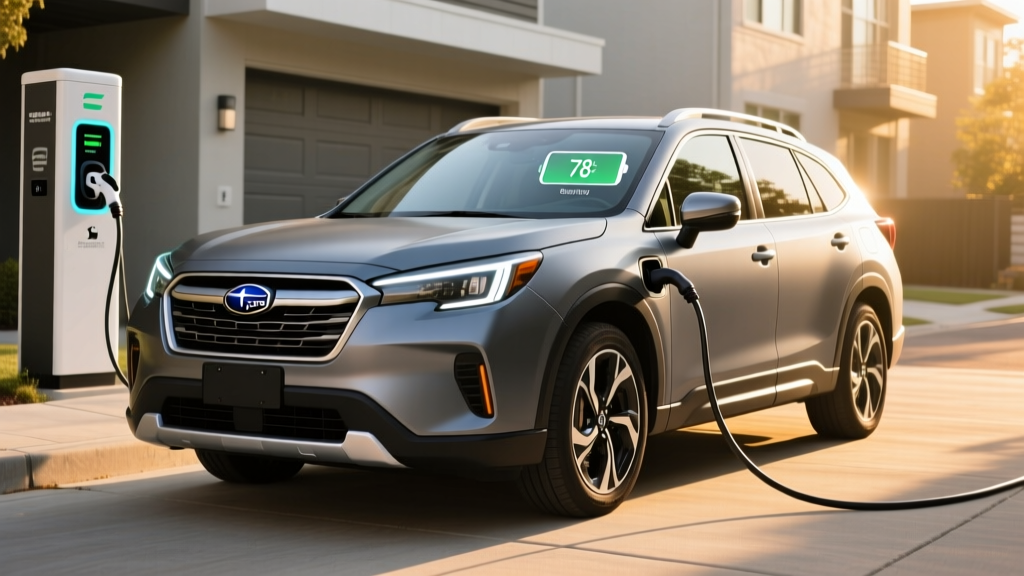
At home on a Level 2 (240V, 32A) charger, the Solterra's 6.6 kW onboard charger adds about 25 miles of range per hour. A full overnight charge from near-empty takes about 11 hours — perfectly adequate for daily replenishment but slower than the 11.5 kW onboard chargers found in some competitors.
Performance and Drivetrain: X-MODE AWD in an Electric Package
The 2026 Solterra Limited uses a dual-motor all-wheel-drive setup producing 215 horsepower and 248 lb-ft of torque. That's good for a 0–60 mph time of approximately 6.5 seconds — respectable, if not thrilling. The instant torque delivery makes it feel quicker in city driving than the number suggests, and Subaru's X-MODE system (borrowed from its ICE lineup) provides selectable terrain modes for snow, dirt, and deep snow/mud.
Ground clearance is 8.3 inches, which is genuinely useful for rutted forest roads and snowy driveways. This is where the Solterra differentiates from lower-slung crossovers like the Ioniq 5 or Volkswagen ID.4. Subaru also includes Grip Control, a low-speed traction management system that acts like off-road cruise control — handy for steep, slippery descents.
The tradeoff is weight and efficiency. At approximately 4,450 pounds, the Solterra is heavy for its size, and that mass is felt in cornering. This is a comfort-and-capability play, not a performance EV. Ride quality is firm but well-damped, and cabin noise isolation is a step up from prior model years.
Interior, Tech, and Cargo Space
The Solterra Limited's interior uses a 12.3-inch touchscreen running Subaru's latest Starlink infotainment system with wireless Apple CarPlay and Android Auto. The Limited trim adds navigation, a 10-speaker Harman Kardon audio system, heated and ventilated front seats, a heated steering wheel, and a panoramic fixed glass roof.
Driver assistance comes via Subaru's EyeSight suite, which includes adaptive cruise control with lane centering, automatic emergency braking, blind-spot monitoring, and rear cross-traffic alert. This is an SAE Level 2 driver-assist system — the driver must remain fully engaged and hands must stay on the wheel. It is not autonomous driving.
Cargo space measures 23.8 cubic feet behind the second row and 56.9 cubic feet with the rear seats folded. That's competitive with the Toyota bZ4X but trails the Hyundai Ioniq 5 (27.2 cu ft / 59.3 cu ft). There is no front trunk (frunk) — the space under the hood is occupied by drivetrain components.
Passenger space is generous: 42.1 inches of front legroom and 35.7 inches of rear legroom. The rear seat is comfortable for two adults on longer trips, though the center position is best left for children due to a pronounced floor hump (from the battery tunnel).
Pricing, Trim Levels, and Federal Tax Credit Eligibility
The 2026 Subaru Solterra is offered in three trims. Here's the pricing breakdown:
| Trim | MSRP (incl. destination) | Est. After §30D Credit* |
|---|---|---|
| Premium | $39,995 | ~$32,495 |
| Limited | $46,995 | ~$39,495 |
| Touring | $51,995 | ~$44,495 |
*Credit eligibility depends on buyer income, battery sourcing, and MSRP caps under IRS §30D. See details below.
Our as-tested Limited, equipped with the optional $200 Harbor Mist Gray Pearl paint and $1,500 panoramic roof delete (a weight-saving option some buyers choose), came to $48,495 before any incentives.
Federal tax credit (§30D) eligibility for the Solterra is nuanced. Under current IRS rules, the credit is worth up to $7,500 and can be transferred to the dealer at the point of sale as a purchase-price reduction. However, several conditions apply:
- MSRP cap: SUVs must have an MSRP at or below $80,000 — all Solterra trims qualify.
- Buyer income cap: Modified AGI must not exceed $150,000 (single), $225,000 (head of household), or $300,000 (joint).
- Battery sourcing: At least a percentage of critical minerals must be sourced from the US or a free-trade-agreement country, and battery components must not be sourced from a "foreign entity of concern" (FEOC). Subaru has been working to meet these thresholds, but eligibility can shift as sourcing rules tighten annually. Verify current-year eligibility with your dealer and the IRS before purchase.
- Point-of-sale transfer: You can apply the credit as an immediate price reduction at the dealership rather than waiting to claim it on your tax return.
Many buyers will also qualify for state-level incentives (California's CVRP, Colorado's state credit, etc.), but these vary by jurisdiction — check your state's energy office for current programs.
Warranty and Long-Term Ownership
Subaru backs the Solterra's battery and electric powertrain with an 8-year / 100,000-mile warranty, with a capacity retention threshold of 70% — meaning Subaru will repair or replace the battery if it degrades below 70% of original capacity within that period. This is industry-standard and matches Toyota, Hyundai, and most mainstream competitors.
The limited vehicle warranty covers 3 years / 36,000 miles. Subaru also includes 2 years of complimentary scheduled maintenance and 3 years of SiriusXM and Starlink connected services on the Limited trim.
Long-term battery degradation data for the Solterra is still limited given the model's 2023 launch, but the NMC chemistry and liquid-cooled thermal management system should provide reasonable longevity. Expect roughly 10–15% capacity loss over 100,000 miles based on comparable NMC packs from other manufacturers.
Pros, Cons, and Who Should Buy the Solterra Limited
Pros
- Genuine AWD capability with X-MODE and 8.3" ground clearance — real off-pavement utility
- 285-mile EPA range is finally competitive for road trips
- Strong safety suite (EyeSight, IIHS Top Safety Pick+)
- Comfortable ride quality and well-insulated cabin
- Point-of-sale tax credit can drop Limited to ~$39,495
Cons
- 150 kW peak DC charging lags behind Ioniq 5 (240 kW) and Model Y (250 kW)
- No heat pump on Limited — cold-weather range loss is significant (~25–30%)
- CCS1 connector only; NACS adapter needed for Supercharger access
- No frunk (front trunk)
- Efficiency (32 kWh/100 mi) is middling for the segment
Who this EV suits best: The Solterra Limited is ideal for outdoor-oriented buyers who need real AWD traction for snow, dirt roads, or ski-trip duty and who charge primarily at home. It's a strong commuter and weekend-adventure vehicle. It's less ideal for high-mileage road-trippers who prioritize the fastest possible DC charging or buyers in extreme cold climates who would benefit from a heat pump.
Frequently Asked Questions
What is the real-world range of the 2026 Subaru Solterra Limited?
The EPA rates the Limited at 285 miles. In real-world highway driving at 70 mph and moderate temperatures, expect roughly 240–255 miles. In cold weather (below 35°F), plan for 190–215 miles due to the lack of a heat pump and NMC battery characteristics.
How fast does the Solterra charge at home and on DC fast chargers?
On a Level 2 (240V) home charger, the Solterra charges at 6.6 kW, adding about 25 miles of range per hour. On a DC fast charger, it peaks at 150 kW and can go from 10% to 80% in approximately 35 minutes.
Does the 2026 Solterra qualify for the $7,500 federal EV tax credit?
It can, but eligibility depends on your income (AGI caps apply), the battery's critical-mineral sourcing compliance, and the MSRP cap (which the Solterra clears). The credit can be transferred at the point of sale as an immediate price reduction. Always verify current-year eligibility on irs.gov and with your dealer before purchasing.
Is the Solterra Limited worth buying over the Hyundai Ioniq 5 or Toyota bZ4X?
Choose the Solterra if AWD capability, ground clearance, and Subaru's safety reputation are priorities. Choose the Ioniq 5 if you want faster DC charging (240 kW), more cargo space, and better efficiency. The bZ4X is the closest platform sibling but offers slightly less range and fewer off-road features. Per IIHS safety ratings, the Solterra earns top marks, which may sway family buyers.
Does the Solterra have a heat pump?
No — the 2026 Solterra Limited does not include a heat pump. Cabin heating relies on a resistance heater, which draws significantly more energy in cold weather and contributes to the 25–30% range loss in winter conditions.
Can the Solterra tow?
Subaru does not currently rate the Solterra for towing. If towing is a priority, look at the Ford Mustang Mach-E (up to 2,200 lbs with the trailer package) or the Hyundai Ioniq 5 (up to 2,300 lbs with AWD).