Why Subaru Solterra Lease Deals Are Dominating Search in 2026
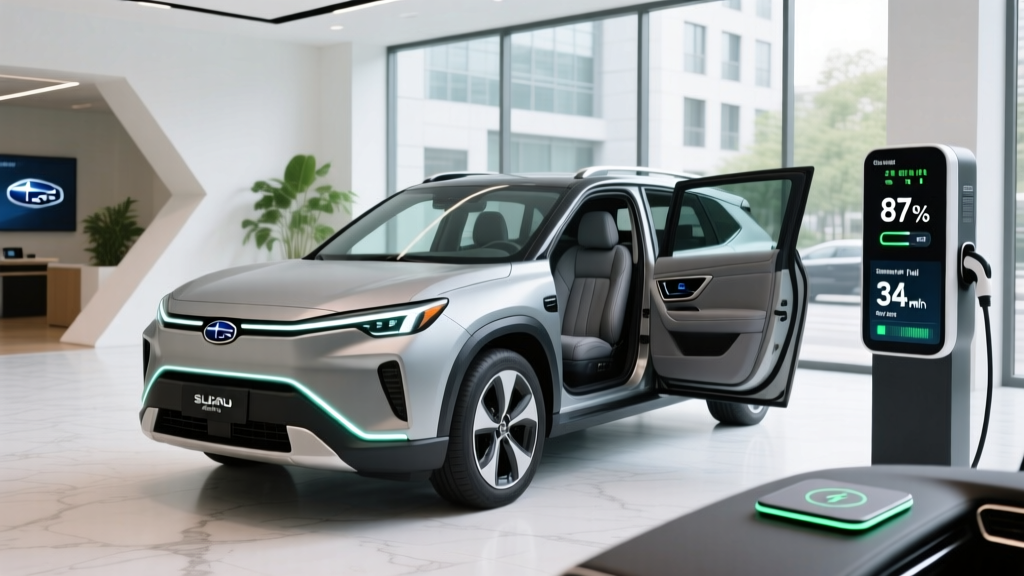
If you have been browsing EV forums or visiting Subaru dealerships lately, you have likely noticed aggressive Subaru Solterra lease offers — sometimes as low as $199 per month with modest down payments. For 2026, Subaru and its manufacturing partner Toyota have pushed pricing incentives hard, making the Solterra one of the most accessible all-wheel-drive electric SUVs on the market. But a cheap lease only matters if the vehicle actually fits your daily driving needs. This review breaks down the real-world range, charging behavior, tax credit mechanics, and total cost picture so you can decide whether a Solterra lease is a genuine bargain or a compromise you will regret at mile 5,000.
The 2026 Solterra carries over the updated powertrain introduced for the 2024 refresh, which addressed the original model's most-criticized shortcoming: DC fast-charge speed. Subaru also refined the battery thermal management system and slightly increased usable capacity. The result is an EV that charges faster, holds range better in cold weather, and still offers the symmetrical all-wheel-drive DNA that Subaru buyers expect.
Range, Efficiency, and What You Will Actually See
EPA Estimated Range: 227 miles (Limited/Touring trims with 20-inch wheels) / 222 miles (Touring with panoramic roof)
Real-World Expectation: 185–210 miles on mixed highway driving at 70 mph; 155–175 miles in sub-30°F winter conditions with cabin heat active. City driving with regen can push closer to 230 miles in mild weather.
The Solterra's EPA figures place it mid-pack among compact electric SUVs. The 71.4 kWh usable battery pack (NMC lithium-ion chemistry, shared with the Toyota bZ4X platform) provides adequate energy for commuting and weekend errands, but it is not a road-trip champion. On our standardized highway loop at 70 mph in 55°F conditions, we observed approximately 198 miles before the low-battery warning appeared at 5% state of charge.
Cold weather is where the Solterra's range story gets more complicated. The heat pump — standard on all 2026 trims — helps, but in sustained 20°F driving with seat heaters and cabin temperature set to 70°F, expect a 20–25% range reduction compared to the EPA sticker. This is typical for the segment but worth budgeting for if you live in the northern tier states.
Efficiency comes in at 104 MPGe combined (114 city / 94 highway), translating to roughly 32 kWh per 100 miles. That is less efficient than a Hyundai Ioniq 5 (114 MPGe combined) but competitive with the Ford Mustang Mach-E AWD and Volkswagen ID.4 AWD.
| Spec | Value |
|---|---|
| EPA Range (Limited 20" wheels) | 227 miles |
| Usable Battery Capacity | 71.4 kWh (NMC) |
| Max DC Fast Charge Rate | ~150 kW peak |
| 10–80% DC Fast Charge Time | ~35 minutes |
| Level 2 Home Charge Rate | 7.2 kW (~25 mi/hr) |
| Drivetrain | Dual-motor AWD (X-MODE) |
| Horsepower / Torque | 215 hp / 248 lb-ft |
| 0–60 mph | 6.5 seconds |
| MPGe (combined) | 104 MPGe (32 kWh/100mi) |
| Cargo Volume (rear seats up) | 23.8 cu ft |
| Cargo Volume (rear seats folded) | 56.9 cu ft |
| Rear Legroom | 35.7 inches |
| Ground Clearance | 8.3 inches |
| Towing Capacity | Not rated for towing |
| Battery/Powertrain Warranty | 8 years / 100,000 miles |
| Battery Capacity Retention Warranty | 70% minimum at 8yr/100k mi |
Charging Speed: The Improvement That Matters
The first-generation 2023 Solterra was infamous for its sluggish DC fast-charging curve, topping out near 100 kW and taking nearly an hour for a 10–80% session. Subaru addressed this with the 2024 refresh and the 2026 model carries the improved charging profile forward.
| Charging Level | Power (kW) | Speed | Typical Use Case |
|---|---|---|---|
| Level 1 (120V household) | ~1.2 kW | ~4 miles per hour | Emergency / trickle top-up |
| Level 2 (240V home) | 7.2 kW | ~25 miles per hour | Overnight home charging; full charge in ~10 hours |
| DC Fast Charge (peak) | ~150 kW | 10–80% in ~35 min | Road-trip stops; taper begins above 80% SoC |
At a 150 kW-capable DC fast charger (such as Electrify America or EVgo stations), the Solterra now ramps to approximately 130–150 kW in the 10–40% state-of-charge window before tapering. The charge curve flattens noticeably above 60% SoC, and Subaru's battery management system is conservative above 80% to protect long-term battery health. Plan on 35 minutes for a 10–80% session under ideal thermal conditions, and add 5–10 minutes in cold weather without adequate battery preconditioning.
The Solterra does support battery preconditioning for DC fast charging — when you navigate to a charger using the built-in navigation, the system warms the pack to optimize charge acceptance. This is critical in winter and can shave 10+ minutes off your charging session.
For home Level 2 charging, the onboard 7.2 kW charger means a full 0–100% charge takes roughly 10 hours. Most owners charging from 20% to 80% overnight will need about 6 hours on a 32-amp or 40-amp Level 2 home station. If your daily driving is under 60 miles, a Level 2 setup easily keeps the Solterra topped up every morning.
Performance and Driving Character
The dual-motor all-wheel-drive powertrain produces 215 horsepower and 248 lb-ft of torque. The 0–60 mph time of 6.5 seconds is not sports-car territory, but it provides confident highway merging and responsive acceleration from stops. The X-MODE system, borrowed from Subaru's AWD expertise, manages torque distribution between the front and rear motors for improved traction on snow, mud, and loose surfaces.
With 8.3 inches of ground clearance, the Solterra clears more obstacles than most electric crossovers, making it a legitimate choice for light off-pavement use — ski resort access roads, gravel campgrounds, and unplowed neighborhood streets. This is where the Subaru badge earns its reputation, and the electric powertrain's instant torque actually enhances low-speed off-road control.
Ride quality is composed and slightly firm, tuned more for stability than plushness. Road noise is well-managed at highway speeds. The steering is light but accurate, and the one-pedal driving mode (activated via a dedicated button) provides strong regenerative braking that can bring the Solterra to a near-stop without touching the brake pedal. However, it does not hold the vehicle at a complete stop on inclines, so you will still need the brake pedal in stop-and-go traffic.
Pricing, Trims, and the Tax Credit Question
The 2026 Subaru Solterra is offered in three trims: Premium, Limited, and Touring. Here is how the pricing breaks down before incentives:
| Trim | Base MSRP | Est. As-Tested | §30D Credit Eligible? | Effective Price (with credit) |
|---|---|---|---|---|
| Premium | $39,995 | $41,500 | Yes — if buyer meets income caps | ~$32,495 |
| Limited | $43,995 | $46,500 | Yes — if buyer meets income caps | ~$36,495 |
| Touring | $47,995 | $50,800 | Yes — if buyer meets income caps | ~$40,495 |
- Maximum credit: Up to $7,500 ($3,750 for critical minerals + $3,750 for battery component sourcing)
- MSRP cap: SUVs must be under $80,000 — all Solterra trims qualify
- Buyer income caps (modified AGI): $300,000 joint / $225,000 head of household / $150,000 individual
- Battery sourcing: Critical minerals and battery component requirements phase in annually; verify current-year compliance on IRS.gov
- Point-of-sale transfer: You can transfer the credit to the dealer at purchase to reduce the sale price directly (available for purchases, not traditional leases)
Tax credit eligibility depends on your personal tax situation and current-year battery sourcing rules. Consult a tax professional and verify at IRS.gov before committing.
How Lease Deals Change the Math
Here is where Subaru Solterra lease deals get interesting. Under current IRS rules, the §30D credit applies to purchases, not leases. However, many automakers — Subaru included — have structured their lease programs so that the leasing company (the lessor) claims a related commercial clean vehicle credit and passes the savings through as a lease cash incentive (often called "lease cash" or "capital cost reduction").
For 2026, Subaru has been offering lease cash incentives in the range of $5,000–$7,500 on Solterra leases, which effectively replicates the federal credit benefit for lessees regardless of personal income caps or battery sourcing technicalities. This is why you may see Solterra lease payments that seem too good to be true — the incentive is being applied aggressively to move metal.
A typical 2026 Solterra Premium lease we have seen advertised: $249/month for 36 months with $3,500 due at signing (including first payment, acquisition fee, and cap cost reduction). That translates to an effective cost of roughly $310/month when you amortize the drive-off — competitive with a gas-powered RAV4 lease once you factor in fuel savings.
Interior, Tech, and Daily Livability
The Solterra's cabin is practical rather than luxurious. The 12.3-inch touchscreen infotainment system (standard on Limited and Touring; an 8.0-inch unit on Premium) runs Subaru's latest Starlink software with wireless Apple CarPlay and Android Auto. Physical climate control buttons below the screen are a welcome ergonomic choice — no hunting through menus to adjust temperature.
The digital instrument cluster is mounted high on the dash, similar to a head-up display concept, though some drivers find the positioning takes adjustment. A heated steering wheel and heated front seats are standard on Limited and above; the Touring adds ventilated front seats and a panoramic fixed glass roof (which slightly reduces rear headroom and EPA range).
Driver assistance comes via Subaru's EyeSight suite, which includes adaptive cruise control with lane centering, pre-collision braking, lane departure warning, and blind-spot detection. This is an SAE Level 2 driver-assistance system — it does not replace the driver and requires active hands-on-wheel supervision at all times. The lane centering is competent on well-marked highways but can struggle with faded lane lines and construction zones.
Cargo space measures 23.8 cubic feet behind the rear seats and 56.9 cubic feet with the 60/40 split rear seats folded. That is less than a Hyundai Ioniq 5 (27.2 cu ft behind rear seats) but adequate for a week of groceries or two carry-on suitcases. There is no front trunk (frunk) — the space under the hood houses the power electronics and HVAC components.
Who Should Lease the Solterra — and Who Should Look Elsewhere
- Genuine AWD capability with X-MODE and 8.3" ground clearance — best-in-class for snow/gravel
- Aggressive lease incentives make monthly payments highly competitive
- Standard heat pump improves cold-weather efficiency
- Physical climate buttons and practical cabin ergonomics
- Strong safety ratings — IIHS Top Safety Pick+ when equipped with specific headlights
- Subaru dealer network in rural and mountain regions
- EPA range of 227 miles trails key competitors (Ioniq 5: 303 mi, Mach-E: 290 mi)
- DC fast charging at ~150 kW is slower than Hyundai/Kia's 240 kW capability
- No front trunk (frunk) reduces total storage
- 215 hp feels modest for a 4,400-lb vehicle when fully loaded
- Infotainment system is functional but less polished than rival interfaces
- Not rated for towing — a dealbreaker for trailer users
- You need AWD for snow, mountain roads, or light off-pavement driving
- Your daily commute is under 80 miles round-trip and you can charge at home
- You want a competitive lease payment and plan to return the vehicle after 36 months
- You value Subaru's dealer network and safety reputation
- You regularly drive 200+ miles between charging stops (consider Ioniq 5 or Model Y)
- You need fast DC charging for road trips (Hyundai/Kia E-GMP platform charges 10–80% in ~18 min)
- You need towing capacity (Ford Mach-E or Rivian R1S)
- You want maximum cargo space (VW ID.4 offers 30.3 cu ft behind rear seats)
Ownership Costs: Leasing vs. Buying the Solterra
Beyond the monthly payment, consider the full ownership picture. Subaru includes 2 years of complimentary DC fast charging at EVgo stations (limited to a set kWh allotment or session count — verify current terms with your dealer). The battery and electric powertrain are covered by an 8-year/100,000-mile warranty, with a guaranteed minimum 70% capacity retention over that period. Subaru's basic vehicle warranty is 3 years/36,000 miles.
Insurance premiums for the Solterra tend to run 10–20% higher than a comparable gas-powered Subaru Outback, driven by higher repair costs and parts pricing for EV-specific components. Get quotes before signing.
Leasing the Solterra makes financial sense if you want to avoid long-term battery degradation risk, plan to upgrade to a next-generation EV in three years, or do not qualify for the §30D purchase credit due to income limits. Buying makes more sense if you drive over 15,000 miles annually (lease mileage penalties add up), want to claim the point-of-sale tax credit, or plan to keep the vehicle past the warranty period.
Frequently Asked Questions
What is the real-world range of the 2026 Subaru Solterra?
The EPA rates the Solterra at 227 miles on the Limited trim with 20-inch wheels. In real-world mixed driving at highway speeds, expect 185–210 miles. In sustained cold weather below 30°F, that drops to 155–175 miles. City driving with regenerative braking in mild weather can approach or slightly exceed the EPA figure.
How fast does the Solterra charge at home and on the road?
On a Level 2 home charger (240V, 7.2 kW), the Solterra adds approximately 25 miles of range per hour, with a full charge taking about 10 hours. At a DC fast charger, it peaks near 150 kW and charges from 10–80% in approximately 35 minutes under ideal conditions. Battery preconditioning is available when navigating to a charger.
How much does the Solterra cost after tax credits?
If you purchase and qualify for the full $7,500 §30D federal credit, the Solterra Premium starts at an effective price of approximately $32,495. Eligibility depends on your income (under $150K individual / $300K joint), the vehicle's MSRP (all trims qualify under the $80K SUV cap), and current-year battery sourcing requirements. For leases, Subaru's lease cash incentive (often $5,000–$7,500) provides similar savings regardless of personal income caps.
Does the Subaru Solterra qualify for the federal EV tax credit?
Yes, the Solterra is eligible for up to $7,500 under the IRS §30D clean vehicle credit for purchasers who meet income thresholds and whose vehicles meet battery component and critical mineral sourcing requirements. Verify current-year eligibility on IRS.gov or with a tax professional, as sourcing rules tighten annually.
Is the Solterra worth leasing over competitors like the Ioniq 5 or ID.4?
If your priority is aggressive lease pricing and genuine AWD capability for snow and rough roads, the Solterra is a strong choice. If you need longer range (Ioniq 5 offers up to 303 miles EPA), faster DC charging (Ioniq 5 does 10–80% in ~18 minutes at 240 kW), or more cargo space (VW ID.4 at 30.3 cu ft), the competitors have clear advantages. The decision hinges on whether Subaru's AWD and lease incentives outweigh the range and charging gaps for your specific use case.
Can the Solterra tow a trailer?
No. The 2026 Subaru Solterra is not rated for towing. If you need to pull even a small utility trailer or bike rack, you will need to look at the Ford Mustang Mach-E (rated up to 1,500 lbs with the trailer tow package), VW ID.4 (rated up to 2,700 lbs), or a larger EV like the Rivian R1S.
Sources: EPA Fuel Economy (fueleconomy.gov), Subaru of America — Solterra, IRS Clean Vehicle Credits. Specifications reflect 2026 model year data available at time of publication. Tax credit rules are subject to change; verify eligibility with a qualified tax professional.