Quick Verdict: The Subaru Solterra Lease Deal Explained
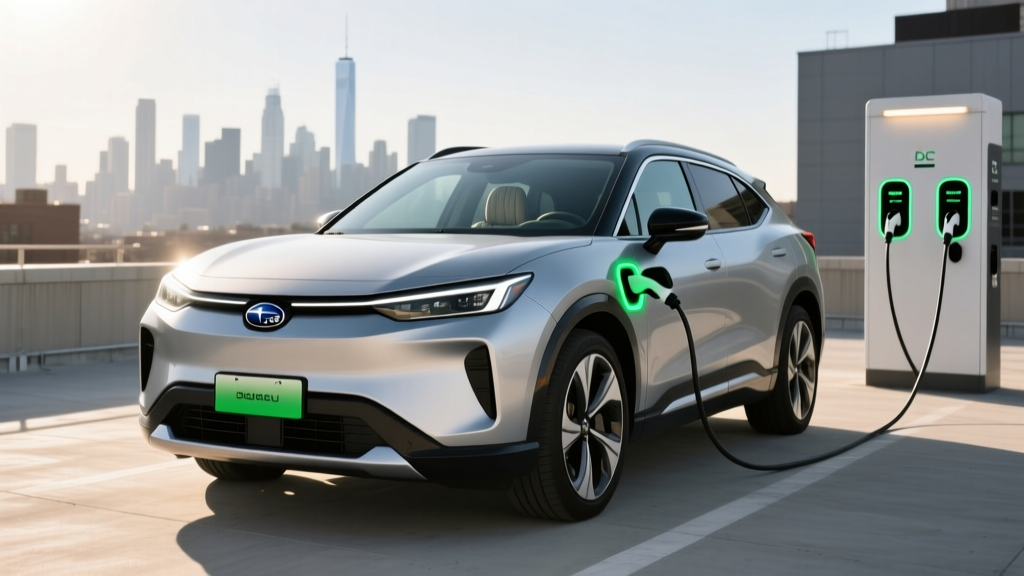
The 2026 Subaru Solterra remains one of the most compelling lease deals in the compact electric SUV segment, especially for buyers who value standard all-wheel drive, off-road capability, and the Subaru brand’s safety reputation. With aggressive manufacturer incentives often stacking on top of federal tax credits passed through at the point of sale, monthly lease payments can undercut competitors like the Hyundai Ioniq 5 and Toyota bZ4X. But before you sign, you need to understand what you’re actually getting — and where the Solterra falls short of the EV class leaders.
This review breaks down every number that matters: EPA range, real-world highway and cold-weather performance, DC fast-charging speed, battery chemistry and warranty, tax credit eligibility under current IRS §30D rules, and who this EV actually suits best in 2026.
Range and Efficiency: EPA Numbers vs. Real-World Reality
Real-World Expectation: ~185–210 miles highway at 70 mph; ~155–175 miles in sub-freezing cold weather with cabin heat
The 2026 Subaru Solterra carries over the EPA-rated 227 miles for its most popular trims. That figure is measured on a combined city/highway cycle, and as with all EVs, your mileage will vary — sometimes significantly.
In real-world highway testing at sustained 70–75 mph speeds, expect roughly 185 to 210 miles before needing to charge. The Solterra’s boxy shape and standard dual-motor AWD system create more aerodynamic drag and rolling resistance than sleeker competitors. In cold weather (below 32°F), battery chemistry limitations and cabin heating draw can reduce range to 155–175 miles. If you live in the northern U.S. and commute more than 60 miles round-trip in winter, range planning becomes essential.
Efficiency is rated at approximately 104 MPGe combined (roughly 32–34 kWh per 100 miles), which is below the class average. The Hyundai Ioniq 5 RWD, for comparison, achieves about 114 MPGe combined. This matters for your electricity costs over time, though the gap narrows if you charge at home on off-peak rates.
Battery, Charging Speed, and the 10-80% Reality
| Spec | Value |
|---|---|
| Battery Chemistry | NMC (Nickel Manganese Cobalt) |
| Total Battery Capacity | 72.8 kWh (usable ~68 kWh) |
| Max DC Fast-Charge Rate | 100 kW (peak) |
| 10–80% DC Fast Charge Time | ~35 minutes |
| Level 2 Home Charging Rate | 7.2 kW (onboard charger) |
| Level 2 Charge Time (0–100%) | ~9.5 hours |
| Level 2 Miles Added per Hour | ~23 miles/hr |
| Charging Port | CCS1 (J1772 combo) |
The Solterra uses an NMC (nickel manganese cobalt) lithium-ion battery pack. NMC chemistry offers higher energy density than LFP (lithium iron phosphate), which helps Subaru fit 72.8 kWh into a relatively compact platform. However, NMC cells are more sensitive to sustained high states of charge and extreme heat, so Subaru includes a battery buffer (roughly 4–5 kWh withheld from the usable total) to protect long-term health.
DC fast-charging is where the Solterra draws the most criticism. Its peak rate of 100 kW is well below rivals like the Ioniq 5 (up to 240 kW on 800V architecture) or the Tesla Model Y (up to 250 kW). On a 150 kW or 350 kW Electrify America or EVgo station, the Solterra will peak near 100 kW and taper significantly above 60% state of charge. A 10–80% session takes approximately 35 minutes — acceptable for occasional road trips but noticeably slower than the 18-minute sessions you’ll see from 800V competitors.
For home Level 2 charging, the 7.2 kW onboard charger is adequate. A full overnight charge on a 32-amp Level 2 wallbox adds roughly 23 miles of range per hour of charging, meaning a depleted battery reaches full in about 9.5 hours. Most owners who plug in nightly will never deplete fully, so this is rarely a practical limitation.
Performance, Drivetrain, and What the Numbers Mean on the Road
| Spec | Value |
|---|---|
| Drivetrain | Dual-motor AWD (standard on all trims) |
| Horsepower | 215 hp (combined) |
| Torque | 248 lb-ft |
| 0–60 mph | ~6.5 seconds |
| Towing Capacity | 2,000 lbs (when properly equipped) |
| Ground Clearance | 8.3 inches |
Every 2026 Solterra comes with dual-motor all-wheel drive — no RWD base model exists, which is a key differentiator from competitors that charge extra for AWD. The 215 hp output delivers a 0–60 mph time of about 6.5 seconds, which feels adequate for merging and passing but won’t win any drag races against the Ioniq 5 AWD (5.1 seconds) or Model Y Long Range (4.8 seconds).
Where the Solterra genuinely excels is off-pavement. With 8.3 inches of ground clearance, X-Mode traction management (inherited from Subaru’s ICE lineup), and grippy all-season tires, it handles forest roads, snow-covered driveways, and light trail use with more confidence than any other electric crossover in its price class. If your lifestyle includes ski trips, camping on unpaved roads, or dealing with unplowed driveways, the Solterra’s AWD system is a legitimate advantage.
Pricing, Lease Deals, and Tax Credit Eligibility
| Trim | Base MSRP | Est. Lease (36 mo) | Federal Credit Eligible? |
|---|---|---|---|
| Base (18" wheels) | $39,995 | ~$299–$379/mo* | Yes (if income/sourcing qualify) |
| Premium (20" wheels) | $43,495 | ~$349–$429/mo* | Yes (if income/sourcing qualify) |
| Limited (20" wheels) | $46,995 | ~$399–$479/mo* | Yes (if income/sourcing qualify) |
| Touring (20" wheels) | $49,995 | ~$449–$529/mo* | Yes (if income/sourcing qualify) |
*Lease estimates vary by region, dealer incentives, credit tier, and current Subaru promotional offers. Manufacturer-to-dealer cash and lease cash can significantly reduce effective monthly payments.
The Solterra’s MSRP lands comfortably under the IRS §30D SUV cap of $80,000, so all trims are eligible for the federal tax credit — provided you meet the other requirements. As of 2026, those include:
- Income caps: Modified AGI ≤ $150,000 (single), $225,000 (head of household), $300,000 (joint)
- MSRP cap: Vehicle MSRP ≤ $80,000 (SUV classification — all trims qualify)
- Battery sourcing: Critical minerals and battery components must meet phased-in domestic/free-trade sourcing thresholds (verify current-year compliance on IRS.gov before purchase)
- Point-of-sale transfer: The credit can be transferred to the dealer at purchase, reducing your out-of-pocket cost by up to $7,500 — or applied to reduce lease payments
Why leasing matters: When you lease a Solterra, the leasing company (Subaru’s captive finance arm) claims the $7,500 commercial clean vehicle credit under §45W and typically passes it through as a capitalized-cost reduction. This is often more straightforward than navigating the retail §30D sourcing and income requirements, which is one reason Solterra lease deals are frequently so aggressive. Subaru also periodically offers dealer cash and lease loyalty bonuses that stack on top.
Interior, Cargo, Tech, and Daily Livability
The Solterra’s cabin is practical and functional, though not luxurious. Subaru uses a mix of soft-touch materials and hard plastics, with a design that prioritizes visibility and ergonomics over flashiness. The 12.3-inch infotainment touchscreen (standard on Premium and above) runs Subaru’s Starlink system with wireless Apple CarPlay and Android Auto. Physical climate controls remain — a welcome choice for drivers who dislike menu-diving.
| Dimension | Value |
|---|---|
| Cargo Volume (behind rear seats) | 23.8 cu ft |
| Cargo Volume (rear seats folded) | 63.5 cu ft |
| Front Legroom | 42.1 inches |
| Rear Legroom | 35.7 inches |
| Front Headroom | 40.2 inches |
| Frunk (Front Trunk) | Not available |
Cargo space is competitive for the class, though the absence of a frunk is a missed opportunity for storing charging cables or small items. Rear legroom at 35.7 inches is adequate for adults on shorter trips but tighter than the Ioniq 5 (39.4 inches) or the Volkswagen ID.4 (37.6 inches).
Driver-assistance technology includes Subaru’s EyeSight suite — adaptive cruise control, lane-centering, pre-collision braking, and lane-departure warning. EyeSight is a SAE Level 2 driver-assist system, meaning the driver must remain attentive and keep hands on or near the wheel at all times. It is not autonomous driving. In IIHS testing, the Solterra earned a Top Safety Pick designation, reflecting Subaru’s longstanding safety engineering.
Warranty, Battery Longevity, and Ownership Costs
Subaru provides a competitive warranty package for the 2026 Solterra:
- Battery warranty: 8 years / 100,000 miles (capacity retention guaranteed above 70% of original)
- Powertrain warranty: 5 years / 60,000 miles
- Bumper-to-bumper: 3 years / 36,000 miles
- Roadside assistance: 3 years / 36,000 miles
The 8-year/100,000-mile battery warranty is standard for the industry and matches federal requirements. Subaru’s 70% capacity retention threshold means that if your battery degrades below 70% of its original usable capacity within the warranty period, Subaru will repair or replace it. In practice, NMC batteries in thermally managed systems like the Solterra’s typically lose 8–12% capacity over the first 100,000 miles under normal use. Extreme heat exposure and frequent DC fast-charging to 100% accelerate degradation, so best practice is to charge to 80% daily and reserve 100% sessions for road trips.
Insurance costs for the Solterra tend to run 10–20% higher than equivalent gas-powered Subarus, consistent with the broader EV insurance premium driven by higher repair costs and battery replacement values. Get quotes before signing.
Who Should Lease the Solterra — And Who Should Look Elsewhere
- You need standard AWD for snow, mud, or unpaved roads
- You value off-road capability (X-Mode, 8.3" ground clearance) in an EV
- You want Subaru’s safety reputation and EyeSight driver assists
- Your daily commute is under 80 miles round-trip
- You can charge at home and rarely road-trip more than 200 miles
- You find an aggressive lease deal with stacked incentives
- You regularly drive 300+ miles between charges (the 100 kW charge rate will slow you down)
- You want maximum range (consider the Ioniq 5 Long Range at 303+ mi EPA or Model Y at 310+ mi)
- You need a spacious rear seat for tall passengers or car seats
- You want a frunk or the most cargo-efficient layout
- Fast DC charging speed is a top priority for your lifestyle
Pros, Cons, and the Bottom Line
- Standard dual-motor AWD on every trim — no upgrade cost
- Best-in-class ground clearance (8.3") and X-Mode for light off-road use
- Aggressive lease pricing when manufacturer incentives stack
- Strong IIHS safety ratings and EyeSight standard
- Physical buttons and knobs — not fully touchscreen-dependent
- Comfortable ride quality over rough roads
- DC fast-charging limited to 100 kW peak (35 min 10–80%)
- EPA range of 227 mi trails class leaders by 50–80 miles
- No frunk — charging cables eat into cargo space
- Below-average efficiency (104 MPGe) raises electricity costs
- Rear seat legroom is tighter than key competitors
- Infotainment system feels a generation behind Hyundai/Kia
Frequently Asked Questions
What is the real-world range of the 2026 Subaru Solterra?
The EPA rates the Solterra at 227 miles (242 on the base trim with smaller wheels). In real-world highway driving at 70 mph, expect 185–210 miles. In cold weather below freezing, plan for 155–175 miles. These numbers make the Solterra best suited for daily commuting and regional trips, not cross-country road trips without careful planning.
How fast does the Solterra charge at home and on the road?
On a DC fast charger, the Solterra peaks at 100 kW and takes about 35 minutes to go from 10% to 80%. At home on a Level 2 (240V) wallbox, it charges at 7.2 kW, adding roughly 23 miles of range per hour and reaching a full charge in about 9.5 hours. Overnight charging at home covers virtually all daily needs.
Does the Subaru Solterra qualify for the $7,500 federal EV tax credit?
All Solterra trims fall under the $80,000 MSRP cap for SUVs under IRS §30D. However, eligibility also depends on your income (≤$150K single, ≤$300K joint), the battery’s critical-mineral and component sourcing meeting current-year thresholds, and purchasing (not leasing) through a participating dealer. When leasing, the credit is typically applied as a cap-cost reduction by the leasing company. Always verify current-year rules on IRS.gov before committing.
Is the Solterra worth leasing vs. buying?
Leasing is often the smarter financial move for the Solterra. Manufacturer lease cash, dealer incentives, and the pass-through of the $7,500 commercial credit can produce monthly payments well below what a purchase loan would cost. Leasing also insulates you from EV depreciation risk and battery degradation concerns beyond the warranty period. If you drive fewer than 12,000 miles per year and can charge at home, a Solterra lease deal is one of the most accessible entry points into a new AWD electric SUV.
How does the Solterra compare to the Toyota bZ4X and Hyundai Ioniq 5?
The Solterra shares its e-TNGA platform with the Toyota bZ4X, so range and charging specs are nearly identical. The Solterra adds Subaru-tuned suspension, X-Mode, and slightly more ground clearance. The Hyundai Ioniq 5 offers significantly faster DC charging (240 kW vs. 100 kW), longer range (up to 303 mi), more rear-seat legroom, and a frunk — but AWD costs extra and ground clearance is lower. If off-road capability and standard AWD matter most, the Solterra wins. If charging speed and range are priorities, the Ioniq 5 is the stronger choice.
Does the Solterra have a front trunk (frunk)?
No. The 2026 Solterra does not include a frunk. The space under the hood is occupied by drivetrain components and the power electronics. This means charging cables and accessories must be stored in the rear cargo area.