The Quick Answer: Is the Electric Subaru SUV Right for You?
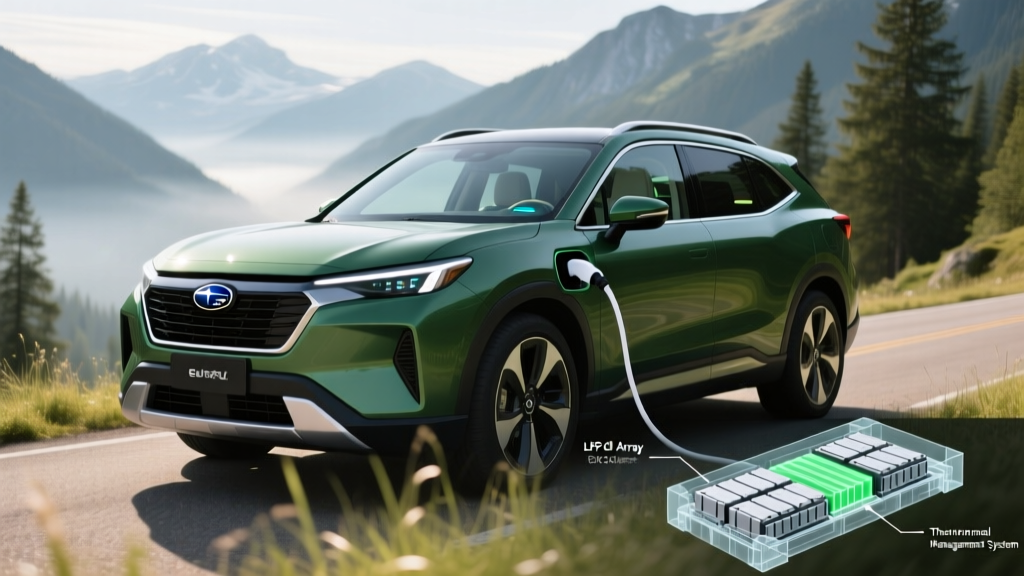
The 2026 Subaru Solterra is the brand's only all-electric SUV, offering an EPA-estimated 227 miles of range (Premium trim with 18-inch wheels), standard symmetrical all-wheel drive, and a starting MSRP around $38,495. It's best suited for drivers who need Subaru's trademark AWD capability in a daily commuter that can charge at home. If your typical day involves under 150 miles of driving and you have access to Level 2 home charging, the Solterra works well. If you frequently road-trip through charging deserts or live in extreme cold without a garage, you'll need to plan carefully — real-world highway range drops to roughly 180-195 miles in winter conditions.
2026 Subaru Solterra: Core Specs at a Glance
The Solterra shares its e-TNGA platform with the Toyota bZ4X, but Subaru tunes it for all-weather capability with standard dual-motor AWD across every trim. Here's what the numbers look like for the current model year:
| Specification | 2026 Solterra Premium | 2026 Solterra Touring |
|---|---|---|
| EPA Range | 227 miles (18" wheels) | 222 miles (20" wheels) |
| Battery Capacity (usable) | 72.8 kWh (Lithium-ion, NMC) | 72.8 kWh (Lithium-ion, NMC) |
| Drivetrain | Dual-motor AWD (214 hp) | Dual-motor AWD (214 hp) |
| Peak DC Fast Charge Rate | ~150 kW | ~150 kW |
| 10-80% DC Fast Charge Time | ~35 minutes | ~35 minutes |
| Level 2 Charge Rate | 7.2 kW (~24 mi/hr) | 7.2 kW (~24 mi/hr) |
| MPGe (Combined) | 111 MPGe | 107 MPGe |
| 0-60 mph | ~6.5 seconds | ~6.5 seconds |
| Starting MSRP | $38,495 | $44,995 |
| Battery/Powertrain Warranty | 8 years / 100,000 miles | 8 years / 100,000 miles |
Source: fueleconomy.gov and Subaru of America specifications.
Real-World Range Reality Check
EPA Sticker: 227 miles (Premium trim).
Expect in practice: 190-210 miles on mixed highway driving at 70+ mph; 170-195 miles in freezing temperatures (below 30°F). The Solterra's boxy crossover shape and standard AWD create more rolling resistance and drag than sleeker EVs. In our experience, the range meter is reasonably accurate — but like all EVs, sustained highway speeds and cold weather are the primary range killers. Plan road trips assuming ~180 miles between stops for a comfort buffer.
Solterra vs. Gas Outback: The Real Cost Comparison
The most common question from Subaru shoppers: how does the Solterra stack up against the gas-powered Outback, the brand's best-selling wagon? Let's run the numbers over a 5-year ownership period, assuming 15,000 miles driven annually.
| Cost Category (5 Years) | 2026 Solterra Premium | 2026 Outback Premium (2.5L) |
|---|---|---|
| Purchase Price (MSRP) | $38,495 | $33,295 |
| Estimated Federal Tax Credit (§30D)* | $0-$7,500 (see eligibility below) | $0 |
| Fuel/Energy Cost (15k mi/yr) | ~$600/yr (home charging, $0.13/kWh avg) | ~$1,950/yr (gas at $3.25/gal, 28 MPG combined) |
| 5-Year Fuel/Energy Total | ~$3,000 | ~$9,750 |
| Maintenance (5 years) | ~$1,200 (no oil, fewer brake pads w/ regen) | ~$3,500 (oil changes, filters, brake wear) |
| Insurance (estimated avg) | ~$1,800/yr | ~$1,500/yr |
| 5-Year Insurance Total | ~$9,000 | ~$7,500 |
| 5-Year Total (no credit) | ~$51,695 | ~$54,045 |
| 5-Year Total (with $7,500 credit) | ~$44,195 | ~$54,045 |
*Federal §30D tax credit eligibility depends on MSRP caps ($80,000 for SUVs), buyer income limits ($300K joint / $150K single), battery critical-mineral sourcing, and assembly requirements. Check current rules at IRS.gov. The Solterra qualifies for the full credit for eligible buyers as of early 2026, but sourcing rules are tightening annually.
Charging at Home and on the Road: What to Expect
The Solterra uses a CCS1 connector for DC fast charging (or NACS with an adapter as Subaru transitions to Tesla's standard). For daily use, home Level 2 charging is where this electric Subaru SUV makes the most sense.
| Charging Level | Power (kW) | Miles Added Per Hour | Best For |
|---|---|---|---|
| Level 1 (120V household outlet) | ~1.4 kW | ~4-5 miles | Overnight top-off, emergencies |
| Level 2 (240V home charger) | 7.2 kW | ~24 miles | Daily charging, full overnight refill |
| DC Fast Charge (public) | Up to 150 kW peak | ~150+ mi in 30 min | Road trips, quick stops |
Home charging reality: A full charge from empty on Level 2 takes roughly 10 hours. Most owners plug in nightly and wake up with a full battery. A 0-80% charge overnight covers virtually any daily commute. If you're installing a Level 2 home charger, budget $500-$800 for the charger unit and $800-$2,500 for electrician installation (a 240V/40A circuit). If your electrical panel needs an upgrade to 200A, add $1,500-$3,000.
DC fast charging caveat: The Solterra's peak rate of ~150 kW is moderate by 2026 standards. Competitors like the Hyundai Ioniq 5 (peak 240 kW) and Kia EV6 (peak 240 kW) charge noticeably faster. The Solterra's charge curve also tapers significantly above 80% state of charge — the final 20% can take as long as the first 60%. For road trips, plan to charge from 10-80% and move on rather than waiting for a full battery.
Federal Tax Credit Eligibility: Can You Claim §30D?
The federal EV tax credit can reduce the Solterra's effective price by up to $7,500, but eligibility has strict requirements under current IRS rules:
- MSRP Cap: Vehicle must have an MSRP under $80,000 (SUV classification). The Solterra clears this easily at ~$38K-$45K.
- Buyer Income Cap: Modified AGI must not exceed $300,000 (joint filers), $225,000 (head of household), or $150,000 (single).
- Battery Sourcing: Increasing percentages of critical minerals and battery components must be sourced from the US or free-trade-agreement countries. This requirement tightens each year — verify current-year compliance at purchase.
- Final Assembly: Vehicle must undergo final assembly in North America. The Solterra is assembled in Japan, which has affected eligibility in prior years. Confirm current assembly-status with your dealer before relying on the credit.
- Point-of-Sale Transfer: Eligible buyers can transfer the credit to the dealer at purchase for an immediate price reduction rather than waiting to claim it on their tax return.
Always verify eligibility at fueleconomy.gov and consult a tax professional before making purchase decisions based on credits.
Common Misconceptions About the Solterra
| Myth | Fact |
|---|---|
| "227 miles of range isn't enough for anyone." | The average American drives ~37 miles per day (FHWA data). 227 miles covers nearly a week of commuting for most people — with nightly home charging, range is rarely an issue for daily use. |
| "EV batteries need replacing every few years." | Subaru warranties the Solterra's battery for 8 years/100,000 miles against degradation below 70% capacity. Industry data shows modern NMC batteries retain 85-90% capacity after 100,000 miles. A full replacement (if needed out of warranty) costs roughly $12,000-$18,000, but most batteries outlast the vehicle. |
| "AWD EVs are terrible in snow." | The Solterra's dual-motor AWD provides instant torque to all four wheels with no mechanical lag. Combined with Subaru's X-MODE traction management and 8.3 inches of ground clearance, it performs well in moderate snow. The low center of gravity from the floor-mounted battery also aids stability. |
| "Public charging is unreliable everywhere." | Network reliability varies significantly. Electrify America and Tesla Superchargers (via adapter) tend to offer the best uptime. Use PlugShare or A Better Routeplanner to verify charger availability on road-trip routes before departing. |
Decision Framework: Should You Buy the Electric Subaru SUV?
Choose the Solterra If:
- You have access to home Level 2 charging (garage or driveway with 240V circuit capability)
- Your daily driving is under 150 miles and you want AWD for rain, snow, or light trails
- You qualify for the federal tax credit (bringing the effective price to ~$31,000-$37,500)
- You value Subaru's safety reputation — the Solterra earns top marks from IIHS with standard EyeSight driver assist
- You want lower running costs and don't mind a 227-mile range ceiling
Look Elsewhere If:
- You rely exclusively on apartment/curbside parking with no charging access (public-only charging is expensive and time-consuming)
- You regularly drive 300+ mile highway stretches through areas with sparse charging infrastructure
- You need maximum range — the Hyundai Ioniq 5 (303 mi) or Tesla Model Y (320 mi) go significantly farther per charge
- Fast DC charging speed is a priority — the Solterra's ~150 kW peak is behind class leaders at 240+ kW
- You need three rows or substantial cargo space — the Solterra's 23.8 cu ft behind the rear seats is modest for an SUV
First-Time EV Buyer: What You Need to Know Before Purchasing
If the Solterra is your first electric vehicle, here are the ownership realities no brochure will emphasize:
Preconditioning matters. The Solterra can warm its battery before you reach a DC fast charger (set it via the infotainment navigation). A cold battery charges dramatically slower — preconditioning can cut your 10-80% charge time by 10-15 minutes in winter.
One-pedal driving takes a week to learn. The Solterra's regenerative braking (adjusted via paddle shifters) can slow the car significantly when you lift off the accelerator. Most owners adapt within days and prefer it, but expect a brief adjustment period.
Insurance costs more. EV insurance premiums run 15-25% higher than comparable gas vehicles due to higher repair costs and battery replacement risk. Get quotes before purchasing — budget roughly $150-$200/month depending on your driving record and location.
Tires wear faster. The Solterra's instant torque and heavier weight (4,365 lbs) accelerate tire wear by roughly 20-30% compared to a gas Outback. Budget for tire replacement every 30,000-40,000 miles rather than 50,000+.
The 12V battery still exists. Like all EVs, the Solterra has a conventional 12V auxiliary battery that powers electronics. It can die just like a gas car's — keep jumper cables or a lithium jump-starter in the vehicle.
Frequently Asked Questions
Does the Subaru Solterra qualify for the $7,500 federal tax credit?
Eligibility depends on current-year battery sourcing rules, buyer income limits, and final assembly location. The Solterra has qualified in recent years, but the final-assembly-in-North-America requirement and tightening critical-minerals rules mean you must verify with your dealer and the IRS before purchase. The point-of-sale transfer option allows eligible buyers to apply the credit as an immediate discount.
How does the Solterra compare to the Toyota bZ4X?
They share the same e-TNGA platform and 72.8 kWh battery, but the Solterra comes exclusively with dual-motor AWD (214 hp) while the bZ4X offers a FWD option. The Solterra has slightly more ground clearance (8.3" vs 8.1") and Subaru's X-MODE for low-traction surfaces. Pricing is comparable, though the bZ4X FWD starts lower. Range figures are within 5-10 miles of each other depending on trim.
What is the real-world range of the Solterra in winter?
Expect 170-195 miles in sustained below-freezing temperatures, depending on driving speed, terrain, and whether you use cabin heating. EVs lose 15-30% of range in cold weather because battery chemistry is less efficient and cabin heating draws from the traction battery. Using heated seats and steering wheel instead of blasting cabin heat can recover 5-10 miles of range.
Can I charge the Solterra at Tesla Superchargers?
Subaru has committed to adopting the NACS (Tesla) charging standard. Depending on your model year, you may need a CCS-to-NACS adapter to access Tesla's Supercharger network. Confirm adapter compatibility with your specific vehicle at purchase. Non-Tesla DC networks like Electrify America and EVgo use CCS natively.
How long will the Solterra battery last?
Subaru warranties the high-voltage battery for 8 years or 100,000 miles against capacity loss below 70%. Real-world data from similar NMC battery packs suggests 85-92% capacity retention at 100,000 miles is typical. Avoid routinely charging to 100% or draining to 0% — keeping the battery between 20-80% for daily use extends longevity. For long-term ownership (200,000+ miles), budget for potential battery service, though most packs outlast the vehicle's economic life.