Quick Verdict: The Subaru Solterra EV in 2026
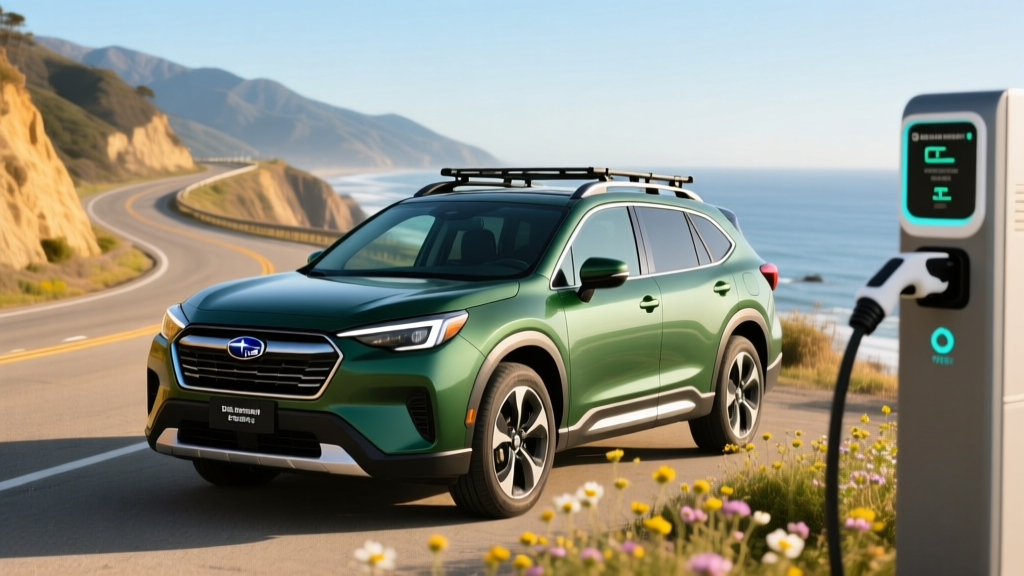
The 2026 Subaru Solterra EV remains the only all-electric vehicle wearing the Pleiades badge, and it continues to prioritize what Subaru buyers have always wanted: standard all-wheel drive, genuine ground clearance, and rugged practicality. Built on the shared Toyota/Subaru e-TNGA platform alongside the Toyota bZ4X, the Solterra differentiates itself with Subaru's X-MODE off-road system, 8.3 inches of ground clearance, and a more adventure-oriented character.
For 2026, Subaru has addressed some of the earlier model's most-cited shortcomings. DC fast-charging speeds have improved, the infotainment system has been overhauled with a larger standard display, and a new heat pump comes standard across all trims — a critical efficiency upgrade for cold-weather drivers. However, the Solterra's EPA range still trails key competitors in the compact electric SUV segment, and its charging curve, while improved, won't satisfy frequent road-trippers who prioritize minimal stop times.
Starting at $39,995 before destination, the Solterra qualifies for partial or full federal tax credits depending on battery sourcing and buyer income — more on the complex §30D eligibility below. It's a compelling pick for Subaru loyalists transitioning to electric and outdoor-oriented buyers who need AWD and don't regularly drive 300+ miles between charges. For those prioritizing maximum range or the fastest possible charging, competitors like the Hyundai Ioniq 5 or Tesla Model Y still hold clear advantages.
Range and Efficiency: EPA Numbers vs. Real-World Expectations
Real-World Expectation: Plan for roughly 185–210 miles in mixed highway driving at 70 mph. In sustained cold weather (below 30°F), expect 160–185 miles without preconditioning. City and moderate-speed driving can yield 215–225 miles. The 2026 heat pump significantly reduces cold-weather cabin-heating energy drain compared to pre-2025 models.
The 2026 Solterra is powered by a 72.8 kWh lithium-ion battery pack (NMC chemistry — nickel manganese cobalt), of which approximately 68.0 kWh is usable capacity. Subaru maintains a conservative top and bottom buffer to protect long-term battery health, which helps explain the range figures relative to the pack size.
Efficiency lands at an EPA-rated 104 MPGe combined (roughly 32 kWh per 100 miles) for the Premium and Limited trims. The heavier Touring trim with its 20-inch wheels drops slightly to 102 MPGe combined. These figures place the Solterra in the middle of the compact electric SUV pack — less efficient than the Tesla Model Y (122 MPGe combined) but roughly on par with the Volkswagen ID.4 AWD (104 MPGe).
In real-world highway testing at sustained speeds of 70–75 mph, the Solterra typically delivers 3.0 to 3.3 miles per kWh, translating to approximately 200–215 miles before you'll want to locate a charger. Subaru's standard heat pump for 2026 is a meaningful upgrade: resistive cabin heating in older EVs can consume 3–5 kW in cold weather, while a heat pump pulls roughly 1–2 kW for equivalent warmth, preserving an additional 15–25 miles of range in freezing temperatures.
| Specification | Premium / Limited | Touring |
|---|---|---|
| EPA Range | 228 miles | 222 miles |
| Battery (Usable / Total) | 68.0 kWh usable / 72.8 kWh total (NMC) | |
| MPGe (City / Hwy / Combined) | 114 / 94 / 104 | 112 / 92 / 102 |
| kWh per 100 Miles | 32 | 33 |
| Drivetrain | Dual-motor AWD | |
| Horsepower | 215 hp | |
| Torque | 248 lb-ft | |
| 0–60 mph | ~6.5 seconds | |
| Max DC Fast Charge | 150 kW | |
| 10–80% DC Charge Time | ~30 minutes | |
| Level 2 Charge Rate | 7.2 kW (~23 mi/hr) | |
| Ground Clearance | 8.3 inches | |
| Cargo Volume (rear seats up / folded) | 23.8 / 56.9 cu ft | |
| Base MSRP (incl. destination) | $39,995 | $46,995 |
Charging Speed: DC Fast Charging and Home Level 2
Charging remains one of the most scrutinized aspects of any EV purchase, and the 2026 Solterra shows meaningful progress over its 2023 predecessor while still trailing class leaders.
| Charging Level | Power / Rate | Miles Added per Hour | Notes |
|---|---|---|---|
| Level 1 (120V household) | ~1.4 kW | ~4 mi/hr | Emergency/trickle only; full charge in ~48 hours |
| Level 2 (240V home/public) | 7.2 kW | ~23 mi/hr | Full charge in ~10 hours; ideal for overnight |
| DC Fast Charge | Peak 150 kW | Up to ~650 mi/hr (at peak) | 10–80% in ~30 min; tapers significantly above 80% |
DC fast charging in practice: The Solterra's peak charge rate of 150 kW is an improvement from the 2023 model's roughly 100 kW ceiling, but it's important to understand that peak kW is not sustained kW. The charge curve peaks around 150 kW between roughly 10% and 40% state of charge, then progressively tapers. Between 40% and 60%, expect approximately 100–120 kW. Above 80%, charging slows dramatically to protect battery longevity — often dropping below 40 kW. The 10–80% session takes approximately 30 minutes at a capable 150+ kW station.
Compared to the Hyundai Ioniq 5's 240 kW peak (10–80% in roughly 18 minutes) or the Tesla Model Y's ~250 kW peak on V3 Superchargers, the Solterra requires noticeably longer stops on road trips. For a 200-mile highway drive requiring a mid-trip top-up, plan on spending 30–35 minutes plugged in rather than the 18–22 minutes some competitors manage.
Home Level 2 charging: The onboard charger accepts up to 7.2 kW on a 240-volt Level 2 circuit, adding roughly 23 miles of range per hour. A full overnight charge from near-empty takes about 10 hours. For daily driving of 40–60 miles, a Level 2 home charger replenishes your daily use in roughly 2–3 hours — making home charging completely adequate for the vast majority of owners.
Installation of a 240V/40-amp Level 2 home circuit typically costs $800–$2,000 depending on your electrical panel's capacity and the distance from panel to charger location. Homes with older 100-amp panels may require a $1,500–$3,000 panel upgrade to support EV charging alongside existing loads. Always consult a licensed electrician for a site-specific assessment.
The Solterra uses the J1772 connector for Level 2 AC charging and CCS1 for DC fast charging. Subaru has confirmed that 2026 models will offer a NACS (Tesla-style) charge port adapter option, enabling access to Tesla Supercharger stations — a significant expansion of the public charging network available to Solterra owners.
Performance, Drivetrain, and Capability
Every 2026 Solterra comes with dual electric motors producing a combined 215 horsepower and 248 lb-ft of torque, powering all four wheels through Subaru's symmetrical all-wheel-drive system. The 0–60 mph time of approximately 6.5 seconds is adequate for merging and passing but trails sportier competitors — the Tesla Model Y Long Range hits 60 mph in about 5.0 seconds, and the Ford Mustang Mach-E Premium AWD manages approximately 5.2 seconds.
Where the Solterra distinguishes itself is off-pavement. With 8.3 inches of ground clearance — more than the Ioniq 5 (6.1 in) or Model Y (6.6 in) — and Subaru's X-MODE traction management system with dedicated Snow/Dirt and Deep Snow/Mud settings, the Solterra handles forest service roads, snowy mountain passes, and mild trail use with genuine competence. It's not a dedicated off-roader, but it fulfills the Subaru brand promise of all-weather, all-surface confidence better than any other electric SUV in its price range.
Towing capacity is rated at 2,000 pounds when properly equipped — sufficient for a small utility trailer or a pair of dirt bikes, but not enough for a loaded camping trailer. This is a common limitation among compact electric SUVs; the Model Y can tow up to 3,500 pounds.
Regenerative braking offers multiple levels selectable via steering-wheel paddles, though the Solterra does not offer true one-pedal driving that brings the vehicle to a complete stop without touching the brake pedal. Drivers accustomed to strong regen in vehicles like the Chevrolet Bolt or Tesla will find the Solterra's maximum regen setting moderate.
Interior, Cargo, and Technology
The 2026 Solterra's cabin is functional, durable, and designed with outdoor use in mind — think water-resistant cargo-area materials and easy-to-clean surfaces rather than luxury pretension. Subaru has upgraded the infotainment system for 2026 with a standard 12.3-inch touchscreen running an improved interface with wireless Apple CarPlay and Android Auto, over-the-air update capability, and integrated cloud-based navigation.
Passenger space is competitive for the segment:
- Front legroom: 42.1 inches
- Rear legroom: 35.4 inches
- Front headroom: 39.9 inches
- Rear headroom: 38.1 inches
Cargo volume behind the rear seats measures 23.8 cubic feet, expanding to 56.9 cubic feet with the 60/40 split rear seats folded. There is no front trunk (frunk) — the space under the hood houses power electronics. The cargo area is flat and usable, with under-floor storage for charging cables and small items. A power liftgate is standard on Limited and Touring trims.
Driver assistance technology: The Solterra comes standard with Subaru's EyeSight suite, which includes adaptive cruise control with lane centering, pre-collision braking, lane departure warning, and blind-spot detection. This is an SAE Level 2 driver-assistance system — meaning it provides steering and speed support on highways but requires the driver to remain fully engaged, with hands on the wheel and eyes on the road at all times. It is not a self-driving system.
A new feature for 2026 is Digital Key capability, allowing your smartphone to lock, unlock, and start the vehicle. Heated front seats and a heated steering wheel are standard across all trims, while ventilated front seats and a panoramic fixed glass roof are reserved for the Touring trim.
Pros
- Standard AWD with genuine off-road capability and 8.3" ground clearance
- Improved heat pump standard for 2026 — better cold-weather range retention
- Competitive pricing with available federal tax credit
- Strong safety credentials (IIHS Top Safety Pick+ expected)
- Comfortable ride quality and quiet cabin
- NACS adapter option opens Tesla Supercharger access
Cons
- EPA range of 228 miles trails segment leaders (Ioniq 5: 303 mi, Model Y: 320 mi)
- DC fast charging at 150 kW peak is slower than key competitors
- No frunk (front trunk) for additional storage
- No true one-pedal driving mode
- 215 hp feels modest for the weight; 0–60 time trails sportier rivals
- 2,000-lb towing capacity limits utility
Pricing, Trims, and Federal Tax Credit Eligibility
The 2026 Subaru Solterra is offered in three trims:
| Trim | Base MSRP (incl. destination) | Est. Price After $7,500 Credit* | Key Features |
|---|---|---|---|
| Premium | $39,995 | ~$32,495 | 12.3" touchscreen, heated seats/steering wheel, X-MODE, 18" alloy wheels, EyeSight suite |
| Limited | $43,995 | ~$36,495 | Adds leather-trimmed seats, power liftgate, 360° camera, heated rear seats |
| Touring | $46,995 | ~$39,495 | Adds panoramic glass roof, ventilated front seats, 20" wheels, Harman Kardon audio, Digital Key |
*Tax credit amounts are estimates based on partial or full §30D eligibility and point-of-sale transfer. Actual credit depends on battery sourcing compliance, buyer income, and other IRS requirements. Always verify with a tax professional.
Federal tax credit eligibility (§30D): The Solterra's eligibility for the up-to-$7,500 federal EV tax credit depends on several factors that change periodically under the IRS clean vehicle credit rules:
- MSRP cap: The Solterra qualifies as an SUV under IRS vehicle-class definitions, which carries an $80,000 MSRP cap — all trims clear this easily.
- Buyer income cap: Adjusted gross income must not exceed $150,000 (single), $225,000 (head of household), or $300,000 (married filing jointly).
- Battery sourcing requirements: The credit is split into two halves — $3,750 for meeting critical-minerals sourcing requirements and $3,750 for meeting battery-component manufacturing requirements. The Solterra's battery sourcing has progressively improved as Toyota/Subaru supply chains adapt, but the exact credit amount (partial $3,750 or full $7,500) should be confirmed at the dealership and cross-checked against the IRS's current eligible-vehicles list at the time of purchase.
- Point-of-sale transfer: As of 2024, eligible buyers can transfer the credit to the dealer at the point of sale, reducing the purchase price directly rather than waiting to claim it on their tax return. This is available for the 2026 Solterra at participating dealerships.
State and local incentives may further reduce the effective price. Check the AFDC incentive database for your specific state — some states offer additional rebates of $1,000–$5,000 for new EV purchases.
Warranty, Ownership Costs, and Long-Term Battery Health
Subaru backs the 2026 Solterra with the following warranty coverage:
- New-vehicle limited warranty: 3 years / 36,000 miles
- Powertrain warranty: 5 years / 60,000 miles
- EV battery warranty: 8 years / 100,000 miles (capacity retention guaranteed above 70% of original capacity)
The 8-year/100,000-mile battery warranty is standard for the industry and matches competitors like Toyota, Hyundai, and Volkswagen. Subaru guarantees that the battery will retain at least 70% of its original capacity during the warranty period. In practice, NMC batteries in modern EVs with active thermal management typically degrade between 1.5% and 2.5% per year under normal use — meaning a Solterra owner might expect roughly 85–92% capacity retention after 8 years, well within the warranty threshold.
Out-of-warranty battery replacement, should it ever be needed, is currently estimated at $12,000–$18,000 including labor based on industry parts pricing for packs of this size. However, full-pack replacements are exceedingly rare; individual module repair is often possible at significantly lower cost.
Total cost of ownership: Electricity costs for the Solterra average approximately $0.045–$0.06 per mile when charging at home on a national-average residential rate of $0.16/kWh. Compare that to a similarly sized gas-powered Subaru Outback achieving 28 MPG combined at $3.40/gallon — roughly $0.12 per mile. Over 15,000 annual miles, the Solterra saves approximately $1,100–$1,200 per year in fuel costs alone.
Insurance premiums for the Solterra tend to run 10–20% higher than equivalent gas-powered Subarus, reflecting higher repair costs and EV-specific coverage considerations. Expect annual premiums of $1,800–$2,400 depending on your profile and location. Maintenance costs are significantly lower than gas vehicles — no oil changes, no spark plugs, no transmission fluid — with most owners needing only cabin air filter replacements, tire rotations, and wiper fluid for the first 100,000 miles.
Who Should Buy the 2026 Subaru Solterra EV?
Choose the Solterra if:
- You live in a region with snow, rain, or unpaved roads and prioritize AWD and ground clearance
- Your daily commute and regular driving stays under 180–200 miles round-trip
- You can charge at home with Level 2 and rarely take road trips exceeding 250 miles between stops
- You're a current Subaru owner who values the brand's safety reputation and outdoor-oriented design
- You want an EV that handles ski trips, trailheads, and gravel roads without range-compromising modifications
Look elsewhere if:
- Maximum range is your top priority (consider the Tesla Model Y at 320 mi or Hyundai Ioniq 5 at 303 mi)
- You frequently take 400+ mile road trips and want the shortest possible charging stops
- You need more than 2,000 lbs of towing capacity
- You want a frunk for additional enclosed storage
- Performance driving and quick acceleration matter to you
The Solterra fills a specific niche: it's the electric SUV for buyers whose lifestyle demands Subaru's signature all-weather capability but whose daily driving patterns fit comfortably within its range envelope. If that describes you, the 2026 model's heat pump, improved charging, and competitive pricing make it a strong choice. If you need more range and faster charging above all else, the segment offers more capable — if less rugged — alternatives.
Frequently Asked Questions
What is the real-world range of the 2026 Subaru Solterra?
The EPA rates the Solterra at 228 miles (Premium/Limited) or 222 miles (Touring). In real-world mixed highway driving at 65–75 mph, expect approximately 185–210 miles. In cold weather below 30°F, plan for 160–185 miles without preconditioning. The standard heat pump for 2026 improves cold-weather range retention compared to earlier models.
How fast does the Subaru Solterra charge?
On a DC fast charger, the Solterra peaks at 150 kW and charges from 10% to 80% in approximately 30 minutes. On a Level 2 home charger (240V), it charges at 7.2 kW, adding about 23 miles per hour — a full overnight charge takes roughly 10 hours. On a standard 120V outlet, charging is approximately 4 miles per hour — suitable only for emergency top-ups.
Does the 2026 Subaru Solterra qualify for the federal EV tax credit?
The Solterra is eligible for up to $7,500 under IRS §30D, but the actual amount depends on current battery-sourcing compliance (split into $3,750 for critical minerals and $3,750 for battery components), your adjusted gross income (caps of $150K single / $300K joint), and the vehicle's MSRP (must be under $80K for SUVs — all trims qualify). The credit can be transferred to the dealer at point of sale for an immediate price reduction. Verify current eligibility on the IRS clean vehicle credit page at the time of purchase.
Is the Subaru Solterra worth buying vs. the Toyota bZ4X or Hyundai Ioniq 5?
The Solterra and bZ4X share the same platform and battery, but the Solterra adds X-MODE, more ground clearance, and Subaru's safety-focused tuning. Choose the Solterra for off-road capability and Subaru's brand. The Ioniq 5 offers significantly more range (303 mi), faster charging (10–80% in ~18 min at 240 kW), and a more spacious interior — making it the better pick for road-trippers and efficiency-focused buyers. The Tesla Model Y leads the segment in range (320 mi) and Supercharger network access but lacks the Solterra's off-road capability.
What are the biggest drawbacks of the Solterra?
The primary limitations are its 228-mile EPA range (below segment leaders), 150 kW peak DC charging (slower than competitors offering 200–250 kW), absence of a frunk, lack of one-pedal driving, and a 2,000-lb towing limit. For buyers whose daily driving fits within the range and who charge primarily at home, these drawbacks are manageable. For frequent long-distance drivers, they're more significant.
How long will the Solterra's battery last?
Subaru warranties the battery for 8 years or 100,000 miles against degradation below 70% of original capacity. Based on NMC battery degradation data from similar EVs, expect approximately 85–92% capacity retention after 8 years of normal use. Many EV batteries outlast their vehicles — full replacement is rare, and individual module repair is possible if needed.
Can the Solterra use Tesla Superchargers?
Subaru offers a NACS adapter for 2026 Solterra models, enabling access to Tesla's Supercharger network (which uses the NACS connector). This significantly expands the available fast-charging infrastructure, particularly in rural areas where Supercharger stations may be the only DC fast-charging option. Confirm adapter availability and compatibility with your dealer.