Subaru's New EV: The Quick Answer
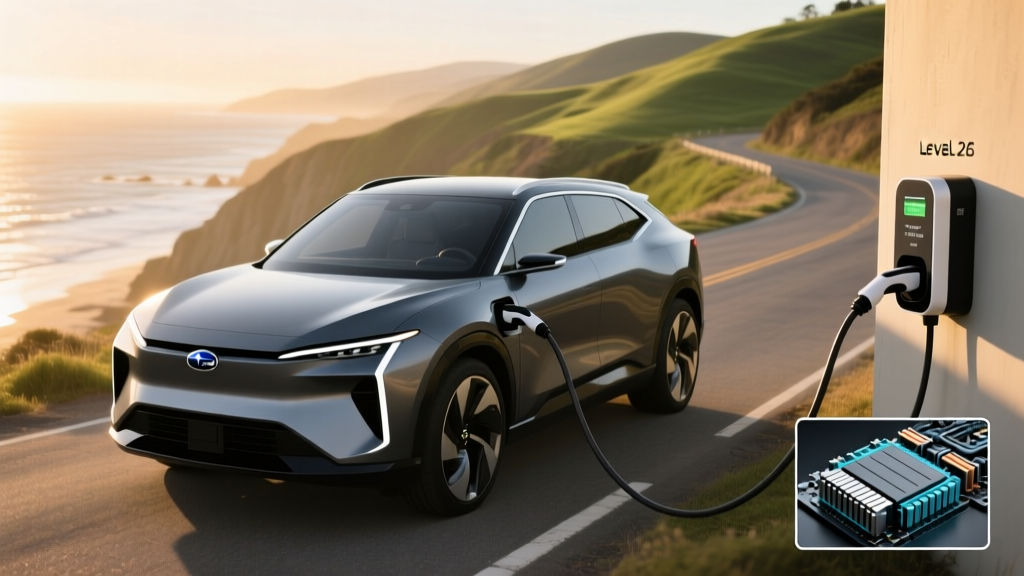
Subaru's new EV is the Solterra, a fully electric compact SUV developed jointly with Toyota (which sells the mechanically similar bZ4X). For the 2026 model year, the Solterra offers up to 228 miles of EPA-estimated range (Premium trim with 18-inch wheels), a 72.8 kWh battery, and DC fast charging that peaks around 100 kW — reaching 10-80% in roughly 56 minutes. Pricing starts at approximately $39,995 before destination, though federal §30D tax credit eligibility depends on your income, the vehicle's MSRP cap status, and battery sourcing requirements that shift yearly. The Solterra makes sense for Subaru loyalists who want standard AWD and off-road credibility in an EV, but its charging speed and real-world highway range trail competitors like the Hyundai Ioniq 5 and Tesla Model Y.
Range and Efficiency: EPA Sticker vs. Real-World Expectations
The 2026 Solterra carries a lithium-ion battery pack with approximately 72.8 kWh of usable capacity. EPA range varies by trim and wheel size:
| Trim / Config | EPA Range | Combined MPGe | kWh/100 mi |
|---|---|---|---|
| Premium (18" wheels) | 228 mi | 104 MPGe | 32 |
| Limited / Touring (20" wheels) | 214-220 mi | 97-100 MPGe | 34-35 |
Real-World Range Reality Check
The EPA sticker says 228 miles, but plan for less in practice. In mixed highway driving at 70-75 mph, expect roughly 185-200 miles before needing a charge. In cold weather (below 30°F), range can drop an additional 20-30%, putting realistic winter range around 150-170 miles for the higher trims. The Solterra lacks a heat pump in earlier model years — check whether the 2026 model includes one, as it significantly reduces cold-weather cabin-heating energy draw.
Compared to rivals, the Solterra's efficiency is middling. The Hyundai Ioniq 5 (Long Range AWD) achieves 290 miles EPA with an 84 kWh pack, and the Tesla Model Y Long Range AWD hits 320 miles — both owing to more efficient powertrains and lower curb weight. The Solterra's standard symmetrical AWD system adds mechanical drag that hurts highway efficiency but delivers the all-weather traction Subaru buyers expect.
Charging Speed: The Solterra's Biggest Limitation
Charging speed is where Subaru's new EV falls notably behind the competition. The Solterra maxes out at approximately 100 kW peak DC fast charging, and it doesn't sustain that rate for long. Here's what to expect:
| Level | Power | Speed (mi/hr added) | Notes |
|---|---|---|---|
| Level 1 (120V household) | ~1.4 kW | ~4 mi/hr | Emergency/trickle only |
| Level 2 (240V home/public) | Up to 7.2 kW | ~22 mi/hr | Full charge in ~10-11 hours |
| DC Fast Charge | Peak ~100 kW | ~150 mi/hr (peak) | 10-80% in ~56 min; tapers heavily above 80% |
For context, the Hyundai Ioniq 5 and Kia EV6 (with 800V architecture) can peak at 240 kW and achieve 10-80% in roughly 18 minutes. That's a massive gap on road trips. If you plan frequent drives over 200 miles, the Solterra's charging curve means longer stops and more careful route planning. For daily commuting with home Level 2 charging, the DC speed matters far less — you'll wake up with a full battery every morning.
Home charging setup: A Level 2 home charger (240V, 32-48A) is strongly recommended. Budget $500-$1,200 for a quality Level 2 unit (ChargePoint Home Flex, Emporia Vue, or Wallbox Pulsar Plus) plus $800-$2,500 for electrician installation depending on panel proximity and whether your electrical panel needs upgrading to 200A service. According to fueleconomy.gov, home Level 2 charging remains the most cost-effective and convenient way to own an EV.
Pricing, Trims, and Federal Tax Credit Eligibility
The 2026 Subaru Solterra is offered in three trims:
- Premium: ~$39,995 MSRP (before destination)
- Limited: ~$43,995 MSRP
- Touring: ~$46,995 MSRP
All trims come with standard dual-motor AWD, Subaru's EyeSight driver-assistance suite (SAE Level 2 — not self-driving; you must remain engaged), an 12.3-inch touchscreen, and wireless Apple CarPlay/Android Auto.
§30D Federal Tax Credit — Current Rules
The Solterra may qualify for up to $7,500 in federal tax credits, but eligibility is far from automatic. Per the IRS §30D guidelines, you must meet ALL of these criteria:
- Income cap: Modified AGI ≤ $150,000 (single) / ≤ $300,000 (joint)
- MSRP cap: Vehicle MSRP must not exceed $80,000 for SUVs (Solterra qualifies)
- Battery sourcing: Critical minerals and battery components must meet phased-in domestic/free-trade sourcing thresholds — these thresholds tighten yearly and can disqualify otherwise eligible vehicles mid-year
- Point-of-sale transfer: You can elect to transfer the credit to the dealer at purchase, reducing your out-of-pocket cost immediately (dealer must be IRS-registered)
Always verify current eligibility on irs.gov and consult a tax professional before relying on the credit in your purchase decision. Sourcing requirements have disqualified several previously eligible models.
EV vs. Gas: How the Solterra Compares to the Subaru Outback
Most Solterra shoppers are cross-shopping against Subaru's own gas-powered lineup — particularly the Outback. Here's a direct comparison using real numbers:
| Metric | 2026 Solterra (EV) | 2026 Outback (Gas AWD) |
|---|---|---|
| Starting MSRP | ~$39,995 | ~$32,995 |
| Fuel/Energy cost per mile | ~$0.04-$0.06 (home charging) | ~$0.13-$0.16 (gas at $3.50/gal, 28 MPG) |
| Annual "fuel" cost (12,000 mi) | ~$480-$720 | ~$1,560-$1,920 |
| Maintenance (annual avg.) | ~$200-$400 | ~$600-$900 |
| 0-60 mph | ~6.5 sec | ~8.4 sec (turbo) / ~9.5 sec (base) |
| Cargo volume (rear seats up) | ~24 cu ft | ~32.5 cu ft |
| Ground clearance | 8.3 in | 8.7 in |
| Towing capacity | Not rated / minimal | 2,700-3,500 lbs |
The takeaway: The Solterra costs roughly $7,000 more upfront but saves $1,000-$1,400 per year in fuel and maintenance. Without a tax credit, breakeven takes about 5 years. With a full $7,500 credit, breakeven drops to roughly 1-2 years. However, the Outback wins on cargo space, towing, and range flexibility — you can fill up anywhere in 5 minutes. If you tow a trailer or regularly drive 300+ miles between stops, the Outback (or a Subaru PHEV option if one becomes available) may serve you better.
Real Ownership Costs: 5-Year Breakdown
Let's model 5-year ownership for a Solterra Premium with home Level 2 charging, 12,000 miles/year, and electricity at $0.14/kWh (national average):
| Category | Solterra (EV) | Outback (Gas AWD) |
|---|---|---|
| Purchase price (after est. credit) | ~$32,495* | ~$32,995 |
| Fuel/Energy (5 years) | ~$2,400-$3,600 | ~$7,800-$9,600 |
| Maintenance (5 years) | ~$1,000-$2,000 | ~$3,000-$4,500 |
| Insurance (5 years, avg.) | ~$9,000-$11,000 | ~$7,500-$9,000 |
| Home charger install (one-time) | ~$1,300-$3,700 | $0 |
| Estimated 5-year total | ~$46,200-$52,800 | ~$51,300-$56,100 |
*Assumes full $7,500 §30D credit. Actual credit depends on sourcing rules at time of purchase.
Key cost factors to watch:
- Insurance: EVs typically carry 15-25% higher premiums due to repair costs and battery replacement risk. Get quotes before buying.
- Tires: EVs are heavier and deliver instant torque, wearing tires 20-30% faster. Budget for replacement around 30,000-40,000 miles.
- Depreciation: EV depreciation has been volatile. The Solterra's resale value is harder to predict than the Outback's historically strong retention.
Common Misconceptions About Subaru's New EV
| Myth | Fact |
|---|---|
| "The Solterra is just a rebadged Toyota bZ4X" | They share a platform (e-TNGA) and battery, but Subaru tunes the suspension, AWD logic, and X-MODE off-road system independently. The driving experience differs meaningfully. |
| "EV batteries need replacing every 5 years" | Subaru warranties the Solterra's battery for 8 years / 100,000 miles against degradation below 70% capacity. Real-world data from similar packs shows 10-15% degradation over 100,000 miles — far less than full replacement. |
| "You can't take an EV off-road" | The Solterra has 8.3 inches of ground clearance and Subaru's X-MODE with Grip Control. It handles dirt roads, snow, and mild trails competently — though it's not a Wrangler competitor. |
| "It's self-driving with EyeSight" | EyeSight is an SAE Level 2 driver-assistance system. It handles adaptive cruise and lane centering but requires your hands on the wheel and eyes on the road at all times. |
| "Charging is free at public stations" | Public DC fast charging costs $0.30-$0.50/kWh in most areas — sometimes more than gas per mile. The real savings come from home charging at residential electricity rates. |
Battery Chemistry, Warranty, and Longevity
The Solterra uses an NMC (nickel-manganese-cobalt) lithium-ion battery. NMC offers higher energy density than LFP (lithium iron phosphate) chemistry, which is why it fits in a compact SUV platform while delivering 200+ miles. The trade-off: NMC degrades slightly faster than LFP over time and is more sensitive to frequent 100% charging.
Best practices for longevity:
- Charge to 80% daily; reserve 100% for road trips
- Avoid letting the battery sit below 10% for extended periods
- Use DC fast charging sparingly — rely on Level 2 for daily needs
- Precondition the battery before fast charging in cold weather (the Solterra's navigation-based preconditioning helps here)
Full battery replacement cost, if ever needed out of warranty, currently runs $15,000-$20,000 — though individual module replacement may be possible for less. Per NHTSA and manufacturer data, complete pack failures within the warranty period are rare.
Decision Framework: Is the Solterra the Right EV for You?
Choose the Subaru Solterra if:
- You have reliable home Level 2 charging (garage or driveway with 240V access)
- Your daily commute is under 80 miles round-trip
- You live in a snow-belt or rainy climate where Subaru's AWD reputation matters
- You want an EV from a brand your local dealer already services
- You qualify for the §30D tax credit, bringing effective price below $33,000
- Off-road capability on forest service roads or ski-area parking lots is a priority
Look elsewhere if:
- You take frequent road trips over 250 miles — the Solterra's ~100 kW charging and ~190-mile real-world highway range mean longer, more frequent stops
- You need towing capability (the Solterra isn't rated for meaningful towing)
- You rely exclusively on public charging — slower DC speeds and limited range make this frustrating
- Cargo volume is paramount — the Outback offers 32.5 cu ft vs. the Solterra's ~24 cu ft
- You want best-in-class efficiency — the Ioniq 5, Model Y, and EV6 all deliver more range per kWh
Frequently Asked Questions
Does the Subaru Solterra qualify for the $7,500 federal tax credit?
It may, but eligibility depends on current-year battery sourcing rules under §30D, your income (≤$150K single / ≤$300K joint), and the MSRP cap (Solterra is under the $80K SUV limit). Check the IRS clean vehicle credit page before purchasing, as sourcing requirements can change mid-year.
How long does it take to charge the Solterra at home?
On a Level 2 home charger (7.2 kW), a full charge from near-empty takes approximately 10-11 hours. Plug in overnight and you'll wake up to a full battery every morning. On a standard 120V outlet (Level 1), expect roughly 4 miles of range per hour — only practical for topping off or emergencies.
Is the Solterra good in winter and snow?
Yes — this is where it shines. Standard dual-motor AWD, 8.3 inches of ground clearance, and Subaru's X-MODE traction system make it one of the more capable EVs in snow. However, expect 20-30% range loss in sustained sub-30°F temperatures due to battery chemistry and cabin heating demands.
How does the Solterra compare to the Toyota bZ4X?
They share the e-TNGA platform, 72.8 kWh battery, and basic powertrain. The Solterra differentiates with Subaru-tuned suspension, standard X-MODE, and slightly different styling. Pricing and range are similar. Test-drive both — dealer experience and brand loyalty often decide this one.
Will the Solterra's battery last 10+ years?
Current data on NMC packs of this type suggests 10-15% capacity loss over 100,000 miles, which is well within the 8-year/100,000-mile warranty threshold of 70% retention. With proper charging habits (80% daily limit, minimal DC fast charging), 15+ years of usable service life is a reasonable expectation.