The Short Answer: Is a Subaru Electric Vehicle Right for You?
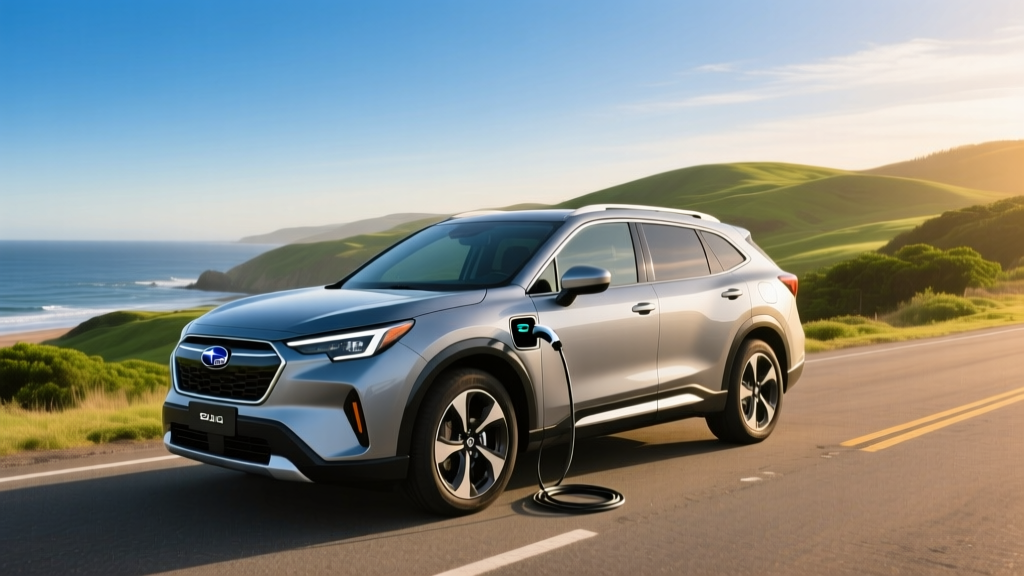
Subaru's only current battery-electric vehicle is the Solterra, a midsize electric SUV co-developed with Toyota (bZ4X). For 2026, it offers an EPA-estimated range of up to 228 miles (Limited FWD trim with the larger battery pack), a 71.4 kWh lithium-ion battery, and DC fast charging that peaks around 150 kW (10–80% in approximately 30–35 minutes). Base pricing starts near $39,995 before incentives. It qualifies for partial or full §30D federal tax credit depending on battery sourcing and buyer income — but real-world highway and cold-weather range drops to roughly 175–200 miles, making it best suited for daily commuters with home charging rather than frequent road-trippers.
What Subaru Electric Vehicles Are Available Now?
As of the 2026 model year, Subaru sells one fully electric vehicle in the United States: the Solterra. There is no Subaru EV sedan, truck, or three-row electric SUV in the current lineup. Subaru has announced plans to introduce additional EVs later this decade, but the Solterra remains the sole option for buyers seeking a zero-tailpipe-emission Subaru today.
The Solterra is built on the e-Subaru Global Platform, jointly engineered with Toyota. It shares its core architecture, battery, and powertrain with the Toyota bZ4X. Available trims typically include Premium, Limited, and Touring, with both front-wheel-drive (FWD) and dual-motor all-wheel-drive (AWD) configurations.
| Spec | FWD (Limited) | AWD (Touring) |
|---|---|---|
| EPA Range | ~228 miles | ~203 miles |
| Battery Capacity | 71.4 kWh (usable ~64 kWh) | 71.4 kWh (usable ~64 kWh) |
| Battery Chemistry | Lithium-ion (NMC) | Lithium-ion (NMC) |
| Horsepower | 201 hp | 214 hp |
| 0–60 mph | ~7.1 sec | ~6.5 sec |
| Peak DC Fast Charge | ~150 kW | ~150 kW |
| 10–80% DC Charge Time | ~30–35 min | ~30–35 min |
| Level 2 AC Charge Rate | 6.6 kW | 6.6 kW |
| Base MSRP (est.) | ~$39,995 | ~$46,995 |
| EPA Efficiency (MPGe) | ~104 MPGe combined | ~95 MPGe combined |
| Battery/Powertrain Warranty | 8 yr / 100,000 mi | 8 yr / 100,000 mi |
Source: fueleconomy.gov and Subaru of America specifications. Verify exact figures at your dealer, as mid-year adjustments can occur.
Real-World Range vs. EPA Sticker
EPA: 228 miles (FWD) / 203 miles (AWD). In practice, expect 185–210 miles on mixed driving in moderate temperatures. Sustained highway speeds above 70 mph reduce range by 10–15%. In sub-freezing winter conditions (below 30°F), plan for 155–180 miles of usable range due to cabin heating demands and reduced battery efficiency. The Solterra's heat pump (standard on higher trims) helps mitigate cold-weather losses but does not eliminate them. If your daily round-trip commute exceeds 80 miles or you regularly drive in cold climates, factor this into your planning.
Solterra vs. Gas Subaru: A Cost Comparison
Most cross-shopping buyers compare the Solterra against the Subaru Outback or Subaru Forester — the brand's best-selling gas models. Here's how the numbers stack up over five years and 75,000 miles of ownership.
| Category | Solterra Touring AWD | Outback Limited (2.5L AWD) |
|---|---|---|
| Purchase Price (MSRP) | ~$46,995 | ~$37,495 |
| Estimated §30D Tax Credit | Up to $7,500* | $0 |
| Effective Purchase Price | ~$39,495 | $37,495 |
| Fuel / Electricity (75k mi) | ~$3,600 (home L2 avg) | ~$8,250 (27 MPG avg, $3.30/gal) |
| Maintenance (5 yr) | ~$1,200 | ~$3,400 |
| Insurance (5 yr est.) | ~$9,500 | ~$7,800 |
| Estimated Depreciation | ~$18,000 | ~$14,000 |
| Total 5-Year Cost | ~$71,795 | ~$70,945 |
*Federal §30D credit eligibility depends on battery critical-mineral sourcing, buyer AGI ($150K single / $300K joint), and MSRP caps ($80K for SUVs). Confirm current-year rules at irs.gov. State incentives may further reduce the Solterra's cost.
The Solterra's higher insurance premiums and steeper depreciation partially offset its fuel and maintenance savings. The break-even point against a gas Outback is tight — often within $1,000–$2,000 over five years — but the Solterra pulls ahead if you can charge primarily at home on off-peak electricity rates (below $0.14/kWh) or if your state offers additional rebates.
Charging the Solterra: What You Need to Know
The Solterra uses a CCS1 (Combo) connector for DC fast charging and a J1772 inlet for Level 2 AC charging. It does not have a native NACS (Tesla) port, though adapters are increasingly available for access to Tesla Supercharger stations.
| Level | Power | Miles Added per Hour | Typical Use Case |
|---|---|---|---|
| Level 1 (120V household) | ~1.4 kW | ~4–5 mi/hr | Emergency / trickle top-off |
| Level 2 (240V home) | 6.6 kW | ~22–25 mi/hr | Overnight home charging (full in ~10 hr) |
| DC Fast Charge | Peak ~150 kW | Up to ~150+ mi in 30 min | Road trips; tapers above 80% SoC |
Home Charging Installation Costs
Most Solterra owners will want a Level 2 home charger. Budget for the following:
| Item | Cost Range |
|---|---|
| Level 2 EVSE hardware (ChargePoint, Emporia, Wallbox) | $350–$700 |
| Electrician labor (240V/40A–50A circuit) | $600–$2,000 |
| Electrical panel upgrade (if needed, 100A→200A) | $1,500–$3,500 |
| Permit and inspection | $50–$300 |
| Total (no panel upgrade) | $1,000–$3,000 |
| Total (with panel upgrade) | $2,500–$6,500 |
If you live in an apartment or lack dedicated parking with electrical access, public charging becomes your primary option. At Electrify America or similar networks, DC fast charging costs $0.35–$0.55/kWh, raising your per-mile energy cost to roughly $0.10–$0.15/mile — closer to (and sometimes exceeding) a gas vehicle. This is the single biggest financial variable for EV ownership without home charging.
Real-World Ownership: Climate, Commute, and Practicality
Subaru buyers tend to live in regions with real winters — the Northeast, Mountain West, and Pacific Northwest. This matters for EV ownership in three specific ways:
- Cold-weather range loss: At 20°F, expect a 20–30% range reduction. Preconditioning the battery while plugged in (using the Subaru app) mitigates this and improves charging speed at DC stations.
- AWD advantage: The dual-motor AWD Solterra provides genuine all-weather traction that aligns with Subaru's brand identity, though it costs ~25 miles of EPA range versus FWD.
- Ground clearance: The Solterra offers 8.3 inches of ground clearance — competitive with the Outback (8.7 in.) and far better than most electric crossovers. This matters for snow and unpaved roads.
For daily driving patterns under 60 miles round-trip with home Level 2 charging, the Solterra works well even in cold climates — you'll recharge overnight and rarely think about range. For road trips exceeding 200 miles, you'll need at least one DC fast-charge stop, and the 30–35 minute 10–80% charge time (plus taper above 80%) means adding 40–50 minutes per stop.
Federal Tax Credit and Incentive Eligibility
§30D Clean Vehicle Credit Checklist (2026 Rules)
- Vehicle MSRP cap: ≤ $80,000 for SUVs (Solterra qualifies)
- Buyer AGI cap: ≤ $150,000 (single) / $225,000 (HOH) / $300,000 (joint)
- Battery sourcing: Critical minerals and battery components must meet phased-in percentage thresholds — this determines whether you receive $3,750 or the full $7,500
- Assembly: Final assembly must occur in North America (Solterra is built in Japan — verify current-year compliance status with your dealer)
- Point-of-sale transfer: You can transfer the credit to the dealer at purchase for an immediate price reduction, rather than waiting for tax filing
Critical note: The Solterra is manufactured at Toyota's plant in Aichi, Japan. Under §30D, vehicles must undergo final assembly in North America to qualify. Subaru and Toyota have made supply-chain adjustments, and credit eligibility has varied by model year. Always verify current eligibility at fueleconomy.gov and confirm with your dealer before signing paperwork. Some buyers may qualify for state-level incentives (California, Colorado, New York, and others) that stack regardless of federal credit status.
Common Misconceptions About the Solterra
| Myth | Fact |
|---|---|
| "The Solterra can't handle winter." | With AWD, 8.3 in. of ground clearance, and a heat pump, it performs well in snow — but range drops 20–30%. Preconditioning is essential. |
| "It charges as fast as a Hyundai Ioniq 5." | No. The Solterra peaks at ~150 kW; the Ioniq 5 peaks at ~240 kW on 800V architecture. Expect 30–35 min vs. 18 min for 10–80%. |
| "EVs cost more to insure — always." | Often true: Solterra premiums run 15–25% higher than a gas Outback due to repair costs and battery replacement risk. Shop quotes before buying. |
| "I'll save $5,000/year on fuel." | Unlikely. At 15,000 miles/year and $0.14/kWh home charging, savings vs. a 27 MPG gas SUV are roughly $900–$1,100/year. Public-only charging narrows this further. |
| "The battery will need replacing in 5 years." | NMC batteries in modern thermal-managed EVs typically retain 85–90% capacity at 100,000 miles. Subaru's warranty covers 8 yr/100,000 mi with a ~70% capacity retention floor. |
Decision Framework: Should You Buy the Solterra?
Choose the Subaru Solterra If:
- You have home Level 2 charging access (garage or dedicated driveway outlet)
- Your daily commute is under 80 miles round-trip
- You value AWD, ground clearance, and Subaru's safety reputation (IIHS Top Safety Pick ratings)
- You want to reduce fuel and maintenance costs without switching brands
- You live in a state with additional EV rebates that improve the financial case
Look Elsewhere If:
- You lack home charging and would rely entirely on public DC fast chargers (cost and convenience penalty)
- You regularly drive 300+ mile trips — the Solterra's range and ~150 kW charge rate make road trips slower than competitors like the Ioniq 5, EV6, or Tesla Model Y
- You need three rows of seating (the Solterra seats five only)
- You want maximum range per dollar — the Hyundai Ioniq 5 (~310 mi EPA) and Tesla Model Y (~310 mi EPA) offer significantly more range at similar prices
- Federal tax credit eligibility is critical to your budget and the Solterra's assembly location disqualifies it in the current model year
Frequently Asked Questions
Does Subaru make a hybrid or plug-in hybrid?
Subaru discontinued the Crosstrek Plug-In Hybrid (PHEV) after the 2023 model year. As of 2026, Subaru does not sell a hybrid or PHEV in the U.S. market. The Solterra is the only electrified option. Subaru has announced plans for hybrid variants of existing models in the coming years, but nothing is currently on sale.
What does it cost to charge the Solterra at home?
With a 71.4 kWh battery (roughly 64 kWh usable) and the U.S. average residential electricity rate of ~$0.16/kWh, a full charge costs approximately $10.25. That translates to roughly $0.05 per mile — compared to $0.12–$0.15/mile for a 27 MPG gas SUV at $3.30/gallon.
Can the Solterra tow?
Subaru rates the Solterra AWD for up to 3,500 pounds of towing capacity when properly equipped — adequate for a small utility trailer or pair of dirt bikes, but not a full-size camper. Towing significantly reduces range, often by 30–50% depending on weight and aerodynamics.
How does the Solterra compare to the Toyota bZ4X?
They share the same platform, battery, and powertrain. Differences are primarily cosmetic (exterior styling, interior trim) and feature-content packaging. The bZ4X may have different trim availability and pricing. EPA range figures are nearly identical. Test-drive both to compare ride tuning and cabin materials.
Is the Solterra's all-wheel-drive system the same as a gas Subaru's symmetrical AWD?
No. The Solterra uses a dual-motor electric AWD system with one motor on each axle. There is no mechanical driveshaft or center differential. Subaru tunes the system for similar all-weather behavior, and it includes X-MODE for low-traction situations, but the architecture is fundamentally different from the symmetrical AWD found in gas Subarus.
What happens if the battery degrades significantly?
Subaru's EV battery warranty guarantees the pack will retain at least ~70% of its original capacity for 8 years or 100,000 miles. If capacity falls below this threshold during the warranty period, Subaru will repair or replace the battery at no cost. Out-of-warranty replacement costs are estimated at $8,000–$14,000 based on current NMC pack pricing, though costs are expected to decline as battery technology matures.