The Real Math Behind 2026 Subaru EV Deals
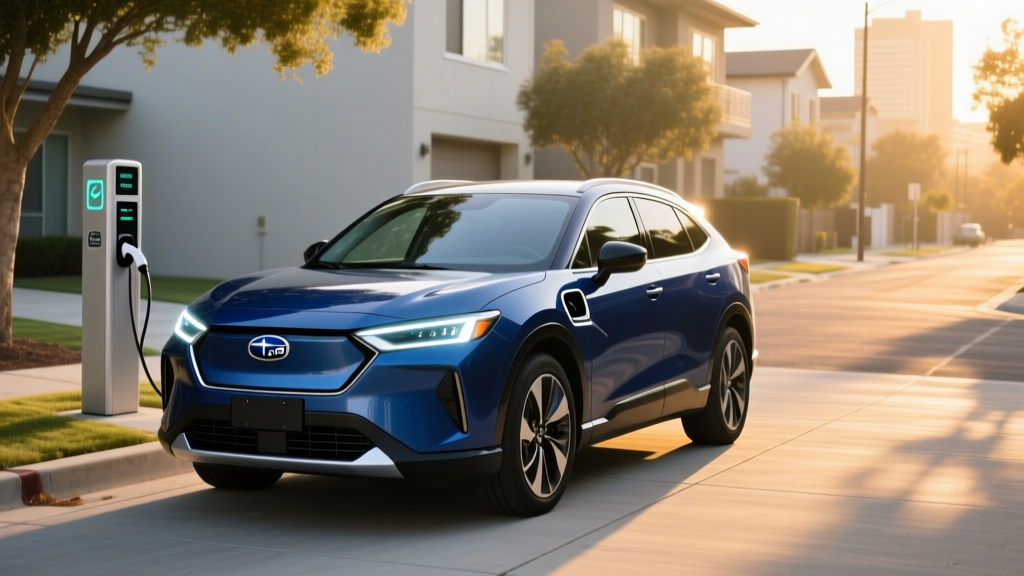
Subaru's electric lineup centers on the 2026 Solterra, the brand's first ground-up battery-electric SUV co-developed with Toyota (it shares a platform with the bZ4X). For buyers hunting Subaru EV deals, the sticker price is only the starting point. What actually determines whether a Solterra is a financial win over five years is the interplay of federal tax credits, state rebates, electricity costs, insurance premiums, and the vehicle's depreciation trajectory.
This guide runs the full ownership-cost analysis on the 2026 Subaru Solterra so you can see exactly where the savings are — and where the costs bite back.
2026 Subaru Solterra: Key Specs at a Glance
| Spec | 2026 Solterra Premium (FWD) | 2026 Solterra Touring (AWD) |
|---|---|---|
| Base MSRP | ~$39,995 | ~$46,995 |
| EPA Range | ~228 mi | ~222 mi |
| Battery (usable) | ~71.4 kWh, NMC lithium-ion | ~71.4 kWh, NMC lithium-ion |
| MPGe (combined) | ~111 MPGe | ~104 MPGe |
| Peak DC Fast Charge | ~150 kW (10–80% in ~35 min) | ~150 kW (10–80% in ~35 min) |
| Level 2 Charge Rate | ~6.6 kW (~23 mi/hr) | ~6.6 kW (~23 mi/hr) |
| Horsepower | 201 hp (single motor) | 214 hp (dual motor AWD) |
| 0–60 mph | ~7.1 sec | ~6.5 sec |
| Battery Warranty | 8 yr / 100,000 mi | 8 yr / 100,000 mi |
Federal Tax Credit: Do You Qualify Under §30D?
The IRS §30D Clean Vehicle Credit can knock up to $7,500 off a new Solterra — and since 2024, eligible buyers can transfer the credit to the dealer as a point-of-sale discount, meaning you don't need to wait until tax filing to benefit. But the eligibility rules are strict and have tightened significantly since the Inflation Reduction Act reshaped them.
- Income caps: Modified AGI ≤ $150,000 (single), ≤ $225,000 (head of household), ≤ $300,000 (married filing jointly)
- MSRP cap: SUVs, vans, and trucks must be ≤ $80,000; sedans ≤ $55,000. All Solterra trims clear this.
- Battery sourcing: The vehicle must meet critical-mineral and battery-component sourcing thresholds that tighten annually. As of 2026, both the critical-minerals and battery-component requirements are at their strictest levels — vehicles with any "foreign entity of concern" (FEOC) content in either category are disqualified entirely.
- Final assembly: Must occur in North America. The Solterra is assembled at Toyota's Motomachi plant in Japan — this is a potential disqualifier. Check the VIN on fueleconomy.gov before purchasing.
- Point-of-sale transfer: You can elect to transfer the credit to the dealer at purchase, reducing your out-of-pocket cost immediately. The dealer must be IRS-registered.
- One credit per VIN: The credit applies once per vehicle, and you can only claim one new-vehicle credit per tax year starting in 2024.
Critical caveat for Subaru shoppers: Because the Solterra is manufactured in Japan, its §30D eligibility hinges on whether the final-assembly requirement is met or any trade-agreement exceptions apply. As of early 2026, the Solterra's North American credit qualification has been inconsistent across model years. Always verify the specific VIN's eligibility through the IRS portal or your dealer's tax-credit documentation before signing.
State, Local, and Utility Incentives
Federal credits are only one piece of the puzzle. Depending on where you live, additional incentives can stack on top:
- State rebates: California's Clean Fuel Reward (up to $1,000 at point of sale), Colorado's $5,000 state tax credit, New York's Charge Ready NY ($2,000 rebate), and Massachusetts' MOR-EV (up to $3,500) are among the most generous. Most states offer nothing — check your state energy office.
- Utility rebates: Many electric utilities offer $250–$1,500 rebates for purchasing an EV or installing a Level 2 home charger. PG&E, ConEdison, Xcel Energy, and National Grid are examples, but programs change annually.
- HOV lane access: States like California, Colorado, and Virginia grant solo-carpool-lane access to qualifying EVs — a non-cash benefit worth hundreds per year in time savings for commuters.
- Property/sales tax exemptions: Some states exempt EVs from ad valorem taxes or waive sales tax on the first $25,000–$50,000 of an EV purchase.
5-Year Total Cost of Ownership: Solterra vs. Gas SUV
Here's where the rubber meets the road. Below is a five-year, 60,000-mile TCO projection comparing the 2026 Solterra Premium (AWD, after incentives) against a comparably priced gas compact SUV (e.g., Subaru Outback 2.5i Premium, MSRP ~$36,000).
| Cost Category (5 yr / 60k mi) | 2026 Solterra Premium (AWD) | 2026 Outback 2.5i Premium (Gas) |
|---|---|---|
| Purchase Price (after incentives) | ~$32,500* | ~$36,000 |
| Fuel / Electricity | ~$3,600 (home charging) | ~$8,100 |
| Maintenance | ~$1,800 | ~$3,900 |
| Insurance | ~$11,400 | ~$9,000 |
| Depreciation (est. 5-yr) | ~$20,800 (64%) | ~$14,400 (40%) |
| Estimated 5-Year TCO | ~$70,100 | ~$71,400 |
*Assumes $7,500 federal credit (if VIN-qualified) + ~$2,000 state/utility incentives. Actual out-of-pocket varies. Depreciation calculated on pre-incentive MSRP for resale comparison.
The takeaway: the Solterra's fuel and maintenance savings (~$6,600 combined over five years) are substantial, but they're nearly eaten by higher insurance (~$2,400 more) and steeper depreciation (~$6,400 more). The net TCO advantage is slim — and it depends entirely on your incentive eligibility and home-charging access.
Charging vs. Gas: The Per-Mile Cost Breakdown
Let's isolate the energy cost with concrete numbers, because this is where EV ownership either shines or disappoints depending on how you charge.
| Scenario | Cost per Mile | Annual Cost (12,000 mi) |
|---|---|---|
| Solterra — Home Level 2 ($0.13/kWh, ~3.5 mi/kWh) | $0.037 | $446 |
| Solterra — Public DC Fast ($0.40/kWh avg, ~3.5 mi/kWh) | $0.114 | $1,371 |
| Outback — Gasoline ($3.40/gal, 29 MPG combined) | $0.117 | $1,407 |
The math is stark: home-charged Solterra owners pay roughly $0.04 per mile for electricity — about one-third the cost of gasoline. But switch to public DC fast charging at $0.40/kWh (common at Electrify America and EVgo stations without a subscription plan) and your per-mile cost nearly matches gasoline. The Solterra's relatively slow ~150 kW peak charge rate also means those public sessions take longer (~35 minutes for 10–80%), adding time cost on road trips.
If you can install a Level 2 home charger and charge overnight at residential rates, the Solterra saves roughly $900–$1,000 per year in fuel. If you're apartment-dwelling and relying on public chargers, that advantage essentially vanishes.
Maintenance Savings: Where EVs Actually Win
EVs have far fewer moving parts than internal-combustion vehicles, and the Solterra is no exception. Here's what the maintenance differential looks like over 60,000 miles:
| Service Item | Solterra (EV) | Outback (Gas) |
|---|---|---|
| Oil changes | None — $0 | ~$450 (6 changes × $75) |
| Transmission fluid | None — $0 | ~$200 |
| Brake pads | ~$0 (regen braking preserves pads; often 80k+ mi life) | ~$600 (1–2 replacements) |
| Engine air filter | None — $0 | ~$120 |
| Spark plugs | None — $0 | ~$400 |
| Cabin air filter | ~$120 | ~$120 |
| Tire rotation / replacement | ~$1,200 (EVs wear tires faster due to torque and weight) | ~$900 |
| Coolant / other fluids | ~$200 | ~$350 |
| Total (5 yr / 60k mi) | ~$1,520 | ~$2,940 |
Net maintenance savings: roughly $1,400–$2,100 over five years. The biggest single offset is tire wear — the Solterra's ~4,300-pound curb weight and instant electric torque wear through tires faster than a gas Outback. Budget for a set of replacement EV-rated tires around year 3–4.
Insurance Costs: The Uncomfortable Truth
EV insurance premiums are typically 15–25% higher than comparable gas vehicles, and the Solterra follows this pattern. According to industry data, the average annual premium for a Solterra runs roughly $2,100–$2,400 depending on state, driving record, and coverage level, versus $1,600–$1,900 for an Outback.
Why the gap? Three reasons:
- Higher repair costs: EV battery packs and power electronics are expensive to replace after collision damage. Even minor rear-end impacts can total an EV if the battery enclosure is compromised.
- Specialized labor: Fewer body shops are certified for high-voltage EV repair, driving up labor rates.
- Vehicle price: The Solterra's higher MSRP means higher comprehensive and collision payouts.
Shop quotes from at least three insurers before purchasing. Some carriers (Geico, Progressive, State Farm) have started offering EV-specific policies with battery coverage riders that can actually be more competitive than standard auto policies.
Depreciation: The Elephant in the Room
Early EV depreciation has been brutal. According to iSeeCars and Kelley Blue Book data, three-year-old EVs have depreciated 45–60% on average — significantly worse than the ~35% average for gas vehicles. The Solterra, with its relatively short range and the market's general cooling on early-generation EVs, has not been immune.
For a $42,000 Solterra Premium AWD, expect a 5-year resale value around $14,000–$17,000 (roughly 60–65% depreciation from MSRP). That's $6,000–$8,000 worse than a gas Outback over the same period.
Factors working against the Solterra's resale:
- Below-average EPA range (222–228 mi) compared to newer competitors offering 300+ miles
- Rapid evolution of EV tech makes early models feel outdated quickly
- Tesla price wars and new-model launches have compressed the entire used-EV market
If you plan to keep the Solterra for 8–10 years and drive it into the ground, depreciation matters less. If you trade in every 3–5 years, the depreciation hit is the single largest ownership cost you'll face.
Is a Subaru EV Deal Worth It? Decision Framework
Choose the Solterra if:
- You qualify for the full $7,500 federal credit AND a state rebate, bringing the effective price below $30,000
- You can charge at home at residential electricity rates (below $0.15/kWh)
- You value Subaru's standard AWD, 8.3 inches of ground clearance, and X-MODE off-road capability in an EV
- Your daily commute is under 100 miles round-trip and you rarely drive more than 200 miles without stopping
- You plan to keep the vehicle 7+ years, minimizing depreciation impact
Look elsewhere if:
- You can't charge at home and would rely on public DC fast charging (the cost advantage evaporates)
- You regularly drive 250+ miles between stops (the 228-mile EPA range becomes a real limitation, especially in cold weather)
- You trade vehicles every 3 years (depreciation will dominate your TCO)
- The Solterra's VIN doesn't qualify for the §30D credit — without it, the price premium over a gas Outback is hard to justify
Frequently Asked Questions
How much does it really cost to own a Subaru Solterra over 5 years?
Our analysis estimates roughly $70,000 over five years and 60,000 miles for a Solterra Premium AWD, including purchase (after incentives), electricity, maintenance, insurance, and depreciation. That's comparable to or slightly less than a gas Outback — but the savings depend heavily on your incentive eligibility, home-charging access, and how long you keep the vehicle.
Does the 2026 Subaru Solterra qualify for the $7,500 federal tax credit?
It depends on the VIN. The Solterra is manufactured in Japan, and the §30D credit requires North American final assembly. Subaru and Toyota have worked to meet battery-sourcing requirements, but assembly location remains a potential disqualifier. Always verify your specific vehicle's eligibility on the IRS Clean Vehicle Credit page before committing to a purchase.
How much do I save on fuel driving a Solterra vs. a gas SUV?
If you charge primarily at home at $0.13/kWh, you'll spend about $450 per year on electricity versus $1,400 on gasoline for a comparable gas SUV — saving roughly $900–$1,000 annually. Over five years, that's $4,500–$5,000 in fuel savings. If you rely on public chargers at $0.35–$0.45/kWh, the savings shrink to near zero.
Are Subaru EVs more expensive to insure?
Yes. Expect Solterra insurance premiums to run 15–25% higher than a gas Outback — roughly $2,200–$2,400 per year versus $1,700–$1,900. Higher repair costs, specialized labor, and the vehicle's MSRP all contribute. Shop multiple insurers and ask about EV-specific policies.
How well does the Solterra hold its value?
Not as well as gas Subarus. The Solterra has experienced heavier depreciation than the brand's gas models, with estimated 5-year depreciation around 60–65%. The below-average range and rapidly evolving EV market are primary drivers. Keeping the vehicle longer (8+ years) is the best strategy to mitigate depreciation losses.
Can I lease a Solterra to get the tax credit even if I don't qualify for §30D?
Possibly. Under the "commercial vehicle" loophole in §30D, lessors can claim a separate commercial clean vehicle credit and pass the savings to lessees through reduced lease payments. This has been a common workaround for EVs that don't meet the North American assembly requirement. Ask your Subaru dealer whether their lease offers include a passed-through credit — but get the reduced payment in writing before signing.