Subaru's Electric Answer: The Solterra at a Glance
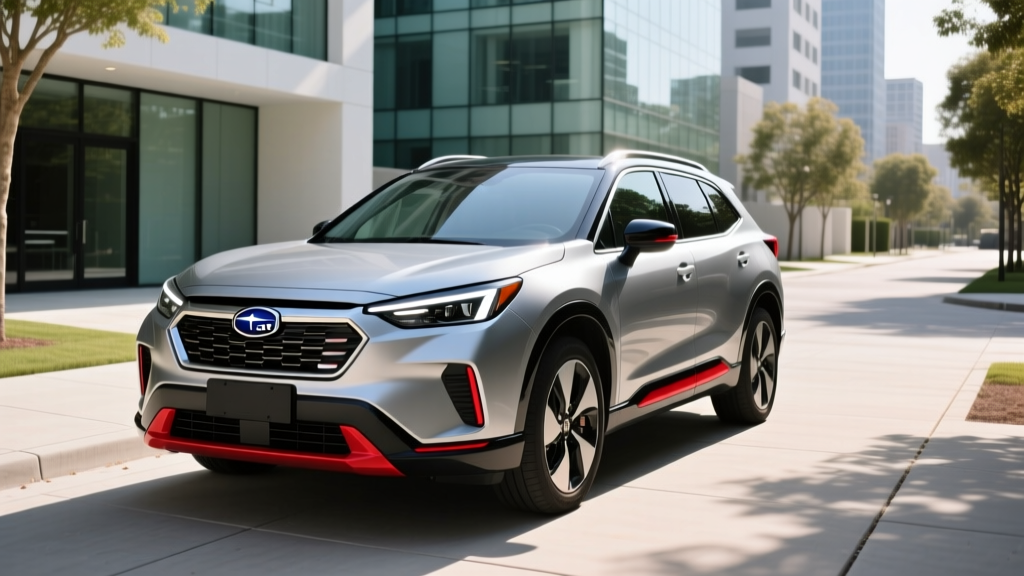
Yes, Subaru has an electric car. The Subaru Solterra is the brand's only fully electric vehicle (BEV), co-developed with Toyota (which sells the near-identical bZ4X). For 2026, the Solterra delivers an EPA-estimated 227 miles of range (Limited trim with 20-inch wheels), a 72.8 kWh usable battery, and standard symmetrical all-wheel drive. Base pricing starts at $38,495 before destination and incentives.
If you're a loyal Subaru owner wondering whether to stay in the family for your first EV, the Solterra is a legitimate option — but it's not the longest-range or fastest-charging EV in its class. Here's exactly what you're getting, what it costs, and whether it beats the gas Outback or a plug-in hybrid alternative.
2026 Subaru Solterra: Range, Battery, and Charging Specs
Before we get into ownership economics, let's nail down the hard numbers. Subaru updated the Solterra for the 2025 model year with improved charging hardware and a slightly larger usable battery, and those specs carry into 2026.
| Specification | 2026 Subaru Solterra |
|---|---|
| EPA Range (Premium/18" wheels) | 227 miles |
| EPA Range (Limited/Touring, 20" wheels) | 222 miles |
| Battery Capacity (usable) | 72.8 kWh (lithium-ion, NMC chemistry) |
| Peak DC Fast Charge Rate | 150 kW (CCS1 connector) |
| 10–80% DC Fast Charge Time | ~35 minutes |
| Level 2 AC Charging (240V) | 11 kW onboard charger |
| Level 2 Full Charge Time (0–100%) | ~9 hours |
| Drivetrain | Dual-motor AWD (standard all trims) |
| Horsepower / Torque | 215 hp / 248 lb-ft |
| 0–60 mph | 6.5 seconds |
| EPA Efficiency (combined) | 102 MPGe (29 kWh/100 mi) |
| Towing Capacity | Not rated for towing |
| Cargo Volume (behind rear seats) | 23.8 cu ft |
| Battery Warranty | 8 years / 100,000 miles (70% capacity retention) |
| Base MSRP (Premium trim) | $38,495 + $1,395 destination |
Real-World Range Reality: The EPA 227-mile sticker assumes mixed driving. On a sustained 75 mph highway trip, expect roughly 185–200 miles before needing to charge. In sub-freezing winter conditions (below 30°F), range can drop 20–30%, bringing usable range to 160–180 miles. The Solterra is equipped with a heat pump on all trims, which helps mitigate cold-weather losses compared to EVs without one, but physics still applies.
The 150 kW peak DC charge rate is a sore point for road-trippers. While competitors like the Hyundai Ioniq 5 (peak 240 kW, 10–80% in ~18 min) and the Tesla Model Y (peak 250 kW on V3 Superchargers) charge significantly faster, the Solterra's ~35-minute 10–80% session is manageable if you plan around rest stops. Note that charge speed tapers sharply above 80% — a trait common to all lithium-ion packs — so charging to 100% on DC is rarely worth the time.
Solterra vs. Gas Outback: What You'll Actually Spend
The most common cross-shop for Subaru buyers isn't another EV — it's the Subaru Outback, the brand's best-selling wagon. Let's compare the real five-year cost of ownership for a typical driver covering 12,000 miles per year with 80% home charging (at $0.14/kWh national average) and 20% public DC fast charging (at $0.40/kWh average).
| Cost Category (5 Years / 60,000 mi) | 2026 Solterra (AWD) | 2026 Outback 2.5i Premium (AWD) |
|---|---|---|
| Purchase Price (MSRP + dest.) | $39,890 | $35,090 |
| Federal Tax Credit (§30D) | Up to $7,500 (see eligibility below) | $0 |
| Effective Purchase Price | $32,390 | $35,090 |
| Fuel / Electricity (60,000 mi) | $3,820 | $7,560 |
| Maintenance (oil, filters, brakes) | $900 | $2,800 |
| Insurance (avg. premium delta) | + $1,800 | Baseline |
| Estimated 5-Year Total Cost | $38,910 | $45,450 |
Notes: Gas price assumed at $3.50/gal, Outback at 28 MPG combined (per fueleconomy.gov). Solterra electricity cost blended at ~$0.19/kWh effective average. Insurance varies widely by state, carrier, and driving record — the +$1,800 figure reflects a common EV premium of roughly $30/month but is not universal. Maintenance savings for the Solterra reflect the absence of oil changes, transmission fluid, spark plugs, and reduced brake wear from regenerative braking.
The math is clear: even with a higher sticker price and slightly elevated insurance, the Solterra costs roughly $6,500 less over five years — primarily due to the federal tax credit and dramatically lower energy and maintenance costs. Stretch ownership to 10 years and the gap widens further.
Federal Tax Credit: Does the Solterra Qualify for $7,500?
This is where things get nuanced. The IRS §30D Clean Vehicle Credit can reduce your federal tax liability by up to $7,500 — and since 2024, it can be transferred to the dealer as a point-of-sale discount. But eligibility depends on several requirements:
- MSRP Cap: The Solterra qualifies — SUVs/vans must be under $80,000 MSRP, and all Solterra trims clear this bar.
- Buyer Income Cap: Adjusted gross income must not exceed $150,000 (single), $225,000 (head of household), or $300,000 (joint filing).
- Battery Sourcing: A portion of the credit ($3,750) depends on critical-mineral sourcing and battery-component manufacturing requirements that phase in stricter thresholds each year. As of the 2026 tax year, check the latest IRS guidance on clean vehicle credits and the DOE's qualified vehicle list to confirm the Solterra's exact credit amount — it may be $3,750 or the full $7,500 depending on current battery-component compliance.
- Point-of-Sale Transfer: You can elect to transfer the credit to the dealer at purchase, reducing your out-of-pocket cost immediately rather than waiting to claim it on your tax return.
Important: Tax credit rules change frequently and are subject to battery supply-chain sourcing requirements that vary by model year and production batch. Always confirm current eligibility with your tax professional and the official IRS resources before signing a purchase agreement.
Solterra vs. Plug-In Hybrid: Should You Consider a PHEV Instead?
Not every Subaru buyer is ready for a full EV. If you lack reliable home charging or regularly drive in rural areas with sparse DC fast-charging infrastructure, a plug-in hybrid (PHEV) like the Toyota RAV4 Prime (Subaru and Toyota share powertrain tech) may be a better bridge.
| Factor | Solterra (BEV) | RAV4 Prime (PHEV) |
|---|---|---|
| Electric-Only Range | 227 mi (full battery) | 42 mi (EPA) |
| Total Range (with gas) | 227 mi | 600+ mi |
| Home Charging Needed? | Strongly recommended | Beneficial but not required |
| Road-Trip Convenience | Plan charging stops (~35 min each) | Fill up at any gas station in 5 min |
| Winter Range Loss | 20–30% reduction | Minimal (gas engine supplements) |
| Maintenance Complexity | Very low (no engine) | Moderate (engine + electric system) |
| Federal Tax Credit | Up to $7,500 | Up to $7,500 (phase-out may apply) |
| Base MSRP | $38,495 | $43,690 |
If 90% of your driving is under 40 miles round-trip and you can charge at home, a PHEV lets you drive on electricity daily while keeping a gas engine for long trips. But you'll pay more upfront, maintain an internal-combustion engine, and carry the weight of both systems. For committed home-chargers who road-trip 3–4 times a year, the Solterra's 227-mile range and growing DC fast-charging network make it a viable all-in-one solution — you just need to accept 35-minute charge stops.
Real-World Ownership: What First-Time EV Buyers Must Know
If the Solterra will be your first EV, here's what no brochure will tell you:
Home Charging Is Non-Negotiable for Convenience
The Solterra's 11 kW onboard charger means a full Level 2 (240V) charge takes about 9 hours — perfect for overnight replenishment. But installing a Level 2 home charger requires a dedicated 40- or 50-amp circuit. Budget $500–$1,500 for the charger hardware (e.g., ChargePoint Home Flex, Emporia Level 2) and $800–$2,500 for professional electrician installation, depending on panel proximity and whether your electrical panel needs a 200-amp upgrade (an additional $1,500–$3,500 if needed). Without home charging, you'll rely on public Level 2 and DC stations, which is significantly more expensive ($0.30–$0.50/kWh) and less convenient.
Public Charging Reliability Varies
The Solterra uses the CCS1 connector for DC fast charging, which works with Electrify America, EVgo, and most non-Tesla networks. As of 2026, Subaru has not adopted the NACS (Tesla) connector — though an adapter may become available. Electrify America's uptime has improved but still trails Tesla's Supercharger network in reliability. Download multiple charging apps (PlugShare, Electrify America, EVgo) before your first road trip.
Cold Weather Is Real — But Manageable
Subaru buyers live in snow-belt states. Expect 20–30% range reduction below freezing. The Solterra's heat pump helps, but preconditioning the battery while plugged in (using the Subaru app) is essential for maximizing range and charge speed in cold weather. If you garage your car and precondition, you'll lose less range than if you cold-soak outdoors overnight.
The Solterra Is Not a Towing Vehicle
Unlike the Outback (rated at 2,700 lbs with the turbo engine) or the Ford F-150 Lightning, the Solterra has no official towing rating. If you tow a small trailer, bike rack with heavy e-bikes, or a pop-up camper, this is a dealbreaker. A roof rack with a cargo box is your best option for extra hauling.
Common Misconceptions About the Solterra
| Myth | Fact |
|---|---|
| "The Solterra is just a rebadged Toyota bZ4X with no differences." | They share the e-TNGA platform and battery, but Subaru tunes the AWD system, suspension, and X-MODE off-road software differently. The Solterra also includes Subaru's EyeSight safety suite, which differs from Toyota Safety Sense in some features. |
| "227 miles of range isn't enough for daily driving." | The average American drives 37 miles per day (FHWA data). Even in winter, 160+ miles of real-world range covers 95% of daily commutes with room to spare — if you charge at home nightly. |
| "EV batteries need replacement after 100,000 miles." | Subaru warranties the Solterra's battery for 8 years/100,000 miles against degradation below 70% capacity. Real-world NMC degradation data from similar platforms shows ~10–12% capacity loss at 100,000 miles — meaning you'd still have ~200 miles of range. |
| "Charging an EV is more expensive than gas." | At $0.14/kWh (home charging), the Solterra costs roughly $0.047 per mile in electricity. At $3.50/gal and 28 MPG, the Outback costs $0.125 per mile in fuel. Even at public DC rates of $0.40/kWh, the Solterra is still cheaper per mile (~$0.116). |
| "The Solterra can use Tesla Superchargers." | As of 2026, the Solterra uses CCS1. Subaru has not announced native NACS adoption. A CCS-to-NACS adapter may enable Supercharger access in the future, but verify compatibility before relying on it. |
Decision Framework: Is the Solterra Right for You?
Buy the Subaru Solterra if:
- You have (or can install) Level 2 home charging.
- Your daily driving is under 150 miles round-trip.
- You want standard AWD for snow and rain without paying for a gas engine.
- You qualify for at least $3,750 in federal tax credits, bringing the effective price under $35,000.
- You road-trip 2–4 times a year and can tolerate ~35-minute DC charge stops.
- You value Subaru's EyeSight safety tech, X-MODE traction, and brand loyalty.
Consider a different EV or PHEV if:
- You lack home charging and your area has limited public DC infrastructure.
- You regularly drive 300+ miles in a single day and don't want to plan charge stops.
- You need towing capability (look at the Ford F-150 Lightning, Rivian R1S, or a PHEV like the Jeep Wrangler 4xe).
- You prioritize maximum range — the Hyundai Ioniq 5 (310 mi EPA), Tesla Model Y (320 mi), or Chevrolet Equinox EV (319 mi) offer significantly more.
- You want the fastest DC charging available — the Ioniq 5 and Ioniq 6 charge 10–80% in ~18 minutes on 350 kW chargers.
Frequently Asked Questions
Does Subaru make a hybrid or plug-in hybrid?
As of 2026, Subaru does not offer a plug-in hybrid in the U.S. market. The Crosstrek Hybrid (PHEV) was discontinued after the 2023 model year. Subaru's electrification strategy currently centers on the all-electric Solterra, with additional EV models announced for later in the decade. If you want a PHEV with Subaru-like AWD capability, the Toyota RAV4 Prime is the closest equivalent.
How long does it take to charge the Solterra at home?
On a Level 2 (240V) home charger at 11 kW, a full 0–100% charge takes approximately 9 hours. A typical overnight session replenishing 150 miles of range (roughly 50 kWh) takes about 4.5–5 hours. On a standard 120V household outlet (Level 1), expect roughly 3–4 miles of range per hour of charging — adequate only for very low-mileage drivers or emergency top-ups.
Is the Solterra good in snow?
Yes. Standard dual-motor AWD with Subaru's X-MODE traction management provides excellent grip on snow and ice. The Solterra's low center of gravity (from the under-floor battery pack) aids stability. However, winter tires are still recommended for severe snow conditions — AWD helps you accelerate, but tires help you stop and corner. Expect 20–30% range reduction in sustained sub-freezing temperatures.
Will the Solterra's battery last?
Subaru warranties the high-voltage battery for 8 years or 100,000 miles against capacity loss below 70%. Based on degradation data from similar NMC packs in the Toyota bZ4X and Hyundai Ioniq 5, owners typically see 8–12% capacity loss over the first 100,000 miles. At that rate, a Solterra with 227 miles of original range would still deliver roughly 200 miles at 100,000 miles. Battery replacement, if ever needed out of warranty, is estimated at $12,000–$18,000 based on current NMC pack pricing — but most EV batteries outlast the vehicle's useful life.
Can I road-trip the Solterra cross-country?
Yes, but plan carefully. With 227 miles of EPA range (and ~185–200 real-world highway miles), you'll need a DC fast-charging stop roughly every 2.5–3 hours of driving at highway speeds. Electrify America, EVgo, and ChargePoint DC stations along major interstate corridors are adequate, but rural routes in the Mountain West, Great Plains, and parts of the Southwest remain charging deserts. Use PlugShare or A Better Routeplanner to map your route before departing.
What's the Solterra's safety rating?
The Solterra earned the IIHS Top Safety Pick+ designation (for the model year it was tested), with top marks in crashworthiness. Subaru's EyeSight driver-assistance system includes adaptive cruise control, lane-centering, pre-collision braking, and lane-departure warning. Note: EyeSight is a Level 2 driver-assist system per SAE classification — it is not self-driving, and the driver must remain attentive with hands on the wheel at all times.