Subaru's New Electric Car: The Quick Answer
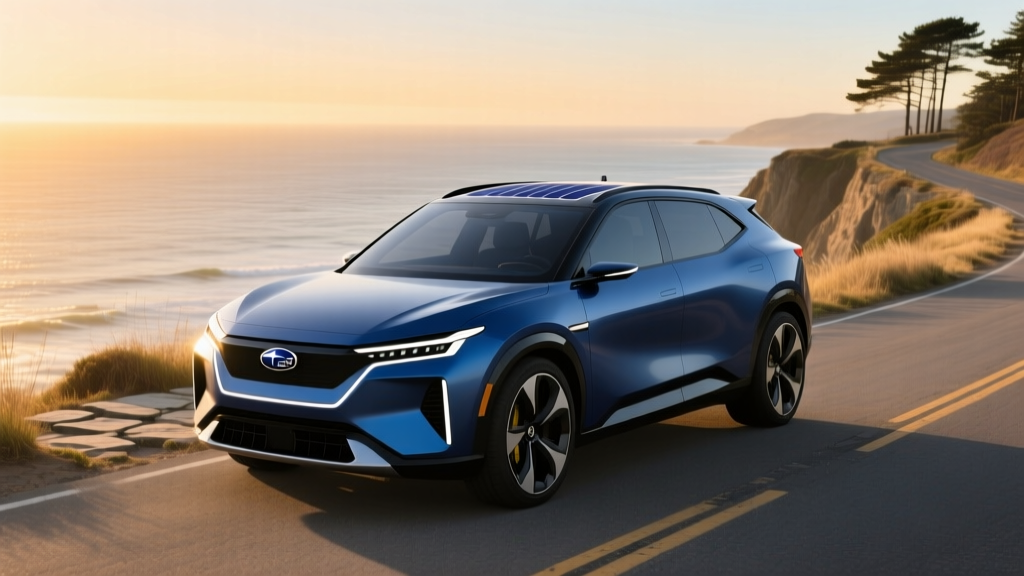
If you're searching for the Subaru new electric car, you're looking for the 2026 Subaru Solterra — a compact all-electric SUV with standard all-wheel drive, an EPA-estimated 228 miles of range (in higher trims), and a starting MSRP around $38,495. It shares its platform and battery with the Toyota bZ4X but adds Subaru's signature X-MODE off-road capability and slightly retuned suspension. For buyers with home Level 2 charging and moderate commutes, the Solterra is a practical, comfortable entry into EV ownership. For those who regularly drive 300+ miles between charges or live in extreme cold climates without garage charging, its range limitations require honest consideration.
2026 Subaru Solterra: Core Specs at a Glance
| Specification | 2026 Subaru Solterra |
|---|---|
| EPA Range | 228 mi (Touring/Limited), ~222 mi (Premium with larger wheels option) |
| Battery Capacity | 72.8 kWh (usable ~65.4 kWh), Lithium-ion NMC |
| DC Fast Charge Peak | ~150 kW |
| 10–80% DC Fast Charge | ~35 minutes |
| Level 2 Charge Rate | ~7.2 kW (onboard charger) |
| Drivetrain | Dual-motor AWD (standard all trims) |
| Horsepower | 215 hp combined |
| 0–60 mph | ~6.5 seconds |
| Efficiency | 104 MPGe combined (EPA est.) |
| Cargo Volume | 23.8 cu ft (rear seats up), 56.9 cu ft (rear seats folded) |
| Starting MSRP | ~$38,495 (Premium trim) |
| Battery Warranty | 8 years / 100,000 miles |
| Vehicle Warranty | 3 years / 36,000 mi basic; 5 years / 60,000 mi powertrain |
Real-World Range: What to Actually Expect
The EPA rates the 2026 Solterra at 228 miles in its most efficient configuration. In real-world highway driving at 70–75 mph, expect approximately 185–205 miles before needing to charge. In freezing temperatures (below 30°F), range can drop to 155–180 miles due to battery resistance and cabin heating demands. The Solterra includes a heat pump on all trims, which helps mitigate cold-weather losses compared to resistive heating, but physics still wins in deep winter. Plan road trips around 170-mile legs to maintain a comfortable buffer.
Solterra vs. Gas: Real Cost Comparison
The most common question from first-time EV buyers: does going electric actually save money? Let's compare the Solterra against its closest gas-powered sibling, the Subaru Outback (a natural cross-shop for Subaru loyalists).
| Cost Factor | 2026 Solterra (AWD) | 2026 Outback 2.5i (AWD) |
|---|---|---|
| Base MSRP | $38,495 | $32,695 |
| Fed. Tax Credit (§30D) | Up to $7,500 (eligibility varies) | $0 |
| Effective Purchase Price | ~$30,995 (if full credit applies) | $32,695 |
| Fuel/Energy Cost per Mile | ~$0.04–$0.06 (home charging) | ~$0.13–$0.15 (gas at $3.50/gal, 28 MPG) |
| Annual Fuel/Energy (12,000 mi) | $480–$720 | $1,560–$1,800 |
| Annual Maintenance | ~$150–$300 | ~$400–$600 |
| 5-Year Fuel + Maintenance | ~$3,150–$5,100 | ~$9,800–$12,000 |
| Estimated Insurance (Annual Avg.) | ~$1,800–$2,200 | ~$1,400–$1,700 |
The takeaway: If you qualify for the full §30D federal tax credit, the Solterra's effective purchase price can undercut the Outback. Over five years, home-charging savings on energy and maintenance can total $5,000–$7,000 compared to gas. However, EV insurance premiums run 15–30% higher on average, partially offsetting those gains. Your actual savings depend heavily on local electricity rates, driving mileage, and credit eligibility.
Federal Tax Credit: Do You Qualify?
The §30D Clean Vehicle Credit can reduce the Solterra's cost by up to $7,500, but eligibility is not automatic. The rules are complex and subject to change. Here's the current framework per IRS guidelines:
- MSRP Cap: SUVs must have an MSRP at or below $80,000 — the Solterra clears this easily.
- Buyer Income Limits: Modified AGI must not exceed $300,000 (joint filers), $225,000 (head of household), or $150,000 (single).
- Battery Sourcing Requirements: The credit splits into two halves — $3,750 for critical minerals and $3,750 for battery component sourcing. The Solterra's eligibility for each half depends on supply-chain compliance that can shift year to year.
- Point-of-Sale Transfer: As of 2024+, you can transfer the credit to the dealer at purchase, reducing your out-of-pocket cost immediately rather than waiting for a tax refund.
- Final Assembly: Vehicle must undergo final assembly in North America — the Solterra is assembled in Japan, which may affect eligibility. Always verify the current VIN eligibility on fueleconomy.gov before purchasing.
Consult a tax professional and check the IRS and fueleconomy.gov databases for your specific model year and VIN before relying on credit amounts in your purchase decision.
Charging the Solterra: Home, Public, and What It Costs
Charging speed and access are where many first-time EV buyers have the most questions. The Solterra supports three charging levels:
| Charging Level | Power | Miles Added per Hour | Full Charge Time (0–100%) | Best For |
|---|---|---|---|---|
| Level 1 (120V outlet) | ~1.4 kW | ~4–5 miles | ~50+ hours | Emergency / trickle top-up |
| Level 2 (240V home) | ~7.2 kW | ~22–25 miles | ~9–10 hours | Daily overnight charging |
| DC Fast Charging | Up to ~150 kW | ~150+ miles in 30 min | 10–80% in ~35 min | Road trips, quick top-ups |
Home Charging Installation Costs
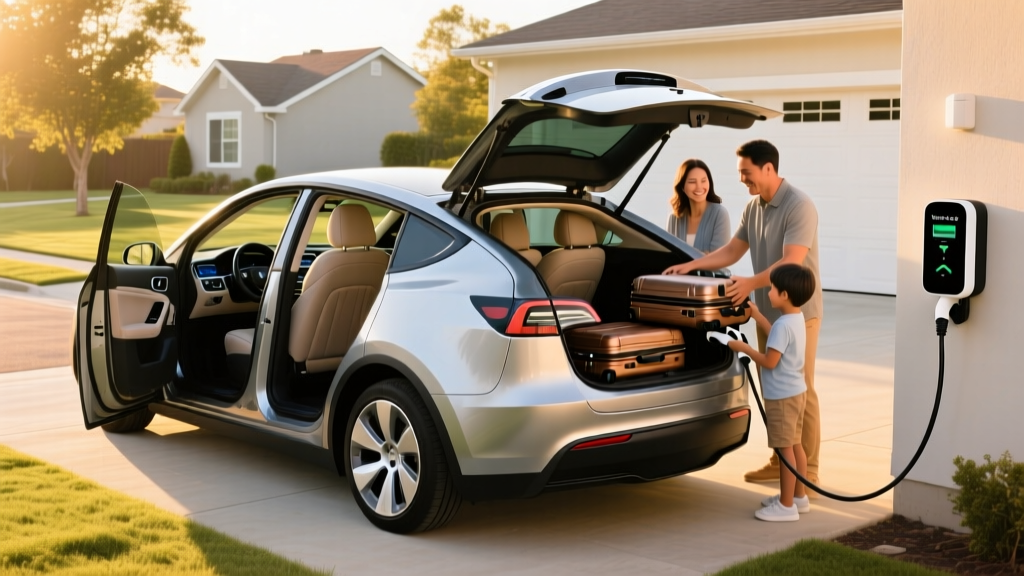
Most Solterra owners will want a Level 2 home charger. Here's what to budget:
| Item | Typical Cost Range |
|---|---|
| Level 2 Charger Hardware (32A–48A) | $300–$700 |
| Electrician Labor (240V circuit run) | $500–$2,000 |
| Electrical Permit | $50–$200 |
| Panel Upgrade (if needed, 100A→200A) | $1,500–$3,500 |
| Total (without panel upgrade) | $850–$2,900 |
| Total (with panel upgrade) | $2,350–$6,400 |
Important: The Solterra uses a J1772 connector for Level 2 AC charging (NACS adapter may be available depending on model year updates). For DC fast charging, it uses CCS1. Always confirm connector compatibility with your local public charging networks — Electrify America, EVgo, and ChargePoint all support CCS1 at most locations.
The Charging Curve Reality
Subaru quotes a ~150 kW peak DC fast-charge rate, but like all EVs, the Solterra doesn't sustain peak speed across the entire session. The charge curve typically peaks around 20–40% State of Charge, then progressively tapers. Expect the 10–80% session to average around 80–100 kW sustained, taking roughly 35 minutes. Charging from 80–100% slows dramatically to protect the battery — plan to charge to 80% on road trips and keep going rather than waiting for a full battery.
EV vs. Hybrid vs. Gas: Which Subaru Is Right for You?
Subaru now offers electrified options alongside its traditional gas lineup. Here's a practical comparison to guide your decision:
| Factor | Solterra (BEV) | Crosstrek Hybrid (PHEV)* | Outback 2.5i (Gas) |
|---|---|---|---|
| Starting MSRP | ~$38,495 | ~$36,000 (est.) | ~$32,695 |
| Electric-Only Range | 228 mi | ~17 mi | N/A |
| Total Range | 228 mi | ~420 mi (gas + electric) | ~540 mi |
| Combined Efficiency | 104 MPGe | ~90 MPGe (elec) / 35 MPG (gas) | 28 MPG |
| Home Charging Needed? | Strongly recommended | Optional but beneficial | No |
| Road-Trip Convenience | 30-min charge stops | Gas-and-go | Gas-and-go |
| Maintenance Cost | Lowest | Moderate | Highest |
*PHEV availability and specs vary by model year — verify current Subaru offerings.
Decision Framework: Which Subaru Should You Buy?
Choose the Solterra (BEV) if:
- You have reliable home Level 2 charging (garage or driveway with 240V access)
- Your daily commute is under 100 miles round-trip
- You qualify for the §30D tax credit, bringing effective price near or below a gas SUV
- You want the lowest ongoing fuel and maintenance costs
- You rarely drive more than 200 miles without an overnight stop
Choose a Subaru PHEV or gas model if:
- You live in an apartment or lack home charging access
- You regularly drive 300+ miles in a day (rural areas, frequent long road trips)
- You live in a region with sparse DC fast-charging infrastructure
- You frequently tow (the Solterra is rated for only ~2,000 lbs; gas models offer more)
- You need maximum range certainty in extreme cold without planning around chargers
Common Misconceptions About the Solterra — Fact-Checked
| Myth | Fact |
|---|---|
| "The Solterra has the same range issue as the early 2023 recall models." | The 2023 battery recall and software update have been fully addressed. 2024–2026 models ship with updated battery management and full rated capacity. |
| "You can't charge a Subaru EV at Tesla Superchargers." | With the industry-wide shift to NACS, Subaru has indicated future NACS compatibility. Check current adapter availability — a CCS-to-NACS adapter may enable Supercharger access for CCS-equipped Solterras. |
| "EV batteries need replacing every few years at huge cost." | The Solterra's battery carries an 8-year/100,000-mile warranty guaranteeing minimum 70% capacity retention. Industry data from fleet studies shows modern NMC batteries typically retain 85–90% capacity after 5 years of normal use. |
| "AWD EVs are terrible off-road." | The Solterra includes X-MODE with hill descent control and 8.3 inches of ground clearance. It handles dirt roads, snow, and light trail use competently — though it's not a dedicated rock crawler. |
| "Electric cars are more expensive to insure always." | EV insurance is typically 15–30% higher, but the gap is narrowing. Shop quotes from multiple carriers — some insurers offer specific EV discounts. |
Ownership Considerations: Climate, Driving Patterns, and Practicalities
Cold-Weather Ownership
If you live in northern states with sustained sub-freezing winters, budget for 20–30% range loss. The Solterra's heat pump helps, but preconditioning the battery while plugged in (using the Subaru app) is essential for preserving range and enabling faster DC charging. Always plug in and precondition before winter drives.
Public Charging Reliability
Public DC fast-charging networks have improved but remain inconsistent. Before relying on public charging for your commute, test the stations near your regular routes. Apps like PlugShare and ChargePoint show real-time availability and user-reported reliability scores. The Solterra's ~35-minute 10–80% charge time is adequate for a meal stop but slower than competitors like the Hyundai Ioniq 5 (~18 minutes at 350 kW chargers).
Driving Patterns That Work Best
The Solterra excels as a daily commuter and weekend adventure vehicle for drivers who:
- Drive 30–80 miles daily and charge overnight at home
- Take road trips of 150–200 miles between stops (aligning with DC charger spacing on major corridors)
- Value AWD traction for snow, rain, and dirt roads over maximum range or towing capacity
Frequently Asked Questions
Is the 2026 Subaru Solterra eligible for the $7,500 federal tax credit?
Eligibility depends on battery sourcing requirements, buyer income, and the vehicle's final assembly location. Because the Solterra is assembled in Japan, it may not meet the North American final assembly requirement under §30D. Always verify your specific vehicle's eligibility on fueleconomy.gov and consult a tax professional before purchasing.
How does the Solterra compare to the Toyota bZ4X?
Both share the e-TNGA platform and 72.8 kWh battery. The Solterra adds standard X-MODE, slightly more ground clearance, and Subaru-tuned suspension. The bZ4X may offer a slightly lower starting price. Range, charging speed, and interior space are nearly identical.
Can I tow with the Solterra?
The Solterra is rated for approximately 2,000 lbs of towing capacity — enough for a small utility trailer or a couple of dirt bikes, but not a full-size camper. If towing is a priority, a gas or hybrid Subaru Outback (3,500 lbs) is the better choice.
What happens if the battery degrades significantly?
Subaru warrants the battery for 8 years or 100,000 miles against capacity loss below 70%. If degradation exceeds this threshold within the warranty period, Subaru will repair or replace the battery at no cost. Out-of-warranty replacement costs are estimated at $8,000–$15,000 depending on labor and parts availability, though prices are expected to decline as the battery supply chain matures.
Does the Solterra support one-pedal driving?
The Solterra offers adjustable regenerative braking via paddle shifters behind the steering wheel, but it does not offer true one-pedal driving that brings the car to a complete stop without touching the brake pedal. Maximum regen provides significant deceleration but requires brake application for full stops.
What's the real cost per mile to charge at home?
At the US average residential electricity rate of ~$0.16/kWh, fully charging the Solterra's ~65.4 kWh usable battery costs roughly $10.50, yielding about $0.046 per mile. Compare that to $0.13–$0.15 per mile for a 28 MPG gas car at $3.50/gallon. If your utility offers off-peak rates (often $0.08–$0.10/kWh), costs drop to ~$0.03 per mile.