Quick Answer: Is a Subaru EV Right for You in 2026?
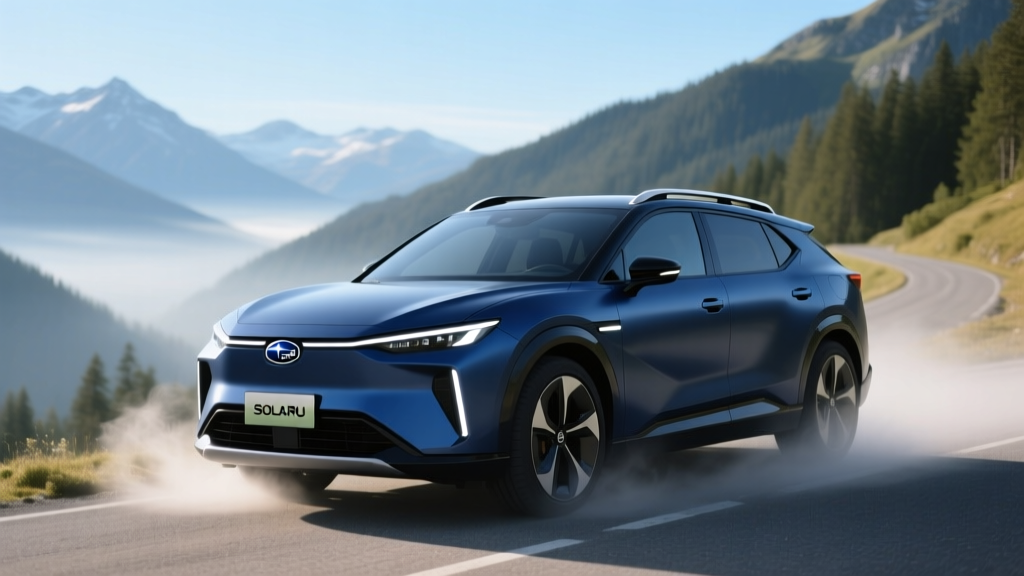
Subaru's sole electric offering for 2026 is the Solterra SUV, co-developed with Toyota (bZ4X). The 2026 Solterra delivers an EPA-estimated 222–228 miles of range depending on trim, with DC fast charging now peaking at ~150 kW (a meaningful upgrade from the original ~100 kW limit). Pricing starts at approximately $39,995 before destination. The Solterra qualifies for a partial or full §30D federal tax credit (up to $7,500) depending on battery-sourcing compliance and buyer income — check current IRS rules before purchasing. It's best suited for buyers who want Subaru's signature AWD capability and ground clearance in an EV, primarily drive under 200 miles daily, and have access to home Level 2 charging. If you regularly drive 300+ miles between charges or live in an apartment without charging access, a Subaru PHEV (like the Crosstrek Hybrid) or a longer-range EV may serve you better.
Subaru's electrification strategy has been deliberate — some would say slow — but the 2026 Solterra represents the brand's most refined electric vehicle yet. After several model years of iterative improvements to charging speed, thermal management, and range, the Solterra now addresses the most common criticisms of its 2023 debut. This guide covers everything a prospective buyer needs: real-world range expectations, charging logistics, total ownership costs, and how it stacks up against both gas alternatives and rival EVs.
2026 Subaru Solterra: Core Specs at a Glance
| Specification | 2026 Solterra Premium | 2026 Solterra Limited / Touring |
|---|---|---|
| EPA Range | ~228 miles | ~222 miles |
| Battery (usable) | ~71.4 kWh, NMC lithium-ion | |
| Drivetrain | Dual-motor AWD, 215 hp / 249 lb-ft torque | |
| 0–60 mph | ~6.5 seconds | |
| DC Fast Charge (peak) | ~150 kW (10–80% in ~30 min) | |
| Level 2 Charge Rate | ~6.6 kW (full charge ~11 hours) | |
| MPGe (combined) | ~104 MPGe | ~102 MPGe |
| Ground Clearance | 8.3 inches | |
| Cargo Volume | ~23.8 cu ft (rear seats up) / ~56.9 cu ft (folded) | |
| Base MSRP | ~$39,995 | ~$44,995–$47,995 |
| Battery/Powertrain Warranty | 8 years / 100,000 miles | |
Solterra vs Gas: How Does the Outback Compare?
Most Subaru buyers cross-shop the Solterra against the brand's own gas-powered SUVs, especially the Outback and Forester. Here's how the numbers stack up for a typical buyer driving 12,000 miles per year.
| Metric | 2026 Solterra (AWD) | 2026 Outback 2.5i (AWD) | 2026 Forester (AWD) |
|---|---|---|---|
| Base MSRP | ~$39,995 | ~$32,995 | ~$33,495 |
| Fuel/Energy Cost (annual, 12k mi) | ~$540–$720 (home L2, $0.13–$0.17/kWh) | ~$1,620 (28 MPG, $3.78/gal) | ~$1,700 (27 MPG, $3.78/gal) |
| Annual Maintenance | ~$300–$400 | ~$600–$800 | ~$600–$800 |
| Federal Tax Credit | Up to $7,500 (§30D) | None | None |
| 5-Year Fuel + Maintenance | ~$4,200–$5,600 | ~$11,100–$13,000 | ~$11,500–$13,500 |
| Range / Tank | ~200–228 mi | ~518 mi (18.5 gal) | ~464 mi (16.9 gal) |
| Refuel/Recharge Time | ~30 min (10–80% DCFC) | ~5 min | ~5 min |
The math: The Solterra costs roughly $7,000 more upfront than an Outback. After applying a potential $7,500 federal tax credit (if eligible — see §30D details below), the effective purchase price can drop to parity or even below the gas alternative. Over five years, the Solterra saves approximately $6,500–$8,000 in combined fuel and maintenance costs for a home-charging owner. The breakeven point, with the credit, can arrive within the first year of ownership.
However, the Outback's 500+ mile range and 5-minute refueling remain decisive advantages for frequent road-trippers, rural drivers, and anyone without reliable home charging access.
Charging the Solterra: Home, Public, and What You'll Actually Spend
The Solterra uses the CCS1 connector for DC fast charging and J1772 for Level 2 AC charging. Subaru has not adopted the NACS (Tesla) port as of the 2026 model year, though a NACS adapter or future transition is possible. Here's what charging looks like in practice:
| Charging Level | Power (kW) | Miles Added per Hour | Full Charge Time | Best For |
|---|---|---|---|---|
| Level 1 (120V household) | ~1.4 kW | ~4 mi/hr | ~50+ hours | Emergency top-ups only |
| Level 2 (240V home/public) | ~6.6 kW | ~22 mi/hr | ~11 hours | Daily overnight charging |
| DC Fast Charge | Up to ~150 kW | ~180+ mi/hr (peak) | 10–80% in ~30 min | Road trips, quick top-ups |
Home charging cost: A typical Level 2 home charger installation (40-amp circuit, 240V) runs $800–$2,000 including equipment and electrician labor, depending on your panel's proximity to the garage and whether a panel upgrade (to 200A service) is needed. At the US average electricity rate of ~$0.16/kWh, fully charging the Solterra's 71.4 kWh battery costs approximately $11.40, or about $0.05 per mile — roughly one-third the per-mile cost of gasoline at $3.78/gallon.
Public DCFC cost: Networks like Electrify America and EVgo typically charge $0.35–$0.55/kWh. A 10–80% session (~50 kWh) costs roughly $17.50–$27.50. Frequent reliance on public fast charging significantly erodes the cost advantage over gasoline — this is a critical factor for apartment dwellers or those without garage access.
Charging curve reality: The Solterra's 150 kW peak rate is not sustained across the entire session. Like all EVs, the charge rate tapers as the battery fills. Expect peak speeds between 10–50% SoC, with significant slowing above 70%. A 10–80% session takes approximately 30 minutes, but an 80–100% top-off can add another 30–40 minutes. For road trips, plan stops around the 10–80% window to minimize time at the charger.
Federal Tax Credit: Does the 2026 Solterra Qualify?
The federal EV tax credit under IRS §30D can provide up to $7,500 for qualifying new EV purchases, and since 2024, the credit can be transferred to the dealer at point of sale as an instant rebate. However, eligibility is governed by several requirements that change frequently:
- MSRP cap: SUVs must have an MSRP at or below $80,000 — the Solterra clears this easily at ~$39,995–$47,995.
- Buyer income cap: Modified adjusted gross income must not exceed $150,000 (single), $225,000 (head of household), or $300,000 (joint filers).
- Battery sourcing: The $7,500 credit is split into two halves — $3,750 for critical-minerals sourcing and $3,750 for battery-component assembly (both must meet escalating domestic-content thresholds). The Solterra's battery is manufactured in Japan by Panasonic; sourcing compliance for 2026 must be verified at purchase, as rules tighten annually.
- Point-of-sale transfer: You can elect to transfer the credit to the dealer for an upfront price reduction, rather than claiming it on your tax return.
Bottom line: The Solterra may qualify for the full $7,500, a partial $3,750, or potentially zero depending on how its battery supply chain maps to current-year sourcing rules. Always verify with your dealer and a tax professional before assuming the full credit. Check the latest eligibility at fueleconomy.gov.
Real-World Ownership: Who Should (and Shouldn't) Buy the Solterra
The Solterra is not the longest-range EV in its class — rivals like the Hyundai Ioniq 5 (~303 mi), Tesla Model Y (~310 mi), and Ford Mustang Mach-E (~250–312 mi) all offer more distance per charge. So why choose the Subaru?
Decision Framework: Is the Solterra Your EV?
Choose the Solterra if:
- You want genuine AWD with X-MODE for snow, dirt roads, or light off-pavement use — the Solterra's 8.3 inches of ground clearance and dual-motor torque vectoring are legitimate Subaru differentiators.
- Your daily commute is under 150 miles round-trip, and you can charge at home overnight.
- You value Subaru's safety reputation (EyeSight driver-assist suite) and want a brand your local dealer can service.
- You live in a cold/snowy climate where AWD and a heat pump matter more than maximum range.
Look elsewhere if:
- You regularly drive 300+ miles between stops — the Solterra's ~200-mile real-world highway range means frequent charging stops on long trips.
- You live in an apartment or condo without Level 2 charging access. Level 1 (120V) charging adds only ~4 miles per hour and is not viable as a primary strategy.
- You want the fastest DC charging in the segment — the Ioniq 5's 800V architecture charges 10–80% in ~18 minutes at 240+ kW, roughly 12 minutes faster than the Solterra.
- Cargo space is a priority — the Solterra's 23.8 cu ft behind the rear seats trails the Outback (32.5 cu ft) and Model Y (30.2 cu ft).
Common Misconceptions About the Solterra
| Myth | Fact |
|---|---|
| "The Solterra only gets 150 miles of range." | That figure applied to early 2023 models under specific test conditions. The 2026 Solterra achieves an EPA-estimated 222–228 miles. Real-world mixed driving yields ~200–215 miles; severe cold or sustained highway speeds reduce this to ~145–195 miles. |
| "It can't fast charge — it's stuck at 100 kW." | Subaru updated the Solterra's thermal management and charging profile for 2025+. The 2026 model now peaks at ~150 kW. While not class-leading, a 10–80% session in ~30 minutes is adequate for most road-trip scenarios. |
| "The battery will need replacement in 5 years." | The Solterra's battery is warrantied for 8 years/100,000 miles against degradation below ~70% capacity. Industry data from similar NMC packs shows typical degradation of 10–15% over 8 years. Full battery replacement (if ever needed out of warranty) costs approximately $12,000–$18,000, but this is rare within the first decade. |
| "It's just a rebadged Toyota bZ4X." | The Solterra shares the e-TNGA platform and battery with the bZ4X, but Subaru tunes the AWD system, suspension, and X-MODE off-road software independently. Ground clearance, approach/departure angles, and driving dynamics differ. Interior materials and infotainment layouts also diverge. |
| "EVs cost more to insure." | Partially true. EV insurance premiums average 15–25% higher than comparable gas vehicles due to battery replacement costs in collisions. Expect Solterra annual premiums of ~$1,800–$2,400 depending on your profile, versus ~$1,400–$1,900 for an Outback. Shop multiple insurers — some now offer EV-specific discounts. |
5-Year Total Cost of Ownership: Solterra vs Outback
| Cost Category (5 years, 60k mi) | 2026 Solterra Limited | 2026 Outback Limited |
|---|---|---|
| Purchase Price (MSRP) | ~$44,995 | ~$38,495 |
| Federal Tax Credit | –$3,750 to –$7,500* | $0 |
| Home Charger Install | ~$1,200 (one-time) | $0 |
| Fuel/Energy (5 years) | ~$3,200 (home L2 avg) | ~$8,100 |
| Maintenance (5 years) | ~$1,800 | ~$3,500 |
| Insurance (5 years) | ~$10,500 | ~$8,250 |
| Estimated Depreciation | ~$18,000–$22,000 | ~$15,000–$18,000 |
| Net 5-Year Cost (approx.) | ~$50,000–$56,000 | ~$55,300–$58,300 |
* Tax credit amount depends on battery-sourcing compliance at time of purchase. Consult IRS §30D guidelines and a tax professional. Depreciation estimates based on segment averages; EV depreciation has been volatile and may differ.
The Solterra can achieve rough cost parity with the Outback over five years when the federal tax credit applies and home charging is the primary fuel source. The biggest variable is depreciation — EVs have experienced steeper resale-value declines than gas vehicles in recent years, though this gap is narrowing as the market matures.
What First-Time EV Buyers Should Know Before Choosing Subaru
If the Solterra will be your first electric vehicle, prepare for these ownership realities:
- Home charging is non-negotiable for convenience. Without Level 2 access at home or work, EV ownership becomes significantly more expensive and time-consuming. Budget $800–$2,000 for a quality Level 2 charger (e.g., ChargePoint Home Flex, Emporia Vue) plus professional installation. Confirm your electrical panel has capacity — a 200A service panel is typical, but older homes with 100A panels may need a $1,500–$3,000 upgrade.
- Plan road trips around chargers, not gas stations. The Solterra's ~200-mile real-world highway range means you'll stop every 2.5–3 hours on long drives. Apps like PlugShare and A Better Routeplanner are essential. Subaru includes a trial of connected navigation with charger-finding built in, but always have a backup plan — not every listed charger is operational.
- Cold weather changes everything. If you live where winters regularly drop below freezing, expect 20–35% range loss. Preconditioning the battery while plugged in (a Solterra feature) helps recover some efficiency, and the heat pump reduces cabin-heating energy draw. Still, a 228-mile EPA rating might functionally become ~160 miles on a 10°F January morning.
- Maintenance is lower, but different. No oil changes, spark plugs, or transmission fluid. You'll still need tire rotations (EVs wear tires faster due to instant torque and heavier weight — expect tire replacement every 30,000–40,000 miles), brake inspections (regen braking extends pad life dramatically), cabin air filter changes, and wiper fluid. Budget ~$300–$400/year versus $600–$800 for a gas vehicle.
- The EyeSight system is Level 2 driver assist — not self-driving. Subaru's EyeSight with lane centering and adaptive cruise is a capable SAE Level 2 system, meaning you must remain engaged and hands-on (or hands-near) the wheel at all times. It does not navigate autonomously, handle complex intersections, or replace driver attention. For context on automation levels, only fully driverless services like Waymo operate at Level 4.
Frequently Asked Questions
Does Subaru make any other electric vehicles besides the Solterra?
As of the 2026 model year, the Solterra is Subaru's only fully electric vehicle (BEV) sold in the US market. Subaru has announced plans for additional EV models later this decade, including a larger three-row electric SUV, but these remain unreleased with no confirmed US pricing or specs. Subaru also sells the Crosstrek Hybrid (PHEV), though its availability has been limited and its electric-only range is modest (~17 miles). For a pure-EV Subaru experience, the Solterra is currently the only option.
How does the Solterra's AWD system compare to Subaru's gas AWD?
The Solterra uses a dual-motor setup (one motor per axle) rather than the mechanical symmetrical AWD found in gas Subarus. The electric AWD provides instant torque distribution and integrates with X-MODE for snow/dirt/mud settings. While it lacks a traditional low-range gear, the 8.3 inches of ground clearance and electronic traction control handle light off-pavement use competently. For serious trail use, a gas Outback Wilderness with 9.5 inches of clearance and skid plates remains the more capable tool.
Can I use a Tesla Supercharger with the Solterra?
Not natively. The 2026 Solterra uses the CCS1 connector, while Tesla Superchargers use the NACS connector. Some third-party NACS-to-CCS adapters exist (such as the Lectron or A2Z adapters), but compatibility with Tesla's network requires the Supercharger station to support "Magic Dock" or non-Tesla access, which is still limited. Subaru has not announced a NACS port transition for the Solterra as of 2026. For most owners, Electrify America, EVgo, and ChargePoint networks provide adequate DCFC coverage.
What happens if the Solterra battery degrades significantly?
Subaru warranties the high-voltage battery for 8 years or 100,000 miles against capacity loss below approximately 70%. If your battery falls below this threshold within the warranty period, Subaru will repair or replace it at no cost. Out of warranty, a full battery replacement costs approximately $12,000–$18,000 depending on labor, though individual module replacement may be possible at lower cost. Real-world data from similar NMC packs suggests 10–15% degradation over 8 years is typical, keeping most owners well within warranty coverage.
Is the Solterra eligible for state EV incentives in addition to the federal credit?
Possibly — this varies significantly by state. States like California, Colorado, Massachusetts, and New York offer additional rebates or tax credits ranging from $1,000 to $5,000+ for qualifying EV purchases. Some utilities also offer rebates for home charger installation or off-peak charging rates. Check your state's energy office website and your local utility for current programs. These incentives stack with the federal §30D credit and can meaningfully reduce your net purchase price.