Quick Verdict: The Solterra's Honest Assessment
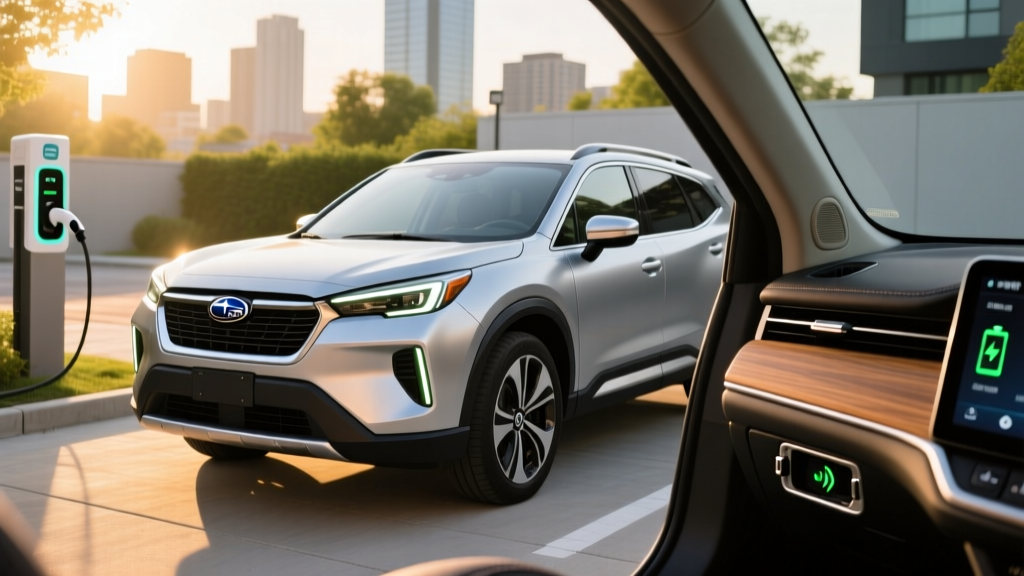
The 2023 Subaru Solterra is Subaru's first ground-up battery electric vehicle, developed jointly with Toyota (its twin is the bZ4X). It brings standard all-wheel drive, 8.3 inches of ground clearance, and Subaru's X-MODE traction system to the EV space — making it one of the most off-road-capable electric crossovers available. But its 222–228 miles of EPA range and middling DC fast-charging speeds place it behind key rivals like the Hyundai Ioniq 5 and Ford Mustang Mach-E for road-trip duty. If your priority is a rugged, safe, everyday electric commuter with genuine dirt-road chops, the Solterra delivers. If you need 300+ miles and ultra-fast charging, look elsewhere.
| Spec | 2023 Subaru Solterra |
|---|---|
| EPA Range | 222–228 miles (varies by trim/wheel size) |
| Battery Capacity | 71.4 kWh usable, lithium-ion (NMC chemistry) |
| Drivetrain | Dual-motor AWD (standard all trims) |
| Horsepower | 215 hp / 249 lb-ft torque |
| 0–60 mph | 6.5 seconds |
| Max DC Fast Charge | ~100 kW peak (150 kW capable on Limited/Touring w/ battery preconditioning) |
| 10–80% DCFC Time | ~56 minutes (Premium); ~35 minutes (Limited/Touring) |
| Level 2 Charge Rate | 6.6 kW onboard charger (~25 mi/hr) |
| Efficiency | 102–104 MPGe combined (31–33 kWh/100 mi) |
| Cargo Volume | 23.8 cu ft (rear seats up); 56.9 cu ft (seats folded) |
| Base MSRP | $44,995 (Premium) – $51,995 (Touring) |
| Battery Warranty | 8 years / 100,000 miles |
Range and Efficiency: EPA vs. Reality
The 2023 Solterra comes in three trims, and range varies depending on wheel size. The Premium trim rides on 18-inch wheels and earns an EPA-estimated 228 miles, while the Limited and Touring trims on 20-inch wheels drop to 222 miles. Per fueleconomy.gov, combined efficiency sits between 102 and 104 MPGe.
Real-World Range Expectations: The EPA sticker says 222–228 miles, but plan for reality. In 70-mph highway driving, expect 185–205 miles in mild weather. In freezing temperatures (below 30°F), range can drop to 155–180 miles due to battery chemistry limitations and cabin heating demands. City driving with regenerative braking recovers more energy and can approach or slightly exceed the EPA number. The Solterra does not include a heat pump (standard on some rivals), which worsens cold-weather efficiency.
This is the Solterra's most significant limitation for buyers comparing it to the segment. The Hyundai Ioniq 5 delivers 303 miles EPA on its Long Range AWD variant; the Ford Mustang Mach-E Extended Range AWD reaches 290 miles. The Solterra's smaller battery and less aerodynamic profile account for the deficit. For daily commuting under 100 miles round-trip, this range is perfectly adequate. For road trips, you'll be stopping more often.
Charging Speed: DC Fast and Home Level 2
Charging is where the 2023 Solterra's story gets nuanced — and where trim choice matters enormously.
| Charging Level | Power / Rate | Speed | Notes |
|---|---|---|---|
| Level 1 (120V) | ~1.2 kW | ~4–5 mi/hr | Emergency/trickle only; ~48 hrs for full charge |
| Level 2 (240V, 32A) | 6.6 kW (onboard charger limit) | ~25 mi/hr | Full charge in ~9–10 hours; standard home setup |
| DC Fast Charge (Premium trim) | ~100 kW peak | 10–80% in ~56 min | Air-cooled battery; slower charge curve |
| DC Fast Charge (Limited/Touring) | ~150 kW peak | 10–80% in ~35 min | Liquid-cooled battery + preconditioning |
This is a critical distinction that many 2023 Solterra buyers discovered after purchase: the Premium trim uses an air-cooled battery pack that limits DC fast charging to roughly 100 kW peak, while the Limited and Touring trims feature a liquid-cooled battery that can accept up to 150 kW — but only when the battery is properly preconditioned (warmed to optimal temperature via the navigation-routed preconditioning feature).
In real-world DC fast charging, the Solterra's charge curve is conservative. Even on the Limited/Touring, you'll see peak rates near 150 kW only in a narrow state-of-charge window (roughly 15–40% SoC), after which the rate tapers significantly. Expect an average rate closer to 70–85 kW across the full 10–80% session. This is noticeably slower than the Hyundai Ioniq 5's 800V architecture, which sustains 200+ kW and hits 10–80% in roughly 18 minutes.
For home charging, the 6.6 kW onboard charger is adequate for overnight replenishment. A typical commute of 40–60 miles round-trip requires only 2–3 hours on Level 2 to recover. Have a licensed electrician install a 240V/40A circuit (NEMA 14-50 or hardwired Level 2 EVSE) for best results.
Performance and Drivetrain
Every 2023 Solterra comes with dual electric motors and standard all-wheel drive — there is no single-motor, front-wheel-drive variant. The front motor produces 107 hp and the rear motor produces 108 hp, for a combined system output of 215 horsepower and 249 lb-ft of torque.
The 0–60 mph time of 6.5 seconds is respectable but not thrilling by EV standards. Where the Solterra shines is low-speed traction and off-road capability. Subaru's X-MODE, carried over from its ICE lineup, manages torque distribution between the front and rear axles for snow, mud, and loose-surface driving. The 8.3 inches of ground clearance exceeds most EV crossovers and rivals many gas-powered compact SUVs.
Ride quality is compliant and well-damped, with a quiet cabin at highway speeds. The steering is light and accurate, though the 4,365-pound curb weight is noticeable during spirited cornering. Regenerative braking offers multiple levels adjustable via steering-wheel paddles, though the maximum regen setting does not bring the car to a complete stop — true one-pedal driving is not available.
Interior, Cargo, and Technology
The Solterra's cabin is practical and straightforward, if not luxurious. Materials are durable hard plastics with soft-touch accents on the dash and door panels. Seating is comfortable for four adults; the rear seat offers 35.7 inches of legroom, adequate for most passengers but tighter than the Ioniq 5's generous 39.4 inches.
Cargo space measures 23.8 cubic feet behind the rear seats and 56.9 cubic feet with the 60/40 split rear seats folded. There is no front trunk (frunk) — the space under the hood houses electronics and the HVAC system. A power liftgate is standard on Limited and Touring trims.
Infotainment: The 2023 Solterra uses a 12.3-inch touchscreen on Limited and Touring trims (the Premium uses a smaller 8-inch unit). Wireless Apple CarPlay and Android Auto are standard on upper trims. The interface is functional but not class-leading in responsiveness. A physical volume knob is absent — volume is controlled via steering-wheel buttons and touchscreen sliders, which some drivers find frustrating.
Driver Assistance: Subaru's EyeSight suite is standard across all trims and includes adaptive cruise control, lane-keeping assist, pre-collision braking, and lane departure warning. The system is well-calibrated and unobtrusive. Per IIHS, the 2023 Solterra earned a TOP SAFETY PICK+ rating, reflecting Subaru's strong safety engineering. Note: EyeSight is a Level 2 driver-assistance system per SAE classification — it requires continuous driver supervision and is not autonomous or "self-driving."
Pricing, Trims, and Federal Tax Credit Eligibility
The 2023 Solterra launched with three trim levels. Pricing includes the $1,295 destination charge:
| Trim | Base MSRP (incl. dest.) | Federal Credit Potential | Effective Price (if eligible) |
|---|---|---|---|
| Premium | $46,290 | Up to $7,500 (§30D) | ~$38,790 |
| Limited | $49,990 | Up to $7,500 (§30D) | ~$42,490 |
| Touring | $53,290 | Up to $7,500 (§30D) | ~$45,790 |
Federal tax credit eligibility under IRS §30D rules is subject to several conditions that change periodically and depend on battery-component and critical-mineral sourcing requirements. Key eligibility factors include:
- MSRP cap: The Solterra is classified as an SUV, so the MSRP cap is $80,000 — all trims qualify.
- Buyer income cap: Modified adjusted gross income must not exceed $150,000 (single), $225,000 (head of household), or $300,000 (joint filing).
- Battery sourcing: The credit amount depends on the percentage of battery components manufactured in North America and critical minerals sourced from the U.S. or free-trade-agreement countries. The Solterra's battery supply chain has been subject to evolving sourcing rules — consult the IRS eligible vehicle list and a tax professional for your specific purchase year.
- Point-of-sale transfer: Beginning in 2024, buyers can transfer the credit to the dealer at purchase for an immediate price reduction. For the 2023 model year purchased in 2023, the credit was claimed on the buyer's tax return.
Always verify current eligibility on the IRS website and with a qualified tax professional before relying on the credit in your purchase decision. State and local incentives vary by jurisdiction and may stack on top of the federal credit — check your state's energy office or Alternative Fuels Data Center for specifics.
Warranty and Long-Term Ownership
Subaru backs the Solterra with competitive warranty coverage:
- Battery pack: 8 years / 100,000 miles (capacity retention guaranteed above 70% per Subaru's stated threshold)
- EV powertrain components: 5 years / 60,000 miles
- New vehicle limited warranty: 3 years / 36,000 miles
- Roadside assistance: 3 years / 36,000 miles
The 8-year/100,000-mile battery warranty aligns with the federal mandate for EV battery coverage and matches most competitors. Subaru's 70% capacity retention threshold is standard but not exceptional — some brands guarantee 70% while others hold at 65% or 75%. Long-term degradation data for the Solterra's specific NMC pack is still accumulating given the vehicle's 2023 launch. Early owner reports and industry data from similar NMC packs suggest 10–15% degradation over 8 years is typical under normal use.
Insurance costs for the Solterra tend to run 10–20% higher than comparable gas-powered Subaru models (Outback, Forester) due to higher repair costs for EV-specific components and the vehicle's MSRP. Get quotes from your insurer before purchasing.
Solterra vs. the Competition
The Solterra competes in the compact electric crossover segment against several strong alternatives. Here's how it stacks up on key metrics:
| Vehicle | EPA Range | DCFC 10–80% | AWD? | Base MSRP |
|---|---|---|---|---|
| 2023 Subaru Solterra | 222–228 mi | 35–56 min | Standard | $46,290 |
| 2023 Hyundai Ioniq 5 AWD | 266–303 mi | ~18 min | Optional | $47,700 |
| 2023 Ford Mustang Mach-E AWD | 247–290 mi | ~37 min | Optional | $48,195 |
| 2023 Toyota bZ4X AWD | 222–228 mi | ~35 min | Optional | $46,700 |
| 2023 Volkswagen ID.4 AWD | 249–275 mi | ~29 min | Optional | $47,290 |
The Solterra's closest sibling is the Toyota bZ4X, which shares the same e-TNGA platform and battery. The Solterra differentiates with standard AWD (the bZ4X offers FWD as the base), more ground clearance, and Subaru's X-MODE. However, both share the same range limitations.
The Ioniq 5 dominates on charging speed thanks to its 800V architecture and on range with its larger optional battery. The Mach-E offers more power and cargo space. The VW ID.4 provides a balanced package with better range and a more refined interior. The Solterra wins specifically on standard AWD, off-road capability, ground clearance, and Subaru's safety reputation.
Who Should Buy the 2023 Subaru Solterra?
Choose the Solterra if:
- You live in a region with snow, rain, or unpaved roads and want standard AWD with genuine off-road capability
- Your daily commute is under 100 miles round-trip and you charge at home overnight
- You value Subaru's safety ratings (TOP SAFETY PICK+) and EyeSight driver-assist suite
- You want 8.3 inches of ground clearance for ski trips, trailheads, or rough driveways
- You're a current Subaru owner loyal to the brand's outdoorsy identity
Look elsewhere if:
- You regularly take road trips exceeding 200 miles between charging stops
- You need the fastest possible DC charging for time-sensitive travel
- You want 300+ miles of EPA range for range-anxiety peace of mind
- You need a frunk, maximum cargo space, or a spacious rear seat for tall passengers
- One-pedal driving is important to your daily driving style
Pros
- Standard dual-motor AWD across all trims
- Class-leading 8.3" ground clearance with X-MODE
- IIHS TOP SAFETY PICK+ rating
- Comfortable ride quality and quiet cabin
- Competitive pricing for a standard-AWD EV crossover
Cons
- Below-average EPA range (222–228 mi) vs. segment leaders
- Premium trim's air-cooled battery limits DC fast charging to ~56 min
- No heat pump (worse cold-weather efficiency)
- No frunk; cargo space is mid-pack
- No true one-pedal driving mode
- Infotainment lacks a physical volume knob
Frequently Asked Questions
What is the real-world range of the 2023 Subaru Solterra?
In mild weather with mixed city/highway driving, expect 190–210 miles. Highway-only driving at 70+ mph reduces this to 185–205 miles. In freezing temperatures, plan for 155–180 miles. The EPA rates the Solterra at 222–228 miles depending on trim, but real-world conditions — especially cold weather and sustained highway speeds — consistently reduce range by 10–30%.
How fast does the Solterra charge at home and on the road?
At home on a 240V Level 2 charger, the 6.6 kW onboard charger adds roughly 25 miles of range per hour, fully replenishing the 71.4 kWh battery in about 9–10 hours. On DC fast chargers, the Limited and Touring trims (liquid-cooled battery) can reach 10–80% in approximately 35 minutes at peak. The Premium trim (air-cooled battery) takes closer to 56 minutes for the same session.
Does the 2023 Subaru Solterra qualify for the federal EV tax credit?
It may qualify for up to $7,500 under IRS §30D, depending on your income, the vehicle's battery sourcing compliance at time of purchase, and MSRP (all trims fall under the $80,000 SUV cap). Income limits are $150K single / $225K head of household / $300K joint. Battery-component and critical-mineral sourcing requirements have evolved since 2023 — verify current eligibility on the IRS website and consult a tax professional.
How much does the Solterra cost after tax credits?
If you qualify for the full $7,500 federal credit, the Premium trim drops to approximately $38,790, the Limited to ~$42,490, and the Touring to ~$45,790. State incentives may reduce the price further — check your local programs. Keep in mind that insurance, home charger installation ($500–$2,000 depending on electrical panel capacity), and any state registration EV fees add to the total cost of ownership.
Is the Subaru Solterra worth buying over the Hyundai Ioniq 5 or Ford Mach-E?
It depends on your priorities. If you need maximum range, the fastest charging, or a spacious rear seat, the Ioniq 5 and Mach-E are objectively better choices. The Solterra earns its keep with standard AWD (no upcharge), genuine off-road capability via X-MODE and high ground clearance, top safety ratings, and a comfortable, practical daily-driver experience. For outdoor-lifestyle buyers in snowy or rural areas, the Solterra's trade-offs may be worth it. For road-trippers and efficiency-maximizers, the Ioniq 5's 303-mile range and 18-minute fast charge are hard to beat.
Does the Solterra have a front trunk (frunk)?
No. The space under the hood is occupied by power electronics and HVAC components. All cargo must go in the rear cargo area (23.8 cu ft behind rear seats, 56.9 cu ft with seats folded).
What battery chemistry does the Solterra use?
The 2023 Solterra uses a lithium-ion battery pack with NMC (nickel manganese cobalt) chemistry, manufactured by Panasonic. NMC offers higher energy density than LFP (lithium iron phosphate) but has a shorter overall cycle life and different thermal characteristics. The pack holds 71.4 kWh of usable energy and is covered by an 8-year/100,000-mile warranty.