Quick Answer: Is the 2026 Subaru Soltera EV Worth Buying?
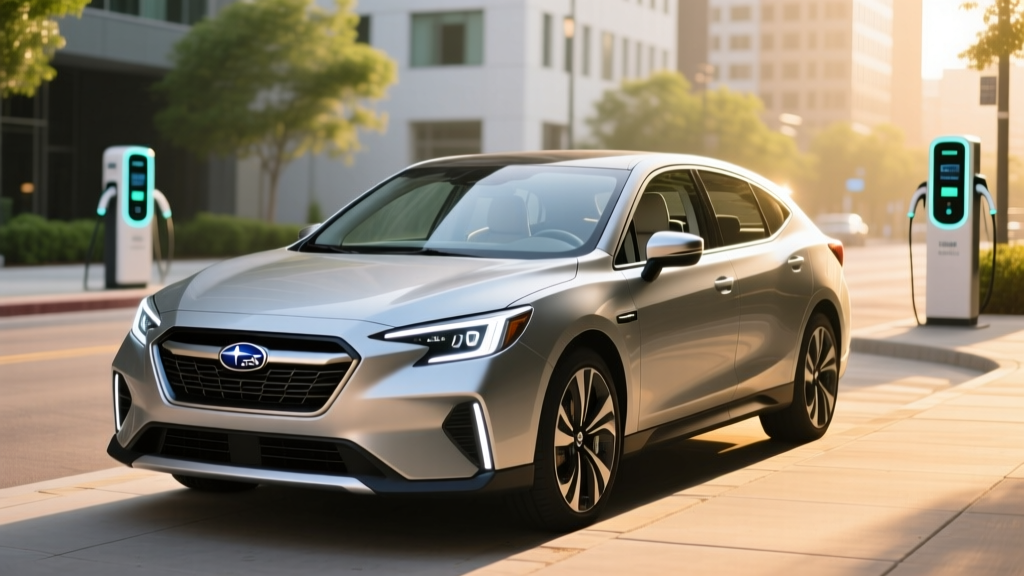
The 2026 Subaru Soltera is a compact electric crossover built on the Toyota bZ4X platform, offering an EPA-estimated 222 to 228 miles of range (depending on trim and wheel size), standard symmetrical all-wheel drive, and a starting MSRP around $37,995 before incentives. It's best suited for daily commuters and light outdoor use who can charge at home. If you regularly drive more than 180 miles between charges or live in extreme cold without a garage, the Soltera's modest battery size may feel limiting. For urban and suburban drivers with Level 2 home charging access, it delivers competitive efficiency and Subaru's familiar AWD capability at a reasonable entry price.
Range, Battery, and Real-World Efficiency
The 2026 Soltera uses a 71.4 kWh lithium-ion battery pack (NMC chemistry) shared with its Toyota bZ4X twin. Subaru rates the Soltera at 222 miles EPA for the Touring trim with 20-inch wheels and 228 miles EPA for the Premium trim with 18-inch wheels, according to fueleconomy.gov.
Real-World Range Expectations
EPA Sticker: 222–228 miles
Highway driving (70–75 mph): Expect ~185–200 miles in moderate temperatures. Aerodynamic drag at sustained highway speed cuts efficiency roughly 12–15% below the combined EPA cycle.
Cold weather (below 30°F): Plan for 160–185 miles. The Soltera's battery thermal management helps, but cabin heating and battery resistance still reduce usable capacity 15–25%.
City/regenerative driving (50–60°F): You may match or slightly exceed the EPA number, hitting 225–235 miles with aggressive regen use.
Efficiency lands around 104–107 MPGe combined (roughly 31–32 kWh/100mi), which is competitive with the Hyundai Ioniq 5 AWD but trails the Tesla Model Y Long Range's ~120 MPGe. The Soltera prioritizes AWD traction over maximum range — a deliberate trade-off for Subaru's target buyer.
Charging Speeds: Home and DC Fast Charging
The Soltera supports both J1772 (Level 1/2 AC) and CCS1 (DC fast charging) connectors. For 2026, Subaru has not adopted the NACS (Tesla) connector natively, though adapters may be available through dealerships.
| Charging Level | Power (kW) | Time | Miles Added per Hour |
|---|---|---|---|
| Level 1 (120V household) | ~1.4 kW | ~50+ hours (0–100%) | ~4–5 mi/hr |
| Level 2 (240V, 32A home) | ~7.7 kW | ~9.5 hours (0–100%) | ~25–27 mi/hr |
| Level 2 (240V, 48A home) | ~11.5 kW | ~6.5 hours (0–100%) | ~37–40 mi/hr |
| DC Fast (peak) | ~150 kW | ~30 min (10–80%) | ~180 mi in 30 min (peak) |
On a DC fast charger, the Soltera peaks near 150 kW but follows a typical charge curve: it holds strong output from 10–50% State of Charge, then tapers significantly above 80%. A 10–80% session takes roughly 30 minutes at a 150 kW+ station, but plan for 40–45 minutes at older 50 kW chargers. The onboard charger accepts up to 11.5 kW on Level 2 AC, meaning a dedicated 48-amp home circuit will fully replenish the battery overnight.
Home charging reality: If you can install a Level 2 charger (typically $500–$1,500 for equipment plus $800–$2,500 for electrician labor and permits), the Soltera works seamlessly as a daily driver. Without home charging, you'll rely on public infrastructure — feasible but more expensive per kWh and less convenient.
Performance and Driving Dynamics
The dual-motor AWD Soltera produces 214 horsepower and 248 lb-ft of torque. Subaru estimates 0–60 mph in approximately 6.5 seconds — adequate for merging and passing but not sporty. The instant torque delivery makes city driving feel quicker than the numbers suggest.
Subaru's X-MODE with Hill Descent Control carries over to the EV platform, providing enhanced traction management for snow, mud, and light off-road situations. Ground clearance sits at 8.3 inches — generous for the segment and genuinely useful for unpaved trailheads. Regenerative braking offers multiple levels selectable via paddle shifters, though the Soltera doesn't achieve full one-pedal driving to a complete stop like some competitors.
Pricing, Trims, and Federal Tax Credit Eligibility
The 2026 Soltera comes in two trims:
- Premium (18" wheels): ~$37,995 MSRP — 228 miles EPA range
- Touring (20" wheels): ~$42,995 MSRP — 222 miles EPA range, adds panoramic roof, heated rear seats, 360° camera
Federal §30D Tax Credit — Current 2026 Rules
The Soltera may qualify for up to $7,500 under IRS §30D, but eligibility depends on multiple factors that change frequently. Per irs.gov, requirements include:
- MSRP cap: Vehicle must be under $80,000 (SUVs/crossovers) — Soltera qualifies ✓
- Buyer income cap: AGI ≤ $150,000 (single) or ≤ $300,000 (joint) — verify your situation
- Battery sourcing: Critical minerals and battery components must meet escalating North American content thresholds — check the latest IRS approved vehicle list at purchase time
- Point-of-sale transfer: You can transfer the credit to the dealer for an upfront price reduction if eligible
Important: Battery sourcing rules tighten annually. Consult a tax professional and verify the Soltera's current eligibility on the IRS clean vehicle list before purchase.
Total Cost of Ownership: Soltera EV vs Gas Crosstrek
To understand the real economics, let's compare the Soltera to its closest gas-powered sibling, the 2026 Subaru Crosstrek (AWD, 2.5L, ~$30,000 MSRP), over 5 years and 60,000 miles.
| Cost Category | Soltera EV (Premium) | Crosstrek Gas (AWD) |
|---|---|---|
| Purchase Price (MSRP) | $37,995 | $30,000 |
| Federal Tax Credit | –$7,500 (if eligible) | $0 |
| Net Purchase | $30,495 | $30,000 |
| Fuel/Energy (60k mi) | ~$3,200 (home charging @ $0.14/kWh) | ~$7,800 (@ $3.50/gal, 29 MPG) |
| Maintenance (5 yr) | ~$600 (cabin filter, wipers, tires) | ~$2,800 (oil, filters, brakes, fluids) |
| Insurance (5 yr est.) | ~$9,500 | ~$7,500 |
| 5-Year Total | ~$43,795 | ~$48,100 |
Net savings with the Soltera: Roughly $4,300 over 5 years if you qualify for the full tax credit and charge primarily at home. Without the credit, the Soltera costs slightly more upfront and breaks even around year 6–7 through fuel and maintenance savings. Insurance premiums for EVs run 15–25% higher on average — get quotes before committing.
Common Misconceptions About the Soltera
| Myth | Fact |
|---|---|
| "228 miles of range isn't enough for road trips." | Most Americans drive under 40 miles/day. For road trips, a 30-minute DC fast charge adds ~150 miles — sufficient for highway corridor travel with planning. |
| "EV batteries need replacing every few years." | Subaru warrants the Soltera's battery for 8 years/100,000 miles against defects and excessive degradation (typically below 70% capacity). Modern NMC packs commonly retain 85–90% capacity at 100k miles. |
| "I can't drive an EV in cold climates." | Cold reduces range 15–25%, but preconditioning (warming the battery while plugged in) mitigates charging slowdowns. The Soltera's heat pump and AWD handle winter driving well — you just charge more often. |
| "Public charging is unreliable everywhere." | Network uptime varies. Electrify America and ChargePoint report 90%+ uptime at newer stations. The Soltera's CCS connector works at all major networks except Tesla Superchargers (without adapter). |
Decision Framework: Should You Buy the Soltera EV?
Choose the Soltera EV If:
- You have home Level 2 charging (or can install it)
- Your daily driving is under 120 miles round-trip
- You want AWD capability for snow/light trails without a gas engine
- You qualify for the federal tax credit (bringing effective price near $30k)
- You prefer Subaru's visibility, ground clearance, and X-MODE over sporty EV performance
Consider Alternatives If:
- You regularly drive 250+ miles between charges — look at the Hyundai Ioniq 5 (303 mi) or Tesla Model Y (320 mi)
- You need DC fast charging above 200 kW for frequent road trips — the Soltera's 150 kW peak is modest
- You want one-pedal driving to a complete stop — the Soltera's regen doesn't fully halt the vehicle
- You cannot charge at home and lack reliable public charging nearby — a PHEV like the Toyota RAV4 Prime may suit you better
Frequently Asked Questions
Does the 2026 Soltera use a Tesla (NACS) charging connector?
No. The 2026 Soltera uses CCS1 for DC fast charging and J1772 for Level 2 AC. Subaru has announced future NACS adoption, but 2026 models ship with CCS. Tesla Supercharger access may require a manufacturer-approved adapter when available.
What is the Soltera's towing capacity?
The Soltera is not rated for towing. If you need to tow, consider the Hyundai Ioniq 5 (up to 2,300 lbs with trailer brakes) or a PHEV/gas crossover.
How does the Soltera compare to the Toyota bZ4X?
They share the e-TNGA platform, 71.4 kWh battery, and dual-motor AWD powertrain. The Soltera differentiates with Subaru-tuned suspension, X-MODE, slightly different styling, and Subaru's Eyesight safety suite. Range and charging specs are nearly identical. Choose based on brand preference, dealer proximity, and pricing.
What happens if the battery degrades significantly?
Subaru's battery warranty covers 8 years/100,000 miles. If capacity drops below the warranted threshold (typically 70% of original), Subaru will repair or replace the battery at no cost. Out-of-warranty replacement costs are estimated at $8,000–$14,000 depending on labor and parts availability — though most packs outlast the vehicle.
Can I install a Level 2 charger myself?
If you have a 240V outlet (like a dryer outlet), you can use a portable Level 2 EVSE. For a hardwired 48-amp charger, hire a licensed electrician. Most installations require a dedicated 60-amp circuit and may need a panel upgrade if your home has a 100-amp service. Expect $1,300–$4,000 total for equipment and professional installation.