Quick Answer: Is the Subaru Outback EV Worth Buying in 2026?
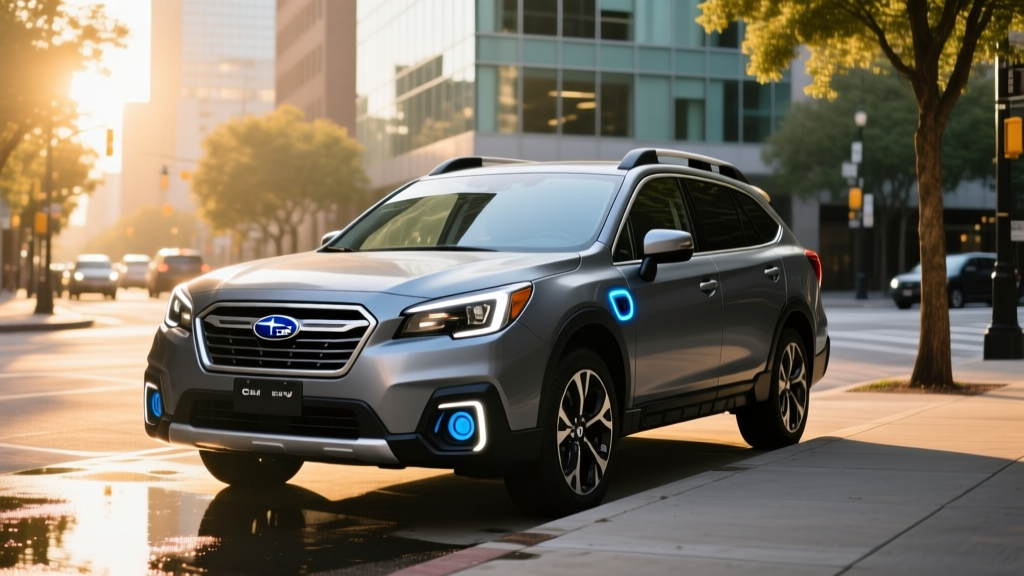
The 2026 Subaru Outback EV (officially the Solterra-based Outback EV wagon variant) is Subaru's entry into the all-electric midsize wagon segment, built on the shared Toyota-Subaru e-TNGA platform. It offers an EPA-estimated range of approximately 285 miles on the larger battery pack, standard symmetrical all-wheel drive, and a starting MSRP around $39,995 before incentives. It qualifies for a portion of the federal §30D tax credit depending on battery sourcing and buyer income. The Outback EV is best for buyers who need AWD capability, wagon cargo versatility, and Subaru's safety reputation — but it faces strong competition from the Hyundai Ioniq 5, Tesla Model Y, and Ford Mustang Mach-E on range and charging speed. If you rely on public DC fast charging and take frequent road trips, the Outback EV's peak ~150 kW charge rate and 10-80% time of approximately 30 minutes may feel limiting compared to rivals charging at 250+ kW.
What Exactly Is the Subaru Outback EV?
Subaru has leveraged its partnership with Toyota to bring an all-electric wagon to market under the beloved Outback nameplate. While the Solterra (Subaru's first EV, launched for 2023) served as a compact SUV, the Outback EV positions itself as the electric successor to the gas Outback wagon that loyal Subaru owners have driven for decades. The 2026 model year brings incremental battery and software updates over the initial release.
Built on the e-TNGA platform co-developed with Toyota, the Outback EV shares core architecture with the Solterra and Toyota bZ4X but wears distinct Subaru bodywork tuned for the wagon form factor. Key Subaru hallmarks remain: standard all-wheel drive (now via dual electric motors), X-MODE terrain management, 8.3 inches of ground clearance, and the EyeSight driver-assistance suite.
| Specification | Value |
|---|---|
| EPA Range (est.) | 285 miles (Premium trim, 72.8 kWh pack) |
| Battery Capacity | 72.8 kWh usable (NMC lithium-ion) |
| Drivetrain | Dual-motor AWD, 215 hp combined |
| 0-60 mph | ~6.5 seconds |
| Peak DC Fast Charge Rate | ~150 kW |
| 10-80% DC Fast Charge Time | ~30 minutes |
| Level 2 Charge Rate (240V) | ~7.2 kW (~9.5 hours, 0-100%) |
| Cargo Volume | ~32 cu ft (rear seats up), ~75 cu ft (folded) |
| Ground Clearance | 8.3 inches |
| Towing Capacity | Not yet rated (est. 2,000 lbs) |
| Base MSRP | $39,995 (Base) / $44,995 (Premium) / $48,495 (Touring) |
| Battery Warranty | 8 years / 100,000 miles |
Real-World Range Reality Check: The EPA estimate of 285 miles applies to mixed driving. Expect approximately 240-255 miles on sustained highway driving at 70+ mph, and potentially as low as 200-220 miles in sub-freezing winter conditions due to battery heating demands and cabin climate load. Subaru's thermal management system includes a heat pump on Premium and Touring trims, which mitigates but does not eliminate cold-weather range loss.
Outback EV vs. Gas Outback: Cost & Capability Comparison
For buyers cross-shopping the Outback EV against the conventional gas Outback, the decision hinges on upfront cost, fueling economics, and driving patterns. Here's how the numbers stack up over a 5-year ownership horizon at 15,000 miles per year.
| Category | Outback EV (Premium) | Gas Outback (Premium) |
|---|---|---|
| Base MSRP | $44,995 | $36,495 |
| Est. Federal Tax Credit (§30D) | Up to $7,500* | $0 |
| Effective Purchase Price | ~$37,495 | $36,495 |
| Fuel/Energy Cost (5 yr) | ~$3,900 (home charging, $0.14/kWh avg) | ~$10,500 ($3.50/gal, 28 MPG combined) |
| Maintenance (5 yr) | ~$1,800 | ~$3,600 |
| Insurance (5 yr est.) | ~$9,500 | ~$7,800 |
| Est. Depreciation | ~$18,000 | ~$14,500 |
| Total 5-Year Cost | ~$70,695 | ~$72,895 |
*Federal §30D credit eligibility depends on MSRP caps, buyer income limits, battery critical-mineral sourcing, and point-of-sale transfer rules. Verify current eligibility at IRS.gov. State incentives may also apply.
The Outback EV reaches approximate cost parity with the gas Outback over five years primarily through fuel and maintenance savings — but only if the buyer qualifies for the full federal credit and charges predominantly at home. Without the tax credit, the EV carries a roughly $4,000-$5,000 premium that takes 6-8 years to recoup through fuel savings alone.
Charging the Outback EV: What You Need to Know
Charging is where the Outback EV's e-TNGA platform shows its age relative to newer 800-volt architectures. The ~150 kW peak DC fast charging rate means longer stops on road trips compared to vehicles like the Hyundai Ioniq 5 (which peaks at ~240 kW on 800V) or the Tesla Model Y (~250 kW on V3 Superchargers).
| Charging Level | Power | Miles Added per Hour | Use Case |
|---|---|---|---|
| Level 1 (120V household) | ~1.4 kW | ~4-5 mi/hr | Emergency / overnight trickle |
| Level 2 (240V, 32A home) | ~7.2 kW | ~24-28 mi/hr | Daily home charging |
| DC Fast Charge (CCS/NACS) | ~150 kW peak | ~150-170 mi in 30 min | Road trips |
Charge Curve Reality: The Outback EV does not sustain its peak 150 kW rate for the full session. Expect peak rates between 10-40% State of Charge, tapering to ~80-100 kW from 40-60%, and further declining to ~40-50 kW above 80%. This is standard behavior for NMC batteries on 400V architectures, but it means a 10-80% session takes approximately 30 minutes under ideal conditions — and potentially 35-40 minutes in cold weather without adequate battery preconditioning.
Connector Note: The 2026 Outback EV ships with a CCS1 port in most markets. Subaru has announced NACS (Tesla-style) adapter compatibility, enabling access to Tesla Supercharger stations. Confirm adapter availability at purchase, as early 2026 models may still require a third-party adapter for Supercharger access.
Home Charging Installation: A Level 2 home charger is essential for practical Outback EV ownership. Budget $500-$800 for a quality 32-amp Level 2 EVSE (such as a ChargePoint Home Flex or Emporia Level 2) plus $800-$2,500 for electrician installation of a 240V/40A circuit. If your home's electrical panel requires an upgrade to 200A service, add $1,500-$3,000. Total home charging setup: $1,300-$5,300 depending on your panel and run distance.
Federal Tax Credit & Incentive Eligibility
The §30D Clean Vehicle Credit can reduce the Outback EV's effective price by up to $7,500, but eligibility is far from guaranteed. Here's the 2026 checklist:
- MSRP Cap: The vehicle must have an MSRP at or below $55,000 for SUVs/wagons — all Outback EV trims qualify.
- Buyer Income Cap: Modified AGI must not exceed $150,000 (single), $225,000 (head of household), or $300,000 (joint filers).
- Battery Sourcing: The $7,500 credit splits into two halves — $3,750 for critical minerals and $3,750 for battery component assembly. Sourcing requirements tighten annually; the Outback EV's eligibility for each half depends on current-year supply chain compliance. Check the fueleconomy.gov credit lookup tool for real-time status.
- Point-of-Sale Transfer: Buyers can elect to transfer the credit to the dealer at purchase, reducing the sale price immediately rather than waiting for a tax refund.
- VIN Verification: The dealer must report the VIN to the IRS at time of sale for credit validation.
State Incentives: Many states offer additional rebates (California's CVRP, Colorado's $5,000 credit, New York's Drive Clean Rebate, etc.). These vary by jurisdiction and income tier — consult your state energy office or a tax professional for specifics.
Who Should Buy the Outback EV — and Who Shouldn't
Decision Framework: Is the Outback EV Right for You?
Choose the Outback EV if:
- You have reliable home Level 2 charging and drive under 250 miles daily
- AWD capability matters for snow, gravel, or light off-road use
- You value Subaru's EyeSight safety suite and strong IIHS crash-test heritage
- You prefer a wagon body style over crossover/SUV alternatives
- You qualify for the federal tax credit and want to reduce long-term fuel costs
Look elsewhere if:
- You take frequent 400+ mile road trips and can't tolerate 30-40 minute charge stops
- You lack home charging access and depend entirely on public infrastructure
- You need maximum range — the Hyundai Ioniq 5 Long Range (310+ mi EPA) or Tesla Model Y Long Range (330+ mi) offer more buffer
- You want the fastest DC charging available — 800V platforms (Ioniq 5, Kia EV6, Porsche Taycan) charge significantly faster
- Towing is a priority — the Outback EV's tow rating is modest compared to the Ford F-150 Lightning or Rivian R1S
Common Misconceptions About the Outback EV
| Myth | Fact |
|---|---|
| "AWD on an EV doesn't work off-road" | Dual-motor AWD with X-MODE provides torque vectoring to each axle. It handles snow, mud, and gravel competently for light-duty use — not Moab rock crawling, but comparable to the gas Outback's capability. |
| "The battery will need expensive replacement in 5 years" | NMC batteries in modern thermal-managed packs typically retain 85-90% capacity after 100,000 miles. Subaru's 8-year/100,000-mile battery warranty covers drops below ~70% State of Health. Full replacements currently cost $12,000-$18,000 but are rarely needed. |
| "I'll save money no matter what" | Savings depend on electricity rates, gas prices, tax credit eligibility, insurance premiums (typically 15-25% higher for EVs), and depreciation. Run your local numbers before committing. |
| "It charges at Tesla Superchargers natively" | The Outback EV uses CCS1 natively. NACS adapter access to Superchargers requires a compatible adapter — confirm availability with your dealer before purchase. |
| "285 miles of range is enough for everything" | 285 miles is the EPA mixed estimate. Highway driving at 75 mph in summer yields ~240-255 miles. Winter highway driving in cold climates can drop to 200-220 miles. Plan road trips around charger locations, not the sticker number. |
Competitor Comparison: How the Outback EV Stacks Up
| Spec | Subaru Outback EV | Hyundai Ioniq 5 (AWD) | Tesla Model Y (LR AWD) | Ford Mustang Mach-E (AWD) |
|---|---|---|---|---|
| EPA Range | ~285 mi | ~290 mi | ~330 mi | ~290 mi |
| Battery | 72.8 kWh NMC | 77.4 kWh NMC | ~78 kWh NMC | 75.7 kWh NMC |
| Peak DC Charge | ~150 kW | ~240 kW | ~250 kW | ~150 kW |
| 10-80% Time | ~30 min | ~18 min | ~22 min | ~33 min |
| 0-60 mph | ~6.5 sec | ~5.1 sec | ~4.8 sec | ~5.1 sec |
| AWD | Standard | Optional | Standard (LR AWD) | Optional |
| Cargo (rear up) | ~32 cu ft | ~27 cu ft | ~30 cu ft | ~29 cu ft |
| Base MSRP (AWD) | ~$44,995 | ~$49,500 | ~$48,990 | ~$47,995 |
| Ground Clearance | 8.3 in | 6.1 in | 6.6 in | 5.7 in |
Sources: fueleconomy.gov, manufacturer specifications. Figures reflect 2026 model year estimates where final EPA certification is pending.
The Outback EV's advantages are ground clearance (best in class for light off-road), standard AWD, and cargo volume. Its weaknesses are DC charging speed and 0-60 performance. If charging speed and range are your top priorities, the Ioniq 5 or Model Y are stronger choices. If you need genuine wagon utility with off-road ground clearance and don't mind slower DC charging, the Outback EV occupies a niche no competitor fully matches.
First-Time EV Buyer Checklist for the Outback EV
If the Outback EV is your first electric vehicle, work through these practical steps before signing:
- Audit your home electrical panel. Confirm you have capacity for a 240V/40A circuit. If your panel is 100A or older, budget for an upgrade ($1,500-$3,000). Hire a licensed electrician for a site assessment.
- Map your daily driving. If your round-trip commute plus errands is under 150 miles, the Outback EV's range provides ample buffer even in winter.
- Check public charging near you. Use PlugShare or the EVGo/Electrify America apps to verify DC fast chargers exist along your common routes. Rural Subaru buyers in charging deserts should weigh this carefully.
- Get insurance quotes before purchase. EV insurance premiums run 15-25% higher than comparable gas vehicles. Shop multiple carriers — some (like Progressive and State Farm) offer EV-specific discounts.
- Verify tax credit eligibility. Use the IRS VIN lookup tool and consult a tax professional. The credit is non-refundable (unless transferred at point of sale), so your tax liability matters.
- Understand the charge curve. Plan road trips knowing that 10-80% takes ~30 minutes, and charging above 80% slows dramatically. Use the 80% rule for road-trip planning to minimize total trip time.
- Download the Subaru app and test preconditioning. Battery preconditioning warms the pack before DC fast charging, reducing charge times in cold weather. Make it a habit before every fast-charge stop.
Frequently Asked Questions
Does the Subaru Outback EV qualify for the full $7,500 federal tax credit?
Eligibility depends on current-year battery sourcing requirements under §30D, your income level, and MSRP caps. The Outback EV's MSRP falls under the $55,000 SUV/wagon cap, but the critical-minerals and battery-component sourcing rules tighten annually. Check the latest status on fueleconomy.gov and verify with your tax advisor before relying on the credit in your purchase math.
How does the Outback EV perform in snow and cold weather?
Very well, with caveats. Dual-motor AWD with X-MODE provides excellent traction, and the low center of gravity (battery pack under the floor) enhances stability. However, expect 15-25% range reduction in sustained sub-freezing temperatures. The heat pump on Premium/Touring trims helps, but preconditioning while plugged in is essential to preserve range and charging speed in winter.
Can I tow with the Outback EV?
Subaru is expected to rate the Outback EV at approximately 2,000 pounds — adequate for a small utility trailer or a pair of dirt bikes, but not for boat towing or campers. Towing also dramatically reduces range; expect a 30-50% range hit when towing near capacity at highway speeds.
What happens if the battery degrades significantly?
Subaru's battery warranty covers capacity below approximately 70% State of Health for 8 years or 100,000 miles. Real-world data from similar e-TNGA platform vehicles (Solterra, bZ4X) suggests 85-92% capacity retention at 100,000 miles under normal use. Out-of-warranty replacement costs currently range from $12,000-$18,000, though prices are expected to decline as battery manufacturing scales.
Is the Outback EV's EyeSight system self-driving?
No. EyeSight is a SAE Level 2 driver-assistance system. It provides adaptive cruise control, lane centering, and pre-collision braking — but the driver must remain fully engaged, hands on or near the wheel, and eyes on the road at all times. It is not autonomous driving. Subaru does not currently offer a hands-free highway driving system comparable to GM's Super Cruise or Ford's BlueCruise.
How does home charging cost compare to gas for the Outback EV?
At the US average residential electricity rate of ~$0.16/kWh, fully charging the 72.8 kWh battery costs approximately $11.65 — delivering ~285 miles of range. That's roughly $0.041 per mile. The gas Outback at 28 MPG combined and $3.50/gallon costs ~$0.125 per mile. Over 15,000 miles annually, that's ~$615 in electricity vs. ~$1,875 in gas — a savings of roughly $1,260 per year on energy alone. Actual savings vary by local rates and time-of-use pricing.