Quick Answer: Is the Subaru Getaway EV Right for You?
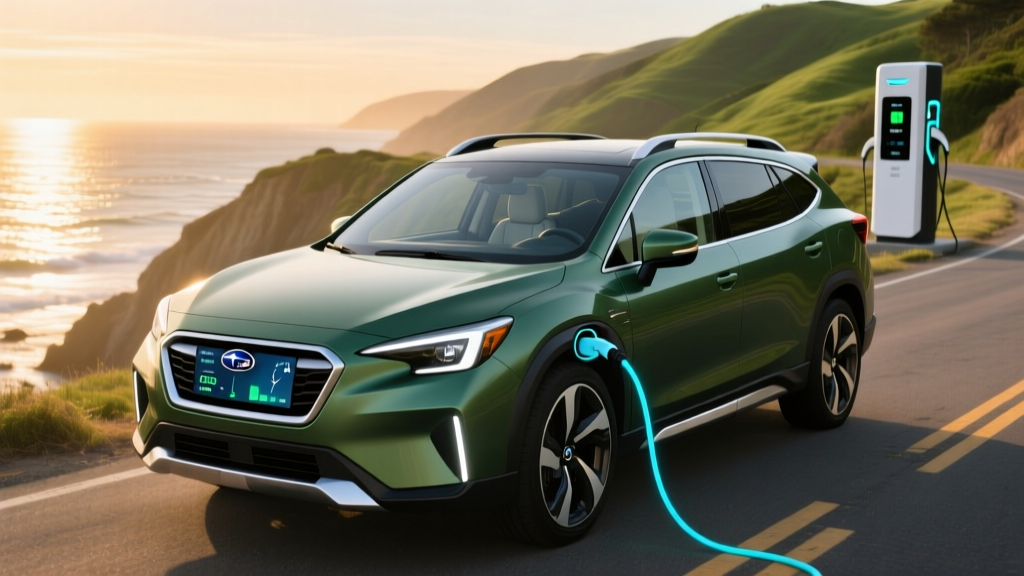
The Subaru Getaway EV is not an officially announced or released model as of early 2026. Subaru has not published specifications, pricing, or a release timeline for a vehicle by this name. If you are searching for a Subaru electric vehicle currently available or coming soon, the relevant models are the Subaru Solterra (a compact electric SUV on sale now, co-developed with Toyota) and any future Subaru EVs built on the company's evolving e-Subaru platform. This guide addresses what buyers searching for a "Subaru Getaway EV" likely want: a practical, adventure-oriented Subaru EV — and breaks down what the closest real option, the 2026 Solterra, delivers on range, cost, and ownership.
What Subaru EVs Can You Actually Buy in 2026?
Subaru's electric vehicle lineup remains focused on the Solterra, which entered the U.S. market for the 2023 model year and received incremental updates through 2026. The Solterra shares its e-TNGA platform and core battery architecture with the Toyota bZ4X. It is Subaru's first and currently only battery-electric vehicle (BEV) sold in North America.
There is no credible manufacturer announcement, NHTSA filing, or EPA certification for a model called the "Subaru Getaway EV." Searches for this term likely stem from concept-name confusion, aftermarket camper-conversion interest (Subaru's adventure branding naturally invites "getaway" associations), or speculative naming from third-party sources. Until Subaru officially announces such a model, treat any specs attributed to a "Getaway EV" as unverified.
For buyers who want a Subaru EV today — or who are waiting to see what Subaru's next electric offering might be — here is what matters based on the Solterra platform, which will inform any future Subaru EV.
2026 Subaru Solterra: The Real Specs That Matter
The 2026 Subaru Solterra carries forward the updated powertrain and battery introduced for the 2024 model year. Here are the confirmed figures:
| Specification | 2026 Subaru Solterra |
|---|---|
| EPA Range (highest trim) | 227 miles (Touring: ~222 mi) |
| Battery Capacity | 72.8 kWh (usable: ~65.4 kWh), lithium-ion NMC |
| Powertrain | Dual-motor AWD, 215 hp, 249 lb-ft torque |
| 0–60 mph | ~6.5 seconds |
| Peak DC Fast Charge Rate | ~100 kW (updated from ~75 kW on 2023 models) |
| 10–80% DC Fast Charge | ~35 minutes |
| Level 2 AC Charging | 6.6 kW onboard charger (~9 hours for full charge) |
| MPGe (combined) | 102–104 MPGe (varies by trim/wheel size) |
| Cargo Volume | 23.8 cu ft (rear seats up), 56.9 cu ft (rear seats folded) |
| Ground Clearance | 8.3 inches |
| Towing Capacity | Not rated for towing |
| Base MSRP | ~$44,995 (Premium) to ~$51,995 (Touring) |
| Battery/Powertrain Warranty | 8 years / 100,000 miles |
Real-World Range Expectations
The EPA rates the Solterra at up to 227 miles. In real-world conditions, expect:
- Highway driving (70–80 mph): ~185–200 miles
- Cold weather (below 32°F): ~160–185 miles (20–30% reduction is typical for NMC batteries without a dedicated heat pump in early model years)
- Mixed city/suburban (moderate temps): ~210–225 miles
These figures are based on EPA data from fueleconomy.gov and real-world owner reports. Range is the Solterra's most-cited limitation versus competitors like the Hyundai Ioniq 5 (303 mi) and Tesla Model Y (310+ mi).
Cost Breakdown: Buying and Owning the Solterra vs. a Gas Subaru Outback
Many buyers cross-shop Subaru EVs with the gas-powered Outback or Forester. Here is a five-year ownership cost comparison using realistic figures:
| Cost Category | 2026 Solterra (Premium) | 2026 Outback (Premium, Gas) |
|---|---|---|
| MSRP | $44,995 | $36,295 |
| Federal Tax Credit (§30D) | Up to $7,500 (eligibility varies — see below) | $0 |
| Effective Purchase Price | ~$37,495 (if full credit applies) | $36,295 |
| Annual Fuel/Energy Cost | ~$650 (home charging, 12¢/kWh avg, 12,000 mi/yr) | ~$1,800 (gas at $3.50/gal, 28 MPG combined) |
| 5-Year Fuel/Energy Total | ~$3,250 | ~$9,000 |
| Maintenance (5 years) | ~$1,200 (no oil changes, fewer fluid services) | ~$3,500 (oil, filters, spark plugs, transmission fluid) |
| Insurance (annual avg) | ~$1,900/yr | ~$1,550/yr |
| 5-Year Insurance Total | ~$9,500 | ~$7,750 |
| Estimated 5-Year Total Cost | ~$53,445 | ~$56,545 |
Key takeaway: The Solterra's higher purchase price is offset by significantly lower energy and maintenance costs. Over five years, total ownership costs converge — and the Solterra may come out ahead if you qualify for the full federal tax credit and charge primarily at home.
Insurance note: EV insurance premiums are typically 15–25% higher than equivalent gas vehicles due to higher repair costs for battery and structural components. Get quotes before purchasing.
Federal Tax Credit: What You Need to Know (§30D Rules for 2026)
The IRS §30D Clean Vehicle Credit can provide up to $7,500 off the purchase of a qualifying new EV. However, eligibility depends on multiple factors that change frequently. As of 2026, the key requirements include:
- MSRP cap: SUVs must have an MSRP at or below $80,000; sedans at or below $55,000. The Solterra qualifies under the SUV cap.
- Buyer income limits: Adjusted gross income must not exceed $300,000 (married filing jointly), $225,000 (head of household), or $150,000 (single).
- Battery sourcing requirements: A percentage of critical minerals and battery components must be sourced from the U.S. or free-trade-agreement partners. These thresholds increase annually. Subaru's supply chain compliance varies by model year — verify current status on IRS.gov's qualifying vehicle list.
- Point-of-sale transfer: Since 2024, buyers can transfer the credit to the dealer at purchase, applying it as an immediate price reduction rather than waiting for a tax refund.
- Assembly requirement: Final assembly must occur in North America. The Solterra is assembled in Japan, which has been a barrier to credit eligibility in some model years.
Critical caveat: Because the Solterra is manufactured in Japan (at Toyota's Motomachi plant), its §30D eligibility has been inconsistent. Always confirm the current model year's status on the IRS qualifying vehicles list before counting the credit into your budget. Never assume the full $7,500 applies.
Charging the Solterra: Home and Public Realities
Charging access is the single biggest ownership variable for any EV buyer. Here is what Solterra ownership looks like in practice:
| Charging Level | Power (kW) | Miles Added Per Hour | Typical Use Case |
|---|---|---|---|
| Level 1 (120V household outlet) | ~1.4 kW | ~4–5 miles | Overnight top-up; emergency only |
| Level 2 (240V home charger) | 6.6 kW | ~22–25 miles | Daily home charging; full charge in ~9 hours |
| DC Fast Charging (public) | Up to ~100 kW peak | ~150–180 miles in 30 min | Road trips; 10–80% in ~35 minutes |
Home Charging Installation Costs
If you have a garage or driveway with accessible electrical infrastructure, a Level 2 home charger is the foundation of practical EV ownership. Expect these costs:
| Item | Cost Range |
|---|---|
| Level 2 charger unit (e.g., ChargePoint Home Flex, Emporia Vue) | $350–$700 |
| Electrician labor (240V/50A circuit run, 20–50 ft) | $800–$2,500 |
| Electrical permit | $50–$200 |
| Panel upgrade (if needed — 100A to 200A service) | $1,500–$3,500 |
| Total (typical install, no panel upgrade) | $1,200–$3,400 |
Important: The Solterra's 6.6 kW onboard charger means it will not charge faster at home even on a 48A or 80A circuit — it caps at 6.6 kW. This is slower than competitors like the Hyundai Ioniq 5 (10.9 kW onboard) and means a full home charge takes longer. For daily driving of 30–50 miles, this is rarely an issue; you will replenish overnight. But if you drain the battery on a long trip and need a full recharge at home, plan for a 9-hour session.
For public DC fast charging, the Solterra uses the CCS1 connector. Subaru has not announced a transition to NACS (Tesla's connector) for the Solterra as of 2026, though access to Tesla Superchargers via adapter is available for some Subaru EVs depending on model year and adapter availability. Check Subaru's official charging compatibility guidance.
Common Misconceptions About the Solterra and Subaru EVs
| Myth | Fact |
|---|---|
| "The Solterra gets 227 miles in all conditions." | 227 miles is the EPA combined estimate. Highway driving at 75 mph yields ~185–200 miles. Cold weather can reduce range by 20–30%. |
| "I'll save $7,500 on every Subaru EV." | The §30D credit depends on income, MSRP, battery sourcing, and North American assembly. The Japan-built Solterra's eligibility varies by model year. Always verify on IRS.gov. |
| "EVs need no maintenance." | EVs still require tire rotations, brake fluid checks, cabin air filter replacement, coolant service, and windshield washer fluid. Expect ~$200–$300/year in maintenance — low, but not zero. |
| "DC fast charging always hits peak speed." | The Solterra peaks near 100 kW only at low state of charge (10–30%). Above 80%, charging slows significantly to protect battery health. Plan road-trip stops around 10–80% windows. |
| "Subaru's AWD works the same on EVs." | The Solterra's dual-motor AWD is capable in snow and light off-road use, and it earned strong marks in traction tests. However, it lacks the low-range gearing and X-Mode sophistication of the Outback Wilderness. It is a capable light-trail vehicle, not a hardcore off-roader. |
| "The battery will need expensive replacement soon." | Subaru warranties the battery for 8 years/100,000 miles against degradation below 70% capacity. Industry data shows NMC batteries typically retain 85–90% capacity after 100,000 miles under normal use. |
Decision Framework: Should You Buy the Solterra, Wait, or Choose Something Else?
Choose the Subaru Solterra if:
- You are a current Subaru owner who values brand loyalty, AWD capability, and the Subaru dealer/service network.
- Your daily driving is under 60 miles round-trip, and you have reliable home charging access.
- You want a compact EV SUV with 8.3 inches of ground clearance for snow, gravel roads, and light trail use.
- You are comfortable with ~200 miles of real-world range and plan road trips around DC fast-charging stops.
Wait or look elsewhere if:
- You regularly drive 250+ miles between stops and need 300+ mile EPA range. Consider the Hyundai Ioniq 5 (303 mi), Tesla Model Y (310+ mi), or Kia EV6 (310 mi).
- You need faster DC charging for frequent road trips. The Ioniq 5 and EV6 peak at ~240 kW (10–80% in ~18 minutes) vs. the Solterra's ~35 minutes.
- You need towing capability. The Solterra is not rated for towing; consider the Ford F-150 Lightning or Rivian R1S if you tow.
- Home charging is not available to you and your area has limited public DC fast-charging infrastructure. A hybrid like the Subaru Outback (gas) or a PHEV like the Toyota RAV4 Prime (42 mi electric-only range, then gas) may be more practical.
- You were specifically hoping for a larger, more adventure-focused Subaru EV (a hypothetical "Getaway"). Monitor Subaru's official announcements — the company has signaled plans to expand its EV lineup, but no specific model or timeline has been confirmed.
Frequently Asked Questions
Is there a Subaru Getaway EV coming?
As of 2026, Subaru has not announced a vehicle called the "Getaway EV." The name does not appear in any official Subaru press release, NHTSA filing, or EPA certification database. Subaru has indicated it will expand its EV lineup beyond the Solterra, but no specific model names or dates have been confirmed. If you see specs attributed to a "Subaru Getaway EV," treat them as speculative until verified by Subaru directly.
How does the Solterra's range compare to other compact EV SUVs?
The Solterra's 227-mile EPA range trails key competitors: the Hyundai Ioniq 5 achieves 303 miles, the Kia EV6 reaches 310 miles, and the Tesla Model Y Long Range delivers 310+ miles. The Solterra's range is closer to the Toyota bZ4X (236–252 mi, its platform sibling). For buyers prioritizing maximum range, the Solterra is not the segment leader.
Can I charge the Solterra at Tesla Superchargers?
Subaru has announced that certain model-year Solterras can access Tesla's Supercharger network using a provided NACS adapter. However, compatibility depends on model year and adapter availability. Confirm with your dealer before relying on Supercharger access, and note that the Solterra's CCS-native port means you will always need an adapter for NACS stations.
What is the real cost to charge the Solterra at home?
At the U.S. average residential electricity rate of ~$0.16/kWh (per EIA data), a full charge of the Solterra's ~65 kWh usable battery costs approximately $10.40. For a typical driver covering 12,000 miles per year at 3.2 miles/kWh efficiency, annual home charging costs run roughly $600–$700 — compared to $1,700–$2,000 in gasoline for a similarly sized AWD SUV getting 28 MPG combined.
Does the Solterra qualify for the $7,500 federal tax credit?
Eligibility is uncertain and model-year dependent. The Solterra's Japan assembly has historically been a barrier under §30D's North American final-assembly requirement. Battery-sourcing thresholds also apply. Always check the current qualifying vehicle list at IRS.gov before making a purchase decision based on the credit. Consult a tax professional for your specific situation.
What should a first-time EV buyer know before purchasing any Subaru EV?
Three things matter most: (1) Home charging access — without it, EV ownership is significantly less convenient and more expensive. Budget $1,200–$3,400 for a Level 2 home installation. (2) Real-world range — subtract 15–25% from the EPA sticker for highway driving, and 20–30% for cold weather. Plan your typical trips around the adjusted number. (3) Charging speed — the Solterra's ~100 kW peak DC rate and ~35-minute 10–80% time means road-trip stops are longer than in faster-charging competitors. If you road-trip frequently, test the charging experience on a route you actually drive before committing.