Quick Answer: What Subaru EVs Are Available in 2026?
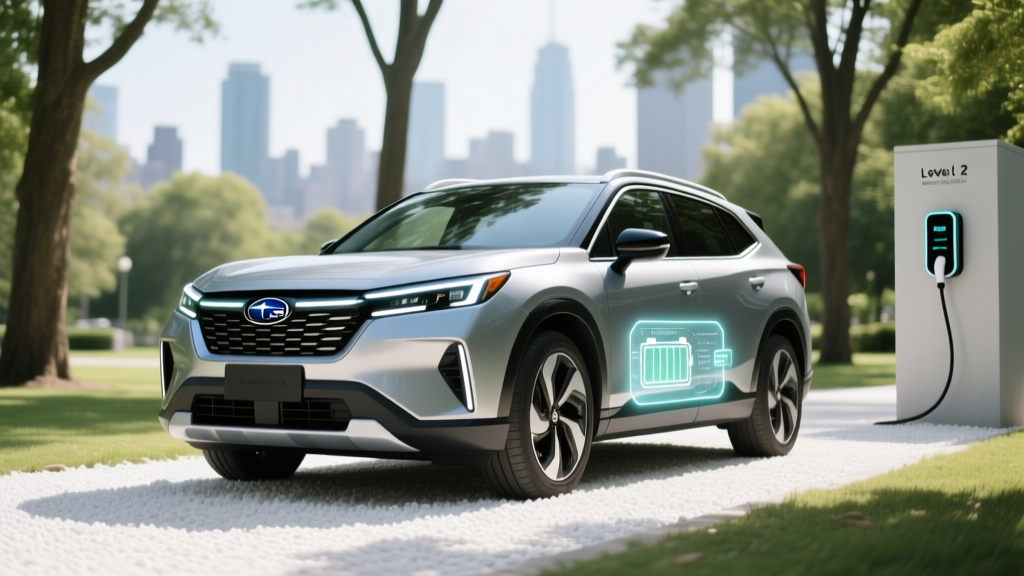
For the 2026 model year, Subaru sells one all-electric vehicle: the Solterra SUV. After significant updates for 2025, the 2026 Solterra carries forward with a ~72.8 kWh (usable) lithium-ion battery, an EPA-estimated range of 222–227 miles depending on trim, DC fast charging at up to 150 kW (10–80% in roughly 35 minutes), and standard symmetrical all-wheel drive. Base pricing starts near $39,995 before destination. It qualifies for a portion of the federal §30D tax credit (up to $3,750–$7,500) depending on battery sourcing, buyer income, and point-of-sale transfer rules. Subaru has announced a second EV, a 3-row SUV, for the 2027 model year but it is not yet available.
2026 Subaru Solterra: Specs, Range, and Real-World Expectations
The 2026 Solterra is Subaru's sole battery-electric offering and the brand's first ground-up EV, co-developed with Toyota on the e-TNGA platform (it shares its underpinnings with the Toyota bZ4X). After a modest refresh for 2025 that added a slightly larger battery and faster charging, the 2026 model arrives largely unchanged.
| Spec | 2026 Solterra (All Trims) |
|---|---|
| EPA Range | 222–227 mi (trim/wheel dependent) |
| Battery (usable) | ~72.8 kWh, lithium-ion (NMC chemistry) |
| Drivetrain | Dual-motor AWD, 215 hp, 249 lb-ft torque |
| 0–60 mph | ~6.5 seconds |
| Max DC Fast Charge | 150 kW (CCS1 connector) |
| 10–80% DC Charge Time | ~35 minutes (preconditioned) |
| Level 2 (240V, 32A) | ~7.7 kW; 0–100% in ~9.5 hours |
| MPGe (combined) | 102–104 MPGe |
| Battery/Powertrain Warranty | 8 years / 100,000 miles |
| Base MSRP | $39,995 (Premium) + $1,350 destination |
Real-World Range vs. EPA Sticker
The EPA rates the Solterra at up to 227 miles. In mixed real-world driving at highway speeds (70–75 mph), expect 185–205 miles in moderate temperatures. In cold weather (below 30°F), range can drop to 150–175 miles due to battery chemistry limitations and cabin heating demands. Subaru's heat pump (standard on all trims) helps mitigate this compared to EVs without one, but the Solterra's relatively modest battery size means cold-weather planning matters on longer trips.
Charging the Solterra: Home, Public, and What to Expect
The Solterra uses a CCS1 connector for DC fast charging and a J1772 inlet for Level 1/Level 2 AC charging. Subaru has not adopted the Tesla NACS connector for the Solterra as of the 2026 model year, though adapters for Tesla Supercharger access are available from third-party manufacturers.
| Charging Level | Power | Miles Added/Hour | Best For |
|---|---|---|---|
| Level 1 (120V) | ~1.4 kW | ~4–5 mi/hr | Overnight top-ups, emergencies |
| Level 2 (240V, 32A) | ~7.7 kW | ~25–28 mi/hr | Daily home charging |
| DC Fast Charge | Up to 150 kW peak | N/A (timed sessions) | Road trips; 10–80% in ~35 min |
Charging curve reality: The Solterra peaks at 150 kW only at low states of charge (roughly 10–30% SoC). From 50% onward, the rate tapers significantly, dropping below 60 kW past 70% SoC. This is why Subaru quotes a 10–80% time rather than a full charge — the final 20% can take as long as the first 70%.
Home charging setup: Most Solterra owners install a Level 2 wall connector on a 240V/40A circuit. Expect to pay $500–$800 for the charger hardware and $800–$2,000 for professional electrician installation (more if your panel needs an upgrade to 200A). Always get a licensed electrician to assess your home's capacity before committing.
Cost of Ownership: Solterra EV vs. Gas Subaru Outback
The most common cross-shopping decision for Subaru buyers is the Solterra versus the gas-powered Outback, the brand's bestseller. Here's how the numbers compare over 5 years and 60,000 miles:
| Cost Factor | 2026 Solterra (Premium) | 2026 Outback (Premium, AWD) |
|---|---|---|
| Base MSRP | $39,995 | $34,995 |
| Fed. Tax Credit (§30D)* | Up to $3,750–$7,500 | $0 |
| Effective Purchase Price | ~$32,495–$36,245 | $34,995 |
| Fuel/Energy (5 yr, 60k mi) | ~$3,200–$4,800** | ~$7,500–$8,500 |
| Maintenance (5 yr) | ~$1,200 | ~$2,800 |
| Insurance (5 yr avg) | ~$9,500 | ~$7,800 |
| Est. 5-Year Total Cost | ~$46,400–$51,750 | ~$53,100–$54,100 |
* §30D credit eligibility depends on buyer income caps ($150k single / $300k joint), MSRP cap ($80k for SUVs), and battery critical-mineral/component sourcing rules. Credit can be transferred to the dealer at point of sale for an upfront price reduction. Verify current-year rules at IRS.gov.
** Electricity cost assumes $0.14–$0.20/kWh average (varies widely by state and utility). Home charging is cheaper; public DC fast charging at $0.35–$0.50/kWh pushes costs higher.
Key takeaway: The Solterra can break even with or beat the Outback on total cost over 5 years, but only if you qualify for a meaningful tax credit and charge primarily at home. If you rely on expensive public DC fast charging or don't qualify for §30D, the Outback remains cheaper to own.
Federal Tax Credit: Does the 2026 Solterra Qualify?
The Solterra's §30D eligibility has been a moving target since launch due to evolving battery-sourcing requirements. For 2026:
- MSRP cap: The Solterra qualifies — its MSRP is well under the $80,000 SUV cap.
- Buyer income cap: AGI must not exceed $150,000 (single), $225,000 (head of household), or $300,000 (joint).
- Critical minerals requirement ($3,750): A percentage of battery minerals must be sourced from the US or free-trade-agreement countries. The Solterra's supply chain has been improving; check with your dealer for current-year qualification.
- Battery components requirement ($3,750): Battery components must be manufactured or assembled in North America. Subaru/Toyota have been shifting production, but confirm eligibility at purchase.
- Point-of-sale transfer: You can transfer the credit to the dealer for an immediate price reduction rather than claiming it on your tax return.
- Foreign entity of concern (FEOC) restriction: Batteries containing components from FEOC entities are disqualified. This is the most volatile requirement — verify at the time of purchase.
Because sourcing rules tighten annually, do not assume the full $7,500 is available. Some 2026 Solterra buyers may qualify for $3,750 (half credit) or the full amount depending on build date and supply chain status. Consult a tax professional and check the latest fueleconomy.gov listings.
Who Should Buy the Solterra — And Who Shouldn't
The Solterra is not the longest-range or fastest-charging EV in its class. Competitors like the Hyundai Ioniq 5 (310+ mi EPA, 350 kW peak charging) and the Tesla Model Y (320+ mi EPA, 250 kW Supercharging) outperform it on paper. But the Solterra fills a specific niche.
Decision Framework: Is the 2026 Solterra Right for You?
Choose the Solterra if:
- You want a Subaru with standard AWD, 8.3 inches of ground clearance, and X-MODE for light off-road or snowy conditions
- Your daily commute is under 80 miles round-trip and you can charge at home
- You value Subaru's safety reputation (EyeSight driver-assist, top IIHS ratings) over maximum range
- You qualify for at least $3,750 in federal tax credits and want to apply it at point of sale
Look elsewhere if:
- You regularly drive 200+ miles between charges and need fast road-trip capability
- You want access to the Tesla Supercharger network natively (without an adapter)
- You live in an apartment without home charging access and your area has limited public infrastructure
- You need 3 rows of seating (wait for Subaru's announced 3-row EV, expected 2027)
Common Misconceptions About Subaru's EV
| Myth | Fact |
|---|---|
| "The Solterra has the same range as the 2023 launch model." | The 2025+ refresh improved range from ~222 to up to 227 miles and boosted DC charging from ~100 kW to 150 kW. The 2026 carries these improvements forward. |
| "Subaru EVs can't handle cold weather." | The Solterra includes a standard heat pump, which improves cold-weather efficiency. Range still drops 20–30% in sub-freezing temps — true of nearly all EVs — but preconditioning and the heat pump help. |
| "The battery will need replacing in a few years." | Subaru warranties the battery for 8 years/100,000 miles with a capacity-retention threshold (typically 70%). Industry data from sources like Recurrent shows modern NMC batteries losing roughly 5–10% capacity over 5 years under normal use. |
| "You can't take a Subaru EV off-road." | The Solterra has 8.3 inches of ground clearance and X-MODE with Grip Control. It's not a dedicated rock crawler, but it handles forest roads, snow, and mild trails competently — consistent with Subaru's brand identity. |
| "I need a Tesla to charge at Superchargers." | Third-party CCS-to-NACS adapters allow Solterra owners to use Tesla Superchargers (V2 and V3). However, speeds may be limited, and Subaru does not officially endorse third-party adapters. |
First-Time EV Buyer Checklist for the Solterra
If the Solterra is your first electric vehicle, here's what to sort out before signing:
- Home charging audit: Can you install a 240V/40A circuit in your garage or driveway? If you rent or live in a condo, check with your landlord or HOA first. Level 1 (120V) charging adds only ~4–5 miles per hour — insufficient for most daily drivers.
- Utility rate check: Many utilities offer time-of-use (TOU) rates that make overnight charging significantly cheaper (as low as $0.06–$0.08/kWh off-peak). Call your utility before purchase.
- Tax credit confirmation: Verify §30D eligibility for the specific VIN you're purchasing — not just the model in general. Ask the dealer for documentation.
- Insurance quotes: EV insurance premiums are typically 15–25% higher than equivalent gas vehicles. Get quotes from your insurer before committing.
- Route planning: Test your most common road trips on A Better Route Planner to confirm charging availability along your routes.
- Preconditioning habit: Learn to use the Solterra's battery preconditioning feature before DC fast charging sessions — it warms the battery for faster charging speeds, especially in cold weather.
Frequently Asked Questions
Is Subaru releasing any new EVs for 2026?
No new EV models are confirmed for the 2026 model year. Subaru has announced a 3-row electric SUV (co-developed with Toyota) targeting the 2027 model year, but specifications, pricing, and availability have not been finalized. The Solterra remains Subaru's only EV for 2026.
How does the Solterra compare to the Toyota bZ4X?
The two share the e-TNGA platform and most mechanical components. Key differences: the Solterra comes exclusively with dual-motor AWD (the bZ4X offers a FWD option), has slightly more ground clearance (8.3 vs. 8.1 inches), and includes Subaru's X-MODE off-road software. Range and charging figures are very similar. Pricing is comparable, though trim structures differ.
Can I tow with the Solterra?
Yes, but capacity is limited. The Solterra is rated for up to 2,000 pounds when properly equipped. That covers a small utility trailer or a couple of dirt bikes, but not a camping trailer. Towing also significantly reduces range — expect a 30–40% range reduction at highway speeds with a loaded trailer.
Does the Solterra support one-pedal driving?
Yes. The Solterra offers adjustable regenerative braking via paddle shifters behind the steering wheel. At maximum regen, you can achieve near one-pedal driving in city conditions, though it doesn't come to a complete stop without touching the brake (unlike some competitors).
What happens if the battery degrades past warranty?
Out-of-warranty battery replacement for the Solterra is estimated at $12,000–$18,000 based on current parts pricing. However, modern lithium-ion packs are designed to retain 70–80%+ capacity well past 150,000 miles. Catastrophic battery failure is rare; gradual degradation is the norm.
Is the Solterra's EyeSight system self-driving?
No. Subaru EyeSight with driver-assist features is an SAE Level 2 system. It provides adaptive cruise control, lane centering, and emergency braking, but the driver must remain fully engaged and hands on the wheel at all times. It is not autonomous driving.
Automation Level Reminder: The Solterra's EyeSight driver-assist system is classified as SAE Level 2. This means it can simultaneously control steering and acceleration/braking under certain conditions, but a human driver must continuously supervise the system and be prepared to take over immediately. It is not a substitute for attentive driving.