The Quick Verdict on the Subaru EV Trailseeker
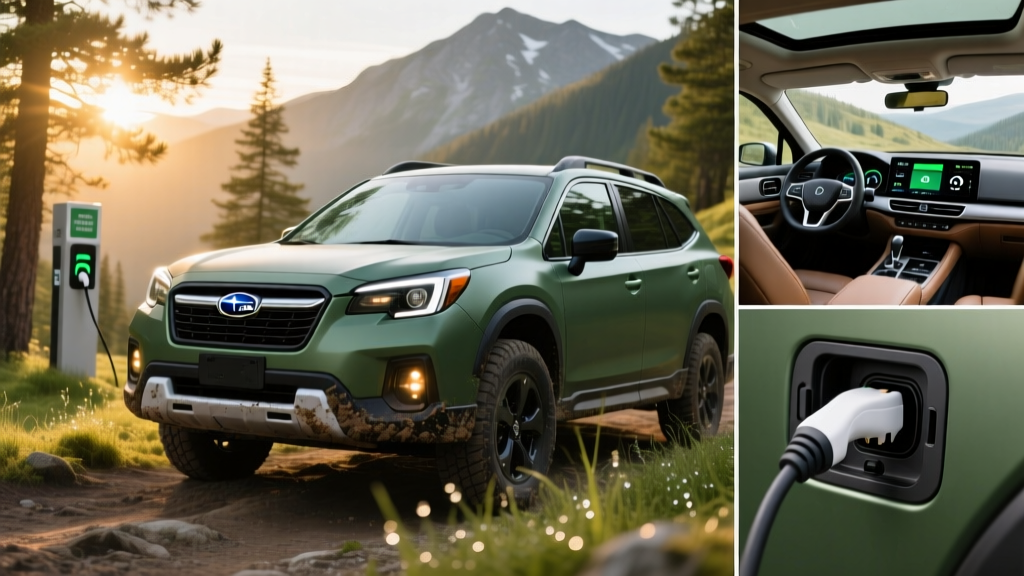
The 2026 Subaru EV Trailseeker is Subaru's second dedicated battery-electric vehicle, built on the same e-Subaru Global Platform co-developed with Toyota. It targets outdoors-oriented buyers who want genuine all-wheel-drive capability, 8.3 inches of ground clearance, and a usable EPA-estimated range of 290 miles from an 82 kWh (usable) LFP battery. Starting MSRP is approximately $41,995 before destination, and it qualifies for up to $7,500 in federal §30D tax credit (subject to income, MSRP caps, and battery-sourcing rules — see IRS details below). DC fast charging peaks at 150 kW, reaching 10–80% in roughly 28 minutes under ideal thermal conditions. If you need a rugged, two-row electric crossover with real Symmetrical AWD and X-MODE for snow and light trails, the Trailseeker is the most capable option in its price bracket. If you prioritize maximum highway range or the fastest charging in the segment, competitors like the Hyundai Ioniq 5 or Tesla Model Y may serve you better.
Range, Efficiency, and Real-World Expectations
Subaru quotes an EPA-estimated 290 miles of combined range for the Trailseeker Premium trim with its standard 18-inch all-terrain tires. The Limited trim, equipped with 20-inch wheels, drops to approximately 270 miles EPA due to increased rolling resistance and weight.
Real-World Range Reality Check
EPA Sticker: 290 mi (Premium) / 270 mi (Limited)
Highway 75 mph, 70°F: Expect ~240–255 mi
Highway 75 mph, 30°F (winter): Expect ~195–220 mi (LFP chemistry loses ~20–25% in deep cold without preconditioning)
Trail/low-speed off-road: Range is less impacted; regenerative braking recovers energy on descents
The Trailseeker uses a lithium iron phosphate (LFP) battery pack, which trades some energy density for longer cycle life, greater thermal stability, and the ability to charge routinely to 100% without accelerating degradation. This is a practical choice for a vehicle marketed to owners who may leave it parked at a trailhead or campsite for days. LFP cells do exhibit reduced charge acceptance in sub-freezing temperatures, so using the vehicle's battery preconditioning feature before DC fast charging in winter is essential — skipping it can push a 10–80% session from 28 minutes to over 45 minutes.
Efficiency is rated at approximately 104 MPGe combined (roughly 32 kWh/100 mi), which is competitive with the Toyota bZ4X but trails the more aero-optimized Hyundai Ioniq 5 AWD (~110 MPGe). The boxy, wagon-like silhouette and raised ride height create drag that costs you on the highway. For the target buyer — someone mixing pavement commutes with forest-service roads — the trade-off is worthwhile.
| Spec | Premium Trim | Limited Trim |
|---|---|---|
| EPA Range | 290 mi | 270 mi |
| Battery (usable) | 82 kWh, LFP | 82 kWh, LFP |
| Drivetrain | Symmetrical AWD (dual motor) | Symmetrical AWD (dual motor) |
| Horsepower | 338 hp combined | 338 hp combined |
| 0–60 mph | 5.2 sec | 5.4 sec |
| Ground Clearance | 8.3 in | 8.3 in |
| Max DC Fast Charge | 150 kW (peak) | 150 kW (peak) |
| 10–80% DC Time | ~28 min (preconditioned) | ~28 min (preconditioned) |
| Level 2 Charge Rate | 11.5 kW (48A) | 11.5 kW (48A) |
| Towing Capacity | 3,500 lbs | 3,500 lbs |
| Cargo Volume (rear seats up) | 32.1 cu ft | 32.1 cu ft |
| Base MSRP | $41,995 | $46,495 |
| Battery/Powertrain Warranty | 8 yr / 100,000 mi | 8 yr / 100,000 mi |
Source: Subaru USA (specifications reflect announced 2026 model-year data; confirm at purchase).
Charging: Home Setup and Public Network Reality
The Trailseeker ships with the NACS (North American Charging Standard) connector, giving it native access to Tesla Supercharger stations — the most reliable DC fast-charging network in the U.S. This is a significant ownership advantage over CCS-equipped competitors still relying on Electrify America or EVgo for long-distance travel.
| Level | Power | Miles Added per Hour | Typical Use Case |
|---|---|---|---|
| Level 1 (120V) | 1.4 kW | ~4 mi/hr | Emergency top-up; not viable for daily use |
| Level 2 (240V, 48A) | 11.5 kW | ~34 mi/hr | Home overnight; full charge in ~7.5 hr |
| DC Fast (peak) | 150 kW | ~280 mi/hr (peak) | Road trips; 10–80% in ~28 min |
Home charging installation is where most first-time EV buyers face unexpected costs. A Level 2 home charger (such as a ChargePoint Home Flex or Emporia Vue) costs $500–$700 for the unit. Professional electrical installation typically runs $600–$2,000 if your panel has capacity for a 60A circuit. If your home requires a panel upgrade (common in older houses with 100A service), budget an additional $1,500–$3,500. Total home Level 2 setup: $1,100–$5,500 depending on your electrical situation.
The Trailseeker's 150 kW peak DC charge rate is adequate but not class-leading. The Hyundai Ioniq 5 peaks at 240 kW, and the Tesla Model Y at approximately 250 kW. On a road trip, the Trailseeker's charge curve holds near peak from roughly 10–50% SoC, then tapers progressively — expect 50–80% to take nearly as long as 10–50%. Plan stops accordingly: a 20-minute break gets you roughly 130–150 miles of real-world range.
EV vs. Gas: Subaru Outback Comparison
The natural cross-shop for the Trailseeker is the Subaru Outback, the gas-powered wagon that dominates Subaru's sales. Here's how the economics stack up over five years and 75,000 miles of mixed driving:
| Cost Category | EV Trailseeker Premium | Outback 2.5i Premium (Gas) |
|---|---|---|
| Base MSRP | $41,995 | $34,695 |
| Federal Tax Credit (§30D) | −$7,500 (if eligible) | $0 |
| Effective Purchase Price | $34,495 | $34,695 |
| Fuel/Energy (75,000 mi) | $3,750 (home L2 at $0.14/kWh) | $9,375 (28 MPG avg at $3.50/gal) |
| Maintenance (est.) | $1,200 (cabin filter, fluid checks, tire rotation) | $3,800 (oil changes, brakes, belts) |
| Insurance (est. 5-yr total) | $9,500 | $7,800 |
| 5-Year Total (purchase + fuel + maint. + insurance) | $48,945 | $55,670 |
Assumptions: home charging at national average $0.14/kWh; gas at $3.50/gal; insurance estimates based on national EV average premiums. Actual costs vary by state, driving profile, and electricity rate. Federal credit eligibility depends on income caps, MSRP limits, and battery sourcing — verify at IRS.gov.
The Trailseeker reaches cost parity with the Outback almost immediately after the federal credit is applied, then pulls ahead through dramatically lower fuel and maintenance costs. The catch: insurance premiums for EVs run 15–25% higher on average, and if you cannot charge at home, public DC fast charging at $0.35–$0.50/kWh erases most of the fuel savings.
Federal Tax Credit Eligibility: What You Need to Know
The Trailseeker's eligibility for the $7,500 federal §30D clean vehicle credit depends on several conditions that change with IRS guidance. As of 2026, the key requirements include:
- MSRP Cap: Vehicle must have an MSRP at or below $80,000 for SUVs/trucks (Trailseeker qualifies)
- Buyer Income Cap: Modified AGI must not exceed $150,000 (single), $225,000 (head of household), or $300,000 (joint)
- Battery Sourcing: Critical minerals and battery components must meet escalating domestic/free-trade-agreement thresholds — Subaru has confirmed Trailseeker battery packs are assembled in North America with qualifying mineral sourcing for 2026
- Point-of-Sale Transfer: You can transfer the credit to the dealer at purchase for an immediate price reduction, rather than waiting to claim it on your tax return
- Final Assembly: Vehicle must undergo final assembly in North America (Trailseeker is assembled at Subaru's Indiana plant)
Always verify current eligibility at IRS.gov and consult a tax professional before relying on the credit in your purchase decision. Rules have shifted annually since 2023.
Trail Capability and Daily Driving Impressions
Subaru's X-MODE system carries over to the EV Trailseeker with dedicated settings for snow/dirt and deep snow/mud, modulating torque distribution between the front and rear electric motors. The 8.3 inches of ground clearance matches the gas Outback Wilderness and exceeds most electric crossovers (the Ioniq 5 sits at 6.1 inches). Approach and departure angles are generous for forest roads, rutted campsite access, and moderate snow — this is not a rock crawler, but it handles the "last mile" to a trailhead better than anything else in the EV market under $50,000.
The dual-motor AWD system produces 338 horsepower and delivers instant torque for confident merging and passing. The 5.2-second 0–60 time is brisk for a vehicle focused on utility. Ride quality is firm but controlled — the long wheelbase and battery-mounted floor keep body roll in check on twisty mountain roads.
Inside, Subaru has prioritized durability over luxury: water-resistant seat fabric, rubberized cargo area, and physical buttons for climate and off-road modes. The 12.3-inch infotainment screen runs Subaru's latest Starlink system with wireless Apple CarPlay and Android Auto. A Vehicle-to-Load (V2L) adapter (sold separately) allows you to power campsite equipment or tools from the traction battery at up to 1.5 kW — useful for overlanding or job-site scenarios.
Common Misconceptions Addressed
| Myth | Fact |
|---|---|
| "EVs can't handle cold weather or snow." | The Trailseeker's LFP battery loses ~20–25% range in sub-20°F weather, but its dual-motor AWD and X-MODE provide excellent traction. Preconditioning mitigates range and charging losses. |
| "EV batteries need replacing every few years." | Subaru warrants the battery for 8 years/100,000 miles against degradation below 70% capacity. LFP chemistry is rated for 3,000+ full cycles before reaching 80% State of Health — equivalent to 500,000+ miles. |
| "You can't take an EV off-road." | The Trailseeker is designed for light-to-moderate off-road use: forest roads, snow, sand, and campsite access. Instant torque and precise motor control are advantages over gas powertrains in low-traction scenarios. |
| "Charging takes too long for road trips." | A 20–25 minute DC fast-charge stop adds ~150 real-world miles. Combined with a meal or restroom break, this is manageable for most trips. Plan routes around Superchargers for best reliability. |
| "EVs cost more to own overall." | After the federal credit, the Trailseeker's 5-year total cost undercuts the gas Outback by ~$6,700, primarily through fuel and maintenance savings. |
Decision Framework: Is the Trailseeker Right for You?
Choose the Subaru EV Trailseeker If:
- You have access to home Level 2 charging (or can install it)
- You regularly drive on unpaved roads, in snow, or to remote trailheads
- You want AWD capability without the fuel cost of a gas SUV
- You value V2L capability for camping or work-site power
- You qualify for the §30D tax credit and want near-cost-parity with a gas Outback from day one
Look Elsewhere If:
- You routinely drive 300+ highway miles between stops (the Trailseeker's real-world highway range of ~240 mi means two stops on a 600-mile trip)
- You need the fastest DC charging available (consider Ioniq 5 or Model Y for 240–250 kW peak rates)
- You cannot install home charging and your area has limited public DC infrastructure
- You need three rows of seating (look at the Kia EV9 or Hyundai Ioniq 9)
- You tow more than 3,500 lbs (the Rivian R1S or Ford F-150 Lightning offer higher capacity)
Frequently Asked Questions
Does the Subaru EV Trailseeker qualify for the full $7,500 federal tax credit?
As of 2026, Subaru has confirmed the Trailseeker meets the battery-sourcing and final-assembly requirements for the full $7,500 §30D credit. However, your personal eligibility depends on income caps ($150K single / $300K joint) and the vehicle's MSRP staying under the $80,000 SUV cap. The credit can be transferred to the dealer at point of sale for an immediate price reduction. Always verify at IRS.gov before purchasing.
What is the real-world highway range of the Trailseeker?
Expect approximately 240–255 miles at 75 mph in moderate temperatures (60–80°F). In cold weather (below 30°F), that drops to roughly 195–220 miles without preconditioning. These figures are consistent with the boxy, high-riding form factor — aerodynamic drag is the primary range killer at highway speeds.
Can I charge the Trailseeker at Tesla Superchargers?
Yes. The 2026 Trailseeker uses the NACS connector natively, providing direct access to Tesla's Supercharger network without an adapter. This is the most reliable public charging network in the U.S., with over 20,000 stalls nationwide.
How does the LFP battery handle cold weather?
LFP chemistry is more sensitive to cold than NMC, losing 20–25% of usable range in sub-20°F conditions. DC fast charging also slows significantly without battery preconditioning. Always activate the Trailseeker's preconditioning feature (via the app or navigation system) 20–30 minutes before arriving at a charger in cold weather to restore charge acceptance.
What does home Level 2 charging installation cost?
Budget $1,100–$2,700 for a straightforward installation (60A circuit, charger within 20 feet of your panel). If your electrical panel needs an upgrade from 100A to 200A service, add $1,500–$3,500. Always get a quote from a licensed electrician before purchasing a charger. A 240V/48A Level 2 charger will fully replenish the Trailseeker's 82 kWh battery in approximately 7.5 hours — easily covering daily driving overnight.
How does the Trailseeker compare to the Subaru Solterra?
The Solterra is Subaru's first EV, a compact crossover with approximately 222 miles of EPA range and a lower starting price (~$38,995). The Trailseeker is larger, offers more range (290 mi), more cargo space, higher ground clearance, and greater towing capacity. Think of the Solterra as an electric Crosstrek and the Trailseeker as an electric Outback — the Trailseeker is the more versatile choice for most buyers.
What is the battery replacement cost if it fails out of warranty?
Full LFP battery pack replacement currently runs $12,000–$18,000 at dealer rates. However, LFP packs are engineered for 3,000+ cycles with minimal degradation, and most EV batteries outlast the vehicle itself. Subaru's 8-year/100,000-mile warranty covers capacity loss below 70%, which provides substantial protection during the highest-risk ownership period.