The Short Answer on the Electric WRX
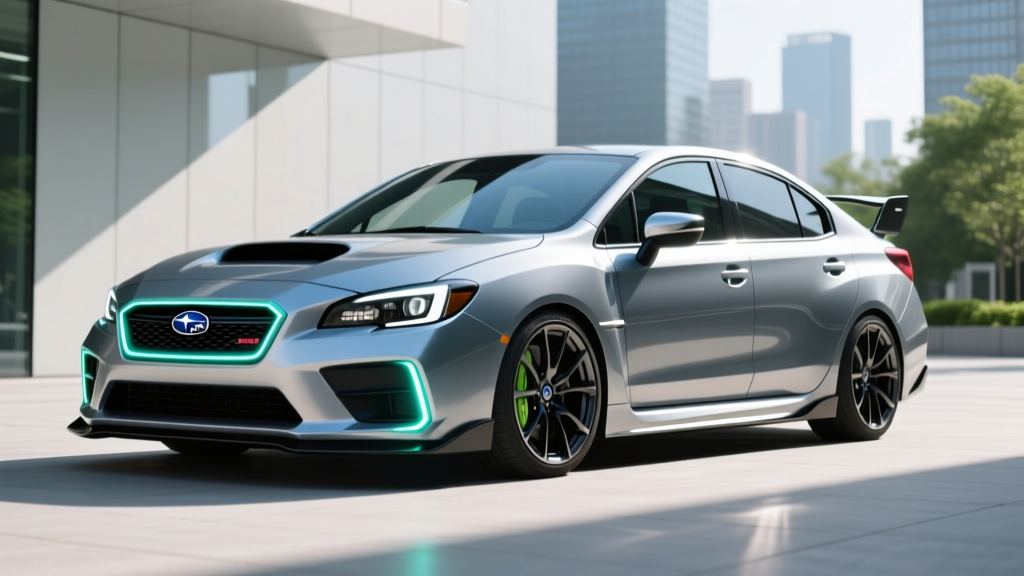
As of mid-2026, Subaru has not yet put an electric WRX into production. The closest signal is the Subaru Uncharted EV concept (debuted 2025) and Subaru's commitment to its e-Subaru global platform developed with Toyota. A production electric performance sedan wearing the WRX badge remains unannounced with a firm on-sale date. If you need an all-wheel-drive electric performance car today, your real alternatives are the Tesla Model 3 Performance, Hyundai Ioniq 6 N, and the upcoming AWD variants from other OEMs. This guide covers what Subaru has confirmed, what industry analysts project, and what to buy in the meantime.
Subaru's EV Roadmap: Where an Electric WRX Fits
Subaru has been slower to electrify than most mainstream automakers, and that context matters for anyone searching for an electric WRX. The brand sold its first dedicated EV, the Solterra (co-developed with Toyota's bZ4X), starting with the 2023 model year. The Solterra uses a 71.4 kWh (usable ~64 kWh) NMC lithium-ion battery and delivers an EPA-estimated 222–227 miles of range depending on trim, per fueleconomy.gov.
For 2026, Subaru has outlined plans to launch multiple new EVs on its next-generation e-Subaru platform, which promises improved energy density, faster DC charging, and a more rigid chassis suited to performance applications. The Uncharted EV concept — a compact crossover — previewed this platform but was not a sedan and did not carry the WRX nameplate.
Subaru executives have stated publicly that the WRX lineage is important to the brand's identity, but they have not confirmed a battery-electric successor. The current gas-powered WRX (VB generation, introduced for 2022) continues in the 2026 lineup with its 2.4L turbocharged flat-four producing 271 hp. Until Subaru officially announces a battery-electric WRX, everything below is projected or speculative based on platform capabilities and competitive positioning.
Projected Specs: What an Electric WRX Would Need to Compete
If Subaru green-lights a production electric WRX on the e-Subaru platform, here is the performance envelope it would need to hit to be competitive against current electric sport sedans. These figures are analyst projections, not manufacturer-confirmed specs.
| Attribute | Projected Electric WRX | Tesla Model 3 Performance (2026) | Hyundai Ioniq 6 N (2026) |
|---|---|---|---|
| Drivetrain | Dual-motor AWD | Dual-motor AWD | Dual-motor AWD |
| Horsepower | ~400–500 hp | 510 hp | 641 hp (N Active) |
| 0–60 mph | ~3.5–4.2 sec | 2.9 sec | 3.2 sec |
| Battery (usable) | ~75–85 kWh NMC | 75 kWh (NMC) | 84 kWh (NMC) |
| EPA Range (est.) | ~250–290 mi | 315 mi | 260 mi |
| Peak DC Charge | ~150–200 kW | 250 kW | 240 kW (N) |
| 10–80% DC Time | ~25–35 min (est.) | ~25 min | ~18 min |
| Base MSRP (est.) | ~$45,000–$55,000 | $54,990 | $67,500 |
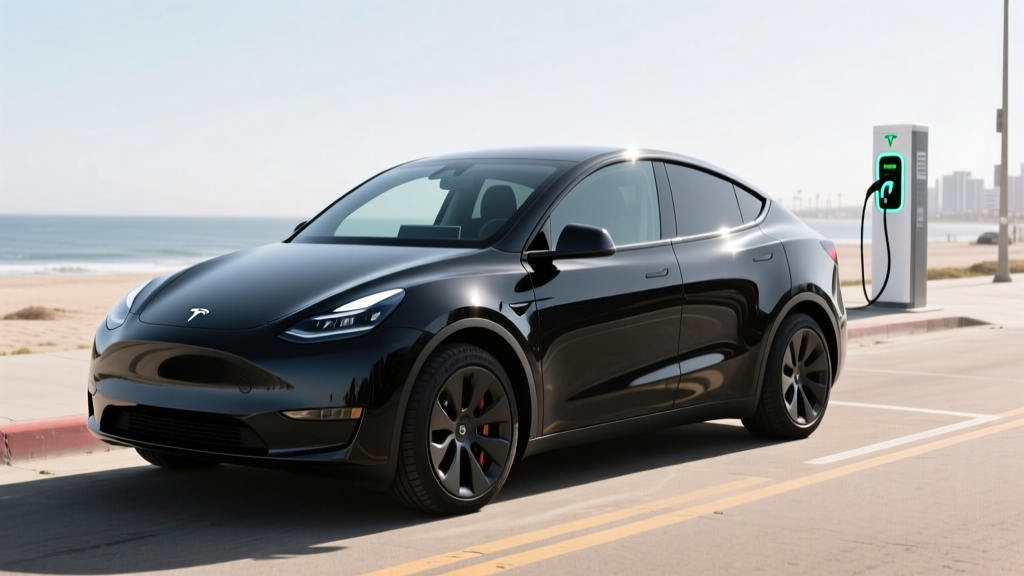
The key challenge for Subaru: the WRX has always been a value-oriented performance car. The 2026 gas WRX starts around $33,000. Matching that price point with an EV that also delivers 250+ miles of range and legitimate performance is extremely difficult given current battery costs. Subaru would likely position an electric WRX closer to $45,000–$55,000, which puts it directly against the Model 3 Performance — a car with an established Supercharger network advantage and proven sub-3-second acceleration.
Real-World Range and Charging: What Subaru EV Owners Actually Experience
To understand what an electric WRX might deliver in practice, we can look at real-world Solterra data and apply it to a performance sedan application.
Solterra Real-World Baseline
EPA sticker: 222–227 miles (depending on wheel size)
Real-world highway (70 mph, moderate temps): ~180–200 miles
Cold weather (below 32°F, highway): ~140–170 miles
Lesson for a future electric WRX: A performance-tuned EV with stickier tires, more aggressive aero, and higher power draw will typically sacrifice 5–15% of range versus its EPA sticker in mixed driving. Plan accordingly.
The current Solterra peaks at roughly 100 kW on DC fast chargers, which is a known weak point — 10–80% takes around 55–60 minutes. Subaru has acknowledged this limitation and the next-generation e-Subaru platform is expected to support at least 150–200 kW peak charging. For a performance buyer who road-trips to canyon roads or track days, anything below 150 kW peak will feel inadequate compared to the 200–350 kW rates now common among competitors.
Charging-curve reality: Peak kW is never sustained across the full session. Most EVs hit peak rate between 10–30% SoC and taper significantly above 60%. A projected 180 kW peak for an electric WRX might average only 100–120 kW across a 10–80% session, translating to roughly 28–35 minutes at a 350 kW-capable station.
Cost of Ownership: Electric Performance Sedan vs. Gas WRX
One of the most common questions from WRX enthusiasts considering an eventual electric version is whether the math works. Here's a comparison using the current gas WRX and a Tesla Model 3 Performance as a stand-in for what an electric WRX would compete against.
| Cost Factor (5 Years / 75,000 mi) | 2026 Gas WRX ($33,000 base) | 2026 Tesla Model 3 Perf. ($54,990) |
|---|---|---|
| Purchase Price (before incentives) | $33,000 | $54,990 |
| Federal §30D Tax Credit | $0 | Up to $7,500 (eligibility varies — see IRS rules below) |
| Fuel / Electricity (75k mi) | ~$9,400 (gas @ $3.50/gal, 26 mpg combined) | ~$3,200 (home L2 @ $0.14/kWh, 28 kWh/100mi) |
| Maintenance (5 yr) | ~$3,500 (oil, brakes, filters) | ~$1,200 (cabin filter, tires, wiper fluid) |
| Insurance (avg. annual) | ~$1,900/yr ($9,500 total) | ~$2,400/yr ($12,000 total) |
| Estimated Depreciation | ~$14,000 | ~$22,000 |
| Approx. 5-Year Total Cost | ~$69,400 | ~$95,690 (before credit) |
Key takeaways:
- The gas WRX remains substantially cheaper to own over five years, primarily because its purchase price is ~$22,000 lower.
- Electric fuel savings are real — roughly $6,200 over 75,000 miles — but they do not close the purchase-price gap.
- EV insurance premiums run 20–30% higher on average, partially offsetting fuel savings.
- Depreciation on EVs has been steeper than on comparable gas performance cars in the 2023–2026 period, though this is stabilizing.
For an electric WRX to make financial sense, Subaru would likely need to price it closer to $40,000–$45,000 to bridge the gap. At that price, with a $7,500 federal credit (if eligible), the five-year total cost could approach the gas WRX — especially as battery costs continue to decline.
Federal Tax Credit: §30D Rules That Would Apply
If an electric WRX launches, its eligibility for the IRS §30D clean vehicle credit would depend on several factors that change annually:
- MSRP cap: Sedans must be priced at or below $55,000 to qualify. This is a potential hurdle — a performance electric WRX could easily exceed this cap.
- Buyer income limits: AGI must not exceed $150,000 (single), $225,000 (head of household), or $300,000 (joint filing).
- Battery sourcing requirements: Critical minerals and battery components must meet escalating percentage thresholds from designated trade partners. Subaru's supply chain (largely Japanese and potentially Chinese-sourced minerals) will determine eligibility year by year.
- Point-of-sale transfer: As of 2024, buyers can transfer the credit to the dealer at purchase, reducing the out-of-pocket price immediately — no need to wait for tax filing.
Bottom line: Never assume a flat $7,500 credit applies. Check IRS.gov and confirm with a tax professional before factoring the credit into your purchase decision. Eligibility is model- and year-specific.
What WRX Loyalists Actually Want (and Whether an EV Can Deliver)
The WRX community cares about specific things that don't always translate cleanly to electric powertrains:
| Concern | Myth | Fact |
|---|---|---|
| Symmetrical AWD feel | "EVs can't replicate Subaru's AWD" | Dual-motor EVs can torque-vector independently front/rear — potentially superior to mechanical AWD in response time |
| Weight | "An electric WRX will be too heavy to handle" | Performance EVs routinely weigh 4,500–5,000 lbs; low center of gravity and torque vectoring compensate, but tire wear increases |
| Sound/engagement | "EVs have no soul" | Subjective, but Hyundai's Ioniq 5 N demonstrates that synthetic shift points and sound profiles can create engagement — not everyone agrees it's enough |
| Manual transmission | "No manual means it's not a real WRX" | EVs don't use multi-speed transmissions; paddle-shifted simulated gears are the closest equivalent |
| Rally/dirt capability | "EVs can't handle gravel" | EVs actually excel on loose surfaces with instant torque and precise traction control; the concern is underbody battery protection |
Decision Framework: Should You Wait or Buy Now?
If you're searching for an electric WRX today, here's your practical path:
Buy a gas WRX now if:
- You want a WRX this year at ~$33,000–$42,000 and value the manual transmission
- You lack reliable home charging access (apartment, street parking)
- You regularly drive in extreme cold or remote areas with sparse DC charging infrastructure
- Your budget is firm below $45,000
Buy a Tesla Model 3 Performance now if:
- You want a sub-3-second AWD electric sedan today with Supercharger network access
- You have home Level 2 charging and a daily commute under 80 miles
- You're comfortable with Tesla's minimalist interior and touchscreen-dependent controls
- You can absorb the ~$55,000 MSRP and higher insurance premiums
Consider the Hyundai Ioniq 6 N if:
- You want the most engaging driver-focused electric sedan currently available
- Simulated gear shifts and N-tuned suspension matter to you
- You can stretch to ~$67,500 for a track-capable EV
Wait for a potential electric WRX if:
- You're committed to the Subaru brand and its AWD heritage
- You can wait until at least 2028–2029 for a possible announcement and 2029–2030 for deliveries
- You want Subaru's EyeSight safety suite and the brand's strong resale-value track record
- Subaru confirms the model — which, as of 2026, they have not
What First-Time EV Buyers Should Know Before Committing
If you're coming from a gas WRX and considering any electric performance car, these realities will shape your experience:
Home charging is essential. Public-only charging for a performance EV is expensive (DC fast charging can cost $0.35–$0.50/kWh, pushing your "fuel" cost near gas-car territory) and time-consuming. Budget $800–$2,000 for a Level 2 home charger installation (equipment + licensed electrician + permit), and confirm your electrical panel has capacity — a 200-amp panel upgrade can add $1,500–$3,000.
Tires wear faster. The instant torque of a 400+ hp EV on performance rubber means expect 20,000–30,000 miles from a set of tires versus 40,000+ on a gas car. Budget $800–$1,400 per set and factor this into your cost of ownership.
Cold weather hits range hard. Any EV loses 20–40% of its EPA range in sustained sub-freezing temperatures, especially at highway speeds. If you live in the upper Midwest or Northeast, a 280-mile EPA rating might mean 180–200 real miles in January. A heat pump (standard on most 2026 EVs) mitigates this somewhat.
Preconditioning matters. If you navigate to a DC fast charger using the car's built-in nav, most EVs will precondition the battery — warming it to optimal temperature for faster charging. Skip this step and your 180 kW peak might drop to 80 kW. Always precondition.
Frequently Asked Questions
Has Subaru officially announced an electric WRX?
No. As of mid-2026, Subaru has not announced a production electric WRX. The brand has confirmed multiple EVs on its next-generation e-Subaru platform, but none have been identified as a WRX successor. Any specs, pricing, or release dates discussed in automotive media are speculative.
Will the electric WRX have a manual transmission?
Electric vehicles do not use conventional multi-speed manual transmissions. If Subaru follows the approach of Hyundai's N division, a future electric WRX might offer simulated gear shifts via paddle shifters, but a true mechanical manual is not possible with a battery-electric powertrain.
How does the current gas WRX compare to electric alternatives?
The 2026 gas WRX produces 271 hp, hits 0–60 in roughly 5.5 seconds, and starts near $33,000. Electric alternatives like the Tesla Model 3 Performance (510 hp, 2.9 sec 0–60, ~$55,000) crush it on acceleration but cost ~$22,000 more. The WRX's advantage remains its accessible price, manual transmission option, and proven rally-bred AWD system.
Would an electric WRX qualify for the $7,500 federal tax credit?
It would depend on the final MSRP (must be ≤$55,000 for sedans), your adjusted gross income, and whether the battery's critical minerals and components meet the year's sourcing requirements under IRS §30D rules. Given that a performance EV could push past the MSRP cap, eligibility is uncertain until Subaru confirms pricing.
What's the best AWD electric performance car I can buy right now?
The Tesla Model 3 Performance offers the best combination of acceleration (2.9 sec 0–60), range (315 mi EPA), and charging infrastructure (Supercharger network). The Hyundai Ioniq 6 N is the driver's choice if engagement and track capability matter more than range and price. The BMW i4 M50 xDrive (~$67,000) is another strong AWD option with a more traditional luxury interior.
Is Subaru's AWD system better than electric dual-motor AWD?
Subaru's symmetrical mechanical AWD is proven, predictable, and well-suited to low-traction surfaces. However, dual-motor electric AWD systems can adjust torque distribution front-to-rear in milliseconds — faster than any mechanical system. On pavement, electric AWD generally provides superior launch traction. On deep gravel or snow, Subaru's system has a longer track record, though EVs with proper winter tires perform very well.