Subaru Electric Models in 2026: The Quick Answer
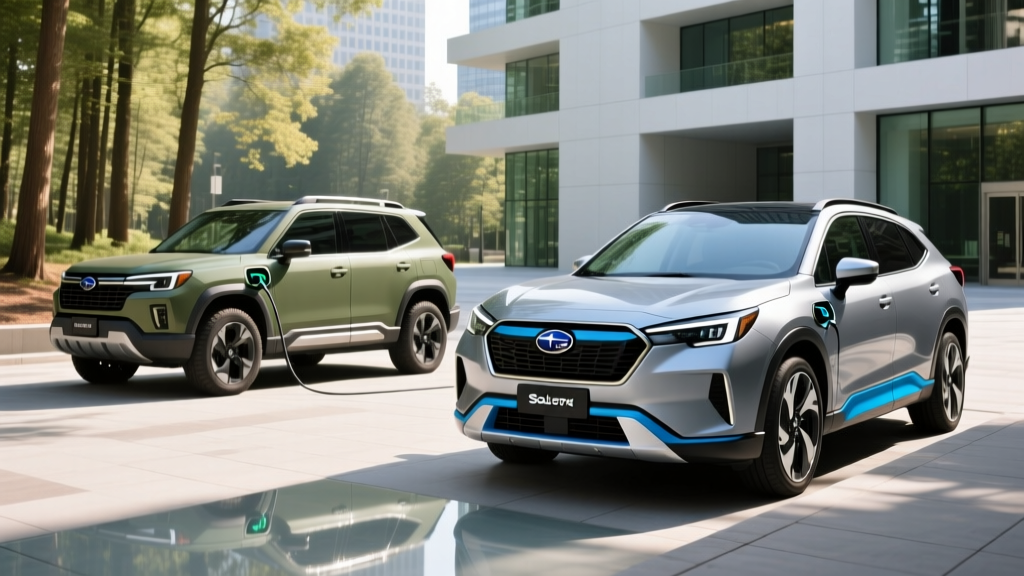
Subaru currently sells one fully electric vehicle in the U.S.: the Solterra, a compact electric SUV co-developed with Toyota (it's the twin of the Toyota bZ4X). For 2026, Subaru has also announced the Trailseeker, an electric wagon variant based on the Solterra platform, expected to arrive in late 2026 as a 2027 model year vehicle.
The 2026 Solterra offers 222–228 miles of EPA range, peaks at 100 kW DC fast charging (10–80% in ~56 minutes), starts at $38,495, and comes standard with AWD. The Trailseeker's final specs remain preliminary.
If you're a Subaru loyalist wanting electric AWD and EyeSight safety tech, the Solterra works — especially for daily commuting under 150 miles. But if you need 300+ mile road-trip range or ultra-fast charging, competitors like the Hyundai Ioniq 5 (311 mi, 240 kW) or Tesla Model Y (320 mi, 250 kW) outperform it on paper.
2026 Subaru Solterra: Full EV Profile
| Spec | Premium (Base) | Limited | Touring |
|---|---|---|---|
| MSRP | $38,495 | $41,995 | $45,495 |
| EPA Range | 228 mi | 222 mi | 222 mi |
| Battery | 71.4 kWh usable (NMC lithium-ion) | ||
| Drivetrain | Dual-motor AWD, 215 hp, 249 lb-ft torque | ||
| 0–60 mph | ~6.5 seconds | ||
| Peak DC Fast Charge | 100 kW (CCS connector) | ||
| 10–80% DCFC Time | ~56 minutes | ||
| Level 2 (240V) Rate | 6.6 kW (~9 hrs empty-to-full) | ||
| Efficiency | 102–104 MPGe combined | ||
| Cargo Volume | 23.8 cu ft (rear seats up) | ||
| Towing | Not rated for towing | ||
| Battery Warranty | 8 years / 100,000 miles | ||
| ADAS | EyeSight (SAE Level 2 driver-assist) | ||
Source: EPA fueleconomy.gov
Real-World Range vs. EPA Sticker
EPA: 222–228 miles. In real-world highway driving at 70 mph, expect roughly 185–200 miles before needing to charge. In cold weather (below 30°F), range can drop another 15–25%, putting winter highway range near 150–170 miles. The Solterra lacks a heat pump (it uses resistive cabin heating), which contributes to this cold-weather penalty. For daily commutes under 60 miles round-trip, this is a non-issue if you charge at home overnight.
2026 Subaru Trailseeker: Announced Electric Wagon
Subaru confirmed the Trailseeker at the 2025 New York Auto Show. It shares the e-TNGA platform and 71.4 kWh battery with the Solterra but adopts a lifted-wagon body style reminiscent of the Outback. Key preliminary details:
- Expected MSRP: $40,000–$48,000 depending on trim
- Expected EPA Range: 215–230 miles (aerodynamic drag may reduce range slightly vs. Solterra)
- Ground Clearance: ~8.7 inches (matching Outback)
- Roof Rails: Standard, with increased dynamic load rating for cargo boxes
- Availability: Late 2026 as a 2027 model year — not yet orderable
These specs are preliminary and subject to change before production. Subaru has not published official EPA or charging figures.
Solterra vs. Gas Subaru: Cost & Efficiency Comparison
Most cross-shopping Subaru buyers are deciding between the Solterra and a gas-powered Forester or Outback. Here's the data:
| Metric | 2026 Solterra (AWD) | 2026 Forester (AWD, Gas) |
|---|---|---|
| Base MSRP | $38,495 | $29,995 |
| EPA Efficiency | 102 MPGe combined | 29 MPG combined |
| Annual Fuel/Energy (12,000 mi) | ~$570 (home charging, $0.14/kWh avg) | ~$1,450 ($3.50/gal) |
| Annual Maintenance Est. | ~$300 | ~$600 |
| Federal Tax Credit (§30D) | $0–$7,500 (see eligibility below) | $0 |
| 5-Year Fuel/Energy Total | ~$2,850 | ~$7,250 |
The Solterra's upfront price is ~$8,500 higher than a base Forester. Annual energy savings of roughly $880 mean the breakeven point on fuel alone is ~9.7 years — before factoring in any tax credit, state rebate, or reduced maintenance. With the full $7,500 federal credit (if eligible), breakeven drops to roughly 1.1 years. However, not every buyer qualifies.
Federal Tax Credit & Incentive Eligibility
The Solterra's §30D federal tax credit eligibility is complex and subject to change. Here's the current framework under IRS rules:
- MSRP Cap: SUVs must have an MSRP under $80,000 — the Solterra qualifies at all trims.
- Buyer Income Cap: AGI must not exceed $150,000 (single), $225,000 (head of household), or $300,000 (joint).
- Battery Sourcing: Critical minerals and battery components must meet phased-in percentage thresholds from U.S. or FTA-partner countries. The Solterra's battery sourcing has historically not met full requirements, often resulting in a reduced credit or $0.
- Point-of-Sale Transfer: If eligible, you can transfer the credit to the dealer at purchase for an upfront price reduction.
Check the latest eligibility on IRS.gov before purchasing — sourcing rules tighten annually and the credit amount can change mid-year. Consult a tax professional for your specific situation. Many states offer additional rebates (e.g., California, Colorado, New York) that stack on top.
Charging the Solterra: Home & Public
The Solterra uses a CCS1 connector for DC fast charging and a J1772 connector for Level 2 AC charging. It does not have a native NACS (Tesla) port, though CCS-to-NACS adapters are available for Supercharger access at participating Tesla stations.
| Level | Power | Miles Added per Hour | Use Case |
|---|---|---|---|
| Level 1 (120V) | ~1.2 kW | ~4 mi/hr | Emergency/trickle only |
| Level 2 (240V, 32A) | 6.6 kW | ~25 mi/hr | Overnight home charging |
| DC Fast Charge | 100 kW peak | ~130 mi in 30 min | Road trips; tapers above 80% |
The charging speed limitation: At 100 kW peak, the Solterra charges noticeably slower than rivals. The Hyundai Ioniq 5 peaks at 240 kW (10–80% in ~18 min) and the Kia EV6 at 240 kW. On a road trip, you'll spend roughly 56 minutes at a DC fast charger going from 10–80%, versus ~18–20 minutes in those competitors. This matters for drivers who regularly take trips over 200 miles.
Home charging cost: Installing a Level 2 home charger (240V, hardwired, 48A circuit) typically costs $800–$2,200 including equipment, electrician labor, and permits — assuming your electrical panel has capacity. A panel upgrade (to 200A) can add $1,500–$3,500. At $0.14/kWh national average, a full Solterra charge costs roughly $10.00 for 228 miles.
Decision Framework: Is a Subaru EV Right for You?
Choose the Solterra If:
- Your daily driving is under 150 miles round-trip and you can charge at home overnight
- You want standard AWD, 8.3 inches of ground clearance, and Subaru's EyeSight safety suite
- You're a Subaru loyalist who values brand-specific features (X-Mode for light off-road, SI-DRIVE modes)
- You live in a moderate climate where cold-weather range loss is manageable
Choose a Competitor If:
- You regularly drive 250+ miles between charges (road trips) — the Ioniq 5 or Model Y offers 300+ mi range
- You need fast DC charging for frequent long-distance travel (240 kW vs. Solterra's 100 kW)
- You need towing capacity (Solterra is unrated; the Ford Mustang Mach-E tows up to 1,500 lb, Rivian R1S tows 7,700 lb)
- You live in extreme cold (below 10°F regularly) and need a heat pump for range preservation
- You want access to the full Tesla Supercharger network natively (NACS port) without an adapter
Wait for the Trailseeker If:
- You want an EV with Outback-like utility (roof rails, wagon cargo space, 8.7" ground clearance)
- You can delay your purchase until late 2026/early 2027
Common Misconceptions About Subaru EVs
| Myth | Fact |
|---|---|
| "Subaru has multiple electric cars to choose from." | Only one production EV (Solterra) is on sale in 2026. The Trailseeker is announced but not yet available. |
| "The Solterra gets $7,500 in federal tax credits." | Credit eligibility depends on battery sourcing rules that change annually. The Solterra has historically qualified for reduced or no federal credit. Always verify at IRS.gov. |
| "AWD EVs always have terrible range." | The Solterra's 228 mi EPA is lower than some RWD rivals, but the Tesla Model Y AWD achieves 320 mi. AWD doesn't inherently doom range — battery size and efficiency matter more. |
| "I can't take a Subaru EV on road trips." | You can, but plan for 56-minute charging stops every ~170 highway miles. It's feasible but slower than competitors. |
| "EVs cost more to insure." | Often true. Solterra insurance averages 10–20% higher than a comparable gas Forester due to repair costs and battery replacement value. Get quotes before buying. |
Frequently Asked Questions
Does Subaru make a hybrid?
As of 2026, Subaru does not sell a hybrid or plug-in hybrid in the U.S. The Crosstrek Hybrid (PHEV) was discontinued after the 2023 model year. Subaru's electrification strategy focuses on BEVs. If you want a Subaru-badged electrified vehicle today, the Solterra is the only option.
Is the Solterra the same car as the Toyota bZ4X?
They share the e-TNGA platform, battery pack, and powertrain hardware. However, Subaru tunes the suspension differently, adds X-Mode for off-road traction, includes standard AWD on all trims (the bZ4X offers FWD on its base trim), and uses Subaru-specific interior/exterior styling. Range and charging specs are nearly identical.
What is the Solterra's battery degradation like?
Subaru warranties the battery at 8 years / 100,000 miles with a capacity retention threshold of 70%. Early Solterra owners (2023 models) report modest degradation of ~3–5% after two years of typical use. Long-term data beyond three years is still limited. The NMC chemistry is proven across the industry, but the 100 kW charge ceiling means less thermal stress on the battery during DC fast charging — a potential longevity benefit.
Can I charge the Solterra at Tesla Superchargers?
Not natively. The Solterra has a CCS1 port. However, Tesla has opened select Supercharger stations to non-Tesla EVs via the built-in Magic Dock adapter (CCS-compatible). You can also purchase a third-party CCS-to-NACS adapter (~$200–$350) for access to NACS-equipped stations. Verify adapter compatibility with Subaru before purchasing, as using an uncertified adapter may affect warranty coverage.
How does the Solterra handle in snow?
This is the Solterra's strongest real-world selling point. Standard dual-motor AWD with Subaru's X-Mode traction management, 8.3 inches of ground clearance, and the low center of gravity from the floor-mounted battery pack make it genuinely capable in snow and light off-road conditions. In our assessment, it matches or exceeds the gas Forester's snow performance, with the added benefit of instant electric torque and no idle emissions in cold starts. Winter range loss (15–25%) is the trade-off.
Should I buy or lease the Solterra?
Leasing is often the smarter financial move for the Solterra. Here's why: the $7,500 federal EV tax credit can be passed through as a lease credit regardless of battery sourcing rules or your personal income cap, because the leasing company (the legal owner) claims the commercial clean vehicle credit (§45W) and passes savings to you. This effectively sidesteps the §30D eligibility headaches. A 36-month lease also protects you from EV depreciation risk as the market evolves rapidly. Compare lease vs. buy numbers with your dealer and tax advisor.