The Short Answer on the Subaru 3-Row EV
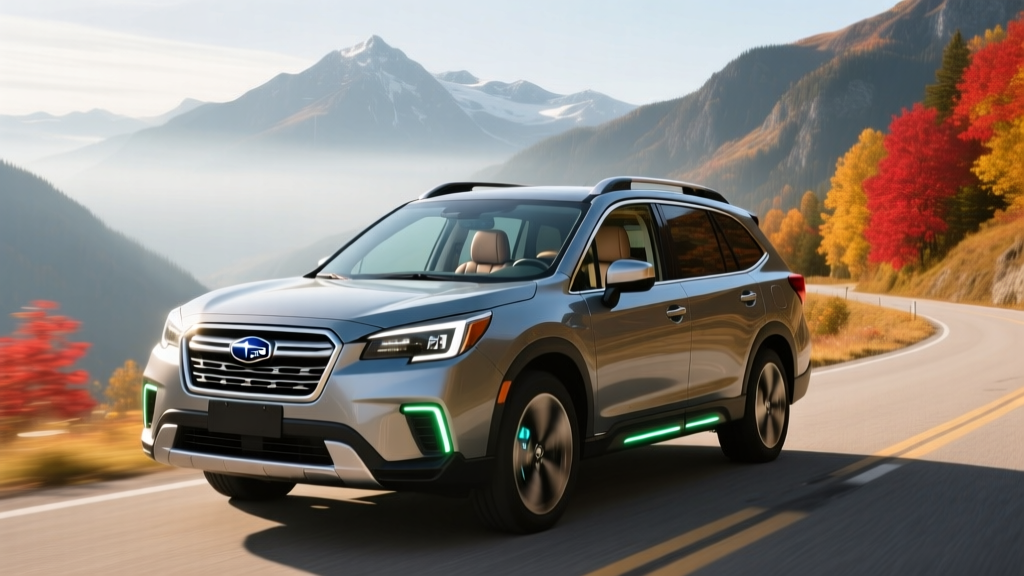
The Subaru Unchained is Subaru's first ground-up three-row electric SUV, arriving for the 2026 model year on a new dedicated EV platform shared with Toyota. It targets families who need six or seven seats, standard all-wheel drive, and Subaru's reputation for bad-weather capability — but in a battery-electric package. Based on announced specifications, expect an EPA-estimated range in the 270–300 mile band, a battery in the 90–100 kWh range, DC fast charging up to roughly 180–200 kW, and a starting MSRP around $48,000–$52,000 before incentives. It competes directly with the Kia EV9, Hyundai Ioniq 9, and Volkswagen ID. Buzz. Federal §30D tax credit eligibility of up to $7,500 is possible but depends on battery sourcing, your income, and the final MSRP cap rules — always verify on IRS.gov before purchasing.
Range, Battery, and Efficiency: What the Numbers Actually Mean
Subaru has confirmed the Unchained rides on a dedicated EV architecture (not a modified gas-car platform), which typically yields better packaging, a lower center of gravity, and more efficient thermal management. The production battery is expected to use NMC (nickel-manganese-cobalt) chemistry, chosen for its higher energy density — important when you're pushing a three-row SUV with AWD through mountain passes.
Real-World Range vs. the EPA Sticker
EPA estimate: ~270–300 miles (final numbers pending EPA certification at launch).
Real-world expectation: Plan for 220–250 miles in mixed highway driving at 70–75 mph. In cold weather (below 30°F), expect a further 15–25% reduction, bringing usable range to roughly 180–210 miles on a full charge. Subaru's standard heat pump should help mitigate winter losses compared to EVs without one, but physics always wins in deep cold.
| Spec | Expected / Announced |
|---|---|
| Battery Capacity (usable) | ~90–100 kWh (NMC) |
| EPA Range | ~270–300 mi (pending certification) |
| Drivetrain | Dual-motor AWD (standard) |
| Horsepower | ~335–375 hp (est.) |
| 0–60 mph | ~5.5–6.5 sec (est.) |
| Max DC Fast Charge Rate | ~180–200 kW |
| 10–80% DC Charge Time | ~25–30 min (est.) |
| Level 2 Charge Rate | ~11 kW onboard charger |
| Towing Capacity | ~3,500–5,000 lbs (est.) |
| Seating | 6 or 7 passengers |
| Starting MSRP | ~$48,000–$52,000 |
| Battery Warranty | 8 yr / 100,000 mi (expected) |
For efficiency, a three-row AWD EV of this size typically lands in the 85–95 MPGe combined range, or roughly 35–40 kWh per 100 miles. That's less efficient than a sedan like the Tesla Model 3 (~130 MPGe), but competitive with the Kia EV9 (~89 MPGe combined per fueleconomy.gov). If you drive 15,000 miles per year at $0.14/kWh (national average home electricity), annual fueling cost lands near $735–$840 — compared to roughly $1,800–$2,100 for a comparable gas SUV at $3.50/gallon and 22 MPG combined.
Charging: Home Setup, Public Networks, and the Curve Reality
Charging is where three-row EV ownership either clicks or becomes a headache. Here's what you need to know:
Home Level 2 Charging
With an expected 11 kW onboard charger, a Level 2 home station (240V, 48-amp circuit) will add roughly 30–35 miles of range per hour of charging. A full 10–100% charge from near-empty takes approximately 9–10 hours — ideal for overnight top-ups. If you install a 48-amp hardwired Level 2 charger (like a ChargePoint Home Flex or Emporia Level 2), budget $600–$1,200 for the unit and $800–$2,500 for professional electrician installation, depending on your panel capacity and run distance. Homes with older 100-amp electrical panels may need a $1,500–$3,000 panel upgrade to 200 amps.
| Level | Power (kW) | Miles of Range per Hour | Use Case |
|---|---|---|---|
| Level 1 (120V) | ~1.4 kW | ~4–5 mi/hr | Emergency / overnight trickle |
| Level 2 (240V, 48A) | ~11 kW | ~30–35 mi/hr | Daily home charging |
| DC Fast Charge | Up to ~200 kW peak | ~600+ mi/hr (peak) | Road trips, 10–80% in ~25–30 min |
The DC Fast-Charging Curve Reality
Subaru's peak rate of ~180–200 kW will not sustain for the entire session. Like all NMC batteries, the Unchained will accept peak power roughly from 10% to 40–50% State of Charge (SoC), then taper progressively. Expect the 10–80% session to average around 120–140 kW, which is why the total time is 25–30 minutes rather than the ~20 minutes a sustained peak would suggest. Above 80%, charging slows dramatically to protect the battery — plan to unplug at 80% on road trips unless you need the extra miles to reach your next stop.
For public charging, the Unchained is expected to use the NACS (North American Charging Standard) connector, giving access to Tesla Supercharger stations (now open to non-Tesla EVs via the NACS standard) as well as Electrify America, EVgo, and ChargePoint networks. Subaru has not confirmed an exclusive network partnership, so plan for multi-network app management.
EV vs. Gas vs. Hybrid: The Three-Row Family SUV Showdown
The most common question from family SUV shoppers: should I go EV, hybrid, or stick with gas? Here's a data-driven comparison against two popular alternatives — the gas Subaru Ascent and the Toyota Grand Highlander Hybrid.
| Attribute | Subaru Unchained (EV) | Subaru Ascent (Gas) | Toyota Grand Highlander Hybrid |
|---|---|---|---|
| Powertrain | Dual-motor AWD BEV | 2.4L Turbo AWD | 2.5L Hybrid AWD |
| EPA Range / Tank | ~270–300 mi | ~460 mi (19.2 gal tank) | ~530 mi (34 MPG × 17.9 gal) |
| MPGe / MPG Combined | ~85–95 MPGe | 22 MPG | 34 MPG |
| Annual Fuel Cost (15k mi) | ~$735–$840 (home charging) | ~$2,385 | ~$1,545 |
| Starting MSRP | ~$48,000–$52,000 | ~$39,000 | ~$45,000 |
| Federal Tax Credit | Up to $7,500 (if eligible) | $0 | Up to $7,500 (PHEV trims) |
| 5-Year Maintenance (est.) | ~$1,200 | ~$3,500 | ~$2,800 |
| 0–60 mph | ~5.5–6.5 sec | ~7.0 sec | ~7.5 sec |
The takeaway: The Unchained costs more upfront but saves $1,500–$1,700 annually on fuel vs. the gas Ascent, and $700–$800 vs. the hybrid. Over five years, that's $7,500–$8,500 in fuel savings over gas, which largely closes the price gap — especially if you qualify for the federal credit. Maintenance savings add another $2,000+ over five years thanks to no oil changes, no transmission fluid, and far less brake wear (regenerative braking handles most deceleration).
Real Costs of Ownership: The Five-Year Breakdown
EV ownership economics go beyond the sticker price. Here's a realistic five-year projection for the Unchained vs. the gas Ascent, assuming 15,000 miles/year, $0.14/kWh home electricity, $3.50/gallon gas, and national-average insurance rates.
| Cost Category | Subaru Unchained EV | Subaru Ascent (Gas) |
|---|---|---|
| Purchase Price (base MSRP) | $50,000 | $39,000 |
| Federal Tax Credit (§30D) | −$7,500 (if eligible) | $0 |
| Effective Purchase Price | $42,500 | $39,000 |
| Home Charger Install (one-time) | $1,800 | $0 |
| Fuel / Electricity (5 years) | $3,950 | $11,925 |
| Maintenance (5 years) | $1,200 | $3,500 |
| Insurance (5 years, est.) | $9,500 | $7,500 |
| Estimated Depreciation | $20,000 | $17,000 |
| 5-Year Total | ~$78,950 | ~$78,925 |
The totals are remarkably close — and that's before accounting for state/local incentives (many states offer $1,000–$4,000 additional rebates), utility off-peak charging discounts, or employer/condo charging. The EV's higher insurance premiums (typically 15–25% more for EVs due to repair costs and parts pricing) are the main offset to fuel and maintenance savings.
Federal Tax Credit: What You Actually Qualify For
The §30D Clean Vehicle Credit can reduce your federal tax liability by up to $7,500, but eligibility is not automatic. Under current IRS rules, you must meet all of the following:
- Income caps: Modified adjusted gross income (AGI) must not exceed $300,000 (joint filers), $225,000 (head of household), or $150,000 (single).
- MSRP cap: The vehicle's MSRP must not exceed $80,000 for SUVs, vans, and pickups (the Unchained should clear this easily at ~$48K–$52K base).
- Battery sourcing: A portion of the credit ($3,750) depends on critical minerals sourcing, and another $3,750 on battery component manufacturing — both with escalating domestic-content thresholds that tighten each year. Vehicles using battery components from a "foreign entity of concern" (FEOC) may be disqualified entirely.
- Point-of-sale transfer: As of 2024, you can transfer the credit to the dealer at purchase, reducing your out-of-pocket cost immediately rather than waiting for tax filing.
Subaru manufactures in Japan (Gunma), and the Unchained's battery supply chain will determine credit eligibility. Toyota's partnership may help with North American battery sourcing, but this is model-specific. Always check the official list at fueleconomy.gov and consult a tax professional before relying on the credit.
Common Misconceptions About the Subaru 3-Row EV
| Myth | Fact |
|---|---|
| "The battery will need replacing in 5 years and cost $20,000." | Modern NMC batteries are warrantied for 8 years/100,000 miles at 70%+ capacity retention. Real-world degradation data from similar platforms shows 10–15% loss over 100K miles. Full replacement is rare and typically only needed after major damage. |
| "I can't road-trip a three-row EV with kids." | With 270+ miles of range and 25-minute DC fast-charge stops, a 500-mile trip requires one planned stop. Pair that with restrooms and snack breaks, and it matches how families already travel. Apps like A Better Routeplanner map charger stops automatically. |
| "AWD EVs don't work in snow." | Dual-motor AWD provides instant torque to all four wheels with no mechanical linkage lag. Subaru's X-MODE traction management is expected to carry over. EVs actually have a weight advantage in snow due to the low, heavy battery pack improving traction. |
| "Home charging is too expensive to install." | A standard Level 2 install runs $1,400–$3,700 total (unit + electrician). Many utilities offer $200–$500 rebates. The Residential Clean Energy Credit may cover 30% of charger hardware and install costs up to $1,000. |
| "The Unchained will tow just like my Ascent." | EV towing range drops 30–50% due to the aerodynamic drag of trailers. If the Unchained is rated for 3,500–5,000 lbs, expect real towing range of 150–200 miles. Plan accordingly for boat or camper trips. |
Who Should Buy the Subaru Unchained — and Who Shouldn't
Decision Framework: Is the Unchained Right for You?
Choose the Subaru Unchained if:
- You have reliable home charging access (garage or driveway with a 240V outlet or the ability to install one).
- Your daily driving is under 200 miles round-trip, with occasional longer road trips.
- You need three rows but want to eliminate gas station visits and reduce maintenance.
- You live in a region with cold winters and value AWD with a heat pump for efficiency.
- You qualify for the §30D tax credit (income under caps, vehicle meets sourcing requirements).
- You're a current Subaru owner who trusts the brand and wants to stay in the ecosystem.
Consider a hybrid or gas alternative if:
- You live in an apartment or condo without charging access and public infrastructure is sparse in your area.
- You regularly tow heavy loads over long distances (EV towing range remains a real limitation).
- You frequently drive 400+ miles in a single day through rural areas with limited DC fast chargers.
- Your budget is strictly under $40,000 and you can't absorb the higher upfront cost even with incentives.
What First-Time EV Buyers Must Know Before Purchasing
If the Unchained is your first EV, here are the practical realities no brochure will tell you:
1. Your electrical panel matters. Before ordering, have an electrician assess your home's panel capacity. A 200-amp panel can usually support a 48-amp Level 2 charger alongside normal household loads. A 100-amp panel may require an upgrade — or you can opt for a smart charger with load-management features that throttle charging when other appliances are running.
2. Plan your road trips differently. Download PlugShare, A Better Routeplanner, or the Tesla app (for Supercharger access) before your first long trip. Precondition the battery (the Unchained should offer navigation-based preconditioning, which warms the battery when a charger is set as your destination) to maximize charge speed.
3. Regenerative braking changes how you drive. Subaru will likely offer adjustable regen levels, including a one-pedal-driving mode. Expect a 1–2 week adaptation period. The payoff: dramatically less brake wear, with brake pads often lasting 100,000+ miles on EVs.
4. Insurance will be higher. EV insurance premiums run 15–25% above comparable gas vehicles. Get quotes from GEICO, Progressive, State Farm, and EV-specialty insurers before committing. Some manufacturers offer captive insurance programs with competitive rates.
5. Tires wear faster. EVs are heavier and deliver instant torque, which accelerates tire wear by 20–30% compared to gas equivalents. Budget for a set of EV-optimized touring tires (Michelin Pilot Sport EV, Hankook iON) every 30,000–40,000 miles at roughly $200–$300 per tire.
Frequently Asked Questions
When will the Subaru Unchained be available to buy?
Subaru has announced the Unchained concept and confirmed a production three-row EV is coming. Based on typical concept-to-production timelines and Subaru's stated EV roadmap, expect U.S. deliveries to begin in late 2025 or early 2026 as a 2026 model-year vehicle. Final EPA range and pricing will be confirmed closer to launch.
Will the Unchained qualify for the $7,500 federal tax credit?
It's possible but not guaranteed. Eligibility depends on the final battery sourcing and critical-mineral content meeting IRS thresholds for the purchase year, as well as your personal income and the vehicle's MSRP staying under $80,000. Check IRS.gov and the fueleconomy.gov credit lookup tool when the vehicle is officially listed.
Can I charge a Subaru Unchained at a Tesla Supercharger?
If the Unchained ships with the NACS connector (as expected for 2026-model EVs), it will be compatible with Tesla Superchargers natively. If it ships with CCS, a NACS adapter (typically $200–$250) will enable Supercharger access, as Tesla has opened its network to non-Tesla EVs.
How does the Unchained compare to the Kia EV9?
The Kia EV9 is the Unchained's closest rival. The EV9 offers up to 304 miles of EPA range (Light RWD trim), peaks at ~210 kW DC charging, and starts around $54,900. The Unchained will compete on Subaru's AWD reputation, X-MODE traction software, and potentially lower base pricing. Compare final EPA numbers side-by-side when both are certified.
What happens if the battery degrades significantly?
Subaru is expected to offer an 8-year/100,000-mile battery warranty with a capacity-retention threshold of 70% (industry standard). If the battery falls below that threshold within the warranty period, Subaru will repair or replace it at no cost. Out-of-warranty replacement for a ~95 kWh pack currently runs $12,000–$18,000 at independent EV shops, though prices continue to decline as battery manufacturing scales.
Is the Unchained a good EV for cold climates?
Subaru's brand identity is built on cold-weather capability, and the Unchained is expected to include a heat pump (standard) for efficient cabin heating without draining the battery excessively, battery preconditioning, and AWD with X-MODE. Expect 15–25% range loss in sub-freezing temperatures — typical for all EVs — but the Unchained should be among the better-equipped options for snow-belt buyers.