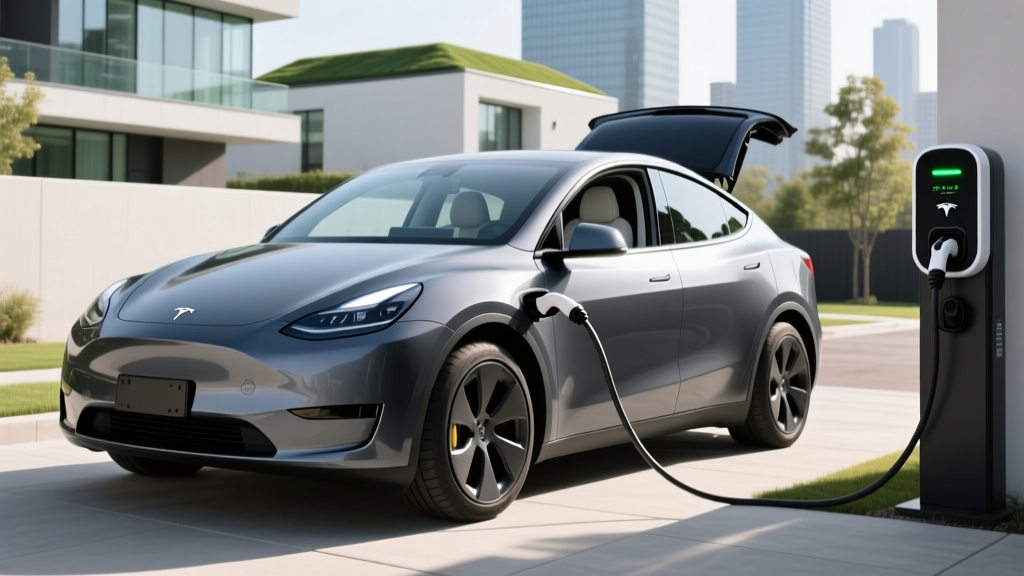
Quick Answer: A street legal electric vehicle (EV) is any fully highway-capable, DOT/NHTSA-compliant battery-electric car you can register, insure, and drive on public roads — from a $30,000 Chevy Equinox EV to a $90,000+ Tesla Model X. As of 2026, expect 250–350 miles of EPA-rated range, 10–80% DC fast charging in 18–30 minutes at 150–350 kW, and annual fuel savings of $800–$1,500 versus a comparable gas car. Federal §30D tax credits of up to $7,500 (transferred at point of sale) apply to qualifying new models, but strict MSRP caps, buyer income limits, and battery-sourcing rules mean not every EV qualifies. Budget $500–$2,000 for a home Level 2 charger installation if you have garage access.
What Makes an Electric Vehicle "Street Legal"?
Every new EV sold by a major automaker in the U.S. already meets federal motor vehicle safety standards (FMVSS), carries EPA certification, and is fully street legal in all 50 states. You register, title, and insure one exactly as you would a gas car. There is no separate "street legal" EV category — the term mostly surfaces because buyers sometimes confuse highway-capable EVs with neighborhood electric vehicles (NEVs), which are limited to 25 mph and restricted to low-speed roads.
If you're shopping for a real commuter or family vehicle, focus on these compliance markers:
- NHTSA crash-test ratings — check nhtsa.gov/ratings for 1–5 star scores
- IIHS safety picks — look for Top Safety Pick or TSP+ designations at iihs.org/ratings
- EPA range certification — verified at fueleconomy.gov
- State registration — all mainstream EVs (Tesla, Hyundai, Ford, BMW, etc.) are 50-state legal with no special permits
Low-speed vehicles (LSVs) and golf-cart-style NEVs are a different category entirely — they're not suitable for highways and don't qualify for the federal EV tax credit.
Street Legal EV vs Gas Car: The Real Numbers
Spec-sheet marketing doesn't tell the whole story. Here's how a mainstream 2026 street legal electric vehicle stacks up against a similarly sized gas crossover in actual ownership conditions.
| Metric | 2026 Hyundai Ioniq 5 (AWD) | 2026 Toyota RAV4 (Gas AWD) |
|---|---|---|
| Base MSRP | $47,400 | $32,350 |
| After $7,500 §30D credit | ~$39,900 | N/A |
| EPA Range / MPG | 290 mi (real-world ~250 mi highway) | 30 MPG combined |
| Energy Cost per Mile | ~$0.045 (home charging at $0.16/kWh) | ~$0.115 (gas at $3.45/gal) |
| Annual Fuel/Energy (12k mi) | ~$540 | ~$1,380 |
| Annual Maintenance | ~$300 | ~$650 |
| 0–60 mph | 4.5 sec (320 HP) | 8.0 sec (203 HP) |
| 5-Year Fuel + Maint. Cost | ~$4,200 | ~$10,150 |
The EV costs more upfront but recoups $5,950 in fuel and maintenance over five years — and that's before factoring in any state rebates or cheaper overnight utility rates. The gap narrows if you lack home charging and rely entirely on public DC fast chargers at $0.35–$0.50/kWh, which pushes per-mile cost closer to $0.10.
Real-World Range: What the EPA Sticker Won't Tell You
EPA range estimates assume a mix of city and highway driving at moderate temperatures. In practice, three factors will reduce your usable range in a street legal electric vehicle:
1. Highway driving at 70–80 mph. Aerodynamic drag scales with the square of speed. A 310-mile EPA-rated EV typically delivers 240–270 miles at sustained 75 mph. On a road trip from Denver to Kansas City, plan stops accordingly.
2. Cold weather. Battery chemistry slows in freezing temperatures, and cabin heating draws significant power. Expect 20–35% range loss at 20°F. A 290-mile Ioniq 5 might give you 190–210 miles on a January highway drive in Minnesota. Models with heat pumps (standard on Hyundai, Tesla, BMW, and most 2026 EVs) reduce this penalty to roughly 15–25%.
3. Charging-curve taper. Peak DC charge rates (say, 240 kW) apply only between roughly 10–50% state of charge. Above 80%, charging slows dramatically to protect battery health. A "10–80% in 18 minutes" spec is useful; a "0–100% in 22 minutes" claim is marketing fiction. Budget 25–35 minutes for a realistic highway fast-charge stop.
Real-World Range Rule of Thumb: Multiply the EPA figure by 0.85 for mixed highway driving, 0.70 for cold-weather highway, and 0.95 for warm-weather city commuting. For a 310-mile EPA EV, that's roughly 264 mi highway, 217 mi winter highway, and 295 mi city.
Charging at Home vs Public: What First-Time Buyers Must Know
Not every EV buyer has a garage with a 240V outlet, and pretending otherwise erases the biggest barrier to EV ownership. Here's the honest breakdown:
| Charging Level | Power (kW) | Miles Added per Hour | Typical Cost per kWh | Best For |
|---|---|---|---|---|
| Level 1 (120V household) | 1.4 kW | 3–5 mi | $0.12–$0.18 | Overnight top-ups, PHEVs |
| Level 2 (240V home) | 7.2–11.5 kW | 25–44 mi | $0.12–$0.18 | Daily home charging (ideal) |
| DC Fast Charge (public) | 50–350 kW | 150–300+ mi (peak) | $0.30–$0.55 | Road trips, apartment dwellers |
Home Level 2 installation typically costs $500–$2,000 total: $300–$700 for a quality charger (ChargePoint Home Flex, Emporia Level 2, Tesla Wall Connector) plus $200–$1,300 for electrician labor, permit, and possible panel work. If your home has a 200-amp electrical panel with spare capacity, expect the lower end. A 100-amp panel or long conduit runs push costs higher — get a licensed electrician's quote before purchasing the car.
Apartment and condo dwellers face a harder reality. Public DC fast charging at $0.40/kWh costs nearly as much as gas per mile. If you can't install home charging, a PHEV (plug-in hybrid) may be a more practical electrified choice, or look for workplace charging, community charger programs, or buildings with right-to-charge laws (now active in CA, CO, FL, HI, and several other states).
Tax Credits and Incentives: The 2026 §30D Rules
The federal EV tax credit under IRS §30D remains up to $7,500 for qualifying new EVs, but eligibility is far from universal. Under current 2026 rules, a street legal electric vehicle must clear every hurdle below:
- MSRP cap: ≤ $80,000 for SUVs, vans, and pickups; ≤ $55,000 for sedans
- Buyer income cap: AGI ≤ $300,000 (joint), $225,000 (head of household), $150,000 (single)
- Battery sourcing: Increasingly strict critical-mineral and battery-component requirements sourced from the U.S. or FTA partners — many Asian-sourced battery packs disqualify otherwise eligible vehicles
- Final assembly: Vehicle must be assembled in North America
- Point-of-sale transfer: As of 2024+, you can transfer the credit to the dealer at purchase for an immediate price reduction — no need to wait for tax filing
Check the latest qualifying vehicle list at IRS.gov clean vehicle pages before committing. State incentives vary widely — Colorado offers up to $5,000, California's CVRP is income-dependent, and many states offer nothing. Consult your tax professional for personal eligibility.
5-Year Total Cost of Ownership Breakdown
Comparing a mid-range street legal electric vehicle (2026 Tesla Model Y Long Range, ~$48,000 after credit) against the best-selling gas crossover (2026 Toyota RAV4 LE AWD, ~$32,350) over five years and 60,000 miles:
| Cost Category | Tesla Model Y LR (EV) | Toyota RAV4 AWD (Gas) |
|---|---|---|
| Purchase Price (after credit) | $48,000 | $32,350 |
| Fuel / Energy (60k mi) | $2,700 | $6,900 |
| Maintenance | $1,500 | $3,250 |
| Insurance (avg. 5 yr) | $9,500 | $7,200 |
| Depreciation (est.) | $18,000 | $12,500 |
| 5-Year Total | $79,700 | $62,200 |
The EV still carries a ~$17,500 premium over five years in this comparison, driven by higher insurance (EV premiums average 15–25% more) and steeper depreciation. However, the math shifts dramatically if you buy a lower-priced EV (Equinox EV at ~$33,000), qualify for the full $7,500 credit, drive more than 15,000 miles annually, or live in a state with low electricity rates and high gas prices. Run your own numbers — the break-even point is highly personal.
Common EV Myths vs Facts
| Myth | Fact |
|---|---|
| "EV batteries need replacing every 5 years" | Federal law mandates 8-year/100,000-mile battery warranties. Real-world degradation averages 10–15% over 100k miles. Most packs outlast the car. |
| "You'll be stranded — chargers are unreliable" | Tesla Superchargers maintain 99%+ uptime. Non-Tesla networks (EA, EVgo) have improved to ~85–90%. Plan road trips with A Better Routeplanner and carry a backup network app. |
| "EVs are worse in winter" | Range drops 20–35% in deep cold, but EVs start instantly (no cranking), and preconditioning while plugged in preserves range. Gas cars also lose efficiency in cold — it's just less visible. |
| "EVs are slow" | Even a base 2026 Chevy Equinox EV hits 0–60 in ~7.5 seconds. A Model Y Performance does it in 3.5 sec. Instant torque makes EVs feel quicker than gas cars with similar 0–60 times. |
| "Home charging requires a full panel upgrade" | Most homes with 200-amp service can add a Level 2 charger for under $1,000. Only older homes with 100-amp panels and high existing loads typically need a $1,500–$3,000 upgrade. |
Decision Framework: Should You Buy a Street Legal Electric Vehicle?
Buy an EV if:
- You can install a Level 2 charger at home or have reliable workplace charging
- Your daily commute is under 80 miles round-trip (covers 90%+ of U.S. drivers)
- You take road trips fewer than 4–5 times per year (or are willing to plan charging stops)
- You qualify for the §30D credit or a strong state incentive
- You want lower per-mile fuel costs and minimal maintenance (no oil changes, fewer brake replacements due to regen braking)
Buy a PHEV (plug-in hybrid) instead if:
- You lack home or workplace charging access
- You frequently drive 300+ miles in rural areas or charging deserts
- You live in extreme cold (below 0°F regularly) and need maximum range certainty
- Your budget is under $30,000 and you can't wait for more affordable EVs
Stick with a gas car or HEV hybrid if:
- You drive fewer than 8,000 miles per year (fuel savings won't offset the EV price premium)
- You live in an apartment with no charging and no public chargers nearby
- Your budget is tight and used-EV options in your area are limited
Frequently Asked Questions
Do I need a special license to drive a street legal electric vehicle?
No. A standard state driver's license covers all highway-legal EVs. No special endorsements, training, or permits are required. Registration and insurance work identically to a gas car.
How long do EV batteries actually last?
Most 2026 EV batteries use NMC (nickel manganese cobalt) or LFP (lithium iron phosphate) chemistry. LFP packs, found in base Tesla Model 3/Y and some Ford models, tolerate daily 100% charging and show minimal degradation — expect 90%+ capacity after 150,000 miles. NMC packs prefer 20–80% daily charging but still retain 85–90% capacity at 100k miles. Federal warranty mandates 8 years/100,000 miles with at least 70% capacity retention.
What happens if I run out of charge on the road?
Same as running out of gas — you call roadside assistance. AAA and most insurance-provided roadside services now offer flatbed towing to the nearest charger. EV navigation systems (Tesla, Hyundai, Rivian) route through chargers automatically and warn you if your destination exceeds range.
Are EVs more expensive to insure?
Yes, on average 15–25% more than equivalent gas cars, due to higher repair costs, specialized parts, and total-loss thresholds. Shop quotes from GEICO, Progressive, State Farm, and EV-specialty insurers before buying. Some states and insurers offer EV-specific discounts that partially close the gap.
Can I tow with a street legal electric vehicle?
Yes, but towing cuts EV range by 30–50%. A Ford F-150 Lightning can tow up to 10,000 lbs but its 320-mile range drops to roughly 160–200 miles with a heavy trailer. Rivian R1T and Tesla Model X also tow competently. For frequent heavy towing, a diesel or hybrid truck remains more practical for range reasons.