The Short Answer: Are Street-Legal Electric Motorcycles Worth It in 2026?
Yes — if your commute is under 80 miles round-trip, you have access to a standard 120V outlet at home, and you value near-zero maintenance. Street-legal electric motorcycles like the Zero SR/S (160-mile city range, $19,995) and LiveWire ONE (146-mile city range, $21,999) deliver real highway capability, instant torque, and fuel savings of $600–$1,100 annually versus a comparable gas bike. However, DC fast charging infrastructure for motorcycles remains extremely sparse, cold weather cuts range by 20–30%, and the federal §30D EV tax credit does not apply to two- or three-wheeled vehicles. For riders who need 200+ miles of uninterrupted touring range or live in charging deserts, a gas motorcycle or a plug-in hybrid car remains the more practical choice.
What Makes an Electric Motorcycle Street-Legal?
A street-legal electric motorcycle must meet the same federal and state requirements as any gas-powered motorcycle: DOT-compliant lighting, mirrors, horn, speedometer, license plate illumination, and a Vehicle Identification Number (VIN) registered with your state DMV. In the U.S., the National Highway Traffic Safety Administration (NHTSA) classifies these as Low-Speed Vehicles (LSVs) or full motorcycles depending on top speed. Full-speed electric motorcycles — those capable of exceeding 30 mph — require a standard motorcycle license (M endorsement), registration, insurance, and helmet compliance per your state.
Critically, electric scooters and low-speed electric bicycles (e-bikes) are not motorcycles. If a two-wheeler has pedals, is limited to 20–28 mph, and lacks a VIN, it falls under CPSC e-bike regulations, not DOT motorcycle standards. The models covered in this guide — Zero Motorcycles, LiveWire, Energica, and Damon — are all full-speed, VIN-registered, highway-capable machines.
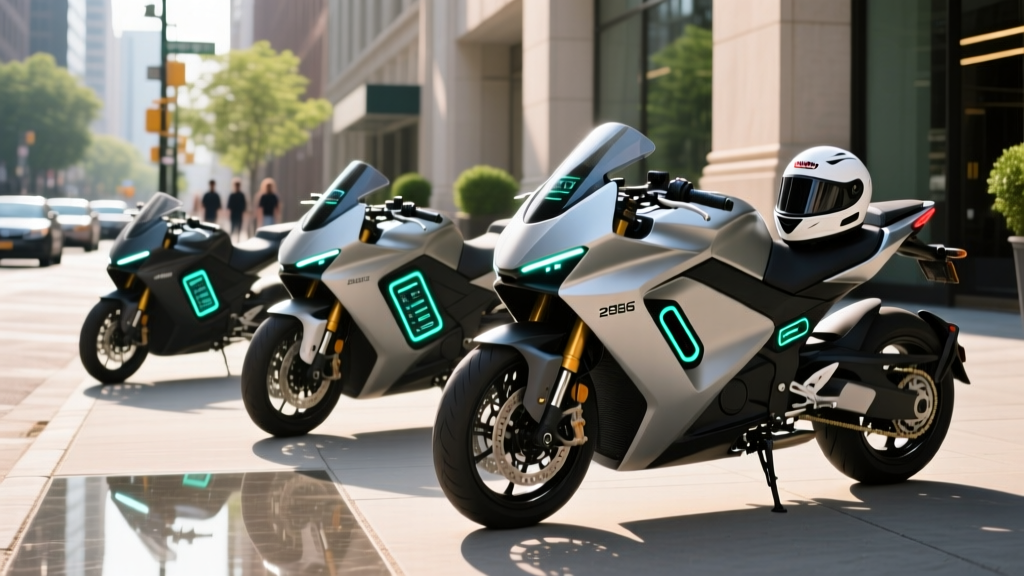
Top 2026 Street-Legal Electric Motorcycles: Spec Comparison
| Model | Motor Power (HP) | Battery (kWh) | EPA City Range | Real-World Hwy Range | Level 1 Charge (120V) | Level 2 Charge (240V) | 0–60 mph | Base MSRP |
|---|---|---|---|---|---|---|---|---|
| Zero SR/S (2026) | 110 hp (peak) | 17.3 kWh (Z-Force Li-Ion) | 160 mi | ~82 mi (70 mph sustained) | ~9.5 hrs (0–100%) | ~2.5 hrs (0–95%) | 3.0 sec | $19,995 |
| Zero SR (2026) | 110 hp (peak) | 17.3 kWh | 156 mi | ~80 mi | ~9.5 hrs | ~2.5 hrs | 3.3 sec | $18,495 |
| LiveWire ONE (2026) | 105 hp | 15.4 kWh (RESS Li-Ion) | 146 mi | ~78 mi | ~12.5 hrs | ~2.0 hrs (0–100%) | 3.0 sec | $21,999 |
| Energica Ego+ RS (2026) | 171 hp (peak) | 21.5 kWh | 160 mi (WMTC) | ~95 mi | ~11 hrs | ~3.5 hrs | 2.6 sec | $28,490 |
| Damon HyperFighter (announced) | 200 hp | 20 kWh | ~140 mi (est.) | ~85 mi (est.) | TBD | TBD | ~2.5 sec (est.) | $35,000 (est.) |
Real-world highway range tested or estimated at sustained 65–75 mph speeds, moderate temperatures. City range reflects EPA or WMTC stop-and-go cycles with regenerative braking recovery. Source: Manufacturer spec sheets and independent rider reports.
Electric Motorcycle vs Gas Motorcycle: Real Cost Breakdown
The purchase price of a street-legal electric motorcycle is typically 40–80% higher than a comparable gas sport or naked bike. A new Kawasaki Z650 costs around $8,300; the Zero SR starts at $18,495. But the total cost of ownership narrows significantly over five years thanks to eliminated maintenance and fuel savings.
| Cost Category (5-Year / 30,000 mi) | Zero SR ($18,495) | Kawasaki Z650 ($8,299) | Difference |
|---|---|---|---|
| Purchase Price | $18,495 | $8,299 | +$10,196 (electric) |
| Fuel / Electricity | $620 (avg $0.14/kWh) | $2,880 (avg $4.00/gal, 48 MPG) | −$2,260 savings (electric) |
| Oil Changes & Filters | $0 | $600 | −$600 savings (electric) |
| Chain / Belt Maintenance | $350 (belt drive) | $750 (chain) | −$400 savings (electric) |
| Brake Pads | $200 (regen extends life) | $500 | −$300 savings (electric) |
| Insurance (avg) | $3,200 | $2,600 | +$600 (electric) |
| Tires (replacement) | $1,400 | $1,400 | $0 |
| 5-Year Total | $24,265 | $17,029 | +$7,236 (electric) |
Bottom line: Over five years and 30,000 miles, the Zero SR still costs roughly $7,200 more than the Kawasaki Z650 even after accounting for all maintenance and fuel savings. The gap narrows further at higher mileage (10,000+ miles/year) or if your local electricity rate is below $0.10/kWh. The federal §30D clean vehicle tax credit does not apply to motorcycles — it covers only four-wheeled vehicles with four wheels and a GVWR under 14,000 lbs. Some states, such as California and Colorado, offer separate two-wheeler electrification rebates; check your state energy office for current programs.
Charging at Home and on the Road: What Riders Need to Know
Unlike electric cars, most electric motorcycles do not support DC fast charging as standard. The Zero SR/S and LiveWire ONE accept Level 2 (240V) charging via an onboard charger, but DC fast-charge capability (which can refill a battery to 80% in ~30 minutes) is either unavailable or requires an expensive accessory. Here's how charging breaks down in practice:
Charging Speed Reality Check
Level 1 (standard 120V household outlet): Adds approximately 10–13 miles of range per hour of charging. A full charge from empty on a Zero SR/S takes about 9.5 hours — practical only if you park near an outlet overnight.
Level 2 (240V, NEMA 14-50 or hardwired): Adds 50–65 miles of range per hour. A full charge takes 2.0–2.5 hours. Installing a dedicated 240V circuit in your garage typically costs $500–$1,500 depending on panel proximity and local electrician rates. Always hire a licensed electrician — motorcycle onboard chargers draw 1.3–3.3 kW continuously, and improper wiring is a fire risk.
DC Fast Charging (CHAdeMO accessory, Zero Motorcycles only): Adds ~150 miles of range per hour. A 0–95% charge takes approximately 1 hour. The CHAdeMO accessory for Zero motorcycles costs ~$2,000 and is compatible with only a small fraction of public DC stations. CCS and NACS connectors are not available on any current production electric motorcycle.
For touring riders, the lack of DC fast-charging infrastructure is the single largest practical limitation. Public charging networks like Electrify America, EVgo, and ChargePoint are designed for four-wheeled EVs — parking a motorcycle at a DC stall can be awkward, and many stations lack motorcycle-accessible cable routing. Plan routes carefully using apps like PlugShare, filtering for Level 2 J1772 connectors, which most electric motorcycles can use with the included adapter.
Common Misconceptions: Myth vs Fact
| Myth | Fact |
|---|---|
| "Electric motorcycles get the $7,500 federal tax credit." | False. The IRS §30D credit applies only to four-wheeled vehicles. Motorcycles, three-wheelers, and off-road vehicles are excluded. Some state and utility rebates may apply — check IRS.gov and your state energy office. |
| "The range is too low for real riding." | Partially true. EPA city range of 140–160 miles is realistic for stop-and-go commuting with regen braking. Sustained 70 mph highway riding cuts range by 40–50%. For commutes under 60 miles round-trip, range is ample. For touring, it requires planning. |
| "The battery will need replacing in 3–5 years." | False. Zero Motorcycles warranties its Z-Force battery for 5 years with unlimited mileage, guaranteeing at least 70% capacity retention. Real-world degradation data from owners shows ~10–15% capacity loss at 50,000 miles. Lithium-ion motorcycle batteries are rated for 1,000–1,500+ full charge cycles. |
| "Electric motorcycles are silent and therefore dangerous." | Misleading. At speed, wind noise and tire noise are audible. At low speeds, the near-silence is a real concern for pedestrian awareness. Many riders add an aftermarket acoustic alert or simply ride more defensively in parking lots and residential areas. |
| "You can charge at any public EV station." | Not reliably. Most public DC fast chargers use CCS or NACS connectors incompatible with motorcycles. Level 2 J1772 stations work with an adapter, but cables may not reach a motorcycle parked beside a car stall. Always verify connector type and cable length on PlugShare before relying on a station. |
Real-World Ownership: Climate, Commute, and Practical Considerations
Before purchasing a street-legal electric motorcycle, honestly assess these factors:
Climate Impact on Range
Lithium-ion batteries lose efficiency in cold weather. At 32°F (0°C), expect 20–30% range reduction compared to mild-weather performance. A Zero SR/S rated at 160 city miles may deliver only 110–125 city miles in winter conditions. Highway range drops even further — potentially to 55–65 miles at 70 mph in freezing temps. If you ride year-round in northern climates, this is a dealbreaker for longer commutes. Heated grips and gear also draw from the main battery, further reducing range.
Home Charging Access
Electric motorcycles are most practical when you can charge at home. If you live in an apartment without garage access or park on the street, daily charging becomes logistically difficult. Unlike electric cars, motorcycles cannot easily use curbside Level 2 chargers due to cable reach and parking design. If you lack reliable overnight charging access, an electric motorcycle is not yet a practical daily rider.
Insurance Costs
Insurance premiums for electric motorcycles are typically 15–30% higher than equivalent gas bikes, driven by higher replacement costs and limited repair network data. Expect annual premiums of $600–$900 for a Zero SR, depending on your state, riding history, and coverage level. Get quotes before purchasing — the insurance gap can erase some of the fuel savings.
Resale Value
The used electric motorcycle market is still small, and depreciation is steeper than for popular gas bikes. A 3-year-old Zero SR may retain 50–60% of its purchase price versus 65–75% for a comparable Kawasaki or Yamaha. Factor this into your total cost calculation if you plan to sell within five years.
Decision Framework: Is a Street-Legal Electric Motorcycle Right for You?
Choose an Electric Motorcycle If:
- Your daily commute is under 70 miles round-trip, and you ride primarily at city or suburban speeds (under 60 mph) where regenerative braking maximizes range recovery.
- You have a garage or covered parking with access to a 120V or 240V outlet, enabling overnight charging every night.
- You value low maintenance — no oil changes, no chain lubrication, no clutch wear, no spark plugs, and significantly extended brake pad life thanks to regenerative braking.
- You want instant, clutchless torque for urban riding. Electric motors deliver 100% of peak torque from 0 RPM, making stoplight launches and low-speed maneuvering effortless.
- You ride in a state or city with two-wheeler electrification rebates that can offset $1,000–$3,000 of the purchase price.
Choose a Gas Motorcycle (or Keep Your Current Bike) If:
- You regularly ride 150+ miles in a single day — touring, canyon carving, or long-distance commuting. Gas bikes refuel in 3 minutes at any station; electric motorcycles require 1–2 hours at Level 2 or careful DC route planning.
- You live in an apartment or park on the street without access to overnight charging. Public Level 2 infrastructure is not yet motorcycle-friendly.
- You ride in sustained freezing temperatures for more than 3–4 months per year, where range loss becomes a daily inconvenience.
- Your budget is under $12,000 — the entry price for a new, full-speed, street-legal electric motorcycle is $18,000+, and the used market is thin.
- You need a motorcycle for dual-sport or off-road use. Electric dirt bikes exist (Zero FX, KTM Freeride E-XC), but they are not street-legal without significant modification and are range-limited off-road.
Frequently Asked Questions
Do I need a motorcycle license to ride an electric motorcycle?
Yes. Any street-legal electric motorcycle capable of speeds above 30 mph requires a standard motorcycle endorsement (M license) on your driver's license, along with registration, insurance, and compliance with your state's helmet laws. Low-speed electric scooters (under 30 mph) may fall under moped regulations in some states, which have different licensing requirements.
How long do electric motorcycle batteries last before replacement?
Modern lithium-ion motorcycle batteries are designed for 1,000–1,500+ full charge cycles before reaching 80% capacity. For a Zero SR with 17.3 kWh and an average real-world range of 80 highway miles, that translates to roughly 80,000–120,000 miles before significant degradation. Zero Motorcycles warranties its batteries for 5 years / unlimited miles at 70% minimum capacity. Full battery replacement, if needed out of warranty, costs $3,000–$5,000 depending on the model.
Can I install a Level 2 charger for my electric motorcycle at home?
Yes. Most electric motorcycles use a standard J1772 connector for Level 2 charging. You can install a 240V NEMA 14-50 outlet or a hardwired Level 2 EVSE (Electric Vehicle Supply Equipment) in your garage. Installation costs range from $500 (simple outlet near the panel) to $2,000+ (panel upgrade required, long wire runs). Always use a licensed electrician and pull a permit — improper 240V wiring is a serious fire hazard. The motorcycle's onboard charger handles the conversion; you don't need a motorcycle-specific EVSE.
Why don't electric motorcycles qualify for the federal EV tax credit?
The IRS §30D Clean Vehicle Credit is written to apply only to vehicles with four wheels and a gross vehicle weight rating (GVWR) under 14,000 pounds. Two- and three-wheeled electric vehicles, including motorcycles, are explicitly excluded. Legislation to extend credits to electric motorcycles has been proposed but not enacted as of 2026. Check your state's energy office — some states (California, Colorado, New York) offer separate rebates of $500–$3,000 for electric two-wheelers.
How does regenerative braking work on an electric motorcycle?
When you close the throttle or apply the brakes, the electric motor reverses direction and acts as a generator, converting kinetic energy back into electrical energy and storing it in the battery. This slows the motorcycle without using the friction brakes, extending pad life and recovering 5–15% of energy in stop-and-go riding. Most electric motorcycles offer adjustable regen levels via a smartphone app, from mild (gas-like engine braking feel) to aggressive (near one-handed riding in city traffic). Regen effectiveness decreases at highway speeds and on long downhills, where friction brakes remain essential.
Are electric motorcycles safe in a crash?
Electric motorcycles meet the same DOT crashworthiness and lighting standards as gas motorcycles. The battery pack is typically mounted low in the frame as a stressed member, contributing to structural rigidity. In a crash, the high-voltage system is designed to disconnect automatically. The primary safety concern is thermal runaway — a damaged lithium-ion battery can ignite — but this is extremely rare in production motorcycles with proper battery management systems (BMS). Insurance claims data from the IIHS does not show elevated fire risk for electric motorcycles versus gas bikes in real-world crash data.
The Bottom Line
Street-legal electric motorcycles in 2026 are excellent urban commuters and thrilling short-range rides, but they are not yet touring machines or apartment-dweller solutions. The Zero SR/S and LiveWire ONE offer real 80-mile highway range, sub-3.5-second 0–60 performance, and maintenance costs that approach zero. But at $18,000–$22,000 before incentives, with no federal tax credit and sparse DC fast-charging infrastructure, the economics favor riders who can charge at home, ride mostly in cities, and accept a premium for the electric experience. If that's your profile, an electric motorcycle is a genuinely rewarding daily ride. If you need 200-mile touring range or live without home charging, stick with gas for now — the technology will catch up.