The Short Answer: Street-Legal Electric Motorcycles in 2026
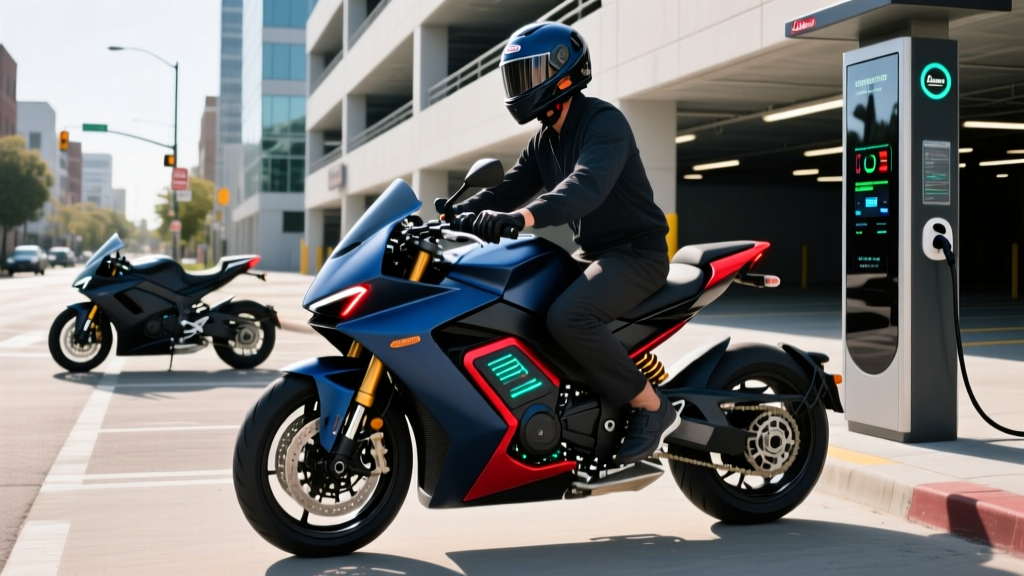
Street-legal electric motorcycles for adults are full-speed, DOT-compliant two-wheelers — not e-bikes or scooters. In 2026, the leading models deliver 60–160 miles of real-world range, charge in 1.5–4 hours on Level 2 (or 30–50 minutes on DC fast chargers where supported), and carry base prices from roughly $12,000 to $30,000. They eliminate fuel and most engine maintenance but introduce trade-offs: range drops 20–30% at sustained highway speeds or in cold weather, public motorcycle-compatible charging remains sparse, and insurance can run 10–20% higher than equivalent gas bikes. If you commute under 50 miles round-trip and can charge at home, an electric motorcycle is a compelling, lower-operating-cost alternative. If you regularly tour 200+ miles or lack home charging, a gas motorcycle or plug-in hybrid scooter may serve you better.
What Makes an Electric Motorcycle Street Legal?
Before shopping, it is essential to separate three vehicle categories that buyers frequently confuse:
- Electric motorcycles (street-legal): Two- or three-wheeled motor vehicles that meet all Federal Motor Vehicle Safety Standards (FMVSS), require registration, a motorcycle endorsement (M-class license), insurance, and a license plate. Examples: Zero SR/S, Energica Experia, LiveWire ONE.
- Electric scooters/mopeds: Lower-speed vehicles (typically under 30 mph) that may or may not require registration depending on state law. Often classified differently by NHTSA.
- E-bikes: Bicycle-class vehicles with pedal-assist or throttle up to 28 mph (Class 3), regulated as consumer products by the CPSC, not as motor vehicles.
This guide covers only the first category — full electric motorcycles that adults can legally ride on public roads with a standard motorcycle license. These bikes carry a 17-digit VIN, pass state inspection where required, and are insurable through major carriers.
Top 2026 Street-Legal Electric Motorcycles: Spec Comparison
Below is a data-driven comparison of the most widely available street-legal electric motorcycles for the 2026 model year. All range figures reflect real-world mixed riding; highway-only range at 70+ mph will be 20–35% lower due to aerodynamic drag and the absence of regenerative braking benefit at steady speed.
| Model | Battery (kWh) | Real-World Range (mi) | Peak Power (HP) | 0–60 mph (sec) | Level 2 Charge (0–100%) | DC Fast Charge | Base MSRP |
|---|---|---|---|---|---|---|---|
| Zero SR/S (2026) | 15.8 kWh (Z-Force Li-Ion NMC) | 82 city / 62 hwy | 110 HP | 3.3 | ~2.5 hrs (w/ Charge Tank) | ~1.0 hr (6 kW DC option) | $21,495 |
| Zero SR (2026) | 14.4 kWh | 90 city / 66 hwy | 80 HP | 3.6 | ~2.0 hrs (w/ Charge Tank) | Optional | $19,495 |
| Energica Experia Green Tourer | 22.5 kWh (NMC) | 120 city / 85 hwy | 102 HP | 3.5 | ~3.5 hrs | ~40 min (DC CCS) | $27,890 |
| LiveWire ONE (2026) | 15.4 kWh (NMC) | 95 city / 70 hwy | 105 HP | 3.0 | ~2.5 hrs | ~40 min (DC CCS) | $22,799 |
| Ryvid Anthem ST | 4.4 kWh (NMC) | 40–50 mixed | 60 HP | 3.5 | ~2.0 hrs | None | $7,995 |
Sources: Manufacturer spec sheets (2026 model year); fueleconomy.gov for EPA-equivalent efficiency data where available. Range figures reflect combined city/highway riding; highway-only range at sustained 70 mph will be 20–35% lower.
Electric vs. Gas Motorcycle: Real Cost Breakdown
The sticker price of an electric motorcycle is typically 30–60% higher than a comparable gas bike. The operating cost, however, is dramatically lower. Here is a 5-year/50,000-mile ownership comparison between a Zero SR ($19,495) and a Kawasaki Z650 (a popular midweight gas bike at ~$8,299):
| Cost Category (5 yr / 50,000 mi) | Zero SR (Electric) | Kawasaki Z650 (Gas) |
|---|---|---|
| Purchase price | $19,495 | $8,299 |
| Fuel / electricity | $1,100 (at $0.15/kWh avg) | $3,750 (at $3.75/gal, 45 mpg) |
| Oil changes | $0 | $600 (every 4,000 mi) |
| Chain/belt maintenance | $200 (belt drive) | $500 (chain lube/replace) |
| Brake pads | $150 (regen extends life) | $400 |
| Insurance (est.) | $4,200 | $3,500 |
| Total 5-year cost | $25,145 | $17,049 |
Key takeaway: The electric motorcycle saves roughly $2,650 in fuel and maintenance over five years, but the higher purchase price means you do not break even on operating savings alone. The value proposition is strongest for riders who prioritize instant torque, near-silent operation, zero tailpipe emissions in urban areas, and minimal maintenance — not pure cost parity.
Charging at Home: What You Actually Need
Unlike electric cars, most electric motorcycles charge on standard 120V (Level 1) out of the box, but it is slow — typically adding only 8–15 miles of range per hour. For practical daily use, a 240V Level 2 setup is strongly recommended.
Level 1 (120V Household Outlet)
- Power draw: ~0.6–1.3 kW
- Charge rate: ~8–15 miles of range per hour
- Full charge time: 8–14 hours depending on battery size
- Cost: $0 (included charger); no electrician needed
Level 2 (240V — NEMA 14-50 or hardwired)
- Power draw: 3.3–6.6 kW (varies by bike and onboard charger)
- Charge rate: ~40–80 miles of range per hour
- Full charge time: 1.5–4 hours
- Cost: $500–$1,500 for a dedicated 240V circuit installed by a licensed electrician (motorcycle charging draws less than an EV, so panel upgrades are rarely needed)
DC Fast Charging (where supported)
- Power draw: 6–22 kW (motorcycle DC rates are far lower than car rates)
- Charge rate: 10–80% in 30–50 minutes
- Availability: Energica and LiveWire support CCS Type 2 DC fast charging; Zero offers a proprietary 6 kW DC option. Public chargers with motorcycle-accessible cables remain limited — plan routes carefully using apps like PlugShare and filter for CCS/Type 2 connectors.
Common Misconceptions About Electric Motorcycles
| Myth | Fact |
|---|---|
| "They can't go highway speed." | Every model listed above exceeds 90 mph top speed. The Zero SR/S and LiveWire ONE both hit 124+ mph. |
| "You need a special license." | A standard state motorcycle endorsement (M-class) is all that is required — the same license you need for a gas motorcycle. |
| "The battery will die in 3 years." | Major manufacturers warranty their batteries for 5 years/unlimited miles (Zero, LiveWire) or 2 years/24,000 miles (Energica). Real-world degradation data from fleet riders shows 80–90% capacity retention at 50,000 miles with proper care (avoiding prolonged storage at 100% SoC or below 10%). |
| "They're silent so they're dangerous." | Electric motorcycles produce gear whine and wind/tire noise above 30 mph. At low speeds, some riders add an aftermarket sound device for pedestrian awareness — but this is a personal choice, not a legal requirement in most states. |
| "I qualify for the $7,500 federal tax credit." | The IRS §30D credit applies to 2- and 3-wheeled plug-in electric vehicles under separate rules: the credit is 10% of the purchase price up to $2,500, the vehicle must have a battery capacity of at least 2.5 kWh, and income/MSRP caps differ from the 4-wheel vehicle rules. Verify eligibility with a tax professional. |
| "Range is the same in winter." | Cold weather (below 40°F) reduces lithium-ion battery performance by 15–30%. A Zero SR rated for 90 city miles may deliver 60–70 miles at 25°F with heated grips drawing additional power. Preconditioning the battery (available on some models) helps mitigate this. |
Real-World Ownership: What First-Time Buyers Should Know
Beyond the spec sheet, these practical factors determine whether an electric motorcycle fits your life:
Home Charging Access Is Non-Negotiable
Public charging infrastructure for motorcycles is extremely limited. Unlike electric cars, you cannot rely on Electrify America or Tesla Supercharger stalls — cable routing, parking geometry, and connector placement are designed for cars. Plan on 95%+ of your charging happening at home. If you live in an apartment without garage outlet access, an electric motorcycle is not practical today.
Your Commute Distance Determines the Right Battery Size
- Under 30 miles round-trip: A smaller battery (4–10 kWh) like the Ryvid Anthem is sufficient and keeps cost under $8,000.
- 30–70 miles round-trip: A mid-size battery (14–16 kWh) like the Zero SR or LiveWire ONE provides comfortable daily range with reserve for errands.
- Over 70 miles round-trip or touring: The Energica Experia's 22.5 kWh pack and DC fast charging make it the only current option for longer rides, but plan charging stops carefully.
Insurance Costs More — Budget for It
Electric motorcycles carry 10–20% higher insurance premiums than equivalent gas bikes, driven by higher replacement cost and a smaller claims-data pool. Get a quote before purchasing. Some insurers (Progressive, GEICO) now offer specific EV two-wheeler policies; bundling with auto/home can reduce the premium gap.
Maintenance Is Minimal but Not Zero
Expect to maintain: tires (electric torque wears rear tires faster — budget for replacement every 6,000–10,000 miles), brake fluid (every 2 years), suspension service, and firmware updates. There are no oil changes, spark plugs, air filters, valve adjustments, or exhaust systems. Many owners report annual maintenance costs under $200 after the first year.
Decision Framework: Which Electric Motorcycle Fits You?
| Your Situation | Recommended Path |
|---|---|
| Urban commuter, <30 mi/day, budget-conscious | Ryvid Anthem ST or used Zero S — lowest entry cost, home charging sufficient |
| Suburban commuter, 40–70 mi/day, wants performance | Zero SR/S or LiveWire ONE — strong highway capability, Level 2 home charging covers daily needs |
| Weekend tourer, 100+ mi rides, needs DC fast charging | Energica Experia — largest battery, CCS DC fast charging, touring ergonomics |
| No home charging access (apartment/street parking) | Do not buy an electric motorcycle yet — infrastructure is not ready. Consider a gas bike or PHEV scooter. |
| Cold-climate rider (frequent rides below 30°F) | Size up your battery by 30% vs. your actual range need, or choose a gas motorcycle for winter months |
| First-time motorcyclist, no M endorsement yet | Complete your MSF course and get licensed first; then test-ride a Zero S or LiveWire ONE — both are beginner-friendly with adjustable power modes |
Federal Tax Credit for Electric Motorcycles: 2026 Rules
The IRS §30D clean vehicle credit includes provisions for 2- and 3-wheeled plug-in electric vehicles, but the rules differ significantly from the 4-wheel vehicle credit most buyers are familiar with:
- Credit amount: 10% of the purchase price, capped at $2,500 (not $7,500).
- Battery requirement: Minimum 2.5 kWh capacity (all street-legal models above qualify).
- Income caps: Same as 4-wheel vehicles — $150,000 single / $225,000 head of household / $300,000 joint filers (adjusted gross income).
- MSRP cap: There is no MSRP cap specific to 2/3-wheelers in the current rule, but confirm with a tax professional as IRS guidance has been updated multiple times since the Inflation Reduction Act.
- Point-of-sale transfer: As of 2024, eligible buyers can transfer the credit to the dealer at point of sale for an immediate price reduction, rather than waiting to claim it on their tax return.
Critical caveat: Tax credit rules change and IRS guidance evolves. Always verify your specific eligibility at irs.gov or with a qualified tax professional before making a purchase decision.
Frequently Asked Questions
Are electric motorcycles street legal in all 50 states?
Yes, provided the motorcycle has a valid VIN, meets FMVSS standards, and is properly registered and insured in your state. All major manufacturers (Zero, LiveWire, Energica) sell DOT-compliant, street-legal models nationwide. You will need a motorcycle endorsement on your driver's license.
How long do electric motorcycle batteries last before replacement?
Most manufacturers warranty batteries for 5 years with no mileage limit (Zero, LiveWire) or 2 years (Energica). Real-world data from high-mileage riders shows 80–90% state of health (SoH) at 50,000 miles when the battery is stored between 20–80% SoC and not regularly fast-charged to 100%. A full battery replacement, if ever needed, costs $3,000–$5,000 depending on the model.
Can I ride an electric motorcycle in the rain?
Yes. All street-legal electric motorcycles are IP-rated for water resistance and are designed for wet-weather riding. The battery, motor, and electronics are sealed. Ride as you would any motorcycle in rain — reduce speed, increase following distance, and avoid standing water deeper than the manufacturer's wading specification.
Do electric motorcycles have regenerative braking?
Yes, all major models feature adjustable regenerative braking that recovers energy during deceleration and extends range by 5–15% in stop-and-go city riding. At highway speeds, regen benefit is minimal. Some models (Zero, LiveWire) offer multiple regen levels selectable via the dash or smartphone app, and a "twist-and-go" one-motor mode for riders who prefer minimal engine braking feel.
Is it worth buying an electric motorcycle in 2026 or should I wait?
If your commute and charging situation fit the profile above, 2026 models from Zero, LiveWire, and Energica are mature, reliable products with proven battery platforms. Solid-state batteries and dramatically cheaper packs are still 3–5 years away for mass-market motorcycles. Buying now means 3–5 years of lower operating costs and zero tailpipe emissions in your city; waiting means riding a gas bike longer. For touring riders who need 200+ mile range, waiting for next-gen batteries is reasonable.