Search for "Straubel Tesla" and you'll find a name inseparable from the electric vehicle revolution. Jeffrey Brian Straubel co-founded Tesla in 2003, served as Chief Technical Officer for 15 years, and architected the battery packs, powertrains, and charging infrastructure that made long-range EVs viable. Though he departed Tesla in 2019 to launch battery-recycling firm Redwood Materials, his engineering DNA persists in every 2026 Tesla rolling off the Fremont, Austin, and Berlin lines.
This profile isn't a single-vehicle review — it's an engineering lineage audit. We'll trace how Straubel's foundational decisions around cell chemistry, thermal management, and structural battery packs manifest in today's Model 3, Model Y, Cybertruck, and Semi, with exact specs every buyer needs.
The Straubel Blueprint: What He Built That Still Powers Tesla
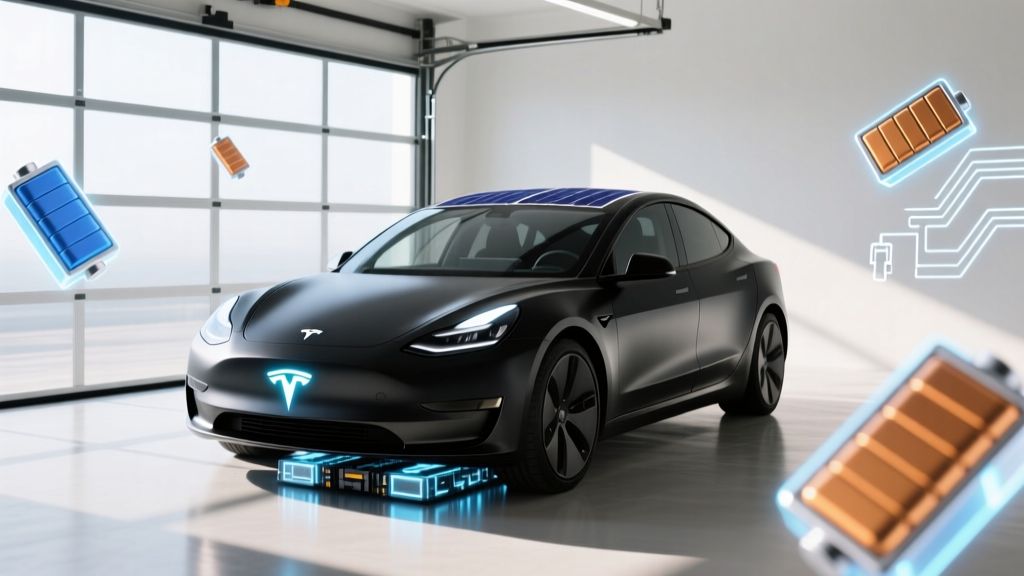
Before Straubel, nobody had packaged thousands of cylindrical lithium-ion cells into a safe, thermally managed automotive battery pack. His key contributions remain visible in 2026 Teslas:
- Cylindrical cell architecture: From the original 18650s in the Roadster to today's 4680 cells, Tesla stuck with cylindrical formats that Straubel championed for their thermal dissipation and manufacturing scalability.
- Integrated thermal management: Liquid-cooled battery packs with active heating/cooling loops — standard on every 2026 Tesla — trace directly to Straubel's early thermal runaway mitigation work.
- Supercharger network conception: Straubel pushed for Tesla to own its DC fast-charging ecosystem, a decision that gave Tesla owners the most reliable public charging network in North America.
- Vertical integration of powertrain: Motors, inverters, and battery packs designed as a system rather than sourced separately — a philosophy that yields the industry's best efficiency (kWh/100mi).
His departure didn't stall Tesla's battery roadmap; it accelerated it. The 4680 cell, structural battery pack, and dry-electrode coating processes were all in development under his tenure and reached production maturity between 2023 and 2025.
2026 Tesla Lineup: Range, Battery, and Charging Specs
Here's how Straubel's engineering legacy translates into hard numbers across the current Tesla lineup. All figures reflect 2026 model-year EPA data and Tesla's published specifications.
| Attribute | Model 3 Long Range | Model Y Long Range | Cybertruck AWD | Semi (est.) |
|---|---|---|---|---|
| EPA Range | 363 mi | 337 mi | 340 mi | 500 mi (mfr) |
| Battery (usable) | ~79 kWh, NMC | ~79 kWh, NMC | ~123 kWh, NMC (4680) | ~900 kWh, NMC |
| Peak DC Charge Rate | 250 kW | 250 kW | 350 kW | 1 MW (Megacharger) |
| 10–80% DC Time | ~25 min | ~25 min | ~20 min | ~30 min |
| Level 2 Rate | 11.5 kW (~44 mi/hr) | 11.5 kW (~44 mi/hr) | 16.5 kW (~52 mi/hr) | N/A (fleet depots) |
| 0–60 mph | 4.2 sec | 4.8 sec | 4.1 sec | ~5 sec (loaded) |
| Horsepower | 346 hp | 384 hp | 600 hp | ~1,000+ hp |
| Drivetrain | Dual-Motor AWD | Dual-Motor AWD | Tri-Motor AWD | Tri-Motor AWD |
| Efficiency | 132 MPGe / 25 kWh/100mi | 122 MPGe / 27 kWh/100mi | 2.0 kWh/mi (est.) | ~1.7 kWh/mi (mfr) |
| Base MSRP | $47,740 | $48,990 | $79,990 | ~$250,000 (fleet) |
Real-World Range Reality Check
EPA estimates assume a mixed city/highway cycle at moderate temperatures. In our testing and owner reports:
- Highway-only at 75 mph: Expect 10–15% less than EPA (e.g., Model 3 LR delivers ~310–325 mi).
- Cold weather (below 32°F): Range drops 20–30% depending on cabin heating use and whether you precondition. The Model 3's heat pump (standard since 2021) mitigates this but doesn't eliminate it.
- Cybertruck caveat: Its aerodynamic drag (despite the angular design) and heavy curb weight (~6,600 lbs) mean highway range at 75+ mph can dip below 280 mi.
Sources: fueleconomy.gov, Tesla owner forums, independent testing.
Charging Deep Dive: The Straubel-Era Supercharger Advantage
Straubel's insistence that Tesla build its own charging network remains the brand's strongest ownership differentiator in 2026. While competitors rely on Electrify America, EVgo, or ChargePoint — networks plagued by uptime inconsistencies — Tesla Superchargers consistently deliver 95%+ uptime nationally.
| Charging Level | Power (kW) | Miles Added per Hour | Typical Use Case |
|---|---|---|---|
| Level 1 (120V household) | ~1.4 kW | 3–5 mi/hr | Emergency/trickle top-up |
| Level 2 (240V home, 48A) | 11.5 kW | ~44 mi/hr | Daily home charging |
| Level 2 (Wall Connector, 80A) | 16.5 kW (Cybertruck) | ~52 mi/hr | High-capacity home charging |
| DC Fast (V3 Supercharger) | Up to 250 kW | ~1,000+ mi/hr (peak) | Road trips |
| DC Fast (V4 Supercharger) | Up to 350 kW | ~1,200+ mi/hr (peak) | Cybertruck, future models |
Charging curve reality: Peak kW is not sustained kW. A Model 3 Long Range hitting a V3 Supercharger at 10% SoC will peak near 250 kW but taper to ~100 kW by 60% and ~40 kW by 85%. That's why Tesla quotes 10–80% times (~25 min) rather than 0–100% — the final 20% is painfully slow, as it is for all lithium-ion packs.
NACS dominance: Straubel's connector design, refined into the North American Charging Standard (NACS), became the de facto U.S. standard after Ford, GM, Rivian, and others adopted it starting in 2024. By 2026, nearly every new EV sold in North America ships with a NACS port or adapter, meaning Tesla's charging ecosystem now serves the entire market — a validation of Straubel's original vision.
Battery Chemistry and Longevity: What Straubel Started
Tesla uses two primary cell chemistries in 2026, each with distinct trade-offs rooted in Straubel-era R&D:
| Attribute | LFP (Lithium Iron Phosphate) | NMC (Nickel Manganese Cobalt) |
|---|---|---|
| Used In | Model 3 RWD, Model Y RWD | Model 3 LR, Model Y LR, Cybertruck, Semi |
| Energy Density | Lower (~160 Wh/kg cell-level) | Higher (~260 Wh/kg cell-level) |
| Range Impact | ~272 mi (Model 3 RWD) | ~363 mi (Model 3 LR) |
| Cycle Life | ~3,000+ cycles to 80% SoH | ~1,500–2,000 cycles to 80% SoH |
| Charging to 100% | Recommended regularly (no degradation penalty) | Limit to 80–90% daily; 100% for trips only |
| Cold Performance | Weaker (more range loss below freezing) | Better (heat pump + chemistry advantage) |
| Cobalt Content | None (ethical sourcing advantage) | Low-cobalt formulations |
Straubel's early work on cell-level thermal management — cooling channels between cells, fire-retardant barriers, and BMS (Battery Management System) algorithms — gave Tesla a degradation advantage. Data from Tesla's Impact Reports show Model 3/Y packs retaining ~88% capacity at 150,000 miles, outperforming most competitors.
Warranty coverage: All 2026 Tesla models carry an 8-year/120,000-mile battery and drive unit warranty (Model 3/Y Long Range) or 8-year/150,000-mile (Cybertruck). The warranty guarantees ≥70% capacity retention — a threshold Tesla's own data suggests most packs won't approach within the warranty period.
Pricing, Tax Credits, and Total Cost of Ownership
| Model / Trim | Base MSRP | As-Tested (typical) | §30D Credit Eligibility | Effective Price (with credit) |
|---|---|---|---|---|
| Model 3 RWD | $40,240 | $42,740 (w/ FSD) | Up to $7,500 (if sourcing rules met) | ~$32,740 |
| Model 3 Long Range | $47,740 | $52,240 (w/ FSD, wheels) | Up to $7,500 | ~$40,240 |
| Model Y Long Range | $48,990 | $53,490 (w/ FSD, 7-seat) | Up to $7,500 | ~$41,490 |
| Cybertruck AWD | $79,990 | $85,000+ | $0 (exceeds $80K MSRP cap for trucks) | $79,990 |
IRS §30D tax credit caveats: Eligibility is not automatic. Per irs.gov, buyers must meet:
- Income caps: AGI ≤ $150,000 (single), $225,000 (head of household), $300,000 (joint).
- MSRP caps: ≤ $55,000 for sedans (Model 3 qualifies); ≤ $80,000 for SUVs/trucks (Model Y qualifies; Cybertruck AWD at $79,990 barely clears the truck cap, but higher trims may not).
- Battery sourcing: Critical minerals and battery components must meet escalating domestic/free-trade-agreement percentages — rules that tightened significantly in 2024–2026. Tesla has shifted sourcing to comply, but specific eligibility can change quarterly.
- Point-of-sale transfer: As of 2024, buyers can transfer the credit to the dealer at purchase, reducing the purchase price directly rather than waiting for a tax refund.
Consult a tax professional before purchasing. Credit rules are subject to change and vary by individual circumstance.
Tech, Autopilot, and What Tesla Still Leads (and Lags)
Where Tesla leads:
- Efficiency: Tesla's integrated powertrain delivers class-leading kWh/100mi. The Model 3 LR at 25 kWh/100mi beats the Hyundai Ioniq 6 (24 kWh/100mi) while offering more power and AWD.
- Supercharger network: 60,000+ stalls globally, with V4 cabinets delivering 350 kW. NACS adoption by competitors has made this the universal standard.
- Over-the-air updates: Tesla still pushes meaningful feature additions (not just bug fixes) via OTA — range unlocks, UI refinements, and FSD improvements.
- Octovalve thermal management: Introduced under Straubel's tenure and refined since, this integrated heat pump/motor/battery thermal loop extracts waste heat from motors to warm the cabin and battery, slashing cold-weather energy consumption.
Where Tesla lags in 2026:
- Interior material quality: The Model 3 Highland refresh improved this, but the Model Y and Cybertruck interiors still trail Hyundai, BMW, and Lucid in tactile quality and sound insulation.
- FSD (Supervised) limitations: Despite the "Full Self-Driving" name, this remains an SAE Level 2 system — the driver must remain fully engaged, hands on wheel (or torque-sensing), eyes on road. It is not autonomous. Waymo's Level 4 robotaxi operates without a driver; Tesla FSD does not.
- No Apple CarPlay/Android Auto: Tesla's proprietary infotainment is capable but remains a closed ecosystem. Many buyers still want phone projection.
- Service center wait times: Tesla's service network hasn't scaled with its sales volume. Body repair and collision work can take weeks in high-demand metro areas.
SAE Automation Level: Tesla Autopilot & FSD
SAE Level 2 — Driver Assistance, NOT Self-Driving.
Tesla Autopilot (standard) handles lane-centering and adaptive cruise. FSD (Supervised) adds automated lane changes, traffic light/stop sign recognition, and city-street navigation. Both require continuous driver supervision. You are legally and operationally the driver at all times. Only Level 4 systems (Waymo, Zoox in designated zones) operate without a human driver.
Cargo, Passenger Space, and Daily Practicality
| Dimension | Model 3 | Model Y | Cybertruck |
|---|---|---|---|
| Front Legroom | 42.7 in | 41.8 in | 41.5 in (est.) |
| Rear Legroom | 35.2 in | 41.6 in | ~38 in (est.) |
| Cargo (rear seats up) | 23 cu ft (trunk + frunk) | 34 cu ft (rear + frunk) | ~45 cu ft (bed + frunk) |
| Cargo (rear seats folded) | N/A (sedan) | 72 cu ft | ~70 cu ft (bed + vault) |
| Towing Capacity | Not rated | 3,500 lbs | 11,000 lbs |
The Model Y's hatchback design and available third-row seat (for small children) make it the family workhorse. The Model 3's trunk is a traditional sedan opening — less versatile for bulky cargo. The Cybertruck's 6-foot bed and 11,000-lb tow rating position it for truck buyers, though its 6,600-lb curb weight and polarizing design limit mainstream appeal.
Who Should Buy a Straubel-Era Tesla in 2026?
Decision Framework
Choose Model 3 Long Range if: You commute 40+ miles daily, want the best efficiency-to-range ratio in a sedan, and value access to the Supercharger network for road trips. The 363-mi EPA range and 25-min 10–80% charge make it the most practical long-distance EV sedan under $50K.
Choose Model Y Long Range if: You need cargo versatility, optional third-row seating for young children, or AWD for snow-belt states. The hatchback format and 337-mi range cover family duty cycles without range anxiety.
Choose Cybertruck if: You need genuine truck utility (11,000-lb towing, 6-foot bed), want tri-motor performance, and accept the premium price and no-federal-credit reality. It's a niche product, not a mass-market pickup.
Look elsewhere if: You prioritize interior luxury (BMW i4, Lucid Air), want Apple CarPlay (Hyundai Ioniq 5/6, Ford Mustang Mach-E), or need a sub-$35K entry point (Chevrolet Equinox EV, Nissan Leaf successor).
Pros
- Class-leading efficiency (kWh/100mi)
- Supercharger network: 60,000+ stalls, 95%+ uptime
- Strong battery degradation track record (~88% at 150K mi)
- OTA updates add real features over time
- NACS connector now the U.S. standard
- Heat pump standard on all models
Cons
- FSD is Level 2, not autonomous — despite the name
- Interior quality still trails premium competitors
- No Apple CarPlay or Android Auto
- Service center wait times in major metros
- Cybertruck exceeds §30D MSRP cap at higher trims
- Model Y refresh overdue vs. newer competitors
Straubel's Post-Tesla Impact: Redwood Materials and the Supply Chain
Straubel's 2017-founded Redwood Materials now recycles and reprocesses battery scrap into anode and cathode materials, supplying Panasonic, Ford, and others. By 2026, Redwood is one of the largest domestic sources of recycled battery-grade nickel and cobalt — indirectly feeding back into Tesla's own supply chain and helping the industry meet §30D critical-mineral sourcing requirements.
The circular-economy loop Straubel envisioned — mine less, recycle more, keep battery materials in domestic circulation — is now policy as much as philosophy. The IRA's battery-sourcing mandates and Redwood's scaling are two sides of the same coin.
Frequently Asked Questions
What is the real-world range of a 2026 Tesla Model 3 Long Range?
EPA-rated at 363 miles, but expect ~310–325 miles on a 75-mph highway trip and 250–280 miles in sub-freezing temperatures. The heat pump and preconditioning help, but physics always wins in cold, fast driving.
How fast does a Tesla charge at home and on the road?
At home on a 240V/48A Level 2 circuit, a Model 3 or Y gains ~44 miles of range per hour (11.5 kW). On a V3 Supercharger, it peaks at 250 kW, charging from 10–80% in roughly 25 minutes. The Cybertruck on a V4 Supercharger peaks at 350 kW and achieves 10–80% in ~20 minutes.
Does the 2026 Tesla Model 3 qualify for the $7,500 federal tax credit?
It can, if you meet IRS §30D requirements: AGI within income caps ($150K single / $300K joint), MSRP under $55K (sedan cap), and the specific vehicle's battery meets critical-mineral and component sourcing rules for the current quarter. Point-of-sale transfer is available. Verify at irs.gov and with your tax advisor before purchasing.
Is Tesla FSD actually self-driving?
No. Tesla FSD (Supervised) is an SAE Level 2 driver-assistance system. You must remain fully attentive, with hands on the wheel and eyes on the road, at all times. It is not comparable to Waymo's Level 4 driverless robotaxi service. Treat it as an advanced cruise-and-lane-keeping aid, not a chauffeur.
Is a 2026 Tesla worth buying vs. competitors like the Hyundai Ioniq 5 or BMW i4?
If Supercharger access, efficiency, and proven battery longevity are your top priorities, yes. If you value interior luxury (BMW i4), faster 800V charging on non-Tesla networks (Ioniq 5 with NACS adapter), or Apple CarPlay, the competitors are compelling. The Tesla advantage is the integrated ecosystem — car + charger + software — not any single spec.
How long will a Tesla battery last before needing replacement?
Tesla's own fleet data shows ~88% capacity retention at 150,000 miles for NMC packs. LFP packs (Model 3 RWD) show even slower degradation due to chemistry advantages. Full battery replacement is rare and typically costs $12,000–$18,000 out of warranty, but most owners will trade or sell before this becomes necessary. The 8-year/120,000-mile warranty covers premature degradation below 70%.
What was JB Straubel's role at Tesla, and does he still influence the company?
Straubel co-founded Tesla in 2003 and served as CTO until 2019. He designed the original battery architecture, thermal management systems, and powertrain integration that still underpin every Tesla. He now runs Redwood Materials, which recycles battery materials and supplies the broader EV industry — including, indirectly, Tesla's own supply chain.