What Are Stealth Electric Vehicles?
Stealth electric vehicles are battery-electric cars designed with conventional, non-futuristic styling that doesn't immediately signal "EV" to onlookers. Unlike the polarizing designs of the Tesla Cybertruck, Hyundai Ioniq 5, or BMW iX, stealth EVs blend into traffic with traditional sedan, SUV, or truck proportions. For buyers who want electric powertrain benefits — instant torque, low running costs, minimal maintenance — without the futuristic aesthetic or unwanted attention, these models offer the best of both worlds. Top stealth EV picks for 2026 include the BMW i4, Hyundai Ioniq 6, Ford F-150 Lightning, and the Volvo EX90.
Why Stealth EVs Matter: The Case for Understated Electrification
Not every EV buyer wants their car to announce its powertrain to the world. Market research consistently shows that a significant segment of potential EV adopters cite "futuristic styling" as a deterrent. Stealth electric vehicles solve this by packaging advanced battery-electric platforms inside body styles that read as conventional luxury sedans, mainstream SUVs, or full-size trucks.
The appeal is practical as much as aesthetic. A stealth EV parked in a corporate lot, a suburban driveway, or a rural job site doesn't invite the questions, opinions, or charging-cable curiosity that a Cybertruck or Ioniq 5 might. For fleet buyers, company-car drivers, and anyone who prefers their vehicle choices to remain private, the stealth EV category fills a real gap.
From a performance standpoint, these vehicles sacrifice nothing. The BMW i4 M50, for example, delivers 536 horsepower and a 3.7-second 0-60 mph time while wearing a body that's nearly indistinguishable from the gasoline 4 Series Gran Coupe. The Ford F-150 Lightning looks like any other F-150 on the road — until you feel the 580 lb-ft of instant torque.
Top Stealth Electric Vehicles for 2026: Specs at a Glance
| Model | EPA Range | Battery (kWh) | Peak DC Charge (kW) | 10-80% Time | 0-60 mph | Base MSRP |
|---|---|---|---|---|---|---|
| BMW i4 eDrive40 | 307 mi | 81.5 kWh (NMC) | 205 kW | ~31 min | 5.5 sec | $57,900 |
| BMW i4 M50 | 269 mi | 81.5 kWh (NMC) | 205 kW | ~31 min | 3.7 sec | $70,700 |
| Hyundai Ioniq 6 SE | 361 mi | 77.4 kWh (NMC) | 235 kW | ~18 min | 5.1 sec | $42,750 |
| Ford F-150 Lightning XLT | 240 mi (std) / 320 mi (ext) | 98 / 131 kWh (NMC) | 150 kW | ~38 min (ext) | 4.0 sec (ext) | $54,995 |
| Volvo EX90 Twin Motor | 310 mi | 111 kWh (NMC) | 250 kW | ~28 min | 4.7 sec | $79,995 |
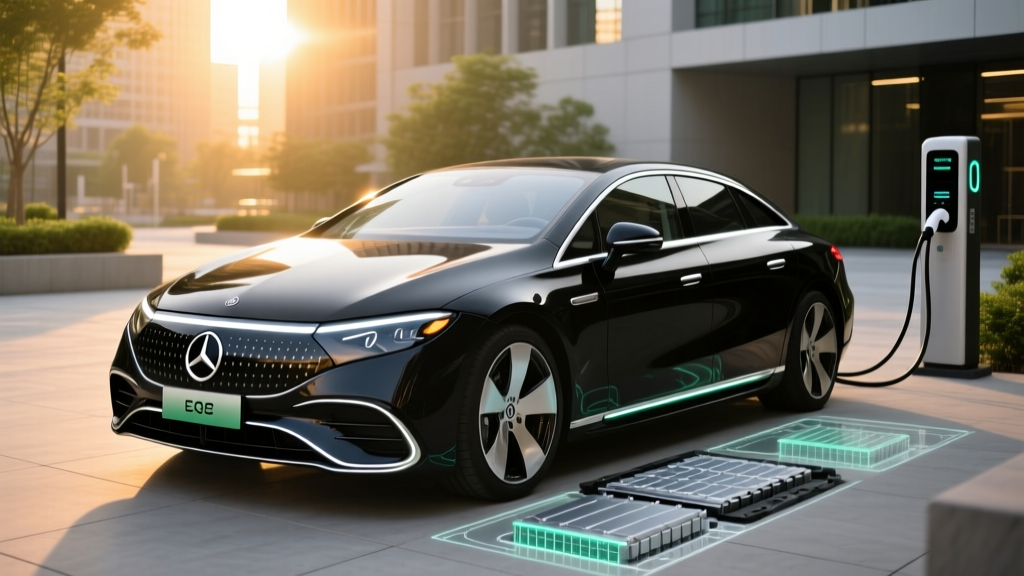
| Mercedes-Benz EQE 350+ | 305 mi | 90.6 kWh (NMC) | 170 kW | ~32 min | 6.2 sec | $71,900 |
Real-world range note: EPA figures assume mixed driving at moderate temperatures. Expect 15-25% range reduction in sustained highway driving above 70 mph, and 20-35% loss in freezing temperatures (below 30°F). The Hyundai Ioniq 6 SE's 361-mile EPA rating, for instance, translates to roughly 280-300 miles on a flat 75-mph highway run in 50°F weather, and closer to 240 miles in 15°F conditions. The Ioniq 6's heat pump (standard on all trims) helps mitigate cold-weather losses compared to EVs without active battery thermal preconditioning.
Stealth EV vs. Gasoline Equivalent: Cost and Performance Comparison
The most common question from stealth EV shoppers: how does the electric version stack up against the gasoline model it visually mimics? Below is a head-to-head comparison of the BMW i4 eDrive40 against the BMW 430i Gran Coupe — nearly identical exterior dimensions, vastly different powertrains.
| Metric | BMW i4 eDrive40 (EV) | BMW 430i Gran Coupe (Gas) |
|---|---|---|
| Base MSRP | $57,900 | $49,900 |
| Horsepower | 335 hp | 255 hp |
| 0-60 mph | 5.5 sec | 5.8 sec |
| EPA Range / Tank Range | 307 mi | ~410 mi (16 gal @ 26 mpg combined) |
| Fuel/Energy Cost per Mile | $0.04-$0.06 (home L2) | $0.14-$0.16 (gas at $3.50/gal) |
| Annual Fuel/Energy (15,000 mi) | $600-$900 | $2,100-$2,400 |
| Estimated Annual Maintenance | $300-$500 | $800-$1,200 |
| §30D Federal Tax Credit | Up to $7,500 (see eligibility) | $0 |
The i4 commands roughly $8,000 more at MSRP, but the IRS §30D federal tax credit can close that gap significantly — if the buyer meets income caps ($150K single / $300K joint), the vehicle's MSRP doesn't exceed the sedan cap of $55,000 (which the i4 eDrive40's base price slightly exceeds, making credit eligibility trim-dependent), and the battery meets critical-mineral and component sourcing requirements. Always verify current-year eligibility on the IRS website or with a tax professional before purchasing.
Where the i4 wins decisively: running costs. Over five years and 75,000 miles, the i4 saves approximately $7,500-$9,000 in fuel and maintenance alone, according to EPA fueleconomy.gov estimates. Factor in the tax credit, and the total cost of ownership can undercut the gasoline 430i before the loan term ends.
Real Ownership Costs: 5-Year Breakdown
| Cost Category | Hyundai Ioniq 6 SE (EV) | Toyota Camry SE (Gas Baseline) |
|---|---|---|
| Purchase Price (MSRP) | $42,750 | $30,500 |
| Federal Tax Credit (est.) | -$7,500* | $0 |
| Effective Purchase Price | $35,250 | $30,500 |
| 5-Year Energy/Fuel (75K mi) | $3,000-$4,500 | $8,500-$10,000 |
| 5-Year Maintenance | $1,500-$2,500 | $3,500-$5,000 |
| 5-Year Insurance (avg) | $9,500-$12,000 | $7,000-$9,000 |
| Estimated 5-Year Depreciation | $18,000-$22,000 | $12,000-$15,000 |
| 5-Year Total Cost of Ownership | $69,750-$76,250 | $61,500-$69,500 |
*§30D credit eligibility depends on battery sourcing, buyer income, and MSRP caps. Verify at irs.gov before purchase. Point-of-sale transfer is available from participating dealers.
The numbers reveal a nuanced picture. The Ioniq 6 still carries a modest TCO premium over the Camry, primarily due to higher insurance costs (EVs average 15-25% higher premiums due to repair costs and parts pricing) and steeper depreciation in the current market. However, the gap has narrowed considerably from 2022 levels, and for buyers with home charging access in moderate climates, the energy savings alone can tip the balance — especially as utility rates remain more stable than gasoline prices.
Charging Stealth EVs: What First-Time Buyers Need to Know
The most critical ownership variable for any EV — stealth or otherwise — is charging access. Here's the reality for the models in this segment:
Charging Speeds Explained: kW vs. kWh
kW (kilowatts) measures charging power — how fast energy flows into the battery. kWh (kilowatt-hours) measures battery capacity — how much energy the battery stores. A 77.4 kWh battery charged at 235 kW (peak) will not charge in 20 minutes, because peak rate only applies at low state of charge. The charge curve tapers significantly above 80% SoC to protect battery chemistry. This is why manufacturers quote 10-80% times, not 0-100%.
| Charging Level | Power (kW) | Miles Added per Hour | Typical Use Case |
|---|---|---|---|
| Level 1 (120V outlet) | 1.2-1.9 kW | 3-5 mi/hr | Overnight trickle; emergency backup |
| Level 2 (240V home/public) | 7.2-19.2 kW | 25-60 mi/hr | Daily home charging; workplace |
| DC Fast Charging | 50-350 kW | 150-800+ mi/hr (peak) | Road trips; rapid top-ups |
Home charging installation costs for a Level 2 (240V, 48-amp) wall connector typically run $800-$2,500 for the equipment and electrician labor if your panel has spare capacity. If a panel upgrade from 100A to 200A is needed, add $1,500-$3,500. Most stealth EV owners charge at home nightly, waking to a full battery — the equivalent of a full gas tank every morning for roughly $0.04/mile versus $0.15/mile for gasoline.
For apartment dwellers or those without garage access, stealth EVs on public charging face the same infrastructure realities as any EV: reliability varies by network (Tesla Supercharger remains the most consistent, now accessible to NACS-equipped non-Teslas; Electrify America and EVgo cover CCS vehicles), and costs range from $0.30-$0.55/kWh at public DC fast chargers — eroding the cost advantage over gasoline. If you cannot charge at home, a PHEV (plug-in hybrid) may be a more pragmatic choice until charging access improves.
Common Misconceptions About Stealth EVs
| Myth | Fact |
|---|---|
| "They're just gas cars with batteries bolted in" | Modern stealth EVs like the i4 and EX90 use dedicated EV architectures (BMW's CLAR, Volvo's SPA2) with skateboard battery packs, low centers of gravity, and optimized weight distribution. They're engineered as EVs first. |
| "You lose too much range in winter" | Cold-weather range loss is real (20-35%), but vehicles with heat pumps (Ioniq 6, EX90) and battery preconditioning recover significantly. A 361-mile Ioniq 6 still delivers ~240 miles in freezing weather — adequate for most daily driving. |
| "Battery replacement will cost a fortune" | All EVs sold in the US carry a federally mandated minimum 8-year/100,000-mile battery warranty (10 years/150,000 miles in CARB states). Real-world degradation data from NHTSA and fleet studies show most NMC batteries retain 85-92% capacity after 100,000 miles. Full replacement costs $10,000-$20,000 but is rarely needed within typical ownership periods. |
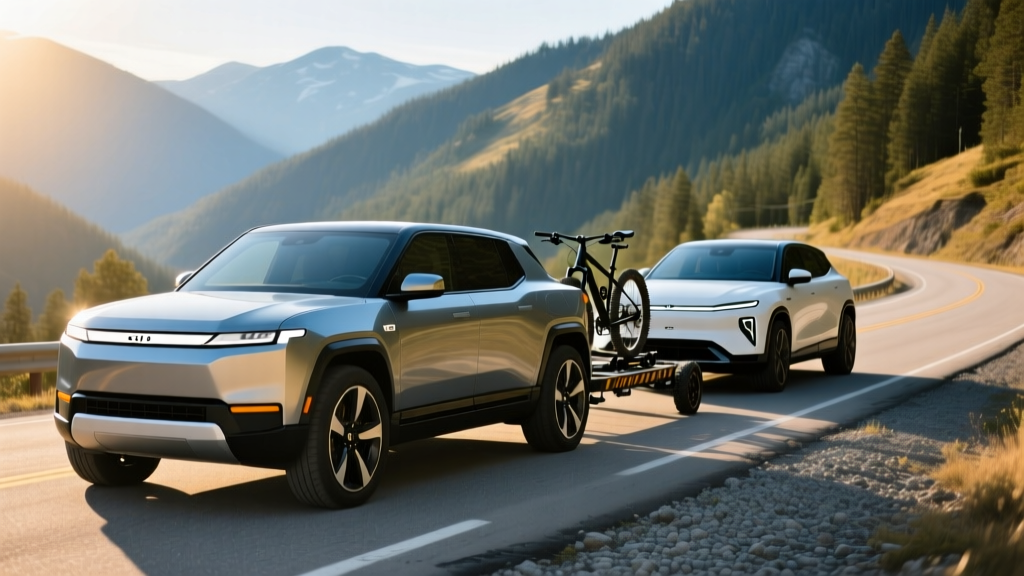
| "They can't tow or handle real work" | The F-150 Lightning tows up to 10,000 lbs (with Max Trailer Tow package) and offers 2.0 kW of Pro Power Onboard (up to 9.6 kW available), making it a legitimate work truck. Towing does cut range roughly 40-50%, a real limitation for long-distance hauling. |
| "I'll qualify for the full $7,500 tax credit" | §30D credit eligibility depends on your adjusted gross income (caps: $150K single, $225K head of household, $300K joint), vehicle MSRP limits ($55K for sedans, $80K for SUVs/trucks), and battery sourcing requirements that change annually. Many stealth EVs in the luxury segment exceed MSRP caps. Always check current IRS guidance. |
Decision Framework: Is a Stealth EV Right for You?
Choose a Stealth EV If:
- You have reliable home Level 2 charging access (garage or driveway with 240V)
- Your daily commute is under 80 miles round-trip (covers 90%+ of US drivers)
- You prefer conventional vehicle styling and don't want your car to be a conversation starter
- You value low running costs and instant torque but don't want a "tech-bro" image
- You live in a moderate climate or are willing to accept 20-30% winter range reduction
- You want a sedan, conventional SUV, or full-size truck — not a crossover with a "spaceship" design
Look at a PHEV or Gas Car Instead If:
- You live in an apartment or condo with no charging access and no realistic path to installing a Level 2 charger
- You regularly drive 300+ miles in a single day through areas with sparse DC fast-charging infrastructure
- Your budget is under $35,000 (stealth EVs currently start in the low $40K range before credits)
- You tow heavy loads over long distances frequently (range loss makes this impractical for pure EVs today)
- Insurance premiums in your area push EV ownership costs beyond your comfort level — get quotes before committing
Frequently Asked Questions
Are stealth EVs less technologically advanced than futuristic-looking EVs?
No. The BMW i4 shares its CLAR platform engineering with the more visually dramatic iX, including the same battery chemistry, thermal management, and infotainment architecture. The Volvo EX90 includes LiDAR-based safety systems, a Snapdragon Cockpit Platform, and bidirectional charging capability. The exterior styling is a design choice, not a technology compromise.
Which stealth EV has the best real-world range?
The Hyundai Ioniq 6 SE leads this group at 361 miles EPA, which translates to roughly 280-300 miles in real-world highway driving at moderate temperatures. Its 0.21 drag coefficient is among the lowest of any production car, which directly improves highway efficiency. For cold climates, the Ioniq 6's standard heat pump and battery preconditioning (activate via navigation to a DC charger) help maintain charging speed and range.
Do stealth EVs hold their resale value?
EV depreciation has been steeper than gasoline vehicles in 2024-2026, driven by price wars, rapid battery improvement cycles, and shifting tax credit rules. Expect 45-55% depreciation over 5 years for most stealth EVs, compared to 35-45% for comparable gasoline sedans. The gap is narrowing as the EV market matures, but buyers should factor this into TCO calculations. Leasing can mitigate depreciation risk.
Can I charge a stealth EV at Tesla Superchargers?
It depends on the connector. Ford has transitioned the F-150 Lightning to the NACS (North American Charging Standard) connector, granting access to the Supercharger network with a Tesla-approved adapter or native NACS port on newer builds. BMW and Mercedes models currently use CCS1 and require a Tesla-approved CCS-to-NACS adapter (check Tesla's compatibility list before purchasing). Hyundai's Ioniq 6 uses CCS1; the brand has announced NACS adoption for future model years. Verify your specific model year and connector before relying on Supercharger access.
What's the cheapest stealth EV available today?
The Hyundai Ioniq 6 SE at $42,750 MSRP is the most affordable in this segment, and with the $7,500 §30D credit (if eligible), the effective price drops to roughly $35,250. The BMW i4 eDrive40 starts at $57,900 but exceeds the $55,000 sedan MSRP cap for the federal credit on most trims, making the Ioniq 6 the value leader for credit-eligible buyers.