Starting a Tesla: What New Owners Need to Know
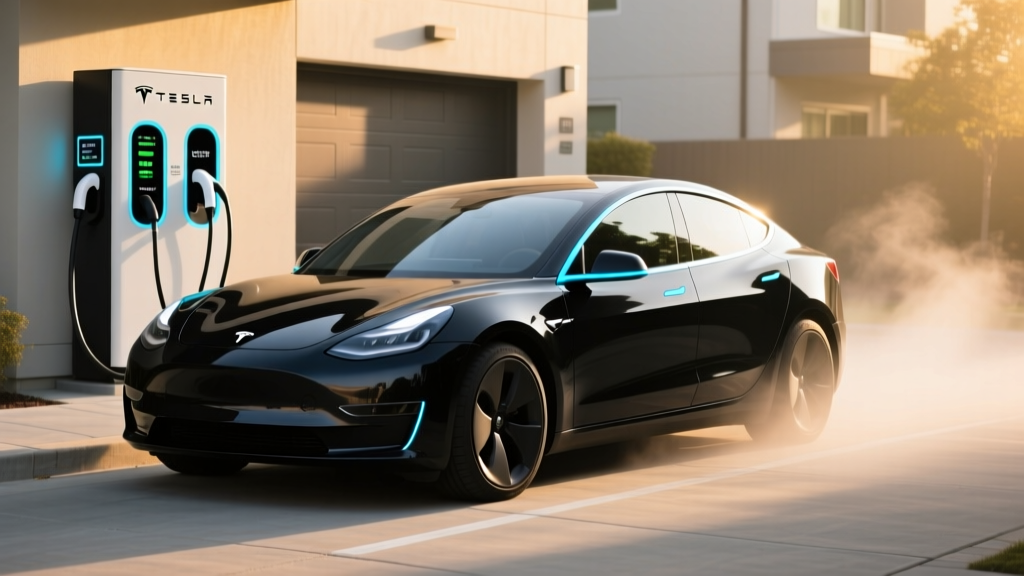
If you've just taken delivery of a Tesla—or are seriously considering one—the first question is often surprisingly simple: how do you actually start it? Unlike a traditional car, there's no ignition button, no key to turn, and no engine rumble to confirm it's ready. When you sit in a Tesla Model 3 with your phone-as-key or key card detected, the car is already "on." You press the brake pedal, select Drive on the right-side stalk, and go. The instrument cluster (a single center screen in the Model 3) lights up with speed, range, and navigation. That's your cue.
But starting the car is the easy part. Understanding what you're getting into—real-world range, charging logistics, total cost after incentives, and how the Model 3 stacks up against rivals—is where the real homework begins. This guide covers the 2026 Tesla Model 3 lineup with the exact numbers you need to decide.
2026 Tesla Model 3: Quick Specs at a Glance
| Spec | Model 3 RWD | Model 3 Long Range AWD | Model 3 Performance |
|---|---|---|---|
| EPA Range | 342 mi | 363 mi | 315 mi |
| Battery (usable) | ~60 kWh (LFP) | ~75 kWh (NMC) | ~75 kWh (NMC) |
| Drivetrain | Rear-Wheel Drive | Dual-Motor AWD | Dual-Motor AWD |
| Horsepower | 271 hp | 346 hp | 510 hp |
| 0-60 mph | 5.8 sec | 4.1 sec | 2.9 sec |
| Peak DC Fast Charge | 170 kW | 250 kW | 250 kW |
| 10-80% DCFC Time | ~25 min | ~22 min | ~22 min |
| Level 2 Home Charge | 11.5 kW (~44 mi/hr) | 11.5 kW (~44 mi/hr) | 11.5 kW (~44 mi/hr) |
| MPGe (combined) | 132 MPGe | 125 MPGe | 115 MPGe |
| Base MSRP | $38,990 | $44,990 | $52,990 |
Source: EPA fueleconomy.gov, Tesla.com (2026 model year). All prices exclude destination fee ($1,390).
Real-World Range: What the EPA Sticker Doesn't Tell You
Range in any EV is a function of speed, temperature, elevation, and climate control use. Tesla's heat pump (standard on all 2026 Model 3 trims) significantly reduces cold-weather cabin heating draw compared to resistive heaters, but battery chemistry itself slows in the cold. The LFP (lithium iron phosphate) pack in the RWD trim is more tolerant of daily 100% charging—Tesla actually recommends charging LFP to full at least once a week for calibration. The NMC packs in the Long Range and Performance benefit from staying between 20-80% for daily use, reserving 100% for road trips.
Efficiency translates to roughly 25-28 kWh per 100 miles for the Long Range AWD in mixed driving, which at the U.S. average residential electricity rate of $0.17/kWh works out to about $4.25-$4.76 per 100 miles—roughly a quarter of what a 30-MPG gas sedan costs at $3.50/gallon.
Charging Speed: DC Fast, Home, and the Curve Reality
| Charging Level | Power / Rate | Miles Added | Best For |
|---|---|---|---|
| Level 1 (120V) | ~1.4 kW | ~5 mi/hr | Emergency / overnight trickle |
| Level 2 (240V, 48A) | 11.5 kW | ~44 mi/hr | Daily home charging |
| DC Fast (V3 Supercharger) | Peak 250 kW | ~175 mi in 15 min | Road trips |
| DC Fast (V4 Supercharger) | Peak 250+ kW | ~200 mi in 15 min | Road trips (newer stations) |
A critical nuance: peak kW is not sustained kW. The Long Range and Performance trims hit 250 kW only at a low state of charge (roughly 10-20%) and taper progressively. By 50% SoC, you're likely at ~120 kW; by 80%, perhaps 60 kW. That's why the 10-80% metric matters more than peak numbers—22 minutes for the AWD trims is competitive, though not class-leading (the Hyundai Ioniq 6 and Porsche Taycan can shave a few minutes off).
At home, a Level 2 wall connector on a 60-amp circuit (48 amps continuous) replenishes roughly 44 miles of range per hour of charging. An overnight session of 8 hours easily refills even the Long Range's 75-kWh pack. Installation typically runs $800-$2,000 depending on panel proximity and local permit requirements—hire a licensed electrician and confirm your panel has headroom for a 60-amp breaker.
Tesla's Supercharger network remains the most reliable public charging ecosystem in the U.S., with over 25,000 stalls. The 2026 Model 3 uses the NACS (North American Charging Standard) connector natively—no adapter needed. Non-Tesla networks (Electrify America, EVgo) require a NACS-to-CCS adapter, available from Tesla for ~$250.
Pricing, Trims, and Federal Tax Credit Eligibility
| Trim | Base MSRP | + Destination | Est. After §30D Credit |
|---|---|---|---|
| Model 3 RWD | $38,990 | $40,380 | ~$32,880* |
| Model 3 Long Range AWD | $44,990 | $46,380 | ~$38,880* |
| Model 3 Performance | $52,990 | $54,380 | ~$46,880* |
*Assumes full $7,500 §30D credit eligibility. Actual credit depends on buyer income, battery sourcing, and point-of-sale transfer rules. Verify at IRS.gov.
The federal EV tax credit under IRS §30D is not automatic. To qualify for the full $7,500 in 2026:
- MSRP cap: Sedans must be under $55,000. The RWD and Long Range qualify; the Performance ($52,990 + destination = $54,380) clears the cap but leaves minimal headroom for options.
- Buyer income cap: Modified AGI must not exceed $150,000 (single), $225,000 (head of household), or $300,000 (joint).
- Battery sourcing: A percentage of critical minerals and battery components must be sourced from the U.S. or FTA-partner countries. Tesla's U.S.-built Model 3 has historically met these thresholds, but the exact qualifying amount ($3,750 vs. $7,500) can shift with supply chain changes. Check the DOE's qualifying vehicle list before purchasing.
- Point-of-sale transfer: As of 2024, buyers can transfer the credit to the dealer at purchase, reducing the upfront price rather than waiting for a tax refund. This applies in 2026.
Interior, Cargo, and Daily Livability
The Model 3's minimalist cabin is polarizing—everything routes through the 15.4-inch center touchscreen, including climate controls, glovebox release, and mirror adjustments. There is no traditional instrument cluster behind the steering wheel. For 2026, Tesla added a rear-seat 8-inch display for climate and media, partially addressing a longstanding complaint.
Dimensions that matter:
- Cargo (trunk + frunk): 23 cu ft trunk + 3.1 cu ft front trunk = 26.1 cu ft total
- Rear legroom: 35.2 inches (adequate for adults under 6'0", tight for taller passengers)
- Front headroom: 40.3 inches
- Curb weight: 3,862 lbs (RWD) to 4,065 lbs (Performance)
The glass roof creates an airy feel but does reduce headroom with the seat raised and offers no shade option beyond the factory tint. In hot climates, owners frequently add an aftermarket sunshade. The 649-liter trunk is practical for two large suitcases plus carry-ons; the 40/60 split-folding rear seat handles longer items.
Tech, Autopilot, and What FSD Actually Does
Every 2026 Model 3 ships with Basic Autopilot: lane-centering and adaptive cruise control on highways. This is a SAE Level 2 system—you must keep hands on the wheel and eyes on the road. Tesla monitors engagement via a steering-wheel torque sensor and cabin camera.
Full Self-Driving (Supervised) remains an $8,000 option (or $99/month subscription as of early 2026). It adds automatic lane changes, traffic light/stop sign recognition, and city-street navigation. Real-world performance varies significantly by geography and conditions—it handles well-mapped suburban arterials competently but still requires active supervision in construction zones, heavy rain, and complex intersections. It is not a substitute for an attentive driver.
The infotainment system is snappy and integrates Spotify, Apple Music, and podcasts natively. There is no Apple CarPlay or Android Auto—a dealbreaker for some buyers accustomed to phone-mirroring. Navigation, trip planning, and Supercharger routing are built in and work well.
Pros and Cons
Pros
- Class-leading Supercharger network access (25,000+ stalls, NACS native)
- LFP battery on RWD allows daily 100% charging without degradation concern
- Strong efficiency: 132 MPGe combined (RWD) keeps per-mile cost low
- Over-the-air updates add features post-purchase
- Competitive 0-60 times across all trims (2.9 sec on Performance)
- Heat pump standard — better cold-weather range retention
Cons
- No Apple CarPlay / Android Auto
- Rear seat is tight for tall adults (35.2" legroom)
- All controls on touchscreen — steep learning curve, distracting while driving
- RWD's 170 kW peak DCFC is slower than rivals (Ioniq 6: 240 kW, 10-80% in ~18 min)
- Build quality improved but still inconsistent vs. legacy luxury brands
- Insurance premiums often 20-30% higher than comparable gas sedans
Who Should Buy the 2026 Model 3?
Choose the Model 3 RWD if: You commute under 60 miles daily, can charge at home, and want the lowest entry price (~$32,880 after credit). The LFP battery's tolerance for full charges makes it ideal for predictable daily routines.
Choose the Model 3 Long Range AWD if: You take regular road trips (300+ miles), live in a region with cold winters, or need dual-motor traction in rain/snow. The 363-mile EPA range and 250 kW DCFC capability make it the most versatile trim.
Choose the Model 3 Performance if: Acceleration thrills matter (2.9 sec 0-60), and you're willing to trade ~50 miles of range for it. Watch the $55K MSRP cap carefully—adding FSD or premium paint can push you over the tax-credit threshold.
Look elsewhere if: You need Apple CarPlay, frequently carry tall rear-seat passengers, or want the steering-wheel buttons and physical controls of a Hyundai Ioniq 6, BMW i4, or Polestar 2.
Warranty and Long-Term Ownership
Tesla's warranty structure:
- Basic vehicle: 4 years / 50,000 miles
- Battery & drive unit (RWD): 8 years / 100,000 miles
- Battery & drive unit (Long Range/Performance): 8 years / 120,000 miles
- Capacity retention threshold: 70% during the warranty period
Real-world degradation data from fleet studies (including Tesla's own impact reports) show Model 3 batteries retaining approximately 88-90% capacity at 100,000 miles. LFP packs tend to degrade more slowly in calendar life but can show more variance in state-of-charge estimation. Out-of-warranty battery replacement costs range from $12,000-$16,000 depending on pack size—rare but worth noting for second owners.
Frequently Asked Questions
How do you start a Tesla Model 3?
There is no start button. With your phone key or key fob detected, press the brake pedal and pull the drive stalk toward you. The car is ready to move. To "turn off," park and walk away—the car powers down automatically.
What is the real-world range of the 2026 Model 3?
The EPA rates the Long Range AWD at 363 miles, but expect ~290-310 miles on highway road trips at 70-75 mph and ~250-270 miles in freezing weather. The RWD's 342-mile EPA rating translates to ~270 highway miles in fair conditions.
How fast does the Model 3 charge at home and on the road?
At home on a Level 2 (240V, 48A) charger, all trims add about 44 miles per hour. On a V3 Supercharger, the Long Range and Performance peak at 250 kW and charge 10-80% in approximately 22 minutes. The RWD peaks at 170 kW, taking about 25 minutes for 10-80%.
Does the 2026 Tesla Model 3 qualify for the $7,500 federal tax credit?
The RWD ($38,990) and Long Range ($44,990) fall under the $55,000 sedan MSRP cap. The Performance ($52,990) qualifies but is close to the limit. Buyer income must not exceed $150K single / $300K joint. Battery sourcing rules apply—verify current eligibility on IRS.gov before purchasing.
Is the Model 3 worth buying over the Hyundai Ioniq 6 or BMW i4?
The Model 3 wins on Supercharger access, efficiency, and software. The Ioniq 6 offers faster DC charging (10-80% in ~18 min), Apple CarPlay, and a more conventional interior. The BMW i4 provides premium build quality and physical controls at a higher price. Your priority—charging network vs. interior ergonomics—should drive the decision.
Is Tesla's Full Self-Driving worth $8,000?
FSD (Supervised) is a Level 2 driver-assist, not autonomous driving. It handles many highway and suburban scenarios well but requires constant supervision. Most buyers are better served by the included Basic Autopilot for highway commuting and subscribing to FSD ($99/month) only when they want to test it or need it for specific trips.