Quick Answer: The Stark Varg electric dirtbike is not a street-legal EV and does not qualify for the federal §30D tax credit. It's an off-road competition motorcycle starting around $13,190 (Alpha 80 HP model). Expect 30–45 minutes of hard motocross riding or up to 6 hours of light trail use per charge from its 6.0 kWh battery. For riders who need zero noise (private land access, indoor events, noise-restricted trails) and instant torque, it's a compelling tool. For casual weekend riders who need 100+ mile range or highway capability, a gas dirt bike or a street-legal electric motorcycle remains the practical choice.
What the Stark Varg Actually Is (And Isn't)
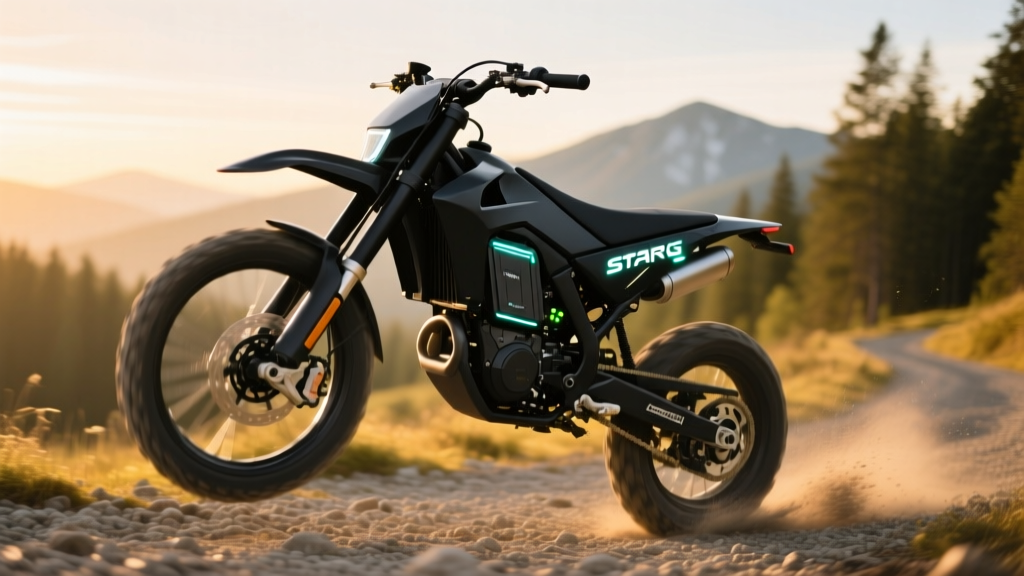
The Stark Varg, produced by Barcelona-based Stark Future, is a full-size electric motocross/enduro motorcycle — not a commuter vehicle, not a road-legal EV, and not eligible for any federal electric vehicle tax credit. It competes directly against 450cc gas motocross bikes from KTM, Honda, Yamaha, and Kawasaki, not against Tesla or Rivian.
Stark Future ships two primary variants for the 2026 model year:
- Varg MX (Motocross): Closed-course competition bike, no lights or street equipment.
- Varg EX (Enduro): Trail-oriented with lighting kit options, though still not DOT/EPA street-legal in most US jurisdictions.
Both share the same core powertrain: a liquid-cooled electric motor producing up to 80 HP (Alpha trim) or 60 HP (standard trim), fed by a 6.0 kWh lithium-ion battery pack using 21700 cylindrical cells.
If you arrived here searching for an "electric vehicle" in the car sense — this isn't it. But if you're an off-road rider evaluating whether to go electric, read on. The ownership economics and charging logistics are genuinely different from gas dirt bikes.
Specs That Matter: Battery, Motor, and Real-World Ride Time
| Specification | Varg Alpha (80 HP) | Varg Standard (60 HP) |
|---|---|---|
| Motor Output | 80 HP / 60 kW peak | 60 HP / 45 kW peak |
| Torque (at rear wheel) | ~940 Nm (claimed) | ~800 Nm (claimed) |
| Battery Capacity | 6.0 kWh (usable) | 6.0 kWh (usable) |
| Battery Chemistry | NMC (Nickel Manganese Cobalt) | NMC |
| Claimed Ride Time (MX) | ~30–40 min hard moto | ~35–45 min hard moto |
| Claimed Ride Time (Trail) | Up to 6 hours (light) | Up to 6 hours (light) |
| Charge Time (0–100%) | ~1–2 hours (outlet dependent) | ~1–2 hours |
| Charger Included | Standard 110V onboard | Standard 110V onboard |
| Weight (wet) | ~238 lbs (108 kg) | ~238 lbs (108 kg) |
| Base MSRP (2026 est.) | ~$14,190 | ~$13,190 |
kWh vs. kW — the critical distinction: The battery stores 6.0 kWh of energy (think of it as the "fuel tank size"). The motor can draw up to 60 kW of power (think of it as "how fast you burn fuel"). A 60 kW peak draw on a 6.0 kWh battery means you could theoretically drain the pack in 6 minutes at full tilt — which is why hard motocross riding yields only 30–40 minutes of run time.
Real-World Ride Time vs. Stark's Claims
Stark's "up to 6 hours" trail-riding claim assumes gentle throttle application on flat terrain at moderate speeds — essentially puttering along fire roads. In practice, most riders report:
- Motocross track (hard motos): 25–40 minutes before the battery is depleted enough to limp home. Comparable to one full moto plus warm-up laps on a 450cc gas bike before refueling.
- Aggressive trail riding: 1.0–1.5 hours of real riding before needing a charge.
- Moderate trail/dual-sport pace: 2–3 hours is achievable with throttle discipline.
- Cold weather impact: Lithium-ion cells lose 10–20% usable capacity below 40°F (4°C). If you ride in winter, budget for shorter sessions.
This is the electric dirtbike equivalent of range anxiety. A gas 450cc motocross bike carries roughly 1.6 gallons of fuel and gets about 1.5–2 hours of hard riding before refueling — and refueling takes 30 seconds. Recharging the Varg takes 1–2 hours depending on your outlet.
Charging Logistics: What You Actually Need
The Varg charges via a standard household outlet (120V / 15A in the US). Here's the math:
| Charging Method | Power (kW) | 0–100% Time | Cost per Full Charge* |
|---|---|---|---|
| Standard 120V outlet | ~1.4 kW | ~4–5 hours | $0.78 (avg US $0.13/kWh) |
| 240V outlet (dryer/RV) | ~3.0 kW (bike-limited) | ~2 hours | $0.78 |
| Stark fast charger (optional) | ~6.0 kW (est.) | ~1 hour | $0.78 |
*Based on full 6.0 kWh charge at national average residential electricity rate of ~$0.13/kWh. Your rate may vary — check your utility bill.
Practical reality: Most motocross tracks don't have dedicated EV charging. You'll likely charge at home overnight, ride, and charge again. If you ride multiple motos per day at the track, you need either multiple batteries (not currently sold as swappable packs) or a generator — at which point the "zero emissions" advantage becomes questionable.
For enduro/trail riders staging from a truck or garage, a 240V outlet at home is the sweet spot: ride all morning, plug in during lunch, ride again in the afternoon.
Stark Varg vs. Gas 450cc Dirt Bike: The Full Cost Breakdown
This is where the electric dirtbike argument gets interesting — or falls apart, depending on your use case. Let's compare a 5-year ownership horizon assuming 100 riding hours per year.
| Cost Category | Stark Varg Alpha (Electric) | 2026 KTM 450 SX-F (Gas) |
|---|---|---|
| Purchase Price | ~$14,190 | ~$11,099 |
| Federal Tax Credit (§30D) | $0 (not a qualified highway vehicle) | $0 |
| Energy Cost (500 hrs total) | ~$390 (6 kWh × 500 charges × $0.13) | ~$2,250 (~1.5 gal/hr × $3.00/gal avg) |
| Oil Changes (500 hrs) | $0 | ~$500 (every 10–15 hrs at $10–15/ea) |
| Air Filter Service | $0 | ~$300 (cleaning/replacement over 500 hrs) |
| Top-End Rebuild | $0 (no piston/rings/valves) | ~$800–$1,500 (typical at 150–200 hrs) |
| Chain/Sprockets | ~$300 (same wear as gas) | ~$300 |
| Tires (500 hrs) | ~$600 | ~$600 |
| Suspension Service | ~$400 | ~$400 |
| Insurance (off-road) | ~$500–$800 (5 years) | ~$500–$800 |
| Estimated 5-Year Total | ~$16,680–$17,180 | ~$16,749–$18,449 |
The verdict: Over 5 years and 500 hours, the Varg roughly breaks even with a premium gas 450 — despite the $3,000+ higher purchase price. The savings come entirely from eliminated engine maintenance (no oil, no top-end rebuilds, no air filter service, no valve adjustments). If you ride fewer than 50 hours per year, the gas bike wins on pure economics. If you ride 150+ hours per year, the Varg starts to pull ahead on maintenance savings.
Note: These estimates assume aggressive competition riding. Casual trail riders who put 20–30 hours per year on a gas bike may go years between top-end rebuilds, shifting the math back toward gas.
Common Misconceptions About the Stark Varg
| Myth | Fact |
|---|---|
| "It qualifies for the $7,500 EV tax credit." | It does not. The §30D credit requires a vehicle with 4 wheels and a GVWR under 14,000 lbs that is street-capable. The Varg is a 2-wheel off-road motorcycle. See IRS §30D guidelines. |
| "Electric dirt bikes have no power." | The Varg Alpha produces 80 HP and an estimated 940 Nm at the rear wheel — more torque than any production 450cc gas motocross bike. Electric motors deliver peak torque at zero RPM. |
| "You can ride all day on one charge." | Hard motocross riding depletes the 6.0 kWh battery in 25–40 minutes. Only very gentle trail riding approaches the 6-hour claim. |
| "No maintenance means no costs." | Suspension, brakes, chain, sprockets, tires, and bearings all wear identically to gas bikes. Only the powertrain maintenance is eliminated. |
| "It's completely silent." | The motor and drivetrain produce a distinct whine. It's far quieter than a gas exhaust (no earplugs required for bystanders), but it is not silent. |
| "The battery will need replacing in 2 years." | NMC cells in this application are rated for hundreds of full cycles. With proper care (avoiding deep discharge storage, avoiding extreme heat), expect 5–8+ years of usable capacity before significant degradation — similar to other performance EV battery packs. |
Who Should Actually Buy the Stark Varg?
Buy the Stark Varg if:
- You ride on private land, indoor tracks, or noise-restricted areas where gas bikes are banned or frowned upon.
- You want instant throttle response with zero clutch/throttle technique required — the electric powertrain simplifies riding, especially for newer riders.
- You ride 100+ hours per year and want to eliminate engine maintenance (oil, filters, top-end rebuilds, valve adjustments).
- You have reliable access to a 240V outlet at home or at your riding location for between-session charging.
- You value the ability to ride in your garage or suburban backyard without noise complaints.
Stick with a gas 450cc dirt bike if:
- You ride remote trails or desert races where no electrical outlet exists within 50 miles.
- You need 3+ hours of continuous hard riding without stopping.
- Your budget is under $11,000 and you ride fewer than 50 hours per year.
- You compete in AMA-sanctioned motocross or enduro events that don't have an electric class (most don't, as of 2026).
- You want easy parts availability at any dealer — Stark Future's US dealer network is still limited compared to KTM, Honda, or Yamaha.
First-Time Electric Dirt Bike Buyer: What You Need to Know
If the Varg is your first electric off-road vehicle, here's what experienced owners wish they'd known:
1. Throttle management is everything. An electric motor's instant torque is thrilling but addictive. New riders tend to ride harder than they would on gas, which murders battery life. Learn to modulate. Stark's ride modes (accessible via the companion app) let you cap power output — use them.
2. Plan your charging like you'd plan fuel stops. Before heading to a riding area, confirm you'll have access to an outlet. A standard 120V outlet works, but a full charge takes 4–5 hours. A 240V outlet (like a dryer plug or RV hookup) cuts that to roughly 2 hours. Some riders bring a portable Honda generator as backup — yes, a gas generator to charge an electric bike.
3. Battery care matters for longevity. Don't store the Varg at 0% or 100% state of charge for extended periods. For long-term storage (off-season), charge to roughly 50–60% and store in a cool, dry place. Avoid charging immediately after a hard ride when cells are hot — let the pack cool for 15–20 minutes first.
4. Check Stark's warranty carefully. As of the latest available information, Stark Future offers a limited warranty on the battery and powertrain. Confirm the exact terms (years/miles/cycles and capacity retention threshold) with your dealer before purchase. Warranty support infrastructure in the US is still maturing compared to established Japanese and Austrian OEMs.
5. Resale value is uncertain. Gas dirt bikes from KTM, Honda, and Yamaha have decades of established resale data. The Varg is a newer product from a startup — long-term depreciation curves are unknown. Factor this into your total cost of ownership calculation.
Where the Stark Varg Fits in the Broader EV Landscape
The Varg represents a niche within a niche: electric powertrains applied to off-road competition motorcycles. It's worth noting the broader context:
- Street-legal electric motorcycles (Zero SR/F, LiveWire ONE) start around $15,000–$22,000, offer 100–150+ miles of real range, and can use public Level 2 chargers. They qualify for some state-level incentives (varies by jurisdiction — check your local DMV and energy office).
- Electric mountain bikes (e-MTBs) from brands like Specialized and Trek cost $5,000–$12,000 and offer 30–60 miles of assisted pedaling range. They're legal on many trails where motorcycles are banned.
- Gas dirt bikes remain dominant in competition, with decades of aftermarket support, established race classes, and fuel infrastructure at every track.
The Varg makes the most sense for riders who specifically need a full-size, full-power motocross/enduro motorcycle but operate in noise-sensitive environments. It solves a real problem — access to riding areas — that gas bikes cannot.
Frequently Asked Questions
How fast is the Stark Varg?
Stark claims a top speed of approximately 60+ mph for the MX model (gearing-dependent) and 0–60 mph acceleration in the low-to-mid 3-second range for the Alpha 80 HP variant. On a motocross track, the instant torque delivery makes it feel significantly quicker off the line than a 450cc gas bike, which must build RPM before hitting peak power.
Can I ride the Stark Varg on public roads?
No. The Varg MX is a closed-course competition vehicle with no lighting, mirrors, or DOT-required equipment. The Varg EX has lighting provisions but is still not EPA/DOT certified for street use in most US states. Riding it on public roads would likely constitute operating an unregistered, uninsured vehicle. Check your local laws, but assume it's off-road only.
Does the Stark Varg qualify for any EV tax credits or incentives?
Not the federal §30D clean vehicle credit — that requires a 4-wheeled, street-capable vehicle meeting specific MSRP, income, and battery sourcing requirements per the IRS. Some states offer off-road equipment rebates or agricultural/utility EV incentives that might apply, but these vary widely by jurisdiction. Consult your state energy office or a tax professional.
How long does the Stark Varg battery last before needing replacement?
Stark has not published an official cycle-life guarantee as of early 2026. Based on NMC cell chemistry in similar high-discharge applications, expect 500–800 full charge cycles before capacity drops to roughly 80% of original. At 100 rides per year, that's 5–8 years of competitive use before you'd notice meaningful range loss. Replacement battery pricing has not been publicly confirmed — contact Stark Future or an authorized dealer for current estimates.
Is the Stark Varg heavier than a gas 450cc dirt bike?
The Varg weighs approximately 238 lbs (108 kg) wet, which is roughly comparable to a 2026 KTM 450 SX-F at ~237 lbs wet. The weight distribution is different — the Varg's mass is concentrated lower (battery pack in the frame's center), which many riders report improves handling feel despite the similar total weight.
Where can I buy or service a Stark Varg in the US?
Stark Future sells direct and through a growing but still limited dealer network in the US. As of 2026, authorized service centers are concentrated in major metro areas. If you live far from a dealer, factor in shipping costs for warranty service. Confirm dealer availability in your region on Stark Future's official site before committing to a purchase.