The Quick Answer: Is the Globe Haul LT a Real Car Replacement?
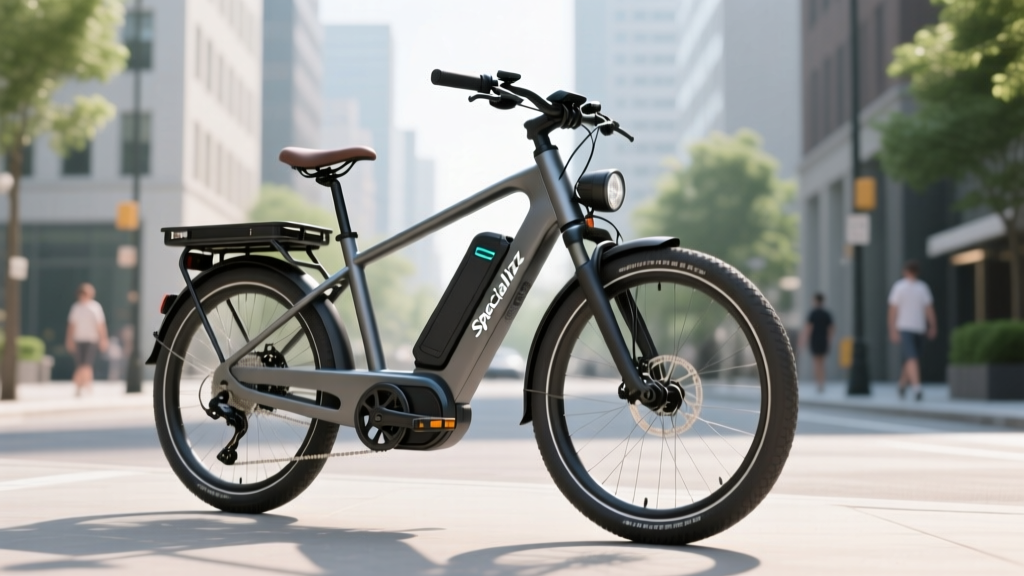
The Specialized Globe Haul LT is a long-tail electric cargo bike built around a 700W rear-hub motor (peak 1,300W), a 772 Wh battery delivering an EPA-estimated 60 miles of range (real-world 40–50 miles with heavy cargo), and a 440-lb total payload capacity. At a base MSRP of approximately $3,499, it targets families and commuters who want to replace short car trips—not the entire vehicle. It excels at school runs, grocery hauls, and last-mile deliveries under 15 miles round-trip. It is not a substitute for highway driving, cold-climate commutes beyond ~25 miles, or carrying more than two small passengers plus gear. Think of it as a second-vehicle eliminator, not a primary-car replacement.
Spec Sheet: What You're Actually Buying
Before evaluating whether the Globe Haul LT fits your routine, here are the hard numbers that define ownership. Note: e-bikes fall outside the federal §30D EV tax credit (which applies to four-wheeled motor vehicles under IRS rules), so sticker price is your true acquisition cost minus any local utility or city e-bike rebates.
| Specification | Globe Haul LT (2025/2026 Model Year) |
|---|---|
| Motor | 700W nominal / 1,300W peak rear hub |
| Battery Capacity | 772 Wh (lithium-ion, integrated) |
| EPA-Est. Range | ~60 miles (light assist, flat terrain, solo rider) |
| Real-World Range (cargo loaded) | 35–50 miles depending on assist level, weight, wind, and grade |
| Top Assisted Speed | Class 2: 20 mph (throttle); Class 3 unlockable to 28 mph in select markets |
| Max Payload (rider + cargo + passengers) | 440 lbs total |
| Charge Time (0–100%) | ~4.5 hours (standard 4A charger, 120V outlet) |
| Weight (bike only) | ~77 lbs |
| Base MSRP | $3,499 |
| Federal Tax Credit Eligibility | Not eligible (§30D applies to 4-wheeled MVs only) |
Range Reality Check: Sticker vs. Real World
Specialized advertises up to 60 miles of range. That figure assumes minimal pedal assist (Eco mode), a 160-lb rider, flat terrain, and moderate temperatures (60–75°F). In real-world cargo use, expect meaningful reduction:
- Solo commuter, light assist, flat route: 50–60 miles achievable.
- One child passenger + groceries (~80 lbs cargo), medium assist: 35–45 miles.
- Two passengers + cargo, high assist, hilly terrain: 25–35 miles before the battery taps its usable buffer.
- Cold weather (below 40°F): Expect 20–30% range loss due to increased internal battery resistance and thicker lubricants in the drivetrain. A 40-mile cargo run in January may require mid-day charging.
The 772 Wh battery is non-removable without tools (integrated into the downtube), meaning you charge where you park. If you lack a garage or ground-floor outlet, this is a dealbreaker worth confronting before purchase. Unlike some competitors (Rad Power, Tern), Specialized does not currently offer a dual-battery option for the Haul LT, capping your range ceiling at the single-pack level.
Cost of Ownership: E-Cargo Bike vs. Gas Car vs. EV
The core financial question: does replacing short car trips with the Globe Haul LT save enough to justify the $3,499 outlay? Let's model a realistic scenario—replacing 12 miles/day of urban driving (school drop-off, errands, short commute) five days a week, 48 weeks/year (2,880 miles/year shifted to the bike).
| Cost Category | Gas Car (25 MPG combined, $3.40/gal) | Compact EV (120 MPGe, $0.14/kWh) | Globe Haul LT ($0.14/kWh) |
|---|---|---|---|
| Energy/Fuel per Year (2,880 mi) | $391 | $118 | $28 (est. 15 Wh/mi avg) |
| Maintenance per Year | $450 (oil, filters, brakes) | $250 (tires, cabin filter, wipers) | $180 (chain, brake pads, tires, tune-up) |
| Insurance per Year | $1,400 | $1,300 | $0–$250 (optional e-bike insurance) |
| Parking/Tolls per Year (urban) | $600 | $600 | $0 |
| 5-Year Fuel + Maint. + Ins. Total | $12,205 | $8,340 | $2,290 (with optional insurance) |
| Upfront Purchase Price | $28,000 (used compact) | $38,000 (new compact EV) | $3,499 |
The verdict: If you already own a paid-off gas car and simply add the Haul LT to shift short trips, your annual savings on fuel and wear are roughly $360/year. Payback takes ~10 years—thin. But if the Haul LT allows you to avoid buying a second car or sell an aging second vehicle, the math flips dramatically. Selling a $6,000 second car and eliminating its $2,000/year insurance/maintenance/fuel exposure nets you $9,499 in year-one value versus keeping that car running. That's the use case where the Haul LT pays for itself immediately.
Home Charging and Infrastructure: The Unavoidable Constraint
Unlike an electric car that can use a public DC fast charger in 25 minutes, the Globe Haul LT charges exclusively on Level 1 (120V household outlet) at approximately 4.5 hours from empty to full. There is no DC fast-charge option, no CCS or NACS port—just a standard barrel connector to the included 4-amp charger.
What this means practically:
- You need a dedicated outlet near where you store the bike (garage, shed, ground-floor apartment).
- If you live in a third-floor walk-up or park on the street, daily charging becomes a significant friction point. The battery does not release without a hex key, so you're not casually carrying it upstairs to charge on your kitchen counter.
- For 90% of cargo-bike use cases (12–20 miles/day), a nightly charge cycle replenishes the battery fully by morning. Range anxiety is minimal if charging access is solved.
- Charging cost is negligible: a full 772 Wh charge costs roughly $0.11 at the US average residential rate of $0.14/kWh. Annual electricity cost for 2,880 miles is under $30.
What the Globe Haul LT Does NOT Do (Limitations Box)
Honest Limitations for Prospective Buyers
- Not for highway or arterial-road commuting: 20 mph (or 28 mph in Class 3 mode) is unsafe on 45+ mph roads without protected bike infrastructure.
- Single battery, no range extender: 35–50 real-world miles is your ceiling. If your daily cargo loop exceeds 40 miles with elevation, you'll need mid-day charging access.
- No weather enclosure: Rain, snow, and sub-30°F cold significantly reduce both rider comfort and battery range. This is a fair-weather and mild-climate workhorse, not a year-all-conditions vehicle in northern states.
- 440-lb payload is shared: A 200-lb rider + 80-lb child + 50 lbs of groceries = 330 lbs, leaving only 110 lbs of margin. Two children plus an adult plus a week of groceries will approach or exceed the limit.
- No federal tax credit: IRS §30D applies to 4-wheeled motor vehicles. E-bikes are not eligible. Check your city/utility for local e-bike rebates (some programs offer $300–$1,200).
- Theft risk is high: A $3,500 cargo bike parked outside is a target. Budget $200–$400 for a heavy-duty lock, GPS tracker, and secure storage solution.
Common Misconceptions: Myth vs. Fact
| Myth | Fact |
|---|---|
| "E-bikes qualify for the $7,500 federal EV tax credit." | False. IRS §30D requires a 4-wheeled motor vehicle with specific battery-sourcing and MSRP caps. E-bikes are classified as consumer products, not MVs. Some states and utilities offer separate e-bike rebates. |
| "60 miles of range means I can commute 30 miles each way." | Only under ideal conditions (solo, Eco assist, flat, warm). With cargo, hills, or cold, expect 25–35 usable miles before needing a charge. |
| "The battery will need replacing in 2–3 years." | Lithium-ion e-bike batteries typically retain 80%+ capacity after 500–800 full charge cycles. At one cycle/day, that's 2+ years of daily use before meaningful degradation—and most users don't fully cycle daily. Expect 5–7 years of usable service before replacement ($400–$600 for a new pack). |
| "I can charge it as fast as an EV at a public station." | No. The Haul LT uses a proprietary 4A charger on 120V. There is no fast-charge standard for e-bikes comparable to DC fast charging for cars. Plan for 4–5 hour charge times. |
| "It replaces my car entirely." | For some households in some climates, it can replace a second car. For primary-vehicle duties (highway, long distance, severe weather, large family), it supplements rather than substitutes. |
Decision Framework: Is the Globe Haul LT Right for You?
Choose the Globe Haul LT If:
- You have secure, ground-level charging access (garage, shed, or ground-floor outlet).
- Your daily cargo trips total under 40 miles round-trip in fair weather.
- You want to eliminate a second car or avoid buying one (net savings: $5,000–$10,000 over 5 years).
- Your route has protected bike lanes or low-traffic streets.
- You're in a mild-to-moderate climate (rarely below 30°F for extended periods).
Look Elsewhere If:
- You need year-round, all-weather transportation in a cold or snowy climate.
- Your daily cargo route exceeds 45 miles or includes sustained steep grades.
- You regularly carry more than one child passenger plus significant cargo (payload ceiling).
- You live in an apartment without ground-floor charging access.
- You need highway-speed commuting capability (consider a used compact EV like the Chevy Bolt or Nissan Leaf instead).
First-Time E-Bike Buyer Essentials
If the Globe Haul LT is your entry into electric mobility, here's what no one warns you about until you own one:
- Maintenance is real but different. Expect chain replacement every 1,500–2,500 miles ($30–$60), brake pad replacement every 2,000–3,000 miles under cargo loads ($25–$50), and an annual professional tune-up ($80–$150). No oil changes, no emissions tests, but the drivetrain works harder than on a standard bicycle.
- Insurance is optional but wise. Homeowner's or renter's policies may cover theft, but often exclude e-bikes over a certain wattage or value. Dedicated e-bike insurance (Velosurance, Spoke Insurance) runs $15–$25/month and covers theft, crash damage, and liability.
- Helmet and safety gear budget. A cargo-capable helmet (MIPS-rated, $80–$200), high-visibility jacket, and quality lights ($60–$120 for a front/rear set) are non-negotiable for street riding.
- Local regulations vary. Class 2 e-bikes (20 mph throttle) are broadly legal on bike paths and streets. Class 3 (28 mph) may be restricted on some multi-use paths. Check your state and municipal codes before unlocking higher speeds.
- Test the actual route, not the spec sheet. Before committing, ride your intended cargo loop with weight on a demo bike (many Specialized dealers offer test rides). Range claims mean nothing if your specific hills, headwinds, and stops drain the battery faster than expected.
Frequently Asked Questions
Can I claim any tax credit or incentive for the Globe Haul LT?
Not the federal §30D EV credit—that applies only to 4-wheeled plug-in vehicles meeting battery-sourcing, MSRP, and buyer-income requirements. However, some cities (Denver, Boulder, Portland) and utilities (PG&E, Xcel Energy) offer e-bike rebates ranging from $300 to $1,200, particularly for income-qualified buyers. Check your local government and utility websites for current programs.
How does the Globe Haul LT compare to the Rad Power RadWagon or Tern GSD?
The RadWagon 5 (~$1,999) is roughly $1,500 cheaper but uses a less refined hub motor, has a lower payload rating (~350 lbs), and offers less dealer support. The Tern GSD (~$5,500–$6,500) is significantly more expensive but features a Bosch mid-drive motor (smoother, more efficient under load), dual-battery capability (up to 1,000 Wh), and a folding handlebar for compact storage. The Globe Haul LT sits in the middle: better build quality and dealer network than Rad, lower price than Tern, but without the mid-drive refinement or dual-battery option.
What happens if the battery degrades or fails?
Specialized offers a 2-year warranty on the battery against defects. Normal capacity degradation (losing 10–20% over 3–5 years) is expected and not covered. Replacement batteries cost approximately $400–$600 through Specialized dealers. Third-party rebuild services exist for $250–$400 but may void remaining warranty and are not endorsed by the manufacturer.
Is the Globe Haul LT safe for carrying children?
Yes, within payload limits and with proper accessories. Specialized offers a dedicated passenger kit with foot pegs, a backrest, and a harness system. Children should be at least 1 year old (able to support their own head with a helmet) and secured with the harness. Never exceed the 440-lb total payload (rider + passengers + cargo). Check your state's e-bike passenger laws—some jurisdictions set minimum age requirements for e-bike passengers.
Can I ride it in the rain?
The Haul LT is rated for wet conditions (IPX4-level water resistance on electrical components). You can ride in rain, but prolonged exposure to heavy downpours or submersion (deep puddles, flooded streets) is not recommended. Post-ride, wipe down the battery contacts and store the bike in a dry location. Cold rain combined with low temperatures will accelerate range loss more than dry cold alone.