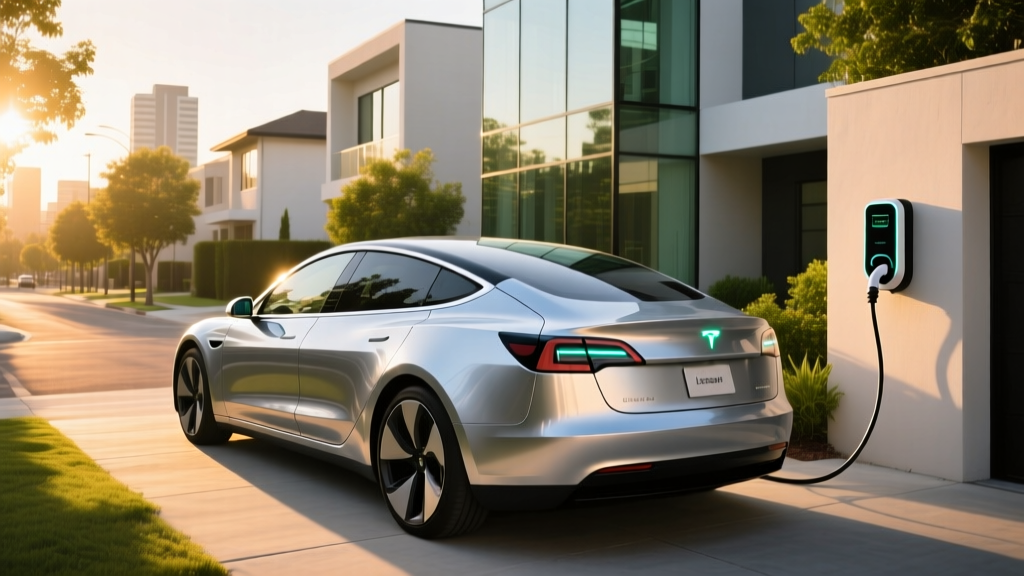
For years, EV enthusiasts have chased the same dream: a Tesla under $25,000. Now, that vehicle may finally be within reach. Internally codenamed "Spark" by industry insiders, Tesla's next compact electric vehicle represents the company's bid to crack the mass-market segment dominated by the Chevrolet Equinox EV, Nissan Leaf successor, and Hyundai Kona Electric.
But here's the critical question: Can Tesla deliver a sub-$25K EV with the range, charging speed, and tech that made the Model 3 a bestseller—without cutting corners that would alienate its core buyers?
What We Know About Spark Tesla So Far
Let's be clear upfront: as of early 2026, Tesla has not officially unveiled a production model called "Spark." The name originates from supply-chain leaks and analyst reports referencing Tesla's next-generation compact platform. What we do know is concrete:
- Target price: $25,000 base MSRP (before incentives)
- Production timeline: Expected to begin at Giga Texas in late 2026 or early 2027
- Platform: Tesla's "unboxed" manufacturing process, which assembles vehicle modules in parallel rather than sequentially
- Market positioning: Below Model 3, competing with compact EVs from legacy automakers
Elon Musk has referenced a "more affordable Tesla" in multiple earnings calls throughout 2024 and 2025, though specific model names and timelines remain fluid. Industry analysts at BloombergNEF and Morgan Stanley project this vehicle will share significant componentry with the refreshed Model 3 Highland platform but in a smaller footprint.
Projected Range and Battery Specs
Estimated EPA range: 250-280 miles (projected)
Real-world expectation: 210-240 miles highway; 180-200 miles in freezing temperatures
Tesla's compact EV will likely use a 50-60 kWh battery pack. The chemistry question is pivotal:
| Chemistry Option | Advantages | Trade-offs | Likelihood |
|---|---|---|---|
| LFP (Lithium Iron Phosphate) | Lower cost, longer cycle life, no cobalt/nickel supply issues, can charge to 100% daily | Lower energy density (~15-20% less range per kg), worse cold-weather performance | High (65-70%) |
| NMC (Nickel Manganese Cobalt) | Higher energy density, better cold-weather range retention | More expensive, shorter cycle life, cobalt sourcing concerns, recommended 80% daily limit | Moderate (30-35%) |
Given Tesla's existing use of CATL-sourced LFP cells in Model 3 RWD variants, an LFP pack in the Spark would align with cost-reduction goals. However, the energy-density penalty means achieving 280+ miles EPA would require either a larger (heavier) pack or breakthrough cell-level improvements.
Cold-weather reality check: LFP batteries typically lose 30-40% range in sub-freezing conditions without preconditioning. If you live in Minnesota or Maine and lack garage parking, expect 170-190 miles of usable range on bitter winter days—a significant limitation for a 250-mile EPA vehicle.
Charging Speed: The Make-or-Break Factor
Charging infrastructure access remains the #1 barrier to EV adoption. A $25K Tesla must charge quickly enough to make road trips viable:
| Charging Level | Projected Specs | Real-World Expectation |
|---|---|---|
| DC Fast Charging (Peak) | 170-200 kW (estimated) | 10-80% in 25-30 minutes at V3 Superchargers; sustained rate likely 80-100 kW average due to charge-curve taper |
| DC Fast Charging (Sustained) | ~100 kW average (10-80%) | Expect 35-40 minutes for a full highway-trip charge including taper and preconditioning time |
| Level 2 Home (240V, 48A) | 11.5 kW | ~35-40 miles of range per hour; full charge in 5-6 hours |
| Level 1 (120V, 12A) | 1.4 kW | ~3-4 miles per hour; 3+ days for full charge (emergency use only) |
The charge-curve reality: Peak kW ratings are marketing numbers. What matters is the 10-80% time. If the Spark hits 200 kW peak but drops to 60 kW above 60% state-of-charge (SoC), your actual road-trip charging stops will feel longer than the spec sheet suggests. Tesla's V3 Superchargers (250 kW capable) and newer V4 posts (up to 350 kW) will not be bottlenecked by the vehicle, but the battery's thermal management and cell chemistry will dictate real-world speed.
Performance and Drivetrain
Tesla has never built a slow car, but the Spark will prioritize efficiency over acceleration:
- Expected 0-60 mph: 5.8-6.5 seconds (RWD single motor)
- Horsepower: ~200-230 hp
- Drivetrain: Rear-wheel drive (RWD) standard; dual-motor AWD unlikely at this price point
- Top speed: Electronically limited to ~125 mph
These figures place the Spark in line with the base Model 3 RWD (0-60 in 5.8 seconds, 271 hp) but slightly detuned for cost and efficiency. For context, the Hyundai Kona Electric does 0-60 in 6.9 seconds with 201 hp, while the Chevrolet Equinox EV 3LT FWD hits 60 mph in 7.6 seconds with 213 hp. The Spark should comfortably outperform both.
Don't expect Performance variants or Track Mode. This is a commuter car, not a sports sedan.
Pricing, Trims, and Federal Tax Credit Eligibility
The headline number is $25,000, but real-world pricing will vary:
| Trim (Projected) | MSRP | Key Features |
|---|---|---|
| Base | $25,000 | RWD, cloth interior, basic Autopilot, 18" wheels, ~250 mi range |
| Long Range | $28,500-$30,000 | Larger battery (~65 kWh), ~300 mi range, heat pump standard |
| Premium | $31,000-$33,000 | Vegan leather, premium audio, FSD hardware, glass roof |
Federal tax credit (§30D) eligibility: This is where it gets complicated. The $7,500 credit has strict requirements:
- MSRP cap: Vehicle must be under $55,000 (sedans/hatchbacks) or $80,000 (SUVs/trucks) — Spark easily qualifies
- Buyer income cap: Modified AGI ≤ $150,000 (single) or $300,000 (joint) — most target buyers will qualify
- Battery sourcing: Critical minerals and battery components must meet escalating domestic-content thresholds (80% critical minerals from U.S./FTA partners by 2027)
- Point-of-sale transfer: Buyers can apply the credit as a down-payment reduction at purchase, not just at tax filing
If Tesla sources LFP cells from CATL (China), the Spark may not qualify for the full $7,500 credit due to foreign-entity-of-concern (FEOC) restrictions. A partial $3,750 credit is possible if only the critical-minerals requirement is met. Tesla would need to secure North American or FEOC-compliant battery supply to unlock the full credit—a significant manufacturing challenge at this price point.
Bottom line: Expect a post-credit price of $17,500-$21,250 if full credit eligibility is achieved, or $21,250-$25,000 with partial/no credit.
Who Should Buy the Spark Tesla?
This vehicle is ideal for:
- First-time EV buyers priced out of Model 3/Y but wary of legacy-brand charging networks
- Urban commuters with home charging who drive 30-60 miles daily
- Rideshare drivers (Uber/Lyft) seeking low operating costs and Tesla's Supercharger reliability
- Second-car households replacing a gas commuter with an electric runabout
This vehicle is NOT ideal for:
- Long-distance road trippers who regularly drive 400+ miles in a day (250-mile range means frequent stops)
- Cold-climate buyers without garage parking (LFP range loss in winter is substantial)
- Family haulers needing 5+ passenger seats and 30+ cu ft cargo (the Spark will be compact)
- Towing users (no towing capacity expected at this price/size)
Pros and Cons
Pros
- Sub-$25K price makes Tesla ownership accessible to mass market
- Supercharger network access (16,000+ stalls in North America) eliminates charging-anxiety
- Expected OTA updates and long software support lifecycle
- Lower operating cost vs gas: ~$0.04-$0.06 per mile (home charging) vs $0.12-$0.15 per mile (gas at $3.50/gal, 30 MPG)
- Tesla's industry-leading efficiency (kWh/100mi) maximizes range from a smaller battery
Cons
- 250-mile range is modest for 2026 standards (Model 3 offers 341 mi)
- LFP chemistry means significant cold-weather range loss
- Unlikely to qualify for full $7,500 federal credit due to battery sourcing
- Compact dimensions limit cargo/passenger space vs crossovers
- No AWD option reduces appeal in snow-belt states
- 2026-2027 production start means 12-18 month wait for early orders
Is Spark Tesla Worth Buying vs Competitors?
The compact EV segment in 2026 is crowded:
| Vehicle | MSRP | EPA Range | DC Fast Charge (10-80%) | Charging Network |
|---|---|---|---|---|
| Spark Tesla (projected) | $25,000 | 250-280 mi | 25-30 min | Tesla Supercharger (best-in-class) |
| Chevrolet Equinox EV 3LT | $33,000 | 319 mi | 20-25 min (190 kW) | CCS (Electrify America, EVgo) |
| Hyundai Kona Electric | $32,675 | 261 mi | 43 min (100 kW) | CCS (moderate reliability) |
| Nissan Leaf (next-gen) | $28,000 (est.) | 240-270 mi | 30-35 min (130 kW) | CHAdeMO (limited network) |
The verdict: If you prioritize charging reliability and ecosystem integration, the Spark's Supercharger access is a massive advantage—especially for apartment dwellers who rely on public charging. But if you need maximum range or live in a cold climate, the Equinox EV's 319-mile EPA rating and NMC battery make it the safer bet, even at a $8,000 premium.
Frequently Asked Questions
When will Spark Tesla be available for purchase?
Tesla has not announced an official release date. Industry projections suggest late 2026 or early 2027 for initial deliveries, with volume production ramping through 2027. Reservations are not yet open.
Will Spark Tesla qualify for the $7,500 federal EV tax credit?
Possibly, but not guaranteed. The vehicle will meet MSRP and buyer-income thresholds, but battery-sourcing rules (FEOC restrictions on Chinese-made cells) may limit eligibility to $3,750 or zero. Check IRS.gov for current-year rules before purchasing.
Can I charge Spark Tesla at home?
Yes. Level 2 home charging (240V, 48A) will add ~35-40 miles of range per hour. A full overnight charge takes 5-6 hours. Installation costs $500-$2,000 depending on your electrical panel and distance from the garage. Budget for a 200-amp panel upgrade ($1,500-$3,000) if your home has older 100-amp service.
Is Spark Tesla self-driving?
No. Tesla's Autopilot and Full Self-Driving (Supervised) are SAE Level 2 driver-assist systems, meaning you must remain engaged and ready to take over at all times. Only Waymo and Zoox operate Level 4 driverless robotaxis in limited geofenced areas. Do not treat any Tesla as autonomous.
What's the real-world range in winter?
Expect 30-40% range loss in sub-freezing temperatures, especially with LFP chemistry. A 250-mile EPA vehicle may deliver 150-175 miles in 20°F weather without preconditioning. Garage parking and battery preconditioning (via the Tesla app) can mitigate this to 20-25% loss.
How does Spark Tesla compare to buying a used Model 3?
A 2023-2024 Model 3 RWD (used) costs $28,000-$35,000 and offers 272-341 miles EPA range, more interior space, and proven reliability. If you can afford the premium, a used Model 3 is the safer bet in 2026. The Spark makes sense only if your budget is strictly under $25K and you're willing to wait for production.
Final Thoughts
The Spark Tesla represents a pivotal moment: Can the company that made EVs desirable also make them affordable? The answer hinges on execution—battery sourcing, manufacturing efficiency, and whether Tesla can deliver a $25K vehicle without the quality-control issues that plagued early Model 3 production.
If you're in the market for a compact EV in 2026, the Spark is worth watching but not waiting for. The Chevrolet Equinox EV, Hyundai Kona Electric, and Nissan Leaf successor are available now, with known specs and immediate delivery. But if your timeline extends to 2027 and your budget is firm at $25K, the Spark could be the EV that finally makes electric driving accessible to the masses—assuming Tesla delivers on its promises.
Sources: EPA Fuel Economy, IRS Clean Vehicle Credits, Tesla Investor Relations, BloombergNEF EV Outlook 2025.