The Quick Answer
If you're researching spark electric vehicles — a term often used to describe entry-level, affordable battery-electric cars aimed at new EV adopters — the short answer is: they can be a smart buy if you have reliable home charging, drive under 250 miles daily, and live in a moderate climate. Expect a purchase price between $28,000–$42,000 before incentives, EPA ranges of 220–330 miles, and annual fuel savings of $800–$1,500 compared to a comparable gas car. However, real-world range drops 15–30% in cold weather, public charging costs can approach gasoline on a per-mile basis, and insurance premiums run 10–20% higher than equivalent gas models. The math works best for buyers who can install a Level 2 home charger and qualify for the federal §30D tax credit.
What Are "Spark" Electric Vehicles, Exactly?
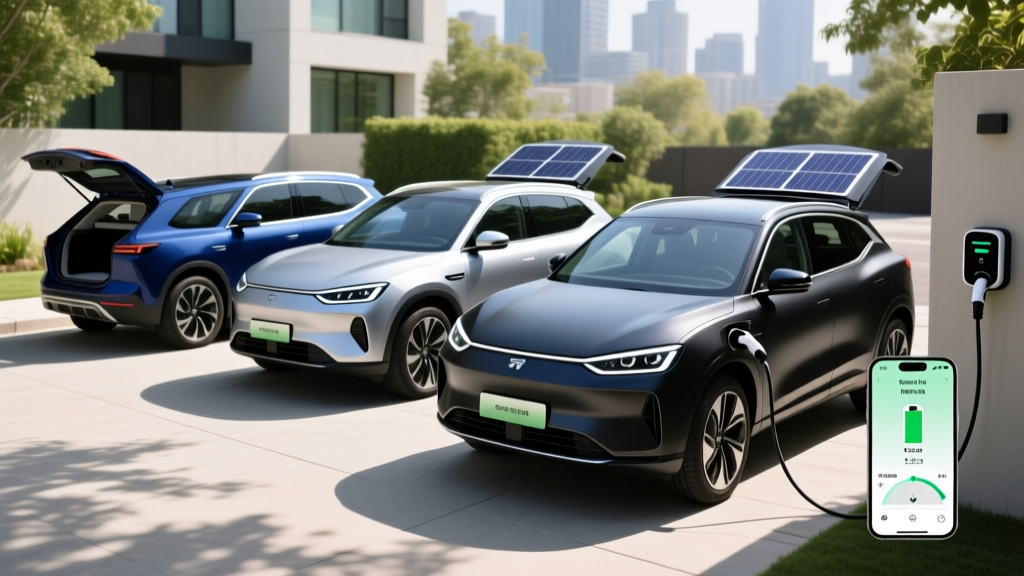
The phrase "spark electric vehicles" doesn't refer to a single brand. Instead, it's become shorthand among EV-curious shoppers for affordable, compact-to-midsize battery-electric vehicles (BEVs) positioned as gateway models — think Chevrolet Equinox EV, Hyundai Kona Electric, Nissan LEAF (discontinued after 2025, but still on lots), Kia EV6 base trims, and the Volvo EX30. These are the EVs designed to "spark" interest among buyers transitioning from gas for the first time.
For 2026, the most competitive models in this segment share common traits:
- Base MSRP: $28,000–$42,000
- EPA range: 220–330 miles
- Battery capacity: 58–77 kWh (mostly NMC chemistry; some LFP variants)
- DC fast charging: 100–175 kW peak, 10–80% in 24–38 minutes
- Federal tax credit eligibility: Varies by model, sourcing, and buyer income (more below)
These vehicles compete directly not just with each other but with gas-powered crossovers (Toyota RAV4, Honda CR-V) and plug-in hybrids (Toyota RAV4 Prime, Hyundai Tucson PHEV). The right choice depends entirely on your driving patterns, charging access, and budget.
EV vs Gas vs Hybrid: The Numbers Side by Side
Before committing to an EV, it's worth comparing total ownership costs against the alternatives. Here's a realistic 5-year breakdown for a typical compact crossover buyer driving 12,000 miles annually:
| Category | Affordable BEV (~$36K) | Gas Crossover (~$32K) | PHEV Crossover (~$38K) |
|---|---|---|---|
| Purchase Price (after incentives) | $29,500* | $32,000 | $34,500* |
| Fuel / Electricity (5 yrs) | $3,200 | $7,500 | $4,800 |
| Maintenance (5 yrs) | $1,200 | $3,800 | $3,200 |
| Insurance (5 yrs) | $9,600 | $7,800 | $8,400 |
| Home Charger Install | $1,200 | $0 | $1,200 |
| Estimated Depreciation | $14,000 | $12,500 | $13,800 |
| Total 5-Year Cost | $58,700 | $63,600 | $65,900 |
*Assumes $7,500 federal §30D point-of-sale credit applied. Eligibility depends on MSRP caps, buyer income, battery sourcing, and VIN-specific rules. Verify at IRS.gov before purchasing.
The BEV wins on fuel and maintenance — electric motors have far fewer moving parts than internal combustion engines, eliminating oil changes, spark plugs, and transmission fluid swaps. But insurance costs more (repair complexity, battery replacement risk), and depreciation remains steeper for EVs as battery technology evolves rapidly. If you can't access the $7,500 credit, the BEV's 5-year cost jumps to roughly $66,200, making the gas crossover the cheaper option.
Real-World Range: What the EPA Sticker Doesn't Tell You
Every EV buyer encounters this gap: the EPA-estimated range printed on the window sticker versus what you actually experience. For spark electric vehicles in the affordable segment, here's what to expect:
| Condition | Typical Range (EPA 280 mi baseline) | Notes |
|---|---|---|
| Mixed city/highway, 70°F | 260–280 mi | Closest to EPA sticker |
| Highway-only, 75 mph, 70°F | 230–255 mi | Aerodynamic drag kills efficiency at speed |
| City driving with regen, 70°F | 280–310 mi | Regenerative braking recovers energy in stop-and-go |
| Highway, 30°F (cold weather) | 195–230 mi | Battery chemistry slows; cabin heating draws power |
| Cold city driving, 20°F | 200–240 mi | Heat pump-equipped models fare better |
The biggest real-world factor most first-time buyers underestimate is cold-weather range loss. Lithium-ion batteries (both NMC and LFP chemistries) experience increased internal resistance below 40°F, and running the cabin heater can draw 2–5 kW continuously — equivalent to losing 10–20 miles of range per hour of driving. Models equipped with a heat pump (standard on the Hyundai Kona Electric, available on the Equinox EV) reduce this penalty by 30–40% compared to resistive heating.
Another factor: charging curves taper significantly above 80% State of Charge (SoC). A vehicle rated for 150 kW peak DC fast charging may only sustain that rate between 10–50% SoC. From 80–100%, charging can slow to 20–30 kW, meaning a "10–80% in 28 minutes" claim doesn't mean a full charge in 35 minutes — expect 50+ minutes for 10–100%. Plan road trips around 80% charges, not full charges.
Charging at Home: The Make-or-Break Factor
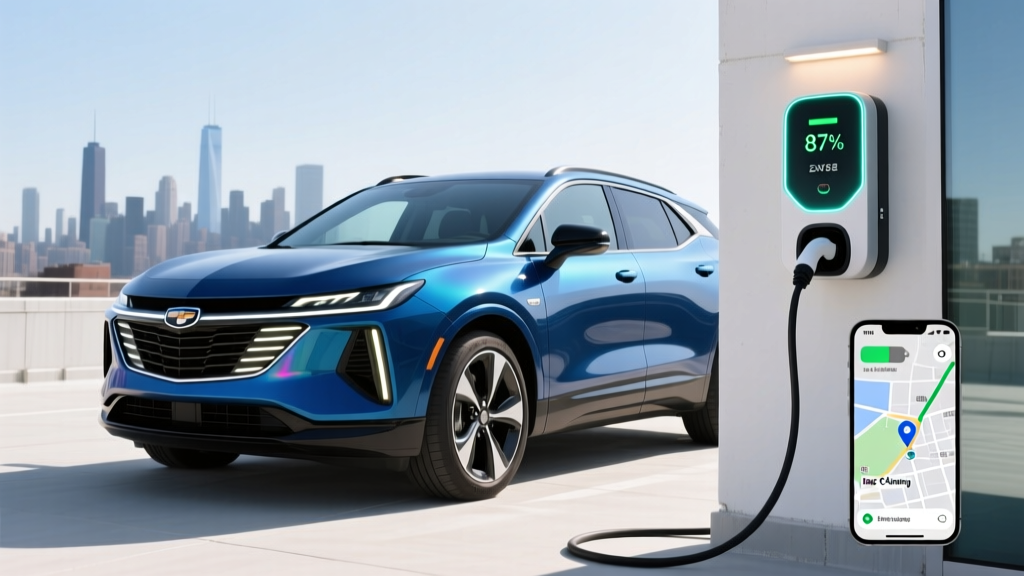
Here's the uncomfortable truth about EV ownership: without reliable home charging, an affordable EV becomes significantly less convenient and more expensive to operate. Public DC fast charging costs $0.30–$0.55/kWh in most US markets (per fueleconomy.gov data), while home charging on a residential electricity rate averages $0.12–$0.18/kWh. That's a 2–4x cost difference.
Home Charging Setup Costs
| Component | Low Estimate | High Estimate |
|---|---|---|
| Level 2 charger hardware (32A–48A) | $350 | $700 |
| Electrician labor (240V circuit run) | $500 | $1,500 |
| Electrical panel upgrade (if needed, 100A→200A) | $1,500 | $3,500 |
| Permit and inspection | $50 | $300 |
| Total (no panel upgrade) | $900 | $2,500 |
| Total (with panel upgrade) | $2,400 | $6,000 |
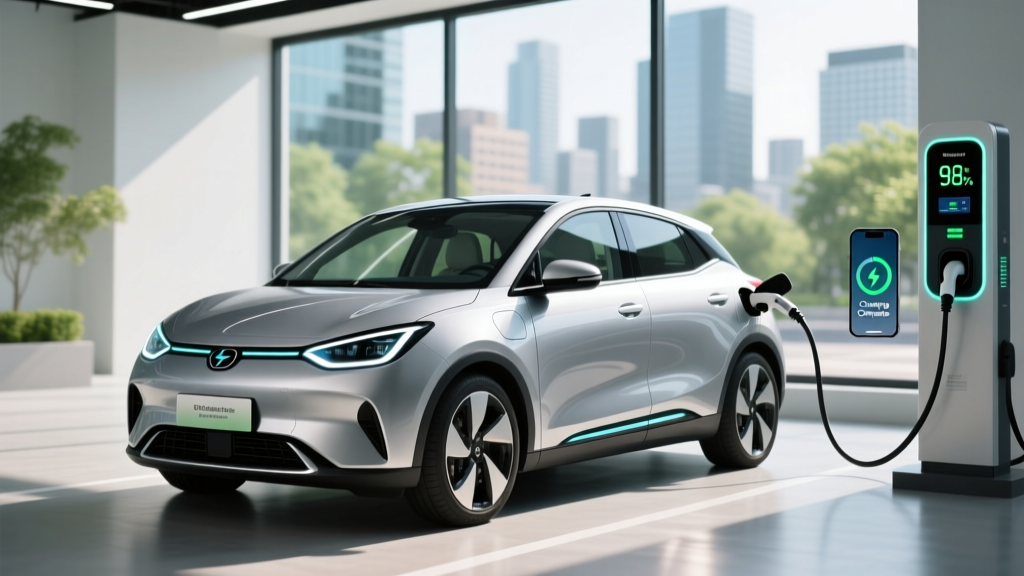
A 48-amp Level 2 charger delivers roughly 11.5 kW of power, adding about 35–45 miles of range per hour of charging — more than enough to replenish a full day's driving overnight. Most spark electric vehicles accept Level 2 charging at 7.2–11.5 kW, meaning a full charge from 10% takes 6–9 hours.
If you live in an apartment, condo, or street-parking situation without charging access, a PHEV (which can fall back on gasoline) or a gas vehicle may be a more practical choice until public charging infrastructure matures in your area.
Common EV Misconceptions — Fact-Checked
| Myth | Fact |
|---|---|
| "EV batteries need replacing every 5 years." | Federal law mandates battery warranties of at least 8 years/100,000 miles. Most NMC and LFP packs retain 85–92% capacity at 100,000 miles based on fleet data. Replacement costs $8,000–$18,000 but is rarely needed within the warranty period. |
| "EVs are worse for the environment because of electricity generation." | Even on coal-heavy grids, EVs produce 30–50% fewer lifecycle emissions than comparable gas cars over 100,000 miles (EPA analysis). On cleaner grids, the advantage exceeds 60%. |
| "You can't take an EV on a road trip." | The US now has over 70,000 public DC fast chargers. With 250+ mile range and 25-minute 10–80% charges, most highway trips require one 30-minute stop every 3 hours — roughly matching natural rest-break cadence. |
| "The $7,500 tax credit applies to every EV." | The §30D credit has MSRP caps ($55K sedans, $80K SUVs/trucks), buyer income caps ($150K single/$300K joint), and strict battery-sourcing requirements. Many popular EVs qualify for partial credit ($3,750) or none at all. Check the IRS eligible vehicle list before buying. |
| "EVs cost more to insure because they're dangerous." | Higher premiums (10–20%) reflect repair cost complexity, not safety risk. EVs consistently earn top IIHS and NHTSA ratings due to low center of gravity and rigid battery enclosures. |
Tax Credit Eligibility: What You Actually Qualify For
The federal §30D clean vehicle credit can reduce your effective purchase price by up to $7,500 — but qualifying requires meeting all of the following criteria simultaneously:
- MSRP cap: Vehicle MSRP must not exceed $55,000 (sedans/wagons) or $80,000 (SUVs/pickups/vans)
- Buyer income cap: Modified adjusted gross income ≤ $150,000 (single), $225,000 (head of household), or $300,000 (joint)
- Battery sourcing: Battery components must meet escalating domestic-content thresholds; critical minerals must be sourced from the US or FTA partners — this requirement tightens annually
- Final assembly: Vehicle must undergo final assembly in North America
- Point-of-sale transfer: As of 2024, you can transfer the credit to the dealer for an immediate price reduction rather than claiming it on your tax return
For 2026, the battery-sourcing rules have tightened significantly. Several popular affordable EVs that qualified for the full $7,500 in 2024 now qualify for only $3,750 or nothing, depending on supply-chain shifts. Always verify a specific VIN's eligibility on IRS.gov or through the dealer's point-of-sale system before signing paperwork.
Decision Framework: Should You Buy a Spark EV?
Choose a Battery-Electric Spark Vehicle If:
- You have (or can install) Level 2 home charging — a garage, driveway, or dedicated parking spot with 240V access
- Your daily round-trip commute is under 100 miles
- You drive fewer than 15,000 miles per year, or your long trips can accommodate 25–35 minute charging stops
- You live in a moderate or warm climate, or you're willing to accept 20–30% winter range reduction
- You qualify for at least $3,750 in federal/state incentives
- You want the lowest per-mile fuel cost and minimal scheduled maintenance
Choose a PHEV Instead If:
- You can't install a home charger (apartment, condo, street parking)
- You frequently drive 300+ miles in a single day through areas with sparse charging infrastructure
- You live in a region with extreme cold (sustained sub-20°F winters) and have no garage
- You want electric-only commuting (25–40 miles) but gasoline flexibility for road trips
Stick With a Gas Vehicle If:
- You drive fewer than 8,000 miles per year (fuel savings won't offset the EV price premium within 5 years)
- You have no access to home or workplace charging and public chargers are unreliable in your area
- Your budget is strictly under $28,000 and you cannot access incentives
Frequently Asked Questions
What's the cheapest spark electric vehicle I can buy new in 2026?
The Chevrolet Equinox EV LT starts around $33,000 (before incentives), offering an EPA-estimated 319 miles of range. The Hyundai Kona Electric SE starts near $32,000 with 261 miles of range. After the $7,500 §30D credit (if eligible), effective prices can drop below $26,000 — competitive with gas crossovers.
How long do EV batteries actually last?
Data from high-mileage fleets shows most NMC and LFP batteries retain 85–92% of original capacity after 100,000 miles and 8 years. Federal warranty requirements mandate at least 8 years/100,000 miles with a capacity retention threshold (typically 70%). Catastrophic battery failure within the warranty period is rare. Out-of-warranty replacement costs $8,000–$18,000 depending on pack size and chemistry.
Is it cheaper to charge at home or at public fast chargers?
Home charging at $0.12–$0.18/kWh costs roughly $4–$6 for a full charge (60 kWh battery), or about $0.03–$0.05 per mile. Public DC fast charging at $0.35–$0.55/kWh costs $11–$18 for the same charge, or $0.08–$0.13 per mile — approaching the cost of gasoline in a 30 MPG car at $3.50/gallon ($0.12/mile). Home charging is essential for EV economics to work.
Do spark electric vehicles qualify for the full $7,500 tax credit?
It depends on the specific model, your income, and current battery-sourcing rules. The Chevrolet Equinox EV (US-assembled, North American battery sourcing) has qualified for the full credit in recent years. The Hyundai Kona Electric (assembled in Korea) has historically not qualified for the federal credit, though state incentives may apply. Always check the IRS eligible vehicle list for the specific model year and VIN before purchasing.
Can I tow with an affordable EV?
Most compact affordable EVs are rated for 1,500–2,500 lbs of towing capacity — enough for a small utility trailer or a pair of jet skis, but not a large boat or travel trailer. Towing also reduces range by 30–50% due to increased aerodynamic drag and weight. If towing is a priority, look at larger, more expensive EVs like the Ford F-150 Lightning or Rivian R1T.
What happens if I run out of charge on the road?
Unlike a gas car, you can't bring a spare can of electrons. However, modern EVs provide accurate range estimation and route planning with charger locations. If you do deplete the battery, roadside assistance can flatbed-tow the vehicle to the nearest charger (towing with wheels down can damage the electric motor). Most manufacturers include 3–5 years of roadside assistance with new EV purchases.