The Tesla Roadster With SpaceX Package: What We Actually Know in 2026
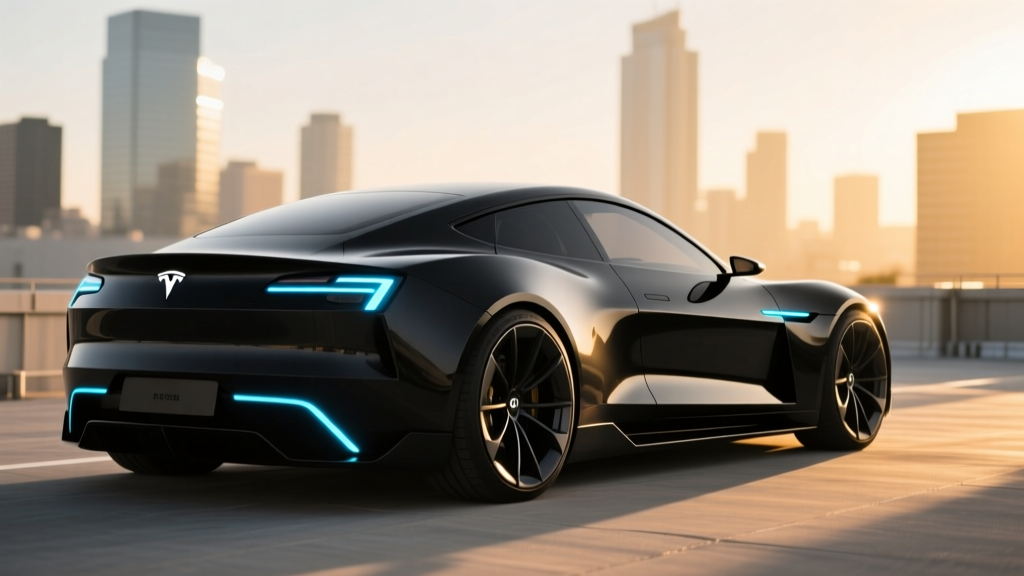
First unveiled in November 2017 and repeatedly delayed since, the next-generation Tesla Roadster — particularly in its top-tier "SpaceX Package" variant — remains one of the most anticipated and least delivered vehicles in automotive history. As of early 2026, Tesla CEO Elon Musk has indicated production could begin in late 2026 or 2027, but no customer deliveries have occurred and final EPA certification has not been published. This profile synthesizes every confirmed and estimated specification Tesla has disclosed, flags what remains preliminary, and grounds the hype in real-world EV ownership realities.
Announced Specifications at a Glance
| Attribute | Announced / Estimated Figure |
|---|---|
| EPA Range (est.) | 620 miles (Tesla claim, not EPA-certified) |
| Battery Capacity | ~200 kWh (announced), chemistry TBD (likely NMC/NCA) |
| Drivetrain | Tri-motor AWD (one front, two rear) |
| Horsepower | ~1,000+ hp (wheel torque: 10,000 Nm / 7,376 lb-ft claimed) |
| 0–60 mph | 1.9 seconds (base); <1.1 sec with SpaceX Package (claimed) |
| Top Speed | 250+ mph (claimed) |
| Max DC Fast Charge | Expected 250+ kW (V3/V4 Supercharger compatible) |
| 10–80% DC Charge | Estimated 30–40 min (preliminary, no official curve published) |
| Level 2 Home Charge | ~11.5 kW / ~30–35 mi/hr (est. based on Tesla architecture) |
| Seats / Cargo | 2+2 seating; ~5 cu ft rear trunk (est.) |
| Base MSRP (Reservation) | $200,000 (base); $250,000 (Founders Series, sold out) |
| Battery/Powertrain Warranty | Expected 8 yr / 150,000 mi (based on Tesla precedent) |
Range Reality: 620 Miles on Paper, What to Expect in the Real World
The 200 kWh battery pack would be the largest ever installed in a production passenger car — roughly double the capacity of a Tesla Model S Long Range (100 kWh usable). That mass carries trade-offs: a 200 kWh NMC pack likely weighs 1,200–1,400 lbs alone, pushing total curb weight well above 4,500 lbs. Higher mass increases tire wear, lengthens braking distances, and reduces efficiency at sustained highway speeds.
For context, the most efficient large-battery EVs today achieve roughly 3.0–3.5 miles per kWh. If the Roadster matches that efficiency, a 200 kWh pack yields 600–700 miles in ideal conditions — consistent with Tesla's claim. But sporty driving, high speeds, and cold temperatures compress that envelope significantly.
Charging: The 200 kWh Problem at Public Chargers
A 200 kWh battery introduces a charging challenge that no current public infrastructure is optimized for. Even at a sustained 250 kW DC fast-charge rate, filling 70% of the pack (10–80%) requires pushing ~140 kWh of energy — which, at a mathematically perfect 250 kW, takes 33 minutes. In practice, charge curves taper above 50–60% state of charge, and thermal management of a pack this large may require derating to protect cell longevity.
| Charge Level | Power (kW) | Miles Added per Hour | 10–80% Time (est.) |
|---|---|---|---|
| Level 1 (120V / 12A) | 1.4 kW | ~4 mi/hr | ~100 hours |
| Level 2 (240V / 48A) | 11.5 kW | ~30–35 mi/hr | ~14–16 hours |
| DC Fast (V3 Supercharger) | 250 kW peak | ~750+ mi/hr (peak) | ~35–45 min |
| DC Fast (V4 Supercharger) | 350+ kW peak (est.) | ~1,000+ mi/hr (peak) | ~25–35 min |
The key takeaway: overnight Level 2 home charging will only replenish roughly 250–350 miles in a 10-hour session — not a full pack. Roadster owners planning long road trips will rely heavily on Tesla's Supercharger network, which as of 2026 has expanded V4 stations capable of higher peak power delivery. However, sustained charge rate matters more than peak. We expect the Roadster's charge curve to hold near peak kW only up to ~40–50% SoC before stepping down, consistent with how large packs manage thermal load.
The SpaceX Package: Cold-Gas Thrusters on a Street Car
The "SpaceX Package" is the variant that generates the most discussion. Tesla has stated this option replaces the rear seats with a compressed-air (cold-gas) thruster system that directs jets of air around the vehicle to increase downforce, improve cornering grip, and potentially reduce braking distances. Elon Musk has also suggested the thrusters could contribute to acceleration, enabling the sub-1.1-second 0–60 mph claim.
From an engineering standpoint, cold-gas thrusters are well-understood in aerospace (used for attitude control on satellites and the SpaceX Dragon capsule). Adapting them to an automobile is unprecedented in production vehicles. Key unknowns include:
- Air supply duration: A compressed-air tank has finite capacity. Thruster firings during hard acceleration or cornering would deplete the supply, requiring time and energy to re-pressurize.
- Regulatory approval: NHTSA has no existing framework for thruster-equipped road vehicles. Certification could add years of delay.
- Weight trade-off: The tank, valves, and nozzles add mass that partially offsets the performance gains.
- Safety: High-pressure air jets near pedestrians and other vehicles raise obvious concerns that regulators will scrutinize.
Our assessment: treat the SpaceX Package as a low-volume, track-oriented option that may arrive later than the base Roadster, if it arrives at all. The base tri-motor configuration with its claimed 1.9-second 0–60 is already supercar-territory performance.
Pricing, Trims, and Federal Tax Credit Eligibility
Tesla's announced pricing structure places the Roadster firmly in exotic-car territory:
| Trim / Variant | Announced MSRP | §30D Tax Credit Eligible? |
|---|---|---|
| Roadster (Base) | $200,000 | ❌ No — exceeds $55,000 MSRP cap for sedans/sports cars |
| Roadster + SpaceX Package | TBD (est. $220,000–$250,000) | ❌ No |
| Founders Series (Limited) | $250,000 (sold out) | ❌ No |
Under current IRS §30D Clean Vehicle Credit rules, the Roadster fails to qualify on multiple fronts. The MSRP cap for vehicles classified as sedans or sports cars (non-SUV/truck) is $55,000. Even if Tesla argued for an SUV classification (unlikely for a two-door sports car), the cap is $80,000 — still far below $200,000. Additionally, buyer income caps ($150,000 single / $300,000 joint AGI) and critical-mineral/battery-sourcing requirements further restrict eligibility. At this price point, buyers should not factor any federal EV tax credit into their purchase calculation.
Tech, Driver Assistance, and Interior
While Tesla has not published a full interior spec sheet, we can extrapolate from the current Tesla technology stack as of 2026:
- Infotainment: Likely a 15–17" center touchscreen running Tesla's current vehicle OS, with gaming-capable hardware (AMD Ryzen-based), Netflix/YouTube streaming while parked, and over-the-air update capability.
- Driver Assistance: Tesla Autopilot standard, with Full Self-Driving (Supervised) available as a paid option. Important: FSD remains an SAE Level 2 system — the driver must remain attentive and hands-on (or eyes-on) at all times. It is not autonomous driving.
- Removable Roof: Tesla has confirmed a lightweight removable glass roof panel that stores in the trunk.
- Steering: Likely steer-by-wire with a yoke or round wheel option, as seen in the current Model S/X refresh.
Who Should Consider the Roadster (and Who Should Wait)
- You want a halo electric sports car and can absorb a $200,000+ purchase with no tax incentive
- You prioritize straight-line acceleration above all else (1.9s 0–60 is hypercar territory)
- You already have a practical daily-driver EV and want a weekend/showpiece vehicle
- You're a Tesla reservation holder who has held since 2017–2019 and is prepared for further delays
- You need a vehicle available for delivery in 2026 — this car is not on sale
- You want a practical daily driver with usable rear seats and cargo space
- You're counting on the SpaceX Package — regulatory and engineering hurdles may delay or cancel it
- Home charging a 200 kWh battery overnight is impractical for your electrical setup (you'd need a dedicated 60A+ circuit and potentially a panel upgrade)
Competitive Landscape: What $200K+ Buys You in 2026
| Vehicle | Price | 0–60 mph | EPA Range | Availability |
|---|---|---|---|---|
| Tesla Roadster (announced) | $200,000+ | 1.9s (claimed) | 620 mi (claimed) | Not on sale |
| Rimac Nevera | $2,200,000 | 1.85s | ~300 mi (WLTP) | Limited production |
| Lucid Air Sapphire | $249,000 | 1.89s | 427 mi | On sale |
| Tesla Model S Plaid | $89,990 | 1.99s | 396 mi | On sale |
| Porsche Taycan Turbo GT | $230,000 | 2.1s | ~280 mi | On sale |
The Model S Plaid delivers 92% of the Roadster's claimed acceleration for 45% of the price and is available today with EPA-certified range and full Supercharger access. The Lucid Air Sapphire matches the Roadster's claimed 0–60 time while offering a usable back seat, 427 miles of certified range, and immediate delivery. Buyers who need a car in 2026 have compelling, proven alternatives.
Frequently Asked Questions
What is the real-world range of the SpaceX Tesla Roadster?
Tesla claims 620 miles, but this is not EPA-certified. Based on typical EPA discounting and real-world highway/cold-weather losses, expect 420–470 miles on the highway in mild weather and potentially 350–420 miles in freezing temperatures. Final certified numbers will only be available once the car enters production and undergoes EPA testing.
How fast does the Roadster charge at home and on the road?
At home on a Level 2 (240V/48A) charger, expect roughly 30–35 miles of range per hour of charging — meaning a full charge from empty would take 18+ hours. On a V3 Supercharger at 250 kW, 10–80% is estimated at 35–45 minutes, though Tesla has not published an official charge curve for this pack. A V4 Supercharger at 350+ kW could reduce this to 25–35 minutes if the pack supports it.
How much does the Roadster cost after tax credits?
The Roadster does not qualify for the federal §30D EV tax credit because its MSRP ($200,000+) far exceeds the $55,000 cap for non-SUV vehicles. The effective purchase price is the full MSRP plus destination, taxes, and registration. State-level incentives (typically $1,000–$7,500 depending on jurisdiction) may apply but are negligible relative to the purchase price.
Is the Roadster worth buying vs. a Model S Plaid or Lucid Air Sapphire?
If you can wait for an uncertain production timeline and want exclusivity, the Roadster offers unmatched claimed specs. If you want a car you can drive today with certified range, proven reliability, and 90%+ of the performance, the Model S Plaid ($89,990) or Lucid Air Sapphire ($249,000) are rational, available alternatives. The Roadster is a collector/halo play, not a practical purchase.
Does the SpaceX Package actually work, and is it street-legal?
Cold-gas thrusters are proven aerospace technology, but no production road car has ever been certified with them. NHTSA has no existing regulatory framework for thruster-equipped vehicles, and the safety implications of high-pressure air jets near pedestrians are unresolved. Expect the SpaceX Package to either be heavily restricted (track-use only), significantly delayed, or potentially canceled before reaching customers.
What battery chemistry will the Roadster use?
Tesla has not confirmed chemistry, but a 200 kWh pack optimized for performance and energy density will almost certainly use NMC (nickel manganese cobalt) or NCA (nickel cobalt aluminum) cells — not LFP, which is heavier and lower in energy density. NMC offers higher specific energy but has a slightly shorter cycle life and requires more careful thermal management than LFP.
Sources: IRS §30D Clean Vehicle Credit rules, EPA Fuel Economy, Tesla Inc. public disclosures and investor communications.