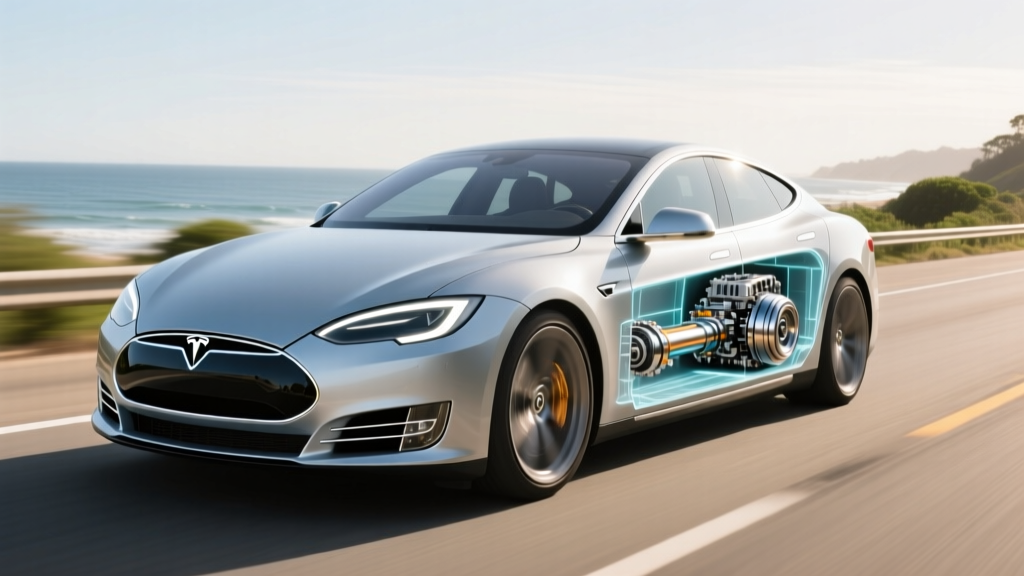
Tesla has always been described as a software company that happens to build cars. With the refreshed 2026 Model 3 — now firmly in its "Highland" lifecycle — that characterization matters more than ever. The hardware is competitive, but it's the software engineering that defines daily ownership: over-the-air updates that alter suspension tuning, a vision-only driver-assist stack that processes billions of pixels per hour, and an infotainment system that doubles as a gaming console. This review examines the 2026 Tesla Model 3 through the lens of its software-defined architecture, with the exact numbers buyers need.
2026 Tesla Model 3: Core Specifications at a Glance
| Spec | Long Range RWD | Long Range AWD | Performance |
|---|---|---|---|
| EPA Range | 363 mi | 346 mi | 315 mi |
| Battery (usable) | ~75 kWh (NMC) | ~75 kWh (NMC) | ~75 kWh (NMC) |
| 0-60 mph | 5.8 sec | 4.2 sec | 2.9 sec |
| Horsepower | 271 hp | 346 hp | 510 hp |
| Drivetrain | RWD | Dual-Motor AWD | Dual-Motor AWD |
| DC Fast Charge (peak) | 250 kW | 250 kW | 250 kW |
| 10-80% DC Time | ~25 min | ~25 min | ~25 min |
| Level 2 Home Charge | 11.5 kW (~44 mi/hr) | 11.5 kW (~44 mi/hr) | 11.5 kW (~44 mi/hr) |
| MPGe (combined) | 132 MPGe | 125 MPGe | 115 MPGe |
| Base MSRP | $42,380 | $47,380 | $54,380 |
Sources: fueleconomy.gov, Tesla.com 2026 specs. Prices exclude $1,390 destination fee.
Range Reality: EPA Stickers vs. Real-World Miles
Real-World Expectation: ~290-320 miles highway at 70 mph; ~240-270 miles in sub-freezing winter conditions. City/regenerative driving can match or slightly exceed EPA figures.
The 363-mile EPA figure on the Long Range RWD is among the highest of any sedan under $50,000. But EPA testing uses low average speeds with significant regenerative braking recovery — conditions that flatter EVs. In sustained 75 mph highway driving (the real road-trip scenario), expect roughly 80-88% of the sticker number, depending on temperature and elevation.
Cold weather is the equalizer. Tesla's heat pump — standard across the 2026 Model 3 lineup — is among the best in the industry at preserving range in winter, but lithium-ion chemistry still loses efficiency below 40°F. Owners in northern climates should budget 20-30% range reduction in deep winter. The software-driven battery preconditioning system mitigates this by warming the pack before you reach a Supercharger, but it can't eliminate physics.
The RWD base model uses an LFP (lithium iron phosphate) battery (~60 kWh usable), yielding an EPA range of 272 miles. LFP chemistry trades energy density for longevity — Tesla recommends charging LFP packs to 100% regularly, unlike the NMC packs in Long Range and Performance trims where 80% daily limits are advised.
Charging Speed and the Software-Managed Charge Curve
Tesla's software engineering is perhaps most visible at the Supercharger. The 250 kW peak DC fast-charge rate is only sustained for a narrow window — roughly 10-30% state of charge — before tapering to protect battery health. The 10-80% charge takes approximately 25 minutes, which remains competitive with the Hyundai Ioniq 6 (240 kW peak, ~18 min 10-80%) and faster than the BMW i4 (205 kW peak, ~31 min 10-80%).
| Charging Level | Power | Miles Added per Hour | Notes |
|---|---|---|---|
| Level 1 (120V) | ~1.4 kW | ~5 mi/hr | Emergency/trickle only |
| Level 2 (240V, 48A) | 11.5 kW | ~44 mi/hr | Home Wall Connector; full charge ~8 hrs |
| DC Fast (Supercharger V3) | 250 kW peak | ~200 mi in 15 min | Peak at low SoC; tapers above 50% |
| DC Fast (Supercharger V4) | Up to 350 kW* | Faster taper curve | *Model 3 currently capped at ~250 kW intake |
Home charging on a Tesla Wall Connector at 11.5 kW delivers roughly 44 miles of range per hour — enough to fully replenish overnight for nearly any commute. Installation typically costs $800-$2,000 depending on panel proximity and whether a 200A service upgrade is needed.
One software advantage: Tesla's navigation automatically routes through Superchargers and preconditions the battery en route, arriving at optimal temperature for peak charge speed. This integrated approach still outperforms third-party routing apps that lack direct thermal-management integration.
The Software Stack: FSD Supervised, Vision-Only ADAS, and OTA Updates
Tesla Autopilot and FSD (Supervised) are Level 2 driver-assistance systems. The driver must remain attentive, hands on or near the wheel, and ready to take over at any moment. These are NOT self-driving systems. Only Level 4 robotaxi services like Waymo operate without a human driver.
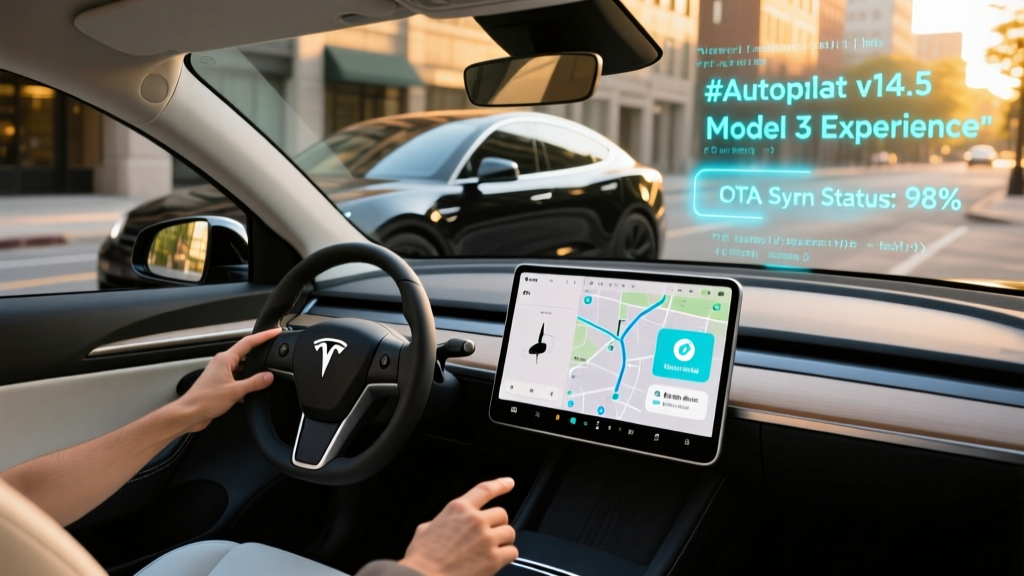
The 2026 Model 3 runs Tesla's vision-only ADAS stack — no radar, no ultrasonic sensors. Eight cameras feed a neural network running on Tesla's HW4 (Hardware 4) computer, processing the environment in real time. Autopilot (standard) handles adaptive cruise control and lane centering on highways competently. Full Self-Driving (Supervised), a $8,000 add-on or $99/month subscription, extends to city streets with stop-sign and traffic-light recognition.
The software engineering achievement is genuine: Tesla's neural-net approach has improved dramatically since the 2022 vision-only transition, with smoother lane changes and better intersection handling. But real-world limitations persist. Construction zones, faded lane markings, and adverse weather still require immediate driver intervention. NHTSA continues to scrutinize Level 2 systems across all manufacturers.
Over-the-air (OTA) updates remain Tesla's killer advantage. The 2026 Model 3 receives meaningful updates monthly — not just infotainment tweaks, but suspension damping profiles, regen behavior, and ADAS improvements delivered wirelessly. No other automaker matches this cadence of post-purchase enhancement.
Interior, Cargo, and the Minimalist Software-First Cabin
The 2026 Model 3 interior is polarizing by design. A single 15.4-inch center touchscreen controls virtually everything — there are no physical buttons for climate, mirrors, or even the glovebox. The rear passengers get their own 8-inch screen for climate and entertainment, a meaningful Highland refresh upgrade.
Dimensions matter for daily usability:
- Cargo volume: 23 cu ft trunk + 3.1 cu ft frunk (26.1 total)
- Rear legroom: 35.3 inches
- Front headroom: 40.3 inches
- Seating: 5 passengers (tight middle seat due to floor tunnel hump)
The ventilated front seats and acoustic glass (added in the Highland refresh) transformed the Model 3 from a tech showcase into a genuinely comfortable daily driver. Road noise is dramatically reduced compared to pre-2024 models.
Pricing, Trims, and Federal Tax Credit Eligibility
| Trim | Base MSRP | After Destination | Est. After §30D Credit* |
|---|---|---|---|
| RWD (LFP) | $38,990 | $40,380 | ~$32,880 |
| Long Range RWD | $42,380 | $43,770 | ~$36,270 |
| Long Range AWD | $47,380 | $48,770 | ~$41,270 |
| Performance | $54,380 | $55,770 | ~$48,270 |
*Estimated after $7,500 federal tax credit. Eligibility depends on buyer income caps ($150K single / $300K joint MAGI), battery critical-mineral and component sourcing requirements, and point-of-sale transfer. Verify current-year rules at IRS.gov §30D. Model 3 qualifies under the $55,000 MSRP sedan cap.
- Vehicle MSRP under $55,000 (sedans) ✓ — all Model 3 trims qualify
- Buyer MAGI under $150K (single) / $300K (joint) — verify with tax professional
- Battery critical minerals ≥ sourced from US/FTA partners — Tesla has significantly shifted sourcing but verify current-year eligibility at purchase
- Battery components ≥ manufactured/assembled in North America — Tesla Fremont/Giga Nevada production supports compliance
- Point-of-sale transfer available — reduces purchase price at the dealer, no waiting for tax filing
How It Compares: Model 3 vs. Key Rivals
The 2026 Model 3 competes against a deepening field. Here's how the software-defined sedan stacks up:
| Attribute | Tesla Model 3 LR AWD | Hyundai Ioniq 6 SEL | BMW i4 eDrive40 |
|---|---|---|---|
| EPA Range | 346 mi | 361 mi | 307 mi |
| DC Fast Peak | 250 kW | 240 kW | 205 kW |
| 10-80% Time | ~25 min | ~18 min | ~31 min |
| 0-60 mph | 4.2 sec | 5.1 sec | 5.5 sec |
| Base MSRP | $47,380 | $42,715 | $57,900 |
| OTA Updates | Monthly, deep | Quarterly, limited | Semi-annual, limited |
| ADAS Approach | Vision-only neural net | Camera + radar fusion | Camera + radar fusion |
| Supercharger Access | Native NACS | CCS (NACS adapter available) | CCS (NACS adapter available) |
The Ioniq 6 charges faster and costs less. The i4 offers a more traditional luxury interior. But neither matches Tesla's software cadence, Supercharger network seamlessness, or post-purchase feature delivery.
Pros and Cons: The Honest Assessment
- 363-mile max EPA range leads the segment
- Supercharger network: 50,000+ stalls, native NACS, no adapters needed
- OTA updates deliver genuine post-purchase improvements
- Heat pump standard — best-in-class cold-weather efficiency
- Highland refresh: acoustic glass, ventilated seats, rear screen
- Lowest energy consumption per mile in class (132 MPGe LR RWD)
- No physical controls — everything through the touchscreen
- FSD Supervised still requires full driver attention ($8K add-on)
- Rear visibility limited by sloping roofline and no rear wiper
- 250 kW peak charge rate trails Ioniq 6's 10-80% speed
- Ride firmness on 19-inch sport wheels (18-inch recommended for comfort)
- No Apple CarPlay/Android Auto — Tesla-only ecosystem
Who the 2026 Model 3 Suits Best
Buy it if: You want maximum range per dollar, you have home Level 2 charging access, you value continuous software improvement, and you frequently road-trip on Supercharger corridors. The Long Range RWD at ~$43,770 (after destination, before credit) is the value sweet spot — 363 miles of EPA range, rear-wheel-drive simplicity, and a ~$36,270 effective price after the federal credit.
Look elsewhere if: You need physical buttons, you want CarPlay integration, you frequently carry rear-seat adults on long trips (the sloping roofline compromises headroom), or you live in an area with sparse Supercharger coverage and no CCS charging alternatives.
Warranty Coverage
Tesla's warranty structure remains competitive:
- Basic vehicle: 4 years / 50,000 miles
- Battery & drive unit (Long Range/Performance): 8 years / 120,000 miles, with ≥70% capacity retention
- Battery & drive unit (RWD/LFP): 8 years / 100,000 miles, with ≥70% capacity retention
The 70% retention threshold is industry-standard (matching Hyundai, Ford, and GM). Real-world data from Tesla's fleet suggests NMC packs lose roughly 10-12% over the first 100,000 miles, with degradation slowing significantly thereafter. LFP packs show even slower degradation curves.
Frequently Asked Questions
What is the real-world range of the 2026 Tesla Model 3?
The Long Range RWD achieves an EPA-estimated 363 miles. In real-world highway driving at 70 mph, expect 290-320 miles. In sub-freezing temperatures, budget 240-270 miles. The LFP-equipped RWD model rates at 272 miles EPA, with real-world highway expectation of ~215-240 miles.
How fast does the Model 3 charge at home and on DC fast chargers?
At home on a Level 2 Tesla Wall Connector (11.5 kW), the Model 3 gains about 44 miles of range per hour — a full charge takes roughly 8 hours. On a V3 Supercharger (250 kW peak), 10-80% takes approximately 25 minutes. Peak charge rate is only sustained briefly at low state of charge; the curve tapers above 50% SoC.
How much does the 2026 Model 3 cost after federal tax credits?
The Long Range RWD starts at $43,770 (including destination). If you qualify for the full $7,500 §30D credit (income under $150K single/$300K joint, battery sourcing requirements met), the effective price drops to approximately $36,270. Point-of-sale transfer is available, reducing the purchase price directly at delivery. Verify current-year eligibility at IRS.gov.
Does the 2026 Tesla Model 3 qualify for the federal EV tax credit?
All Model 3 trims fall under the $55,000 MSRP cap for sedans. Tesla's North American manufacturing and ongoing battery-sourcing shifts have maintained eligibility, but critical-mineral and component requirements tighten annually. Confirm trim-specific eligibility at the time of purchase via the IRS clean vehicle credit portal.
Is the Model 3 worth buying vs. the Hyundai Ioniq 6 or BMW i4?
The Ioniq 6 charges faster (10-80% in ~18 min) and costs less. The i4 offers a premium interior with physical controls and CarPlay. The Model 3 wins on range, Supercharger network access, software update cadence, and total cost of ownership. If charging speed is your top priority, the Ioniq 6 edges ahead. If you want the most integrated software experience and best road-trip infrastructure, the Model 3 remains the benchmark.
Is Tesla's FSD actually self-driving?
No. FSD (Supervised) is an SAE Level 2 driver-assistance system. It requires continuous driver attention and intervention capability. It handles many city and highway scenarios but struggles with construction zones, complex intersections, and adverse weather. You are the driver at all times.