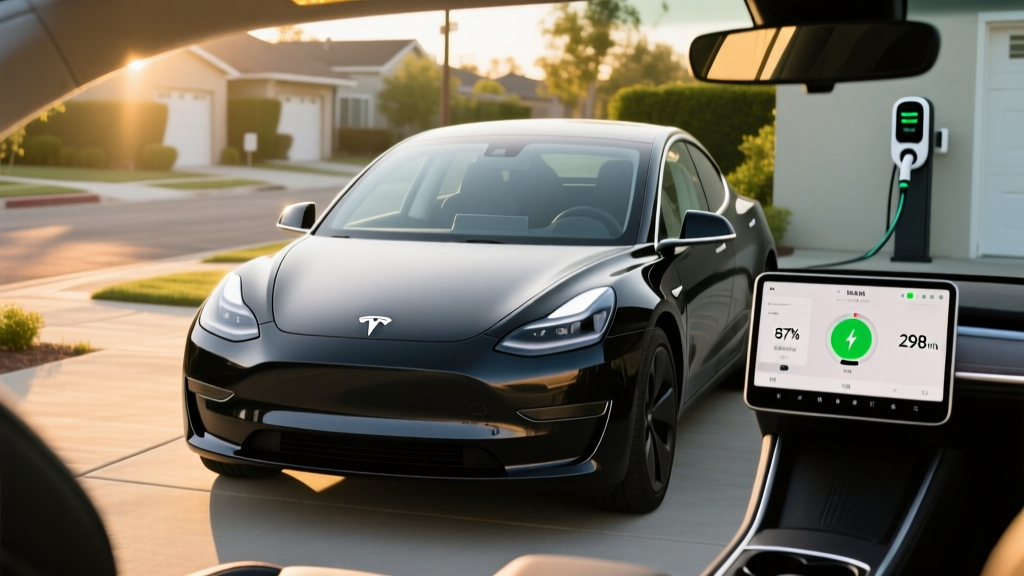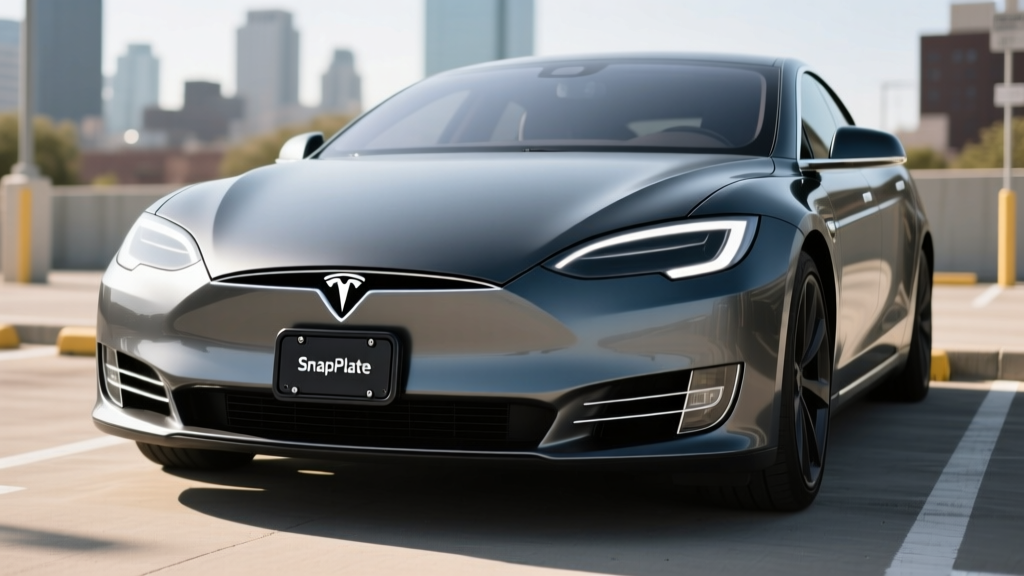
If you own a Tesla Model S in one of the 30+ U.S. states that legally require a front license plate, you've faced the dilemma: drill into your bumper or risk a citation. The SnapPlate front license plate holder for Tesla Model S promises a third option — a no-drill, snap-in mounting bracket designed specifically for the Model S front fascia. This guide walks through the SnapPlate's fitment, installation reality, and pairs it with a complete 2026 Tesla Model S ownership profile so you know exactly what you're mounting it to.
Why the SnapPlate Exists: The Front Plate Problem
Most states — including California, New York, Texas, and Massachusetts — require both front and rear license plates. Tesla ships the Model S with a front plate bracket in the trunk (or adhered to the bumper with 3M tape, depending on model year), but the OEM solution has drawbacks. The adhesive-mount bracket can leave residue or fail in extreme heat, and the screw-mount version requires drilling into the bumper. The SnapPlate takes a different approach: it clips into the existing lower grille openings on the Model S front fascia, using the car's own geometry for retention rather than adhesive or hardware.
2026 Tesla Model S: Full Spec Profile
Before mounting any accessory, it helps to know what you're working with. The 2026 Tesla Model S continues in two main trims: the dual-motor Long Range and the tri-motor Plaid. Here are the numbers that matter for ownership.
| Spec | Long Range | Plaid |
|---|---|---|
| EPA Range | 402 miles | 359 miles |
| Battery (usable) | ~100 kWh (NMC) | ~100 kWh (NMC) |
| Drivetrain | Dual-Motor AWD | Tri-Motor AWD |
| Horsepower | 670 hp | 1,020 hp |
| 0-60 mph | 3.1 seconds | 1.99 seconds |
| Max DC Fast Charge | 250 kW (CCS via adapter / NACS native) | 250 kW |
| 10-80% DCFC Time | ~25 minutes | ~25 minutes |
| Level 2 Home Charge | 11.5 kW (~41 mi/hr) | 11.5 kW (~41 mi/hr) |
| MPGe (combined) | 120 MPGe | 116 MPGe |
| kWh/100 mi | 28 kWh | 29 kWh |
| Cargo Volume | 28 cu ft (rear) + 5.3 cu ft (frunk) | 28 cu ft + 5.3 cu ft |
| Rear Legroom | 35.4 inches | 35.4 inches |
| Base MSRP | $74,990 | $89,990 |
| Battery Warranty | 8 yr / 150,000 mi | 8 yr / 150,000 mi |
SnapPlate Fitment and Installation on the Model S
The SnapPlate is designed for the Model S's lower grille area, which has remained largely consistent since the 2021 refresh (the "Palladium" interior generation). Here's what the installation process looks like in practice:
- Step 1: Clean the lower grille surface with isopropyl alcohol to remove road film and debris.
- Step 2: Align the SnapPlate's retention clips with the grille openings — the bracket uses flexible tabs that snap behind the grille slats.
- Step 3: Press firmly until all four clips engage. You should hear audible clicks.
- Step 4: Attach your state-issued front plate using the included stainless steel screws into the SnapPlate's pre-drilled holes.
Total install time: roughly 5-10 minutes, no tools required beyond a screwdriver for the plate itself.
Fitment Notes and Caveats
The SnapPlate works on the 2021-2026 Model S front fascia. Owners of the pre-2021 Model S (pre-refresh) will find the lower grille geometry is different, and the SnapPlate may not clip in securely. Additionally, if your Model S has the optional front bumper splitter or aftermarket aero kit, clearance may be tight. The bracket holds the plate approximately 1 inch proud of the bumper surface, which is sufficient for law enforcement visibility but does add a minor aerodynamic disturbance — expect negligible impact on range (1-2 miles at most over a full charge).
Charging the Model S: What You Need to Know
Whether you're a new or prospective Model S owner, charging logistics define daily ownership more than any accessory. Here's the breakdown:
| Charge Level | Power (kW) | Miles Added per Hour | Typical Use Case |
|---|---|---|---|
| Level 1 (120V) | ~1.4 kW | ~3-4 mi/hr | Emergency / trickle only |
| Level 2 (240V, 48A) | 11.5 kW | ~41 mi/hr | Daily home charging |
| DC Fast (V3 Supercharger) | 250 kW peak | ~200 mi in 15 min | Road trips |
| DC Fast (V4 Supercharger) | 250 kW peak | ~200 mi in 15 min | Newer stations |
The Model S charge curve peaks at 250 kW only between roughly 10-30% state of charge, then tapers progressively. By 60% SoC, you're typically at 120-140 kW, and above 80% it drops below 60 kW. This is why the 10-80% time of ~25 minutes is the meaningful metric — charging from 80-100% can add another 25-30 minutes. Always precondition the battery (the car does this automatically when navigating to a Supercharger) for optimal charge speed.
Tax Credit Eligibility and Total Cost
The 2026 Tesla Model S does not qualify for the federal §30D new clean vehicle credit. Here's why, based on current IRS rules:
- MSRP Cap: The §30D credit applies only to sedars with an MSRP at or below $55,000. The Model S starts at $74,990, well above the threshold.
- Buyer Income Cap: Even if the MSRP qualified, the credit phases out for buyers with modified AGI above $150,000 (single) or $300,000 (joint).
- Battery Sourcing: Critical mineral and battery component sourcing requirements continue to tighten through 2026, further limiting eligible vehicles.
| Trim | Base MSRP | Federal Tax Credit | Effective Price |
|---|---|---|---|
| Long Range | $74,990 | $0 (exceeds MSRP cap) | $74,990 |
| Plaid | $89,990 | $0 (exceeds MSRP cap) | $89,990 |
| Long Range (w/ FSD) | ~$82,990 | $0 | ~$82,990 |
Some states offer their own EV incentives that may partially offset the cost — check your state's energy office or DMV for current programs, as these vary widely and change frequently.
Who the Model S Suits Best
Buy the Model S Long Range if: You need a 400-mile range luxury sedan for frequent long-distance travel, want AWD for four-season climates, and value a spacious rear seat and generous cargo area (28 cu ft trunk + 5.3 cu ft frunk).
Buy the Model S Plaid if: Track performance and sub-2-second 0-60 times matter to you, and you're willing to trade 43 miles of EPA range for 1,020 hp and tri-motor torque vectoring.
Look elsewhere if: You need the federal tax credit (consider the Model 3, which may qualify depending on trim and sourcing), you want third-row seating, or your budget is under $60,000.
Standout Tech and Notable Drawbacks
The Model S continues to offer Tesla's 17-inch center touchscreen with AMD Ryzen processor, a 22-speaker audio system, and the controversial yoke steering option. The Autopilot suite is standard, with Full Self-Driving (Supervised) available as an $8,000 add-on or $99/month subscription.
Notable drawbacks: The Model S's interior build quality, while improved since 2021, still doesn't match the panel-gap consistency of a Mercedes EQS or BMW i7 at this price point. Rear-seat USB-C ports are limited, and the absence of physical buttons for climate and wipers means everything routes through the touchscreen. Insurance costs also run higher than average — expect $2,400-$3,600/year depending on your profile and state.
SnapPlate vs. OEM Bracket vs. Adhesive Mounts
For the front plate question specifically, here's how the three main options compare:
- OEM Screw-Mount Bracket: Most secure, but requires drilling 2-4 holes in the bumper. Permanent and clean-looking, but impacts resale if you ever remove it.
- OEM 3M Adhesive Bracket: No drilling, but adhesive can fail in extreme heat (common in AZ, TX, NV summers) and leaves residue upon removal.
- SnapPlate Clip-On Bracket: No drill, no adhesive, removable without trace. Slightly less rigid than the screw-mount — you may notice minor vibration at highway speeds on rough pavement. Best option for leased vehicles or owners who want reversibility.
Warranty and Long-Term Ownership
Tesla covers the Model S battery and drive unit for 8 years or 150,000 miles, whichever comes first, with a guaranteed minimum 70% capacity retention over that period. The vehicle limited warranty is 4 years / 50,000 miles. For a vehicle in this price range, the battery warranty is competitive with BMW and Mercedes but falls short of Hyundai/Kia's 10-year/100,000-mile coverage.
Battery chemistry in the 2026 Model S is NMC (nickel manganese cobalt), which offers high energy density (enabling the 400+ mile range) but requires more careful thermal management than LFP chemistry. Tesla's active liquid cooling system handles this well — long-term degradation data from older Model S vehicles suggests roughly 10-12% capacity loss at 150,000 miles under normal use patterns.
Frequently Asked Questions
What is the real-world range of the 2026 Tesla Model S?
The EPA rates the Long Range at 402 miles and the Plaid at 359 miles. In real-world highway driving at 70-75 mph in moderate temperatures, expect 340-370 miles (Long Range) and 300-330 miles (Plaid). Cold weather below 30°F reduces range by 20-30%. City driving with regenerative braking can actually exceed EPA estimates slightly.
How fast does the Model S charge at home and on road trips?
At home on a Level 2 charger (240V, 48A), the Model S adds about 41 miles of range per hour — a full overnight charge easily replenishes a day's driving. On a V3 Supercharger, it peaks at 250 kW and charges from 10-80% in approximately 25 minutes. Above 80%, charge speed tapers significantly to protect battery health.
How much does the Model S cost after tax credits?
The 2026 Model S does not qualify for the $7,500 federal §30D credit because its MSRP ($74,990 Long Range / $89,990 Plaid) exceeds the $55,000 sedan cap. Your effective price is the sticker price minus any applicable state incentives. Check IRS.gov for current rules.
Is the Model S worth buying vs. competitors like the Lucid Air or Mercedes EQS?
The Model S Long Range offers the best combination of range (402 mi), Supercharger network access, and performance in its class. The Lucid Air Grand Touring beats it on range (516 mi EPA) but costs more and has a sparser service network. The Mercedes EQS 450+ offers superior interior luxury and ride quality but trails on range (350 mi) and performance. If Supercharger reliability and range are priorities, the Model S remains the benchmark.
What are the biggest pros and cons of the Model S?
- Class-leading 402-mile EPA range (Long Range)
- 250 kW Supercharger network access
- 670-1,020 hp depending on trim
- Spacious 28 cu ft trunk + frunk
- OTA software updates add features over time
- No federal tax credit (MSRP exceeds cap)
- Interior quality inconsistent at this price
- Yoke steering polarizing and not for everyone
- Insurance costs run $2,400-$3,600/year
- High upfront cost vs. Model 3 or competitors
Does the SnapPlate fit all Tesla Model S years?
The SnapPlate is designed for the 2021-2026 Model S (post-refresh "Palladium" generation). Pre-2021 Model S vehicles have a different front fascia and lower grille geometry that is not compatible with the SnapPlate's clip design. Verify your model year before ordering.
Will the SnapPlate affect my Model S's range or autopilot sensors?
No. The SnapPlate mounts in the lower grille area and does not obstruct any of the Model S's cameras, radar (if equipped), or ultrasonic sensors. The aerodynamic impact is negligible — approximately 1-2 miles of range over a full charge due to the slight increase in frontal drag from the plate itself.