Quick Verdict: Is the Smart #2 Electric Worth It?
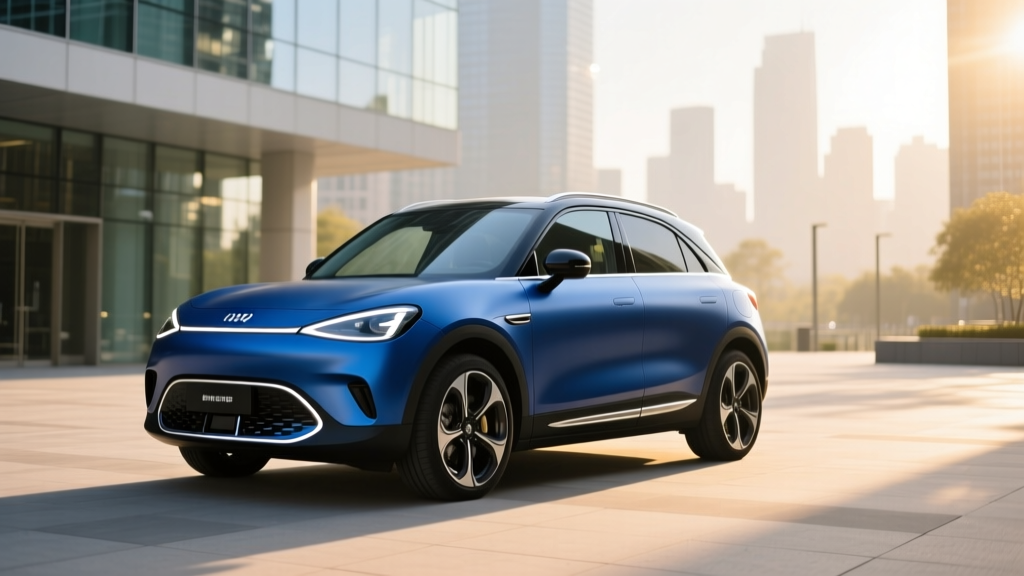
The Smart #2 is the brand's anticipated entry-level electric crossover, positioned below the Smart #1 and #3 in the lineup. Expected to ride on Geely's SEA-E platform, the #2 targets urban buyers who want a compact footprint with roughly 200–250 miles of EPA-estimated range, DC fast charging up to ~150 kW, and a starting price likely in the $30,000–$38,000 range before incentives. It is best suited for city commuters with home charging access who prioritize style and maneuverability over maximum range. If you regularly drive 300+ miles between charges or live in a charging desert, a larger EV or a plug-in hybrid will serve you better.
What Is the Smart #2 Electric?
Smart — now a joint venture between Mercedes-Benz and Geely — has been rebuilding its lineup around fully electric vehicles. The Smart #1 (a subcompact crossover) launched globally in 2023, followed by the Smart #3 (a coupe-style crossover). The Smart #2 has been announced as the next addition, slotted as a more affordable, slightly smaller urban-focused electric crossover. It is expected to debut in select markets first, with U.S. availability still uncertain as of early 2026.
Based on the platform architecture shared with its siblings and Geely's broader EV family (which includes the Zeekr X and Volvo EX30), the Smart #2 should feature:
- A single-motor rear-wheel-drive configuration (with a possible dual-motor AWD variant)
- LFP (lithium iron phosphate) battery chemistry for the base trim, with NMC possible on higher trims
- CCS1 or NACS charging port (U.S. market TBD based on Smart's eventual North American strategy)
- Mercedes-Benz-influenced interior design and MBUX-adjacent infotainment
Important caveat: As of this writing, Smart has not confirmed final U.S. EPA range figures, MSRP, or a firm on-sale date for the American market. The specs below are based on global announcements, platform-shared vehicle data, and informed estimates. We will update this guide as official figures are released.
Estimated Specs: Range, Battery, and Charging
| Specification | Smart #2 (Estimated) | Smart #1 (Global Reference) |
|---|---|---|
| Battery Capacity | ~49–66 kWh usable | 49 kWh (base) / 66 kWh (extended) |
| Battery Chemistry | LFP (base) / NMC (extended) | LFP / NMC |
| EPA Range (Est.) | 200–250 miles | ~210–270 mi (WLTP; EPA typically 10-15% lower) |
| Peak DC Fast Charge | ~130–150 kW | 150 kW |
| 10–80% DC Charge Time | ~25–30 minutes | ~30 min (150 kW) |
| Level 2 AC Charging | Up to 22 kW (3-phase, where available) | 22 kW |
| Drivetrain | RWD (AWD optional) | RWD / AWD (Brabus) |
| Horsepower | ~268 hp (single motor) | 268 hp (single) / 422 hp (dual) |
| 0–60 mph (Est.) | ~6.5 sec (single motor) | 6.7 sec (single) / 4.3 sec (Brabus) |
Real-World Range Reality Check
EPA estimates are a starting point, not a guarantee. Based on testing of the Smart #1 and platform siblings like the Volvo EX30, expect the following adjustments for the Smart #2:
- Highway driving (70+ mph): Subtract ~15–20% from the EPA sticker. A 230-mile EPA rating likely delivers 185–195 miles at sustained interstate speeds.
- Cold weather (below 32°F): LFP batteries are particularly sensitive to cold. Expect 20–30% range loss in freezing conditions unless the vehicle has a heat pump and you precondition while plugged in.
- Combined city/highway, mild weather: You should see numbers close to the EPA estimate, or slightly above in stop-and-go city driving where regenerative braking recovers energy.
Charging at Home and on the Road
Charging access is the single most important ownership variable. Before committing to the Smart #2 (or any EV), honestly assess your situation:
Home Charging
If you can install a Level 2 home charger (240V), the Smart #2's ~49–66 kWh battery will recharge fully overnight. At a typical U.S. residential single-phase supply of 11.5 kW (48-amp circuit), a full charge from 10% takes roughly 5–6 hours. This is the ideal ownership scenario — you wake up every morning with a full "tank."
Home Level 2 installation typically costs $800–$2,500 depending on your electrical panel capacity and the distance from the panel to your parking spot. If your home has a 100-amp panel, you may need a $1,500–$3,000 panel upgrade to 200 amps before adding a dedicated EV circuit.
Public DC Fast Charging
At a 150 kW DC fast charger, the Smart #2 should add roughly 120–150 miles of range in 20–25 minutes under ideal conditions. However, charging follows a curve: peak speed only holds up to roughly 50–60% State of Charge (SoC), then tapers significantly. A 10–80% session will take about 25–30 minutes, but pushing from 80–100% can add another 20+ minutes. For road trips, plan to charge to 80% and move on.
| Charging Level | Power (kW) | Miles Added per Hour | Best For |
|---|---|---|---|
| Level 1 (120V outlet) | 1.4 kW | ~4–5 mi/hr | Emergency / overnight top-up |
| Level 2 (240V home) | 7.7–11.5 kW | ~25–40 mi/hr | Daily charging |
| DC Fast Charge | Up to 150 kW | ~300–500 mi/hr (to 80%) | Road trips |
Cost of Ownership: Smart #2 vs. Gas Subcompact
The Smart #2 competes in price and size with gas-powered subcompact crossovers like the Honda HR-V, Hyundai Kona (gas), and Chevrolet Trax. Here is how the economics compare over five years and 75,000 miles of driving.
| Cost Factor | Smart #2 Electric (Est.) | Gas Subcompact Crossover (Avg.) |
|---|---|---|
| Purchase Price (Base MSRP) | $32,000–$38,000 | $26,000–$30,000 |
| Federal Tax Credit (§30D) | Up to $7,500 (if eligible) | $0 |
| Effective Purchase Price | $24,500–$30,500 | $26,000–$30,000 |
| Fuel/Energy (5 yr / 75k mi) | $2,200–$3,500 (home charging) | $7,500–$9,000 (gas at $3.50/gal, 30 MPG) |
| Maintenance (5 yr) | $800–$1,200 | $2,500–$3,500 |
| Insurance (5 yr avg.) | $8,500–$10,500 | $6,500–$8,000 |
| Total 5-Year Cost | $36,000–$45,700 | $42,500–$50,500 |
Key takeaways: The Smart #2's higher sticker price is offset by the federal tax credit (if you qualify), dramatically lower fuel costs when charging at home, and reduced maintenance (no oil changes, fewer brake replacements due to regenerative braking). Insurance tends to be 15–25% higher on EVs due to repair costs and parts pricing. Your actual savings depend heavily on electricity rates in your area, whether you can charge at home, and how many miles you drive annually.
Federal Tax Credit Eligibility (§30D)
Under current IRS §30D rules, the Smart #2's eligibility for the full $7,500 credit depends on several factors that must all be met:
- MSRP cap: SUVs/crossovers must be priced at or below $80,000 (the Smart #2 easily clears this)
- Buyer income limits: Modified AGI must not exceed $150,000 (single), $225,000 (head of household), or $300,000 (joint)
- Battery sourcing: Critical minerals and battery components must meet escalating domestic/free-trade-partner thresholds — this is the variable most likely to affect Smart/Geely vehicles, given Chinese supply chain involvement
- Point-of-sale transfer: Eligible buyers can apply the credit as an instant rebate at the dealership rather than waiting for tax filing
Caution: Because Smart is a Geely-Mercedes joint venture with significant Chinese battery sourcing, the Smart #2 may face challenges meeting critical-mineral and battery-component requirements. Always verify current eligibility on fueleconomy.gov before purchasing, as these rules change and are model-specific.
EV vs. Hybrid: Which Makes More Sense?
If you are cross-shopping the Smart #2 against a hybrid like the Toyota Corolla Cross Hybrid or a plug-in hybrid, here is a practical decision framework:
| Factor | Smart #2 (BEV) | HEV (e.g., Corolla Cross Hybrid) | PHEV (e.g., Kia Niro PHEV) |
|---|---|---|---|
| EPA Range / Electric Range | 200–250 mi (all-electric) | ~500+ mi (gas, 42 MPG) | ~33 mi electric + ~440 mi gas |
| Fuel Cost per Mile | ~$0.03–$0.05 (home) | ~$0.10–$0.12 | ~$0.05–$0.10 (blended) |
| Home Charging Needed? | Strongly recommended | No | Recommended for EV range benefit |
| Road-Trip Convenience | Plan charging stops | Gas and go | Gas and go (after EV range depletes) |
| Maintenance | Minimal | Moderate (ICE components) | Moderate (dual systems) |
| Tax Credit | Up to $7,500 | $0 | Up to $7,500 (if eligible) |
Decision Framework: Should You Buy the Smart #2?
Choose the Smart #2 (BEV) if:
- You have reliable home charging (garage, driveway, or dedicated outlet)
- Your daily commute is under 80 miles round-trip
- You take road trips of 300+ miles fewer than 5 times per year
- You qualify for the federal tax credit or state EV incentives
- You want the lowest per-mile operating cost and minimal maintenance
Choose a Hybrid (HEV) if:
- You cannot install a home charger (apartment, street parking)
- You regularly drive 400+ miles between stops
- You live in an area with sparse DC fast-charging infrastructure
- You want the lowest upfront purchase price with no charging lifestyle change
Choose a Plug-in Hybrid (PHEV) if:
- You have home charging but also need long-range flexibility regularly
- Your commute fits within the 25–40 mile electric-only range
- You want EV-like daily driving without any range anxiety on road trips
Common Misconceptions About Compact EVs
| Myth | Fact |
|---|---|
| "200 miles of range isn't enough." | The average American drives ~37 miles per day (FHWA data). A 200-mile EV covers nearly a full week of commuting before needing a charge. |
| "EV batteries need replacing every few years." | Modern LFP and NMC batteries are warranted for 8 years/100,000 miles minimum (federal mandate). Real-world degradation data shows most EV batteries retain 85–90% capacity at 100,000 miles. |
| "Charging takes too long." | At home on Level 2, charging happens while you sleep — effectively zero waiting time. On road trips, a 25-minute DC fast-charge stop every 2–3 hours aligns with normal rest breaks. |
| "Small EVs are unsafe." | EV platforms have a low center of gravity (battery pack under the floor), reducing rollover risk. Check IIHS and NHTSA ratings when they become available for the Smart #2. |
| "I'll save money no matter what." | If you rely exclusively on public DC fast charging at $0.35–$0.50/kWh, your per-mile cost can approach that of a fuel-efficient hybrid. Home charging is where the savings live. |
What First-Time EV Buyers Must Know
If the Smart #2 is your first electric vehicle, here are the practical realities no brochure will tell you:
1. Your Electrical Panel Matters
Before ordering, have a licensed electrician assess your home's panel. A 200-amp panel can usually support a 48-amp Level 2 charger. A 100-amp panel may require an upgrade ($1,500–$3,000) or a lower-amperage charger (24–32 amp), which still adds ~100–150 miles overnight — plenty for most drivers.
2. Preconditioning Is Essential
The Smart #2 (like most modern EVs) should support battery preconditioning — warming the battery to optimal temperature before a DC fast-charge session. Always navigate to a charger using the built-in nav to trigger preconditioning. Skipping this can cut your peak charge rate by 30–50% in cold weather.
3. LFP vs. NMC Charging Habits
If your Smart #2 trim uses an LFP battery, the manufacturer will likely recommend charging to 100% regularly (LFP chemistry benefits from periodic full charges for cell balancing). If your trim uses NMC, daily charging to 80% is better for long-term longevity, saving 100% for road trips. Know which chemistry your trim has.
4. Insurance Will Likely Cost More
EV insurance premiums run 15–25% higher than comparable gas cars. Get quotes from multiple insurers before purchase. Some insurers offer specific EV discounts — shop around.
5. Winter Range Loss Is Real
In sustained sub-freezing temperatures, plan for 20–30% less range. If your Smart #2 is rated at 230 miles EPA, budget for ~160–175 miles of usable range on the coldest days. Preconditioning while plugged in, using seat/steering wheel heaters instead of cabin air heating, and keeping a charge buffer all help.
Battery Warranty and Longevity
Federal law requires EV battery warranties of at least 8 years/100,000 miles (10 years/150,000 miles in CARB states). Smart's global vehicles typically carry an 8-year/100,000-mile battery warranty guaranteeing a minimum of 70% capacity retention. This means that even in a worst-case scenario within the warranty period, your 230-mile-range Smart #2 would still deliver at least 161 miles — more than adequate for daily driving.
Based on fleet data from similar Geely SEA-platform vehicles, expect actual degradation to be significantly better than the warranty floor. Most owners report 5–8% loss over the first 100,000 miles with normal charging habits.
Frequently Asked Questions
Is the Smart #2 available in the United States?
As of early 2026, Smart has not officially launched in the U.S. market. The brand has focused on Europe, China, and select Asian markets. U.S. availability has been discussed but not confirmed with a timeline. We will update this guide if and when Smart announces American pricing and availability.
What will the Smart #2 cost?
Based on global pricing of the Smart #1 and #3, and the #2's positioning as the entry-level model, expect a U.S. base MSRP in the $30,000–$38,000 range before incentives. A fully loaded variant could reach the low-to-mid $40,000s.
Can I road-trip in the Smart #2?
Yes, but with planning. With ~200–250 miles of range and 150 kW DC fast charging, you will need to stop every 2–3 hours for a 25-minute charge. This is manageable for most road trippers, but if you frequently drive 500+ mile days in remote areas with sparse charging, a larger-battery EV or PHEV may be a better fit.
Does the Smart #2 qualify for the $7,500 federal tax credit?
Eligibility is uncertain until the vehicle is officially on sale in the U.S. and the IRS evaluates its battery sourcing. Smart's Geely partnership means significant Chinese supply-chain involvement, which could conflict with §30D's critical-mineral and battery-component requirements. Check fueleconomy.gov for the definitive answer when the vehicle launches.
How does the Smart #2 compare to the Volvo EX30?
Both ride on Geely's SEA architecture and share similar dimensions and battery options. The Volvo EX30 launched in the U.S. with an EPA-estimated range of up to 261 miles and a starting MSRP around $34,950. The Smart #2 will likely target similar specs with a more fashion-forward design language and potentially a slightly lower entry price. The EX30 has the advantage of current U.S. availability and Volvo's established dealer and service network.
What connector does the Smart #2 use?
This depends on the market. European models use CCS2; if Smart enters the U.S., it will likely adopt either CCS1 or NACS (Tesla's connector, now widely adopted by other automakers). Until U.S. specs are confirmed, this remains TBD.