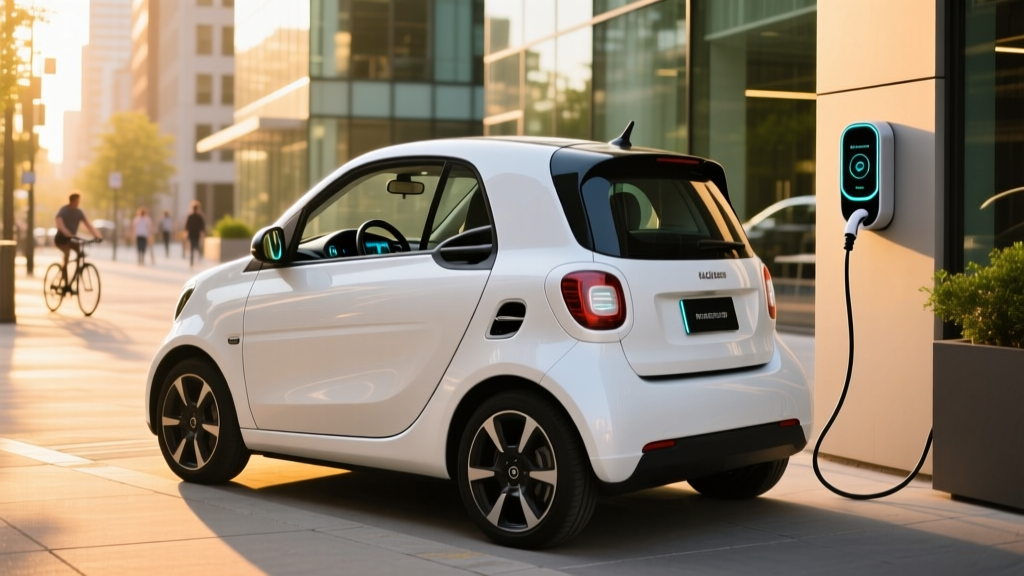
Quick Answer: The Smart Fortwo Electric Drive (model code EQ) was discontinued after the 2019 model year in the United States. You cannot buy one new in 2026. However, used examples remain available on the secondary market, typically priced between $8,000 and $14,000 depending on mileage and condition. With its 17.6 kWh battery and 58-mile EPA range, the Fortwo ED is strictly a city commuter — ideal for short urban loops under 40 miles round-trip with reliable home charging access, but ill-suited for highway travel, cold climates, or anyone without a dedicated parking spot with an outlet.
What You're Actually Getting: Fortwo Electric Drive Specs
Before evaluating whether a used Fortwo ED fits your needs, let's establish exactly what Mercedes-Benz (then Daimler AG) built. The third-generation Smart Fortwo Electric Drive — badged as the EQ Fortwo in some markets — was sold in the U.S. from 2017 through 2019. Here are the hard numbers:
| Specification | Value |
|---|---|
| EPA Range | 58 miles |
| Real-World Range (city, moderate climate) | 50–60 miles |
| Real-World Range (highway, 70 mph) | 38–45 miles |
| Real-World Range (cold weather, below 32°F) | 35–45 miles |
| Battery Capacity (gross / usable) | 17.6 kWh / ~16.0 kWh |
| Battery Chemistry | NMC (Nickel Manganese Cobalt) |
| Motor Output | 80 hp (60 kW) / 118 lb-ft torque |
| 0–60 mph | |
| Top Speed (electronically limited) | 78 mph |
| EPA Efficiency | 108 MPGe combined (31 kWh/100 mi) |
| Level 2 AC Charging (max) | 7.2 kW |
| Level 1 Charging (120V) | ~1.4 kW |
| DC Fast Charging | Not available |
| Charge Time 0–100% (Level 2, 7.2 kW) | ~2.5 hours |
| Charge Time 0–100% (Level 1, 120V) | ~13 hours |
| Connector Type | J1772 (AC only) |
| Cargo Volume | 9.2 cu ft (behind seats) |
| Curb Weight | ~2,340 lbs |
| Battery Warranty (original) | 8 years / 100,000 miles |
A few things jump out from these figures. First, 58 miles of EPA range is extremely limited by 2026 standards — most new EVs deliver 250–350 miles. Second, the absence of DC fast charging is a critical limitation. You cannot use any public fast-charging network (Tesla Supercharger, Electrify America, EVgo) to top up on the go. All charging is AC-only, meaning Level 1 (standard outlet) or Level 2 (240V home or public AC charger).
Third, the battery warranty is now largely expired or nearing expiration for most examples. A 2017 model's 8-year warranty ended in 2025; a 2019 model's expires in 2027. If you're buying used, confirming remaining battery warranty coverage — or budgeting for a potential replacement — is essential.
Real-World Range: What 58 EPA Miles Actually Means
The EPA's 58-mile estimate assumes a mix of city and highway driving in moderate temperatures. In practice, the Fortwo ED's range varies dramatically based on how and where you drive:
EPA Sticker: 58 miles
City driving, 65°F: Expect 55–65 miles (regenerative braking recovers energy in stop-and-go traffic)
Highway driving, 65–70 mph: Expect 38–45 miles (aerodynamic drag dominates at speed; the Fortwo's short wheelbase and tall profile hurt efficiency)
Cold weather, 20°F with cabin heat: Expect 35–45 miles (NMC chemistry loses ~20–30% capacity in freezing temps; resistive cabin heating draws significant power from the small battery)
Hot weather, 95°F with A/C: Expect 48–55 miles (less impact than cold, but A/C compressor load is still meaningful on a 17.6 kWh pack)
The practical takeaway: if your daily round-trip commute exceeds 40 miles, or if you live in a region with harsh winters, the Fortwo ED will require careful planning and likely leave you with uncomfortably thin margins. This is an EV that demands you know your route and your charging options before you leave home.
Cost Breakdown: Buying, Charging, and Owning a Used Fortwo ED
Because the Fortwo ED is only available used, the purchase economics differ from a new EV. Here's what to budget for in 2026:
| Cost Category | Fortwo Electric Drive (Used) | Comparable Gas Car (Used Smart Fortwo Gas, 2017–2019) |
|---|---|---|
| Purchase Price | $8,000–$14,000 | $7,000–$11,000 |
| Federal Used EV Tax Credit (§25E) | Up to $4,000 (30% of sale price, max $4,000; income caps apply) | $0 |
| Effective Purchase Price (after credit) | $4,000–$10,000 | $7,000–$11,000 |
| Annual Fuel/Energy Cost (10,000 mi/yr) | ~$350–$450 (at $0.13/kWh avg) | ~$1,100–$1,300 (at $3.40/gal, 36 MPG combined) |
| Annual Maintenance | ~$200–$400 (no oil changes; brake wear minimal due to regen) | ~$600–$900 (oil, filters, spark plugs, more brake wear) |
| Insurance (annual avg) | ~$1,100–$1,500 | ~$900–$1,200 |
| Estimated 5-Year Total Cost of Ownership | $9,500–$17,000 | $15,500–$21,500 |
On the federal used-EV credit (§25E): This credit provides 30% of the sale price, up to a maximum of $4,000, for qualifying used electric vehicles purchased from a dealer. Key eligibility requirements per the IRS:
- Sale price must be $25,000 or less (the Fortwo ED qualifies easily)
- Buyer income caps: $75,000 single / $112,500 head of household / $150,000 joint
- Vehicle must be at least 2 model years old (all Fortwo EDs qualify)
- Must purchase from a licensed dealer (private-party sales do not qualify)
- Credit is non-refundable — you need sufficient tax liability to claim it
- You can only claim this credit once every 3 years
If you buy a Fortwo ED for $10,000 from a dealer, the credit would be $3,000 (30% of $10,000). If you find one for $14,000, the credit maxes at $4,000. This credit meaningfully reduces the effective cost and is one of the strongest arguments for the used Fortwo ED as a budget city commuter.
Fortwo Electric vs. Gas Fortwo vs. Modern Budget EVs
To put the Fortwo ED in proper context, it helps to compare it against both its gasoline sibling and what you'd get buying a modern entry-level EV in 2026:
| Metric | Smart Fortwo ED (2017–2019, Used) | Smart Fortwo Gas (2017–2019, Used) | Nissan Leaf S (2024–2025, Used) |
|---|---|---|---|
| EPA Range | 58 miles | ~300 miles (gas tank) | 149 miles |
| Effective Price (after credits) | $4,000–$10,000 | $7,000–$11,000 | $14,000–$19,000 |
| Annual Fuel/Energy | ~$400 | ~$1,200 | ~$500 |
| DC Fast Charging | No | N/A (gas) | Yes (CHAdeMO, 50 kW) |
| Cargo Space | 9.2 cu ft | 9.2 cu ft | 23.6 cu ft |
| Seats | 2 | 2 | 5 |
| Highway Capable? | Yes, but limited range | Yes | Yes |
| Cold-Weather Practicality | Poor | Good | Fair |
The Fortwo ED wins on pure urban running cost — electricity at $0.13/kWh makes it one of the cheapest vehicles to operate per mile in the U.S. But the used Nissan Leaf, while $5,000–$10,000 more expensive, offers nearly triple the range, DC fast charging (via CHAdeMO), five seats, and substantially more cargo room. If your budget can stretch, the Leaf is a far more versatile daily driver.
The gas Fortwo is worth noting only as a comparison: Smart discontinued the gasoline Fortwo in the U.S. after 2019 as well, and parts availability for both gas and electric models will become increasingly challenging as the fleet ages.
Charging at Home: What You Need to Know
The Fortwo ED's AC-only charging architecture simplifies some things and complicates others.
Level 1 (120V standard outlet): The included charging cord draws about 1.4 kW, adding roughly 5–6 miles of range per hour. A full 0–100% charge takes approximately 13 hours. This works if you park near an outlet and drive less than 30 miles daily — plug in when you get home, wake up with a full battery.
Level 2 (240V): The Fortwo ED's onboard charger accepts up to 7.2 kW. On a standard 32-amp Level 2 home charger (like a ChargePoint Home Flex or Wallbox Pulsar Plus), a full charge takes about 2.5 hours. This is fast enough that mid-day top-ups are practical if you have a Level 2 unit at work or home.
Home installation cost: If you need a 240V outlet or hardwired Level 2 charger installed, expect the following:
| Item | Cost Range |
|---|---|
| Level 2 charger (hardware) | $300–$700 |
| Electrician labor (240V run, 50 ft avg) | $500–$1,500 |
| Permit and inspection | $50–$200 |
| Electrical panel upgrade (if needed, 100A → 200A) | $1,500–$3,500 |
| Total (no panel upgrade) | $850–$2,400 |
| Total (with panel upgrade) | $2,350–$5,900 |
For a vehicle that may only cost $8,000–$10,000 after credits, a $2,400 charger installation represents a significant percentage of the purchase price. If you already have a 240V outlet (dryer outlet, existing EV setup), the cost drops to just the charger hardware. Many Fortwo ED owners find Level 1 charging sufficient given the small battery and short daily driving needs.
Public charging reality: You can use any public Level 2 charger (J1772 connector) — ChargePoint, Blink, and most destination chargers work fine. However, you cannot use DC fast chargers of any type. This means road trips require planning around multi-hour Level 2 stops, which effectively limits the Fortwo ED to local use.
Common Misconceptions About the Fortwo Electric Drive
| Myth | Fact |
|---|---|
| "It qualifies for the $7,500 new EV tax credit." | The Fortwo ED is discontinued. Only the §25E used-EV credit (up to $4,000) applies, with income and dealer-sale requirements. |
| "58 miles of range is enough for anyone in a city." | Many urban commutes exceed 40 miles round-trip. Add detours, climate control, and battery degradation, and you may have only 30–35 usable miles on a cold day. |
| "I can fast-charge it at Electrify America." | The Fortwo ED has no DC fast-charge port. It is AC-only (J1772). DC fast chargers physically cannot connect. |
| "The battery will need expensive replacement soon." | NMC batteries in low-mileage city cars often retain 85–90% capacity after 8 years. However, if replacement is needed, expect $5,000–$8,000 for a refurbished pack — potentially exceeding the car's value. |
| "It's basically a golf cart." | The Fortwo ED is a fully street-legal passenger vehicle with airbags, ABS, stability control, and a 78-mph top speed. It passed NHTSA crash testing. It's a real car with limited range, not a neighborhood electric vehicle (NEV). |
| "Any mechanic can work on it." | Smart's U.S. dealer network has contracted significantly since 2019. Independent EV shops can handle basic maintenance, but high-voltage battery diagnostics require specialized tools and training. |
Battery Health and Longevity: What to Check Before Buying
The 17.6 kWh NMC battery is the single most important component in a used Fortwo ED. Here's what to evaluate:
State of Health (SoH): Ask the seller or dealer for a battery diagnostic report. Most Mercedes-Benz/Smart dealerships can pull this using their diagnostic tools. A healthy battery should show 85%+ SoH. Below 80%, you'll notice meaningful range loss — a 75% SoH battery might deliver only 40–45 miles on a good day.
Degradation factors: NMC chemistry degrades faster when regularly charged to 100% or deeply discharged. Since the Fortwo ED's small battery makes it nearly impossible to avoid full charges (you need every mile), expect more degradation than you'd see in a long-range EV where owners charge to 80% daily.
Replacement cost: A new or refurbished battery pack costs approximately $5,000–$8,000 including labor. This is a potential total-loss scenario for a car worth $8,000–$10,000. Budget accordingly or negotiate the purchase price to account for this risk.
Warranty check: The original battery warranty covers 8 years/100,000 miles with a capacity retention threshold (typically 70% of original capacity). For 2017 models, this warranty has expired. For 2018–2019 models, verify remaining coverage with a Smart/Mercedes-Benz dealer using the VIN.
Decision Framework: Should You Buy a Fortwo Electric Drive?
Buy the Fortwo ED if:
- Your daily driving is under 35 miles round-trip, almost entirely in the city
- You have reliable access to Level 1 or Level 2 charging at home (garage, driveway, or dedicated parking spot with an outlet)
- You live in a mild climate (Southern California, Florida, Gulf Coast) where cold-weather range loss is minimal
- You want the lowest possible per-mile operating cost and already have another vehicle for longer trips
- You qualify for the §25E used-EV credit and can buy from a dealer for under $14,000
- You accept that parts availability and dealer support will continue to decline
Do NOT buy the Fortwo ED if:
- Your daily commute exceeds 40 miles or includes significant highway driving
- You live in a cold-weather region (Upper Midwest, Northeast, Mountain West) where winter range loss would leave you with 35 miles or fewer
- You rely on street parking without access to an electrical outlet
- This would be your only vehicle — you need a car capable of road trips and unexpected longer drives
- You're concerned about long-term parts availability and service support
- You need more than 2 seats or 9.2 cubic feet of cargo space
Consider these alternatives instead:
- Budget $15,000–$20,000: A used 2022–2024 Nissan Leaf (149–212 mi range), Chevrolet Bolt EV (238–259 mi range), or Hyundai Kona Electric (258 mi range) — all with DC fast charging, more space, and better parts support
- Budget $8,000–$12,000: A used 2017–2019 Chevrolet Bolt EV (238 mi range) — prices have dropped significantly and this is arguably the best value in used EVs
- Budget under $8,000: A used 2013–2017 Nissan Leaf (73–107 mi range) — more range than the Fortwo ED, DC fast charging available, five seats
Frequently Asked Questions
Is the Smart Fortwo Electric Drive still sold new in 2026?
No. Smart discontinued the Fortwo Electric Drive in the U.S. after the 2019 model year. The Smart brand itself was relaunched in the U.S. in 2024–2025 with the Smart #1 and Smart #3 crossovers, which are substantially larger, longer-range vehicles built on Geely's SEA platform. These are completely different vehicles with no mechanical relation to the original Fortwo.
Can I take a Smart Fortwo Electric Drive on the highway?
Yes, it's legally and mechanically capable of highway speeds up to its 78-mph electronic limiter. However, at 65–70 mph, aerodynamic drag reduces range to roughly 38–45 miles. The short 73.7-inch wheelbase also makes it feel less stable than larger vehicles at highway speeds, especially in crosswinds or near trucks. It's safe for brief highway segments but not comfortable for extended interstate driving.
How much does it cost to charge a Fortwo ED at home?
A full charge from empty to 100% uses approximately 16 kWh of usable energy. At the U.S. average residential electricity rate of ~$0.16/kWh (per EIA data), that's about $2.56 per full charge. If you drive 30 miles per day and charge nightly, monthly electricity cost is roughly $25–$35 — compared to $80–$110 in gasoline for a 36-MPG gas Fortwo covering the same distance.
What happens if the battery dies? Is replacement worth it?
If the traction battery fails outside warranty, replacement costs approximately $5,000–$8,000. Given that a used Fortwo ED is worth $8,000–$14,000, a battery replacement can approach or exceed the vehicle's value. Some owners opt for refurbished or salvaged battery packs at lower cost ($3,000–$5,000). Before buying, always check remaining battery warranty and get a State of Health diagnostic.
Do I need a special charger for the Fortwo Electric Drive?
No. The Fortwo ED uses the standard J1772 connector for AC charging, which is universal for all non-Tesla EVs in North America. Any Level 1 (120V) cord or Level 2 (240V) home charger with a J1772 plug will work. You do not need a Tesla Wall Connector or any proprietary equipment. You cannot use DC fast chargers of any type.
Is the Fortwo ED safe?
The Fortwo ED received a 4-star overall safety rating from NHTSA. Its steel Tridion safety cell is structurally robust for its size, and it includes front and side airbags, ABS, and electronic stability control. However, physics is physics — in a collision with a larger vehicle, the Fortwo's 2,340-lb curb weight and minimal crumple zone are disadvantages compared to any modern compact or midsize car.