The Short Answer on Smart Electric Cars
Smart electric cars—vehicles combining battery-electric powertrains with advanced driver-assistance (ADAS) and connected software—make financial sense for most buyers who can charge at home and drive 10,000–15,000 miles annually. In 2026, the average smart EV saves owners $4,500–$7,200 in fuel and maintenance over five years compared to a gas equivalent, though upfront costs remain $3,000–$8,000 higher before incentives. The federal §30D tax credit can reduce purchase price by up to $7,500, but strict battery-sourcing, MSRP caps, and income limits mean not every buyer or model qualifies. If you lack reliable home or workplace charging, a plug-in hybrid (PHEV) may be the smarter electrified choice.
What Makes an Electric Car "Smart" in 2026?
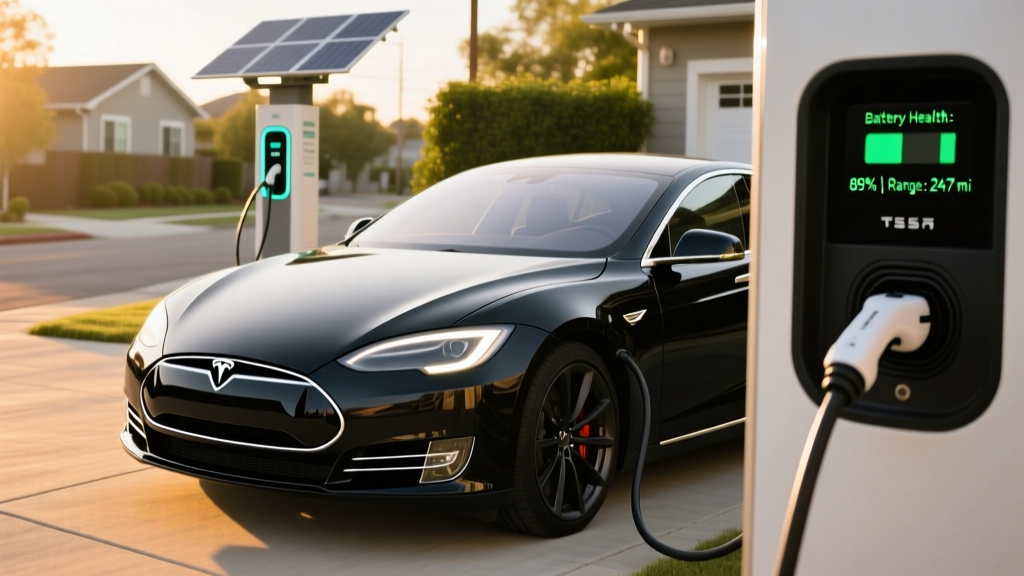
The term "smart electric cars" has evolved beyond the discontinued Smart EQ ForTwo. Today, it describes any battery-electric vehicle (BEV) that pairs a zero-tailpipe-emission powertrain with over-the-air (OTA) software updates, SAE Level 2 driver-assistance systems, and connected features like route-based battery preconditioning. Models like the Tesla Model 3, Hyundai Ioniq 5, Ford Mustang Mach-E, and BMW i4 all fit this definition.
What separates a "smart" EV from a basic one is the integration of three systems:
- Thermal management: Active liquid cooling and heat pumps that precondition the battery for fast DC charging and preserve range in cold weather.
- ADAS suites: Features like Tesla Autopilot, Ford BlueCruise, and Hyundai's Highway Driving Assist 2 operate at SAE Level 2—meaning the driver must remain fully engaged. These are not self-driving systems.
- Software-defined architecture: OTA updates that can add range, improve charging curves, or unlock new features post-purchase.
Smart EV vs Gas Car: The Real Cost Breakdown
The most common question from first-time EV buyers is whether the higher sticker price pays off. Let's compare a well-equipped 2026 smart electric sedan against a popular gas-powered rival over five years and 75,000 miles.
| Cost Category | Smart EV (e.g., Tesla Model 3 RWD) | Gas Sedan (e.g., Toyota Camry SE) |
|---|---|---|
| Base MSRP | $38,990 | $30,500 |
| Federal Tax Credit (§30D) | −$7,500 (if eligible) | $0 |
| Effective Purchase Price | $31,490 | $30,500 |
| Fuel / Electricity (75k mi) | $2,850 (home L2, $0.14/kWh avg) | $8,100 ($3.40/gal, 30 MPG) |
| Maintenance (5 yr) | $1,100 (cabin filter, wipers, tires) | $3,800 (oil, brakes, filters, belts) |
| Insurance (5 yr avg) | $9,500 | $7,200 |
| Estimated Depreciation | $14,200 | $11,800 |
| Total 5-Year Cost | $59,140 | $61,400 |
Sources: fueleconomy.gov, IRS §30D guidelines. Electricity cost assumes 85% home Level 2 charging at $0.14/kWh national average and 15% public DC fast charging at $0.40/kWh. Insurance estimates reflect national EV premium averages; actual rates vary by state, driver profile, and insurer.
Efficiency Snapshot
| Metric | Smart EV | Gas Equivalent |
|---|---|---|
| EPA Efficiency | 132 MPGe / 25 kWh/100mi | 30 MPG combined |
| Cost Per Mile (Energy) | $0.038 | $0.108 |
| EPA Range | 341 miles | ~480 miles (15.1 gal tank) |
| Real-World Highway Range | ~275–295 miles | ~440 miles |
| "Refuel" Time | 10–80% in ~22 min (170 kW DC) | ~5 min |
Real-World Range: What the EPA Sticker Doesn't Tell You
EPA range estimates are measured under controlled lab conditions. In daily driving, smart electric cars typically deliver 80–90% of their sticker range in moderate weather at mixed speeds. Here's what shifts that number:
- Highway driving at 75+ mph: Expect a 12–18% reduction. Aerodynamic drag rises with the square of speed, and EVs have no multi-gear transmission to compensate. A 341-mile EPA EV may deliver 275–295 miles on a flat interstate at 75 mph.
- Cold weather (below 32°F): Battery chemistry slows, and cabin heating draws energy. Losses of 20–35% are documented in AAA testing. A heat pump (standard on most 2026 smart EVs) mitigates this to roughly 15–25% loss.
- Battery preconditioning: Smart EVs that warm the battery before DC fast charging (triggered by navigating to a charger) recover 10–15% of charging speed in cold weather. This is a critical feature—never skip it.
Charging Logistics: The Make-or-Break Factor
Smart electric cars are only practical if charging fits your life. Here's a realistic framework:
Home Charging (Where 80%+ of EV Charging Happens)
- Level 1 (120V, 1.4 kW): Adds ~3–5 miles per hour. Sufficient only if you drive under 30 miles daily and can plug in for 10+ hours overnight.
- Level 2 (240V, 7.7–11.5 kW): Adds 25–44 miles per hour. A full overnight charge for any smart EV. Installation costs $800–$2,500 for a standard panel; $2,500–$5,000+ if your home needs a 200A panel upgrade. Always get a quote from a licensed electrician before committing to a vehicle.
Public DC Fast Charging
Peak rates on 2026 smart EVs range from 150 kW to 350 kW, but peak kW is not sustained kW. Charging follows a curve: speeds taper significantly above 80% State of Charge (SoC) to protect the battery. A vehicle rated at 250 kW peak may average only 130–160 kW across a 10–80% session, making a realistic 10–80% time 18–28 minutes depending on battery size and temperature.
Common Smart EV Misconceptions, Corrected
| Myth | Fact with Data |
|---|---|
| "EV batteries need replacing every few years." | Federal law mandates EV battery warranties of at least 8 years/100,000 miles. Real-world data shows most NMC and LFP packs lose only 8–15% capacity over 150,000 miles. Replacement is rare and costs $5,000–$20,000 if needed out of warranty. |
| "Smart EVs drive themselves." | All consumer ADAS (Autopilot, FSD Supervised, BlueCruise, Super Cruise) are SAE Level 2. The driver must monitor the road at all times. Only robotaxi services like Waymo operate at Level 4 in geofenced areas. |
| "Every EV qualifies for the $7,500 tax credit." | The §30D credit has strict 2026 rules: buyer income caps ($150K single / $300K joint), MSRP caps ($55K cars / $80K SUVs/trucks), and battery critical-mineral and component sourcing requirements. Many popular models qualify for only $3,750 or $0. The credit can now be transferred to the dealer at point of sale. Verify at IRS.gov before purchasing. |
| "Public charging is unreliable everywhere." | Tesla's Supercharger network consistently reports 99%+ uptime. Non-Tesla networks (Electrify America, EVgo, ChargePoint) have improved with NACS adoption and NEVI funding, but reliability still varies by station and region. Apps like PlugShare provide real-time status. |
Decision Framework: Is a Smart Electric Car Right for You?
Choose a smart electric car (BEV) if:
- You have access to Level 2 home or workplace charging.
- Your daily commute is under 80 miles round-trip (covers 90%+ of US drivers).
- You take road trips fewer than 6 times per year and are comfortable planning 20-minute DC fast-charge stops.
- You qualify for the §30D tax credit (check income, MSRP, and sourcing rules).
- You want minimal maintenance and lower per-mile energy costs.
Choose a plug-in hybrid (PHEV) instead if:
- You cannot install or access reliable Level 2 charging at home or work.
- You frequently drive 300+ miles in rural areas with sparse DC charging infrastructure.
- You live in a region with extreme cold (regularly below 10°F) and cannot garage the vehicle.
- You want electric-only commuting (25–45 miles on most 2026 PHEVs) with gas-engine backup for long trips.
Stick with a hybrid (HEV) or gas vehicle if:
- Your budget is strictly under $28,000 and no used EVs meet your needs.
- You drive fewer than 6,000 miles per year—the fuel savings won't offset the EV price premium within a reasonable timeframe.
First-Time EV Buyer Checklist
- Verify your electrical panel. A Level 2 charger typically requires a 240V/40–60A circuit. Have a licensed electrician confirm your panel has capacity before ordering a car.
- Check §30D eligibility early. Confirm your income, the vehicle's MSRP, and its battery-sourcing status on IRS.gov. The point-of-sale transfer option simplifies this but doesn't change the rules.
- Test-drive in conditions you'll actually face. If you commute in winter, test in cold weather. If you take highway trips, drive at highway speed and observe the energy-consumption readout.
- Compare insurance quotes before buying. EV insurance premiums average 15–25% higher than gas equivalents due to repair costs and battery replacement risk. Get a real quote, not an estimate.
- Understand the battery chemistry. LFP (lithium iron phosphate) batteries tolerate daily 100% charging and degrade slower but offer slightly less range. NMC/NCA batteries provide more range but are best kept between 20–80% SoC for longevity.
Frequently Asked Questions
How long do smart electric car batteries actually last?
Most 2026 smart EV batteries are engineered to retain 70–80% of original capacity after 150,000–200,000 miles. Federal warranty requirements mandate coverage for at least 8 years or 100,000 miles against failure or excessive degradation (typically below 60–70% capacity). Real-world fleet data from high-mileage Teslas and Hyundai/Kia EVs supports these figures. Complete battery replacement is uncommon and typically costs $5,000–$20,000 depending on pack size, though prices continue to decline.
Do smart electric cars save money compared to gas cars?
Yes for most drivers, but the timeline depends on mileage and charging access. A driver covering 12,000 miles per year with home Level 2 charging saves roughly $900–$1,400 annually on fuel and $400–$600 on maintenance versus a 30-MPG gas car. The break-even point against a gas vehicle with a comparable purchase price is typically 3–5 years. Without home charging, public DC fast-charging costs ($0.35–$0.55/kWh) can erode savings significantly.
What's the difference between kW and kWh?
This is the single most important distinction for EV buyers. kW (kilowatts) measures power—the rate at which energy flows, like the speed of water from a hose. A 250 kW DC fast charger delivers energy rapidly. kWh (kilowatt-hours) measures energy—the total capacity stored, like the size of a water tank. An 82 kWh battery holds 82 kilowatt-hours of energy. Never confuse the two: a vehicle's battery is rated in kWh; its charger is rated in kW.
Can I take a smart EV on a road trip?
Absolutely, with planning. A 2026 smart EV with 300+ miles of EPA range and 170+ kW DC fast-charging capability can cover 500 miles in roughly 8.5–9 hours including one 25-minute charge stop. Use the vehicle's built-in route planner or apps like A Better Route Planner (ABRP) to identify reliable chargers along your route. The expanding NACS connector standard means Tesla Superchargers are increasingly available to non-Tesla EVs via adapters or native NACS ports.