The Quick Answer on Going Smart Car Electric
If you're searching for a smart car electric in the U.S. market in 2026, your only real option is a used Smart EQ Fortwo (model years 2018–2019 in the U.S.). Smart officially exited the American market after 2019, and the brand's current European-only models (like the Smart #1 and #3) are not sold stateside. The used Smart EQ Fortwo offers an EPA-estimated 58 miles of range, a 17.6 kWh battery, and Level 2 charging that tops out around 7.2 kW. It works as a hyper-niche city runabout for single occupants with reliable home charging — but with serious caveats around parts availability, dealer support, and highway practicality. Budget $8,000–$14,000 on the used market, and understand that this is a compliance-car-era EV, not a modern long-range platform.
What the Smart EQ Fortwo Actually Is
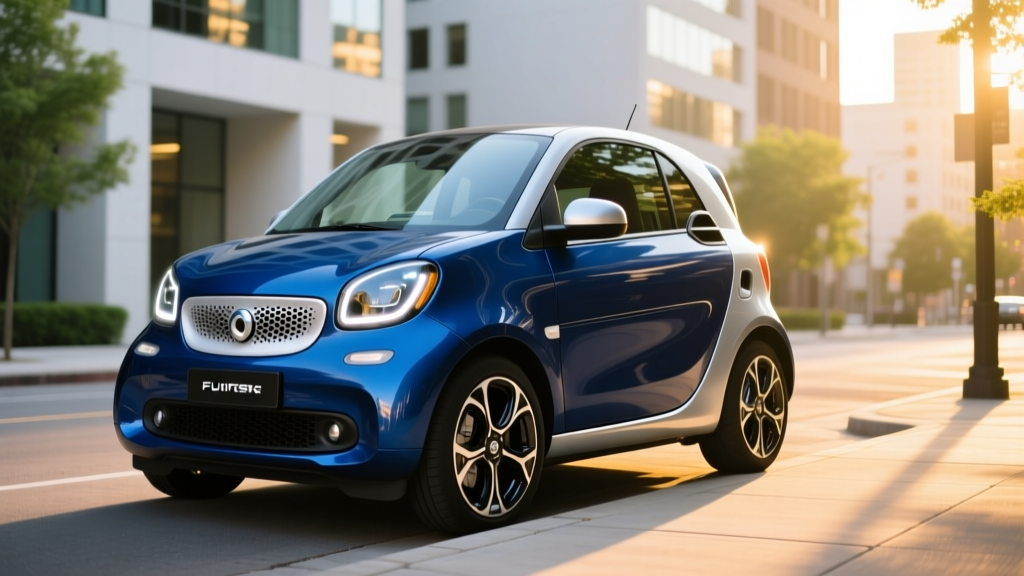
The Smart EQ Fortwo is the battery-electric version of the tiny two-seat Smart Fortwo. Originally badged as the "Smart Electric Drive" (ED) for 2017–2018 model years and rebranded to "EQ" for 2019, it was Smart's final product in the U.S. before Mercedes-Benz pulled the brand from North America entirely.
| Spec | Value |
|---|---|
| EPA Range | 58 miles |
| Battery Capacity (usable) | 17.6 kWh (NMC chemistry) |
| Motor Output | 80 hp / 118 lb-ft torque |
| 0–60 mph | |
| Top Speed | 78 mph (electronically limited) |
| Level 2 AC Charging | 7.2 kW max (J1772 connector) |
| DC Fast Charging | Not available on U.S. models |
| Level 2 Time (0–100%) | ~3 hours |
| EPA Efficiency | 108 MPGe combined |
| Cargo Volume | 9.2 cu ft (behind seats) |
| Curb Weight | ~2,425 lbs |
| Original MSRP (2019) | $25,390 (before incentives) |
| Used Market Price (2026) | $8,000–$14,000 depending on condition/mileage |
The car is exactly what you'd expect: a two-seat microcar optimized for tight European city streets, adapted for American roads with mixed results. Its 80-hp electric motor is adequate for city speeds but struggles with highway merging and sustained 70+ mph driving. The 58-mile EPA range is the most limiting factor in the entire ownership equation.
Real-World Range Reality Check
EPA Sticker: 58 miles
Real-world city driving (mild weather): 50–60 miles
Highway driving (65–75 mph): 38–45 miles
Cold weather (below 32°F): 35–45 miles (NMC batteries without active thermal management lose 20–35% in freezing temps)
Bottom line: Plan for a usable daily radius of about 20–25 miles round-trip to maintain a charging buffer. This is strictly a city car.
Smart EQ vs. Gas Car: The Cost and Practicality Comparison
For context on whether a used Smart EQ Fortwo makes financial sense, here's how it stacks up against the gas-powered Smart Fortwo (which was also sold through 2019 in the U.S.) and a modern budget EV like the 2025 Nissan Leaf for comparison.
| Metric | Smart EQ Fortwo (2019, Used) | Smart Fortwo Gas (2019, Used) | 2025 Nissan Leaf S (New) |
|---|---|---|---|
| Purchase Price | $8,000–$14,000 | $7,000–$11,000 | $28,140 MSRP (before credits) |
| EPA Range / Tank Range | 58 miles | ~270 miles (8.9-gal tank) | 149 miles |
| Fuel/Energy Cost per Mile | ~$0.04 (at $0.14/kWh national avg) | ~$0.11 (at $3.30/gal, 36 MPG combined) | ~$0.04 |
| Annual Fuel/Energy (12,000 mi) | ~$480 | ~$1,320 | ~$480 |
| Annual Maintenance | ~$300–$500 (limited dealer network) | ~$500–$700 | ~$400–$600 |
| Home Charging Required? | Essential | No | Highly recommended |
| DC Fast Charging | None | N/A | CCS, up to 100 kW (optional) |
| Seats | 2 | 2 | 5 |
| Federal Tax Credit | None (used EV credit up to $4,000 via §25E if eligible) | None | Potentially $7,500 via §30D (subject to sourcing/income rules) |
What the numbers reveal: The Smart EQ Fortwo saves you roughly $840/year on fuel compared to its gas sibling at 12,000 miles annually. Over five years, that's about $4,200 in fuel savings. However, the gas Fortwo offers nearly 5x the range and doesn't require home charging infrastructure. If you can charge at home and your daily commute is under 25 miles round-trip, the math favors the EQ. If not, the gas Fortwo — or better yet, a modern used EV with more range — is the smarter play.
Real Costs of Smart Car Electric Ownership in 2026
Buying a used Smart EQ isn't just about the purchase price. Here's a full five-year ownership cost projection based on 10,000 miles/year (realistic for a city-only second car).
| Cost Category | Estimated 5-Year Total | Notes |
|---|---|---|
| Purchase Price | $11,000 (mid-range example) | Private party or dealer, ~30k–50k miles |
| Home Level 2 Charger Install | $600–$2,000 | 240V/32A circuit; may require panel upgrade ($1,500–$3,000 extra on older homes) |
| Electricity (50,000 mi total) | ~$2,000 | At $0.14/kWh avg, ~286 kWh/1,000 mi |
| Insurance | $4,500–$6,500 | Varies widely by state/driver; EV insurance can be 15–25% higher than gas equivalent |
| Maintenance & Repairs | $2,000–$4,000 | Tires, cabin filter, brake fluid, 12V battery replacement; higher risk of parts delays due to brand exit |
| Potential Battery Concern | $0–$8,000 | Out of original 8-year/100k-mi warranty; replacement 17.6 kWh pack estimated $6,000–$8,000 if needed (rare but possible) |
| Depreciation | $4,000–$6,000 | Used EVs depreciating; Smart brand has no U.S. future |
| Total (5-Year, Mid-Range) | $24,100–$33,500 | Excluding potential battery replacement |
Critical ownership note: Mercedes-Benz (Smart's parent) still provides some parts and service support through select Mercedes dealerships, but the network is thin and shrinking. Before buying, identify the nearest Mercedes-Benz dealer willing to service a Smart EQ and ask about parts lead times for body panels, the onboard charger, and the electric powertrain. Some owners report 4–8 week waits for specific components.
Federal Tax Credit for Used EVs (§25E)
While the Smart EQ Fortwo doesn't qualify for the new-vehicle §30D credit (it's no longer sold new), it may qualify for the IRS §25E used clean vehicle credit. This provides up to $4,000 or 30% of the sale price (whichever is less) if:
- The vehicle is purchased from a licensed dealer (not private party)
- The sale price is $25,000 or less
- Your modified adjusted gross income is below $75,000 (single) / $150,000 (married filing jointly)
- The vehicle is at least 2 model years old
- You haven't claimed the used EV credit in the prior 3 years
At a typical used Smart EQ price of $11,000, the credit would be $3,300 (30% of sale price), bringing effective cost down to around $7,700. Confirm current-year eligibility with a tax professional, as IRS rules evolve.
Common Misconceptions About the Smart Car Electric
| Myth | Fact |
|---|---|
| "Smart cars are still sold new in the U.S." | Smart exited the U.S. market after the 2019 model year. Only used examples are available domestically. |
| "It charges at any public DC fast charger." | The U.S.-spec Smart EQ Fortwo has no DC fast charging capability. It is limited to Level 2 AC charging (J1772, 7.2 kW max). Plan all trips around Level 2 or overnight home charging. |
| "58 miles of range is enough for anyone in a city." | It works for short commutes, but errands, detours, climate control usage, and cold weather compress that to 35–50 real-world miles. You'll feel range pressure regularly. |
| "The battery will need expensive replacement soon." | The 17.6 kWh NMC pack is relatively small and, in moderate climates, degradation has been manageable. Most 2018–2019 examples still retain 80–90% of original capacity. However, the original 8-year/100,000-mile battery warranty is expiring or expired on most examples by 2026. |
| "I can take it on road trips." | With no DC fast charging and a 78-mph speed limiter, highway travel is impractical and painfully slow to recharge. This is strictly a local-use vehicle. |
| "It's unsafe because it's so small." | The Smart Fortwo earned an IIHS Top Safety Pick rating in earlier gas-model years and features a reinforced steel Tridion safety cell. However, it has not been crash-tested by IIHS or NHTSA in its EQ electric variant specifically, and its small size inherently disadvantages it in multi-vehicle collisions with larger vehicles. |
Who Should (and Shouldn't) Buy a Smart Car Electric
Decision Framework: Is the Smart EQ Fortwo Right for You?
✅ Choose the Smart EQ Fortwo if ALL of the following are true:
- You need a second or third car strictly for short city errands (under 25 miles round-trip daily)
- You have reliable access to Level 2 home charging (garage or dedicated parking with a 240V outlet)
- You live in a mild climate (cold weather severely impacts the small battery)
- You're a single occupant or couple with no regular passenger or cargo needs
- You value easy parking in a dense urban environment above all else
- You've identified a Mercedes-Benz dealer nearby willing to service the car
- Your budget is under $15,000 and you want the cheapest possible entry into EV ownership
❌ Skip the Smart EQ Fortwo if ANY of the following apply:
- You need to drive more than 40 miles per day regularly
- You lack home charging access and would rely on public infrastructure (no DCFC makes this painful)
- You live in a region with harsh winters (below-freezing temps cut range by 25–35%)
- You ever need to carry passengers or significant cargo
- You want the security of a robust dealer/parts network
- You plan to keep the car 5+ years and worry about long-term parts availability
- You regularly drive on highways or interstates
🔄 Consider these alternatives instead:
- Used Chevrolet Bolt EV (2017–2023): 238–259 miles EPA range, DC fast charging (CCS), 5 seats, $10,000–$18,000 used. Far more practical in every dimension.
- Used Nissan Leaf (2018–2023): 149–226 miles EPA range, CHAdeMO DCFC on higher trims, $10,000–$17,000 used. More range, more space, still compact.
- New 2025/2026 Hyundai Ioniq 5 or Chevrolet Equinox EV: If your budget allows $30,000+, these offer 250–310 miles of range, DCFC at 150–175+ kW, full warranties, and current §30D tax credit eligibility.
Charging the Smart EQ Fortwo: What to Expect
Charging is the Smart EQ's biggest operational limitation. Here's a practical breakdown:
| Charging Level | Power (kW) | Connector | Time (0–100%) | Miles Added per Hour |
|---|---|---|---|---|
| Level 1 (120V household) | ~1.4 kW | J1772 (included cord) | ~14–16 hours | ~4–5 mi/hr |
| Level 2 (240V home/public) | 7.2 kW max | J1772 | ~3 hours | ~20–22 mi/hr |
| DC Fast Charging | N/A | Not equipped | N/A | N/A |
kW vs. kWh reminder: The battery stores 17.6 kWh of energy (capacity). The charger delivers up to 7.2 kW of power (speed). Think of kWh as the size of the fuel tank and kW as the flow rate of the pump.
Home charging setup: A Level 2 home charger (240V, 32A circuit) is essentially mandatory for Smart EQ ownership. Level 1 charging at 120V takes 14+ hours for a full charge — fine for overnight top-ups from 50% but impractical if you arrive home nearly empty. Budget $500–$1,200 for a quality Level 2 EVSE (ChargePoint Home Flex, Emporia Vue, or similar) and $600–$2,000 for electrician installation depending on your panel's capacity and the run distance.
Public charging reality: You can use any J1772-equipped public Level 2 station (ChargePoint, Blink, etc.), but without DC fast charging, a "quick top-up" still means 30–60 minutes plugged in for 10–20 miles of range. This makes the Smart EQ impractical for anyone without dedicated home or workplace charging.
Battery Health and Longevity Concerns
The Smart EQ Fortwo's 17.6 kWh NMC (nickel-manganese-cobalt) lithium-ion battery is the car's most critical and most expensive component. Key facts for 2026 buyers:
- Original warranty: 8 years / 100,000 miles against defects and capacity loss below a specified threshold (typically ~70% state of health). For a 2018 model, this warranty expired or is expiring in 2026.
- Observed degradation: Owner reports and European fleet data suggest 2018–2019 Smart EQ batteries retain roughly 82–92% of original capacity after 5–7 years and 30,000–60,000 miles in moderate climates. Hot-climate cars (Arizona, Texas) may show more degradation due to the battery's passive thermal management (no active liquid cooling).
- Replacement cost: If the battery does fail out of warranty, expect $6,000–$8,000+ for a replacement pack plus labor — potentially exceeding the car's value. Third-party repair options are limited.
- Pre-purchase check: Ask the seller or dealer for a battery state-of-health (SoH) reading. Some Mercedes-Benz diagnostic tools can pull this data. An SoH below 85% on a Smart EQ should be a negotiation point or a walk-away signal.
Frequently Asked Questions
Is Smart still making electric cars?
Yes, but not for the U.S. market. Smart (now a joint venture between Mercedes-Benz and China's Geely) currently sells the Smart #1 and Smart #3 electric crossovers in Europe and China. These are modern, competitive EVs with 200+ miles of WLTP range and DC fast charging. However, Mercedes-Benz has confirmed no plans to re-enter the U.S. with Smart-branded vehicles as of 2026.
Can I convert a gas Smart Fortwo to electric?
Technically, aftermarket EV conversion shops exist, but converting a gas Fortwo is expensive ($15,000–$25,000+), voids all remaining safety certifications, and creates insurance and registration complications. It's far more cost-effective to buy a used Smart EQ Fortwo directly.
What happens if I need Smart EQ parts and no dealer will help?
This is a legitimate risk. Mercedes-Benz maintains some parts distribution for Smart vehicles, but as the fleet ages and shrinks, availability will decline. Independent EV shops and online Smart owner communities (such as Smart USA forums) are increasingly important resources. Some body and interior parts can be sourced from European-market Smart Fortwo models (which share the same platform), but powertrain-specific components may require specialized channels.
Is the Smart EQ Fortwo safe for daily driving?
The Smart Fortwo's Tridion safety cell is genuinely robust for its size, and the car includes front and side airbags, stability control, and anti-lock brakes. However, physics is physics — in a collision with a 4,500-pound SUV or truck, a 2,425-pound microcar puts its occupants at a significant disadvantage. The Smart EQ is safest when used in low-speed urban environments where it was designed to operate.
How does the Smart EQ compare to a modern budget EV like the Chevy Bolt?
It doesn't compete meaningfully. The used Chevrolet Bolt EV offers 238–259 miles of EPA range (4x the Smart EQ), DC fast charging, 5 seats, 56.6 cu ft of cargo space with seats folded, and a much stronger parts/service network through Chevrolet dealers. The only advantage the Smart EQ retains is its tiny footprint for parking in extremely dense cities and its slightly lower used purchase price.
What should I inspect before buying a used Smart EQ Fortwo?
Request a battery SoH diagnostic, check for any outstanding recalls via NHTSA's recall lookup, verify the onboard charger functions properly on both Level 1 and Level 2, inspect the 12V auxiliary battery (a common failure point in all EVs), and confirm the availability of a service provider in your area. Also check tire condition — the Smart EQ uses staggered tire sizes (narrower front, wider rear) that can be more expensive and harder to source than standard sizes.
Sources: EPA efficiency data via fueleconomy.gov; IRS used clean vehicle credit rules via irs.gov; NHTSA recall information at nhtsa.gov.