The Quick Answer: What Is the Smallest Electric Car in the USA?
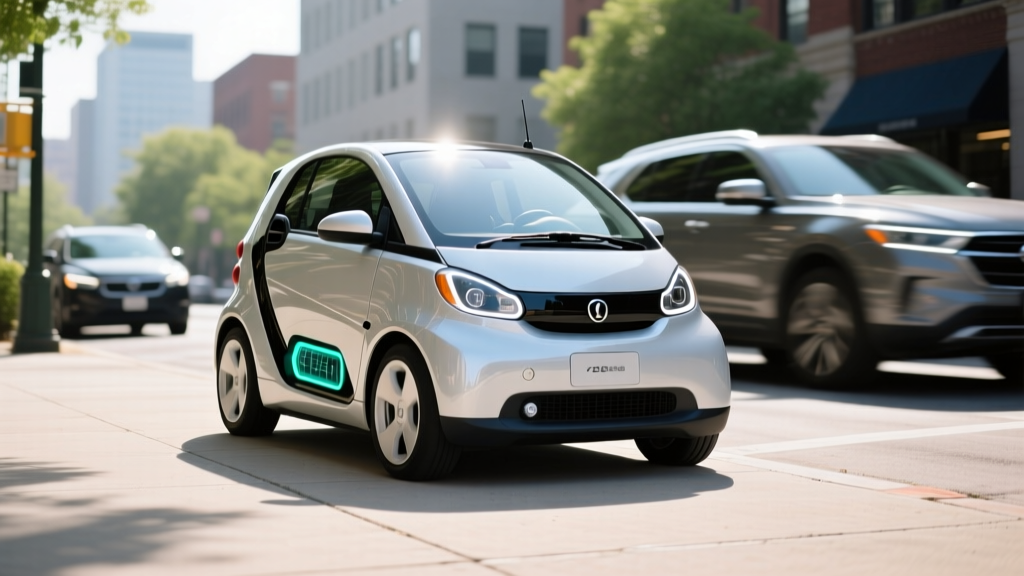
For 2026, the smallest highway-legal, widely available electric car in the USA is the MINI Cooper SE (Hardtop 2 Door). It measures 151.8 inches long, weighs under 3,100 lbs, and carries a 32.6 kWh (usable) battery delivering an EPA-estimated 114 miles of range. Starting MSRP sits at $30,900 before incentives.
If you need something even more compact for city-only use, the Fiat 500e (137.8 inches, ~149 miles EPA, ~$32,500) is the runner-up, though its dealer footprint is narrower.
Neither qualifies as a "neighborhood electric vehicle" (NEV) — both are full-speed, crash-tested, highway-capable cars. If you see a sub-$10,000 micro EV online, verify it's a street-legal NEV limited to 25 mph before assuming it's a real car.
Spec Showdown: The Smallest EVs You Can Actually Buy
"Small" in the EV market usually means subcompact hatchbacks under 160 inches long with batteries between 28 and 42 kWh. Here's how the current contenders stack up on the numbers that matter.
| Spec | MINI Cooper SE (2026) | Fiat 500e (2026) | Nissan LEAF S (2026) |
|---|---|---|---|
| Length (in) | 151.8 | 137.8 | 176.4 |
| EPA Range | 114 mi | 149 mi | 212 mi |
| Battery (usable) | 32.6 kWh (NMC) | 42.0 kWh (NMC) | 60.0 kWh (NMC) |
| Motor Output | 181 hp / 199 lb-ft | 118 hp / 162 lb-ft | 214 hp / 250 lb-ft |
| 0-60 mph | 6.5 sec | 8.5 sec | 6.9 sec |
| Peak DC Charge | 50 kW | 85 kW | 100 kW |
| 10-80% DC Time | ~36 min | ~33 min | ~40 min |
| Level 2 Rate | 11 kW | 11 kW | 7.2 kW |
| MPGe (combined) | 110 | 116 | 111 |
| Base MSRP | $30,900 | $32,500 | $29,130 |
| Battery Warranty | 8 yr / 100k mi | 8 yr / 100k mi | 8 yr / 100k mi |
The LEAF is included as a baseline — it's no longer "small" by footprint, but it's the cheapest new EV in America and a common cross-shop. Notice that smaller doesn't always mean cheaper: the Fiat 500e costs more than the LEAF despite having half the range.
Real-World Range: What 114 Miles Actually Means
EPA Sticker: 114 miles (MINI Cooper SE)
Real-World Expectation: ~90-100 miles in mixed driving; ~75-85 miles at sustained 70 mph highway speeds; potentially 60-70 miles in sub-30°F winter weather without preconditioning.
This is where the smallest EVs separate from the marketing. A 114-mile EPA rating is perfectly adequate if 95% of your driving is a 20-mile round-trip commute with home charging. It becomes a liability if you regularly drive 80+ miles one way, live in a cold climate, or rely solely on public DC fast chargers.
The MINI's 50 kW peak DC charge rate is the real constraint. On a road trip, that 10-80% charge takes roughly 36 minutes — and that's at a charger that can actually deliver 50 kW (many older public stations cap at 50 kW and taper early). The Fiat's 85 kW peak is meaningfully better, but still modest compared to the 150-250 kW rates on larger EVs.
Practical rule: If your longest regular drive exceeds 70 miles one way, or you can't charge at home, the smallest EVs will frustrate you. Step up to a 250+ mile vehicle.
EV vs Gas vs Hybrid: The Real Cost Comparison
Let's compare the MINI Cooper SE against its gas sibling (MINI Hardtop 2 Door, ~$28,400, 32 MPG combined) and a comparable hybrid (Toyota Prius LE, ~$29,450, 57 MPG combined) over 5 years and 60,000 miles.
| Cost Category | MINI Cooper SE (EV) | MINI Hardtop (Gas) | Toyota Prius LE (Hybrid) |
|---|---|---|---|
| Purchase Price (MSRP) | $30,900 | $28,400 | $29,450 |
| Est. Federal Tax Credit (§30D) | $0 (sourcing rules)* | $0 | $0 |
| Fuel/Energy (60k mi) | $3,300 (home L2 @ $0.14/kWh) | $7,500 (@ $3.50/gal) | $3,684 (@ $3.50/gal) |
| Maintenance (5 yr) | ~$1,200 | ~$2,800 | ~$2,400 |
| Insurance (5 yr avg) | ~$9,500 | ~$8,000 | ~$7,200 |
| 5-Year Total (est.) | $44,900 | $46,700 | $42,734 |
*As of 2026, the MINI Cooper SE does not qualify for the full §30D federal tax credit due to battery-component and critical-mineral sourcing requirements. Always verify current eligibility on IRS.gov before purchasing — rules change frequently. Some buyers may qualify for state incentives or the used-EV credit (§25E) on pre-owned models.
Key takeaways:
- The EV saves roughly $1,800 over the gas MINI over 5 years, primarily from fuel and maintenance savings (no oil changes, fewer brake replacements due to regen).
- The Prius hybrid undercuts both on total cost, largely due to lower insurance premiums and no charging infrastructure requirement.
- Insurance on small EVs runs 10-20% higher than gas equivalents — get quotes before committing.
- If you charge primarily on public DC fast chargers ($0.35-$0.55/kWh), the EV's fuel cost advantage shrinks dramatically — potentially to $5,500-$7,800 over 60k miles.
Ownership Reality Check: Who Should (and Shouldn't) Buy a Micro EV
The smallest EVs are not compromises everyone can live with. Before you fall in love with the footprint and the instant torque, run through this honest checklist.
Buy the smallest EV if:
- ✅ You have Level 2 home charging (or reliable workplace L2)
- ✅ Your daily round-trip is under 60 miles
- ✅ You have a second vehicle (or carshare access) for road trips
- ✅ You live in a dense urban area where parking is tight
- ✅ You value low running costs and zero tailpipe emissions over range
Look at a larger EV or a hybrid if:
- ❌ You rely on street parking with no charging access
- ❌ You regularly drive 80+ miles one way
- ❌ You live in a region with harsh winters and no garage (cold saps 30-40% of range)
- ❌ You frequently carry 3+ passengers or bulky cargo
- ❌ You want one vehicle to do everything including road trips
Home Charging Is Non-Negotiable
At 11 kW on Level 2, the MINI Cooper SE recharges from 10% to 100% in roughly 3.5 hours. That's fast for a small battery — but it only works if you have a 240V outlet or a dedicated Level 2 charger at home. A basic Level 2 home station costs $500-$1,200 for equipment plus $800-$2,500 for electrician installation (more if you need a panel upgrade from 100A to 200A service).
If your only option is a standard 120V outlet (Level 1), expect roughly 1.3 kW — that's about 4-5 miles of range per hour, or a full charge in nearly 24 hours. For a 114-mile-range car, Level 1 is barely viable as a daily strategy.
Cargo and Passenger Trade-Offs
The MINI Cooper SE offers 8.7 cubic feet of cargo space behind the rear seats (18.8 cu ft with seats folded). The Fiat 500e provides just 7.1 cu ft. For context, a Honda Civic sedan gives you 14.8 cu ft of trunk space. If you regularly haul groceries for a family, a stroller, or hockey gear, these cars will test your Tetris skills.
Common Misconceptions About Small EVs
| Myth | Fact |
|---|---|
| "Small EVs are cheap" | The smallest EVs start at $30,000-$32,500. A base Nissan LEAF (212 mi range) is $29,130. Small ≠ budget. |
| "114 miles isn't enough for anyone" | The average US commute is ~37 miles round-trip (Census Bureau). For 80% of daily driving, 114 miles is sufficient — with home charging. |
| "They charge super fast because the battery is small" | Small batteries charge at lower peak kW rates. The MINI's 50 kW peak means 10-80% takes ~36 min — longer than a 250 kW-capable larger EV. |
| "All small EVs get the $7,500 tax credit" | As of 2026, most small EVs fail §30D battery-sourcing requirements. Always check fueleconomy.gov for current eligibility. |
| "A micro EV is the same as a golf cart or NEV" | NEVs (neighborhood electric vehicles) are limited to 25 mph and lack crash protection. The MINI and Fiat 500e are full highway-legal vehicles with airbags, ABS, and NHTSA safety ratings. |
| "The battery will die in a few years" | Both the MINI and Fiat carry 8-year/100,000-mile battery warranties covering capacity below 70%. Real-world NMC degradation averages 8-12% over 100k miles. |
First-Time EV Buyer: What You Actually Need to Know
If you've never owned an EV and you're eyeing the smallest option on the lot, here's the practical knowledge that no brochure will give you.
1. kW vs kWh — Don't Confuse Them
kWh (kilowatt-hours) is energy — your battery's fuel tank. The MINI has 32.6 kWh usable. kW (kilowatts) is power — how fast you can fill that tank. A 50 kW charger delivers 50 kWh per hour (theoretically). Mixing these up is the #1 mistake new EV buyers make when comparing specs.
2. The Charge Curve Is Real
Peak DC charge rates (50 kW, 85 kW) only apply at low state-of-charge (typically 10-30%). Above 80%, charging slows dramatically to protect the battery. Plan road-trip stops around 10-80% charges, not 0-100%. That last 20% can take as long as the first 70%.
3. Preconditioning Matters
If your car has battery preconditioning (the MINI does via its navigation-linked climate system), use it. Warming the battery to optimal temperature before DC fast charging can cut your charge time by 15-25% in cold weather. Without preconditioning, a cold battery at 30°F may accept only 20-30 kW even at a 150 kW station.
4. Regenerative Braking Changes How You Drive
Both the MINI and Fiat offer adjustable regen. Max regen enables near-one-pedal driving — lift off the accelerator and the car decelerates strongly, feeding energy back to the battery. This extends your range in stop-and-go traffic by 5-15% and saves your brake pads (many EV owners go 80,000+ miles on original brake pads).
Frequently Asked Questions
Is there a smaller EV than the MINI Cooper SE available in the USA?
The Fiat 500e is shorter (137.8 vs 151.8 inches) but has limited dealer availability. Below that, you enter NEV (neighborhood electric vehicle) territory — vehicles like the Polaris GEM or Wink Motors Wink+ are street-legal only on roads with speed limits of 35 mph or below and lack highway safety equipment.
Can I take the smallest EV on a road trip?
Technically yes, but you'll plan around charging constantly. With 114 miles of range and 36-minute DC charges, a 400-mile trip takes roughly 7-8 hours of driving plus 2-3 charging stops (each 30-40 minutes). Most owners of micro EVs keep a gas car or use a rental/carshare for trips over 150 miles.
Do the smallest EVs qualify for any tax credits in 2026?
Federal §30D credit eligibility depends on battery-component and critical-mineral sourcing, MSRP caps ($55,000 for sedans/hatchbacks), and buyer income limits ($150k single / $300k joint). As of 2026, neither the MINI Cooper SE nor Fiat 500e reliably qualifies for the full $7,500 credit. The §25E used-EV credit (up to $4,000 or 30% of sale price, whichever is less) may apply to pre-owned models under $25,000 — check IRS.gov for current lists.
How long will the battery last in a small EV?
NMC batteries in modern EVs typically retain 85-92% capacity after 100,000 miles, based on fleet data from similar chemistries. Both the MINI and Fiat warrant the battery at 70% capacity for 8 years or 100,000 miles. If the battery degrades below that threshold, the manufacturer replaces or refurbishes it at no cost. Full out-of-warranty replacement runs $8,000-$14,000 depending on the model — but this is rare before 150,000+ miles.
Is a small EV or a hybrid better for city driving?
If you have home charging, the EV wins on running cost (roughly $0.04/mile on home electricity vs $0.11/mile on gas at 32 MPG). If you lack charging access, the hybrid wins on convenience — no charging stops, no range anxiety, and 50+ MPG in city driving. The Toyota Prius at 57 MPG combined is hard to beat for hassle-free city efficiency.
What's the cheapest small EV I can buy?
The Nissan LEAF S at $29,130 is technically the cheapest new EV in America, though it's a compact hatchback rather than a micro car. Among truly small EVs (under 155 inches), the MINI Cooper SE at $30,900 is the most affordable widely available option. On the used market, a 2022-2023 MINI Cooper SE can be found for $18,000-$23,000 and may qualify for the $4,000 used-EV credit.