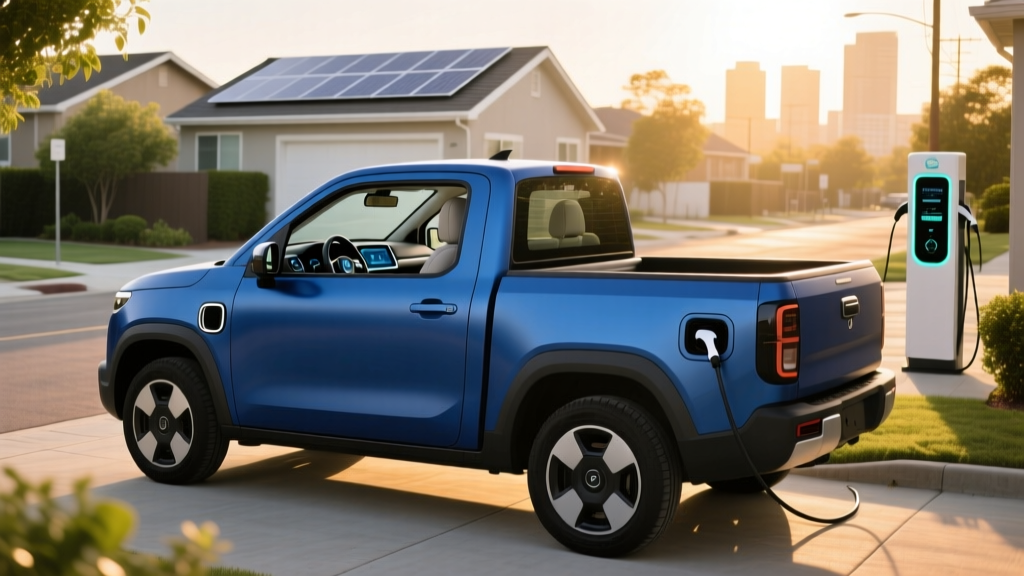
The short answer on small EV trucks: As of the 2026 model year, the compact electric truck segment remains extremely limited. The Ford Maverick EV is expected to arrive for the 2027 model year with an estimated starting price near $35,000 and a targeted EPA range of 250–300 miles. Currently, no mainstream small electric pickup is widely available at U.S. dealerships. Buyers needing an electric truck today must look at midsize options like the Chevrolet Silverado EV (starting ~$50,000) or the Rivian R1T (starting ~$70,000). If you need a small truck bed but aren't locked into electric, the gas-powered Ford Maverick and Hyundai Santa Cruz remain the only true compact pickups, with the Maverick Hybrid delivering an EPA-estimated 42 MPG city.
What Qualifies as a Small EV Truck?
The term "small EV trucks" typically refers to compact or sub-midsize electric pickups with beds under 6 feet and overall lengths under 200 inches. These vehicles target urban and suburban buyers who want truck utility — a bed for hauling lumber, bikes, or gear — without the footprint, weight, and price of full-size electric trucks like the Ford F-150 Lightning or Rivian R1T.
The key distinction: compact trucks prioritize daily drivability and efficiency over towing and payload. A small EV truck in the $30,000–$45,000 range would fill a massive gap in the market, sitting between affordable electric crossovers (Hyundai Ioniq 5, Chevy Equinox EV) and expensive full-size electric pickups.
The Current Small EV Truck Landscape
Here's what exists, what's coming, and what's been shelved as of early 2026:
| Model | Status | Est. Base MSRP | Target EPA Range | Battery (Est.) |
|---|---|---|---|---|
| Ford Maverick EV | Announced (2027 MY) | ~$35,000 | 250–300 mi | ~75–85 kWh |
| Hyundai Santa Cruz EV | Rumored / Not Confirmed | TBD | TBD | TBD |
| Chevrolet Montana EV | South America only (not U.S.) | N/A | ~200 mi | ~55 kWh |
| Tesla Cybertruck (AWD) | Available | $79,990 | 340 mi | ~123 kWh |
| Rivian R1T | Available | $69,900 | 270–420 mi | 95–149 kWh |
| Chevrolet Silverado EV | Available | ~$50,000 | 280–492 mi | 85–200 kWh |
The honest reality: if you search for "small EV trucks" hoping to find a $30,000 compact electric pickup you can buy today, you won't. The market hasn't delivered one yet. The Maverick EV is the most anticipated entry, and Ford has confirmed it will ride on a new flexible EV platform, but production timing and final specs remain preliminary until closer to launch.
Small EV Truck vs. Gas Compact Truck: Cost Comparison
To understand the economics, let's compare what a hypothetical small EV truck would cost to own versus the current gas-powered compact truck benchmark: the Ford Maverick Hybrid.
| Metric | Small EV Truck (Projected) | Ford Maverick Hybrid (2026) |
|---|---|---|
| Base MSRP | ~$35,000 | $28,495 |
| Federal Tax Credit (§30D) | Up to $7,500 (if eligible) | $0 |
| Effective Starting Price | ~$27,500* | $28,495 |
| EPA Fuel Economy / MPGe | ~100 MPGe (est.) | 42 MPG combined |
| Energy Cost per Mile | ~$0.04 (home charging)** | ~$0.09 (gas at $3.20/gal) |
| Annual Fuel/Energy (15,000 mi) | ~$600 | ~$1,350 |
| Annual Maintenance (est.) | ~$300 | ~$550 |
| 5-Year Total Energy + Maintenance | ~$4,500 | ~$9,500 |
*Effective price assumes full $7,500 §30D credit eligibility via point-of-sale transfer. Eligibility depends on MSRP caps (trucks: ≤$80,000), buyer income limits ($150K single / $300K joint), and battery component/critical mineral sourcing rules per IRS §30D guidelines. Always verify with a tax professional.
**Based on U.S. average residential electricity rate of ~$0.16/kWh and estimated efficiency of 3.0 mi/kWh. Public DC fast charging costs 2–4× more.
5-Year Total Cost of Ownership Projection
| Category | Small EV Truck (Proj.) | Maverick Hybrid |
|---|---|---|
| Purchase (after credit) | $27,500 | $28,495 |
| Energy / Fuel (5 yrs) | $3,000 | $6,750 |
| Maintenance (5 yrs) | $1,500 | $2,750 |
| Insurance (5 yrs, est.) | $8,500 | $6,500 |
| Depreciation (est. 5-yr) | $11,000 | $9,500 |
| 5-Year Total | ~$51,500 | ~$53,995 |
EV insurance premiums run 15–25% higher than comparable gas vehicles due to repair costs and battery replacement risk. Depreciation for EVs has improved but remains less predictable than established gas models. Source: fueleconomy.gov for efficiency data.
Real-World Ownership Considerations
Numbers on paper only matter if they match your life. Here's what actually determines whether a small EV truck — or any EV — works for you:
Home Charging Access
This is the single biggest factor. A Level 2 home charger (240V, typically 7.7–11.5 kW) adds roughly 25–40 miles of range per hour of charging, meaning overnight replenishment covers most daily driving. Installation costs range from $500 (simple outlet near the panel) to $2,500+ (panel upgrade, long conduit runs). If you rent, live in a condo without charging infrastructure, or rely solely on street parking, EV ownership becomes significantly harder.
Public DC fast charging (50–350 kW) is the fallback, but costs $0.30–$0.60/kWh at networks like Electrify America or EVgo — roughly equivalent to gas on a per-mile basis. It also takes 20–40 minutes for a 10–80% session depending on the vehicle's charge curve.
Climate and Range Reality
EPA range estimates are tested under moderate conditions. In real-world use:
- Highway driving at 75 mph: Expect 10–15% range reduction vs. EPA combined estimate
- Cold weather (below 32°F): Expect 20–35% range reduction due to battery chemistry limitations and cabin heating demands
- Towing or heavy payload: Range can drop 40–50% — a critical limitation for any truck buyer planning regular towing
A small EV truck with a 270-mile EPA rating might realistically deliver 180–200 miles in winter highway conditions. This is adequate for commuting but requires planning for road trips.
Battery Longevity and Warranty
Modern EV batteries (NMC or LFP chemistry) are designed to retain 70–80% capacity after 150,000–200,000 miles. Federal law mandates a minimum 8-year/100,000-mile battery warranty. Most manufacturers offer 8 years/100,000 miles with a 70% capacity retention threshold. Full battery replacement, while rare, costs $8,000–$18,000 depending on pack size.
Common Misconceptions About Small EV Trucks
| Myth | Fact |
|---|---|
| "EV trucks can't tow anything" | Electric motors produce instant torque. Even compact EV platforms can tow 2,000–5,000 lbs — but range drops dramatically under load. A 270-mile truck might only manage 140 miles while towing 3,500 lbs. |
| "Batteries need replacing every few years" | Data from millions of EVs shows average degradation of 1–2% per year. Most packs outlast 150,000 miles with 80%+ capacity remaining. The warranty protects you further. |
| "You'll save $10,000 in 5 years" | Savings depend heavily on electricity rates, driving distance, and tax credit eligibility. With higher insurance and potentially faster depreciation, real 5-year savings are often $1,500–$3,000 — meaningful but not transformative. |
| "Charging takes too long" | Home Level 2 charging is invisible — you plug in at night and wake up full. DC fast charging adds 150–200+ miles in 20 minutes on capable vehicles. The issue is availability and reliability, not speed. |
| "Small EV trucks are available now" | As of 2026, no mainstream compact electric pickup is in U.S. showrooms. The Ford Maverick EV is the nearest prospect, targeting 2027 production. |
Decision Framework: Should You Wait or Buy Now?
If-Then Guide for Small Truck Buyers
- IF you need a small truck bed today and want electric → THEN no current option exists in the compact segment. Consider the Chevy Silverado EV 4WT (~$50,000, 280 mi range) as the smallest available electric truck, or wait for the Maverick EV.
- IF you can wait 12–18 months and want a true compact electric truck → THEN hold for the Ford Maverick EV. Monitor announcements for final specs, pricing, and §30D tax credit eligibility.
- IF you need a small truck now and are open to gas/hybrid → THEN the Ford Maverick Hybrid ($28,495, 42 MPG city, 1,500-lb payload) is the segment benchmark. The Hyundai Santa Cruz ($28,250, 23 MPG combined) offers more power and a turbo option.
- IF you lack home charging and can't install it → THEN an EV truck (or any EV) will be frustrating. Stick with hybrid until your housing situation changes.
- IF you regularly tow over 3,000 lbs → THEN an EV truck's range penalty under load makes gas or diesel more practical for now, unless your tow routes are short and predictable.
- IF you have home charging, commute under 60 miles daily, and rarely tow → THEN a small EV truck (when available) would be an excellent match — low operating costs, instant torque, and adequate range with a huge margin.
What First-Time EV Buyers Need to Know
If a small EV truck is your entry into electric ownership, prepare for these realities:
- Budget for a Level 2 home charger. Equipment costs $400–$800; professional installation adds $500–$2,500 depending on your electrical panel. This is non-negotiable for convenient ownership.
- Understand the §30D tax credit rules. The credit is not automatic. Vehicle MSRP must be ≤$80,000 for trucks. Your adjusted gross income must be ≤$150,000 (single) or $300,000 (joint). Battery components and critical minerals must meet phased-in sourcing requirements that tighten annually. The credit can be transferred to the dealer at point of sale for an immediate price reduction. Verify current rules at IRS.gov.
- Learn kW vs. kWh. kWh (kilowatt-hours) measures battery capacity — like gallons in a gas tank. kW (kilowatts) measures charging power — like the flow rate of a gas pump. A 75 kWh battery charged at 11.5 kW (Level 2) takes about 7 hours from empty to full.
- Download charging apps before you buy. PlugShare, Electrify America, EVgo, and ChargePoint show station locations, availability, and pricing. Scout routes you'll commonly drive.
- Expect insurance to cost more. Get quotes before purchasing. EV insurance averages 15–25% higher than gas equivalents due to specialized repair requirements and battery replacement costs.
- Preconditioning matters. Most EVs let you warm or cool the battery before fast charging or departure. This improves charge speed in cold weather and preserves range. Use it.
Frequently Asked Questions
Will the Ford Maverick EV qualify for the $7,500 tax credit?
It's too early to confirm. The Maverick EV's expected ~$35,000 MSRP clears the $80,000 truck cap. However, credit eligibility also depends on battery component sourcing and critical mineral requirements that tighten each year under §30D rules, plus your personal income limits. Ford will confirm eligibility closer to launch. Check the IRS qualified vehicle list at purchase time.
How much does it cost to charge a small EV truck at home?
Assuming a 75 kWh battery and the U.S. average electricity rate of $0.16/kWh, a full charge costs about $12. That's roughly equivalent to 3–4 gallons of gas but provides 225–270 miles of range. Annual home charging for 15,000 miles of driving costs approximately $600–$750, compared to $1,200–$1,500 for gas.
Can a small EV truck handle a worksite?
For light-duty tasks — hauling tools, mulch, lumber, bikes — yes. Compact trucks typically offer 1,000–1,500 lbs of payload. Electric motors provide strong low-end torque. However, if you regularly haul near max payload or tow heavy trailers, the range penalty and limited charging infrastructure on remote job sites make gas trucks more practical for now.
Is an electric truck good in snow and cold weather?
EVs perform well in snow thanks to instant torque and a low center of gravity (heavy battery pack). However, cold weather reduces range by 20–35% due to battery chemistry and cabin heating. A heat pump (standard on many modern EVs) mitigates this somewhat. If you live in a cold climate, buy 30% more range than you think you need.
What happens when the battery degrades?
Gradual capacity loss of 1–2% per year is normal. After 10 years, expect 80–90% of original capacity — meaning a 270-mile truck might deliver 220–240 miles. The 8-year/100,000-mile federal battery warranty covers premature degradation below the manufacturer's threshold (typically 70%). Catastrophic battery failure is rare but covered under warranty.
Should I buy a used small EV truck instead?
The used EV market offers significant savings (often 30–40% off MSRP for 2–3-year-old vehicles), but used EVs don't qualify for the new-vehicle §30D credit. A separate used EV credit of up to $4,000 exists for vehicles priced at $25,000 or less. Since no compact electric trucks are currently on the used market, this option isn't available yet for this segment.