Quick Answer: Who Should Buy a Small Electric Vehicle?
A small electric vehicle makes financial and practical sense if you drive under 40 miles daily, have access to Level 2 home or workplace charging, and want to minimize running costs. Expect EPA ranges between 230 and 260 miles from current subcompact EVs, electricity costs roughly 3–5 cents per mile (versus 12–16 cents per mile for a 30-MPG gas car), and near-zero routine maintenance. However, if you lack reliable home charging, regularly take 300+ mile road trips through sparse charging corridors, or live in extreme cold climates, a hybrid or plug-in hybrid may serve you better. The upfront price premium of $5,000–$8,000 over a comparable gas subcompact is typically recovered within 4–6 years through fuel and maintenance savings, helped further by the federal §30D tax credit (up to $7,500) for qualifying models and buyers.
The Small EV Landscape in 2026: What's Actually Available
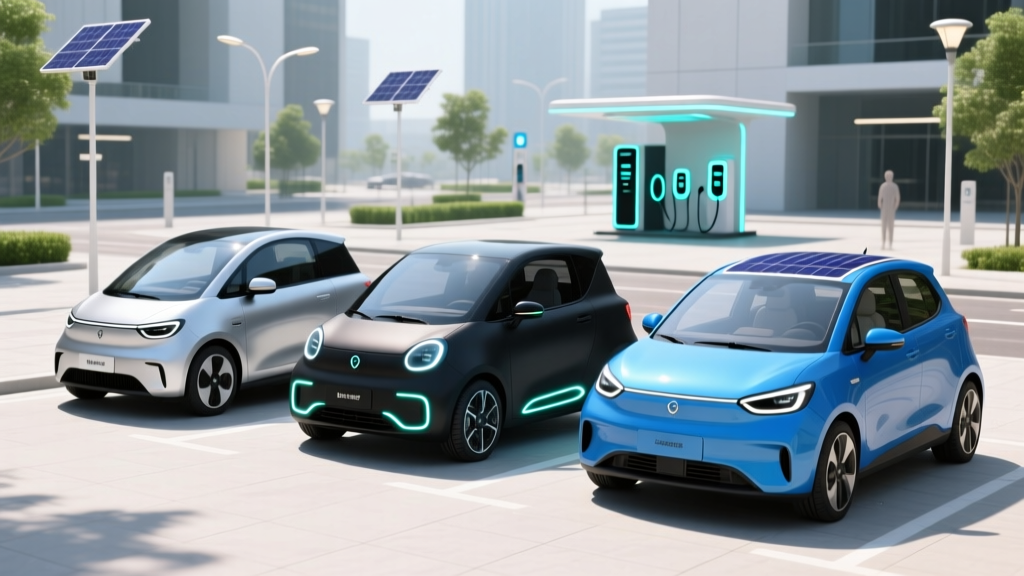
The subcompact and compact EV segment has matured considerably. The most prominent small electric vehicles on sale today include the Chevrolet Bolt EV/EUV (revived for 2025 on the Ultium platform), the Hyundai Kona Electric, the Nissan LEAF (in its final generation), the Mini Cooper SE, and newer entries like the Volvo EX30. These vehicles cluster around 200–260 miles of EPA-rated range and $28,000–$40,000 in base MSRP before incentives.
| Model | EPA Range | Battery (kWh usable) | Chemistry | Peak DC Charge (kW) | 10–80% Time | 0–60 mph | Base MSRP |
|---|---|---|---|---|---|---|---|
| Chevrolet Bolt EV | 259 mi | 65 kWh | NMC (Ultium) | 150 kW | ~20 min | 7.0 sec | $28,795 |
| Hyundai Kona Electric | 261 mi | 64.8 kWh | NMC | 100 kW | ~43 min | 7.8 sec | $33,975 |
| Volvo EX30 | 265 mi | 69 kWh | NMC | 153 kW | ~26 min | 5.1 sec (Twin Motor) | $36,145 |
| Mini Cooper SE | 114 mi | 32.6 kWh | NMC | 50 kW | ~35 min | 7.3 sec | $30,900 |
| Nissan LEAF SV Plus | 212 mi | 60 kWh | NMC | 100 kW | ~45 min | 7.9 sec | $31,575 |
Key takeaway: The Bolt EV and Kona Electric offer the best range-per-dollar ratio. The EX30 leads in charging speed and performance. The LEAF remains hampered by CHAdeMO connector availability as the industry standardizes on NACS. The Mini Cooper SE's 114-mile range restricts it to urban commuters with reliable daily charging.
Small EV vs Gas Car: The Real Cost Breakdown
The purchase decision hinges on total cost of ownership, not just the sticker price. A typical small electric vehicle costs $5,000–$8,000 more upfront than a comparably equipped gas subcompact (e.g., Honda Civic, Toyota Corolla). But that gap narrows significantly when you factor in fuel, maintenance, and available tax credits.
| Cost Category | Small EV (e.g., Bolt EV) | Gas Subcompact (e.g., Civic) |
|---|---|---|
| Purchase Price (base MSRP) | $28,795 | $24,000 |
| Federal §30D Tax Credit (if qualifying) | –$7,500 | $0 |
| Effective Purchase Price | $21,295 | $24,000 |
| Fuel / Energy (5 years, 75k mi) | $3,375 (home L2, $0.13/kWh) | $7,500 (30 MPG avg, $3.00/gal) |
| Maintenance (5 years) | $1,200 (tires, cabin filter, fluid top-offs) | $3,800 (oil changes, brakes, filters, fluids) |
| Insurance (5 years, avg) | $8,750 (~$1,750/yr) | $7,250 (~$1,450/yr) |
| Total 5-Year Cost | $34,620 | $42,550 |
The math favors the EV by roughly $7,900 over five years in this scenario, provided you qualify for the full tax credit and charge primarily at home. Without the credit, the gap shrinks to about $400, though the EV still wins on running costs alone. Source: fueleconomy.gov efficiency data; IRS §30D rules.
Real-World Range Reality Check
EPA sticker: 259 miles (Chevrolet Bolt EV)
Expect in practice: 220–240 miles on mixed driving; 180–200 miles sustained highway at 75 mph; 155–180 miles in sub-25°F winter conditions. Cold weather reduces range 20–30% due to battery chemistry limitations and cabin heating demands. Always plan road trips against the lower bound.
Federal Tax Credits: Does a Small EV Qualify?
The §30D clean vehicle credit can reduce your federal tax liability by up to $7,500 — or, since 2024, be transferred to the dealer as a point-of-sale discount. But eligibility depends on several conditions that change frequently. Here is the current checklist:
- MSRP cap: Vehicle MSRP must not exceed $55,000 (sedans/hatchbacks) — all small EVs listed above qualify.
- Buyer income cap: Modified AGI must be ≤ $150,000 (single), $225,000 (head of household), or $300,000 (joint).
- Battery sourcing: Increasing percentages of critical minerals and battery components must be sourced from the US or free-trade-agreement countries. This requirement tightens annually, and some models that qualified in 2024 may not in 2026.
- Final assembly: Must be in North America (VIN check at fueleconomy.gov).
- Point-of-sale transfer: You can elect to transfer the credit to the dealer for an immediate price reduction rather than claiming it on your tax return.
Important: Always verify a specific VIN's eligibility at the time of purchase. The IRS clean vehicle credit page is the authoritative source. Consult a tax professional for your specific situation.
Charging a Small EV: What First-Time Buyers Must Know
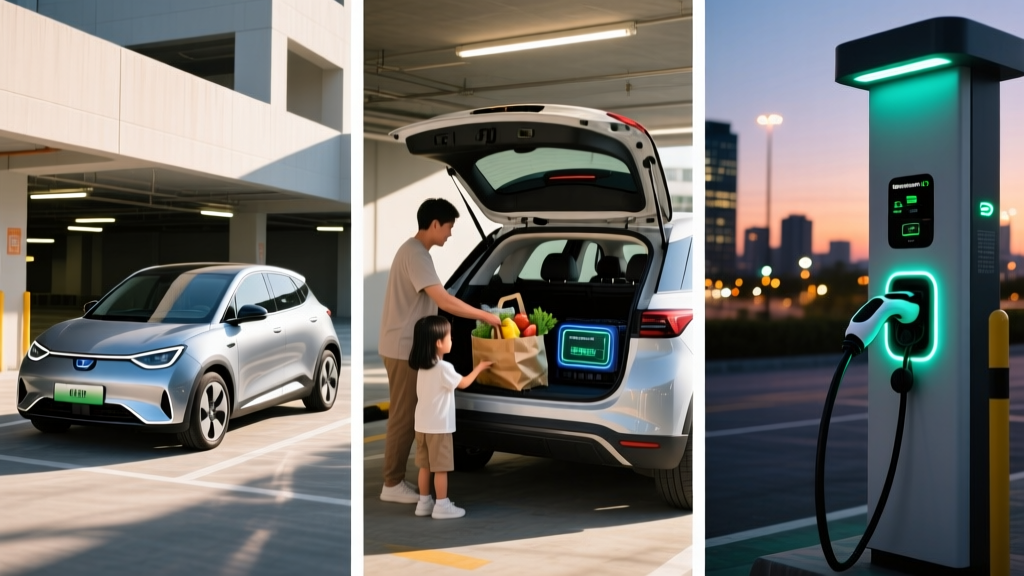
Charging access is the single biggest determinant of EV satisfaction. Here is what each level delivers for a typical 65 kWh small EV battery:
| Level | Power | Miles Added per Hour | Best Use Case |
|---|---|---|---|
| Level 1 (120V household outlet) | ~1.4 kW | 3–5 mi/hr | Overnight top-ups if you drive <30 mi/day |
| Level 2 (240V home/workplace) | 7.2–11.5 kW | 22–40 mi/hr | Daily charging; full overnight refill |
| DC Fast Charge | 100–153 kW (peak) | ~200+ mi in 20 min (10–80%) | Road trips; emergency top-ups |
Home Level 2 installation costs typically range from $500–$1,500 if your electrical panel has capacity for a 40-amp circuit, or $2,000–$5,000+ if a panel upgrade (from 100A to 200A service) is needed. Factor this into your first-year budget.
Charging curve reality: When a spec sheet says "150 kW peak DC charging," that rate applies only at low state-of-charge (typically 10–30%). The rate tapers significantly above 60–70% SoC to protect battery health. A 10–80% session takes 20–25 minutes in the Bolt EV, but an 80–100% session can take another 25+ minutes. Plan road-trip stops around the 10–80% window.
Common Misconceptions About Small EVs
| Myth | Fact |
|---|---|
| "The battery will need replacing in 5 years" | Modern NMC batteries degrade roughly 10–15% over 8 years / 100,000 miles. Federal law mandates battery warranties of at least 8 years/100,000 miles (capacity retention typically ≥70%). Most owners will sell or trade the car before significant degradation matters. |
| "Small EVs can't handle road trips" | A 259-mile EPA range with DC fast charging (10–80% in ~20 min) means you can add ~150 miles of range in a typical rest stop. With route planning via apps like A Better Routeplanner, 500+ mile trips are manageable. |
| "EVs are worse in cold weather" | Range drops 20–30% in sub-freezing temps — real and worth planning for. However, EVs start instantly in cold (no cranking), and preconditioning the battery while plugged in mitigates range loss. Many small EVs now include heat pumps to reduce cabin-heating energy drain. |
| "Charging is always expensive at public stations" | Public DC fast charging costs $0.30–$0.48/kWh (about 9–14 cents/mile) — more than home charging but still competitive with gas. Home charging at $0.13/kWh averages 3–5 cents per mile, dramatically cheaper. |
| "I need a Level 2 charger at home or an EV won't work" | If you drive under 30 miles daily, Level 1 (a standard 120V outlet) adds 3–5 miles per hour — enough to replenish overnight. However, Level 2 is strongly recommended for convenience and to avoid dependence on public charging. |
Decision Framework: Should You Buy a Small Electric Vehicle?
Choose a Small EV If:
- Your daily commute is under 40 miles round-trip
- You have a garage, driveway, or workplace with Level 2 charging access
- You qualify for the §30D tax credit (income and sourcing requirements met)
- You want to minimize per-mile operating costs and routine maintenance
- You primarily drive in urban or suburban areas with moderate winter severity
Choose a PHEV or Hybrid Instead If:
- You lack any reliable home or workplace charging
- You regularly drive 300+ miles through areas with sparse DC fast-charging infrastructure (rural Mountain West, parts of the Great Plains)
- You live in a climate with sustained sub-zero winters and cannot precondition while plugged in
- You need towing capacity beyond 1,000 lbs (small EVs are not rated for serious towing)
- Your budget is strictly under $25,000 and you cannot wait for incentive savings to offset the premium
What First-Time Small EV Buyers Should Know Before Signing
1. Test the charging ecosystem first. Before purchasing, download apps for Electrify America, EVgo, and ChargePoint. Locate the nearest DC fast chargers to your home and workplace. If the closest reliable station is more than 15 minutes away and you lack home charging, reconsider.
2. Budget for Level 2 installation. Get a quote from a licensed electrician before you buy. A 240V / 40-amp circuit installation typically costs $800–$1,500 for a straightforward setup. If your home has 100-amp service, you may need a $2,000–$4,000 panel upgrade.
3. Understand insurance premiums. EVs typically cost 15–25% more to insure than equivalent gas cars due to higher repair costs and specialized parts. Get quotes from your insurer for the specific model before committing.
4. Check NACS compatibility. The North American Charging Standard (NACS) is becoming the dominant connector. Some 2025–2026 small EVs ship with NACS ports natively; others use CCS and require an adapter for Tesla Superchargers. Confirm the connector type for the model year you are buying.
5. Verify tax credit eligibility at purchase. Battery sourcing requirements tighten annually. A model that qualified in 2025 may not qualify in 2026. Check the VIN at fueleconomy.gov on the day you plan to buy.
How long does a small EV battery last?
Modern lithium-ion EV batteries (NMC chemistry) typically retain 85–90% of original capacity after 8 years / 100,000 miles. Federal warranty requirements mandate at least 8 years/100,000 miles of coverage, with some manufacturers offering 10 years. Full battery replacement costs $10,000–$18,000 out of warranty, but the vast majority of owners never need one within typical ownership periods.
Can I charge a small EV with just a regular wall outlet?
Yes — Level 1 charging (120V) works but adds only 3–5 miles of range per hour. For a 65 kWh battery, a full charge from empty takes 40+ hours. It is viable only if your daily driving is under 30 miles. For anything more, invest in Level 2.
Are small EVs safe in a crash?
Yes. The Chevrolet Bolt EUV and Volvo EX30 have earned top ratings from IIHS and NHTSA. EV batteries are mounted low in the chassis, improving rollover resistance. Check specific model ratings at iihs.org and nhtsa.gov.
Do small EVs qualify for the $7,500 tax credit?
Many do, but eligibility depends on battery sourcing, final assembly in North America, MSRP under $55,000, and buyer income caps. Always verify the specific VIN at the point of purchase — rules change yearly.
What's the cheapest small EV to own over 5 years?
As of 2026, the Chevrolet Bolt EV (base ~$28,795, qualifying for the full §30D credit) offers the lowest effective purchase price and strong range. Combined with low electricity costs and minimal maintenance, it delivers one of the lowest total costs of ownership in the segment.